
Last updated September 20, 2026
Level 1 sweep and inspection to the NFPA 211 annual standard - flue, crown, cap, and flashing checked and photographed
Chimney sweep logs do not sweep chimneys. They loosen some creosote - which then falls where a brush and vacuum still have to collect it.
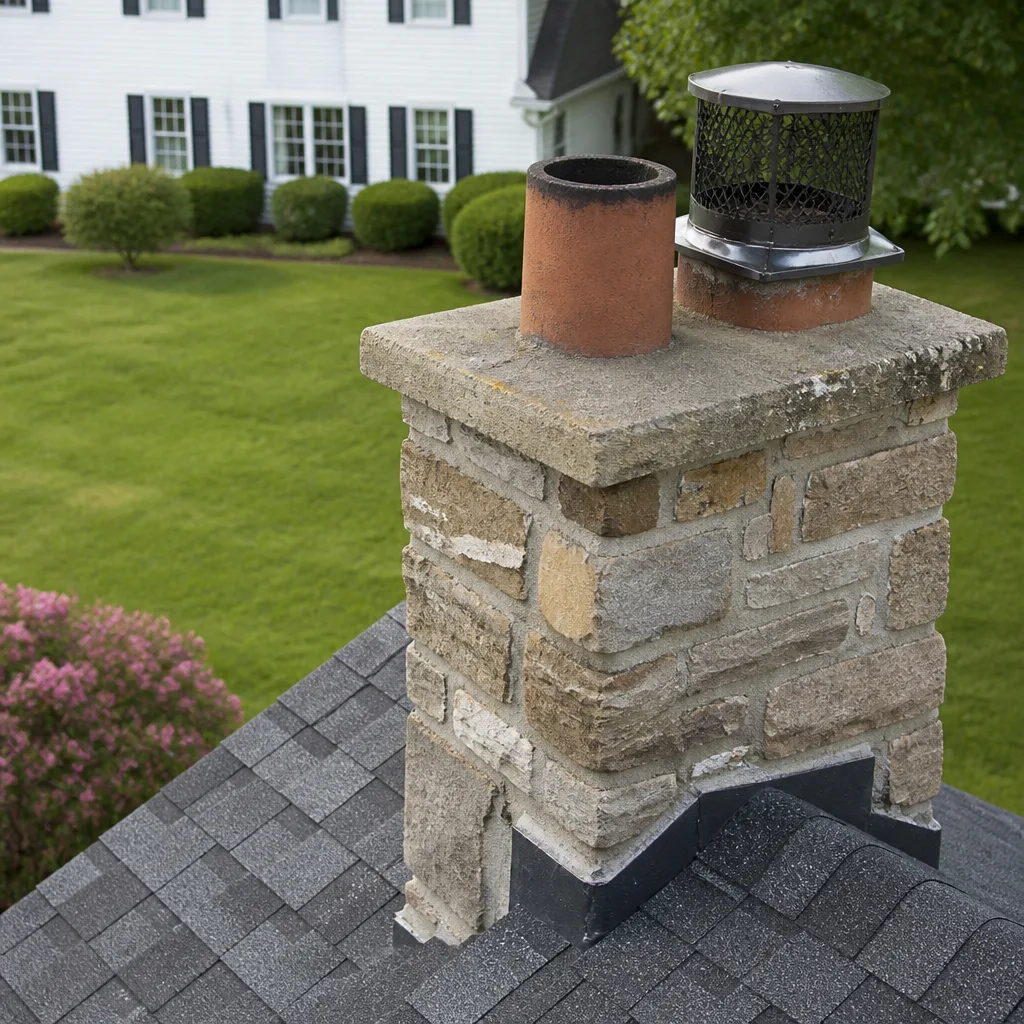
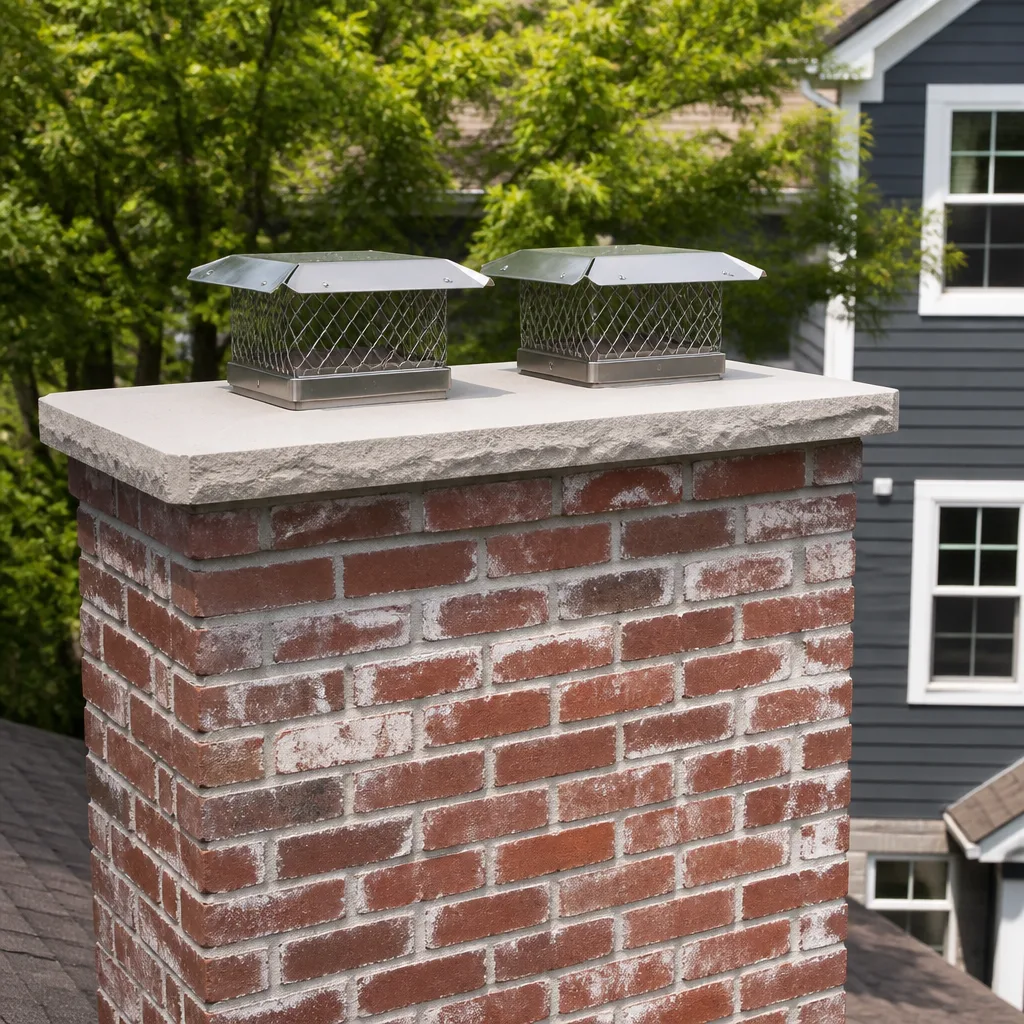
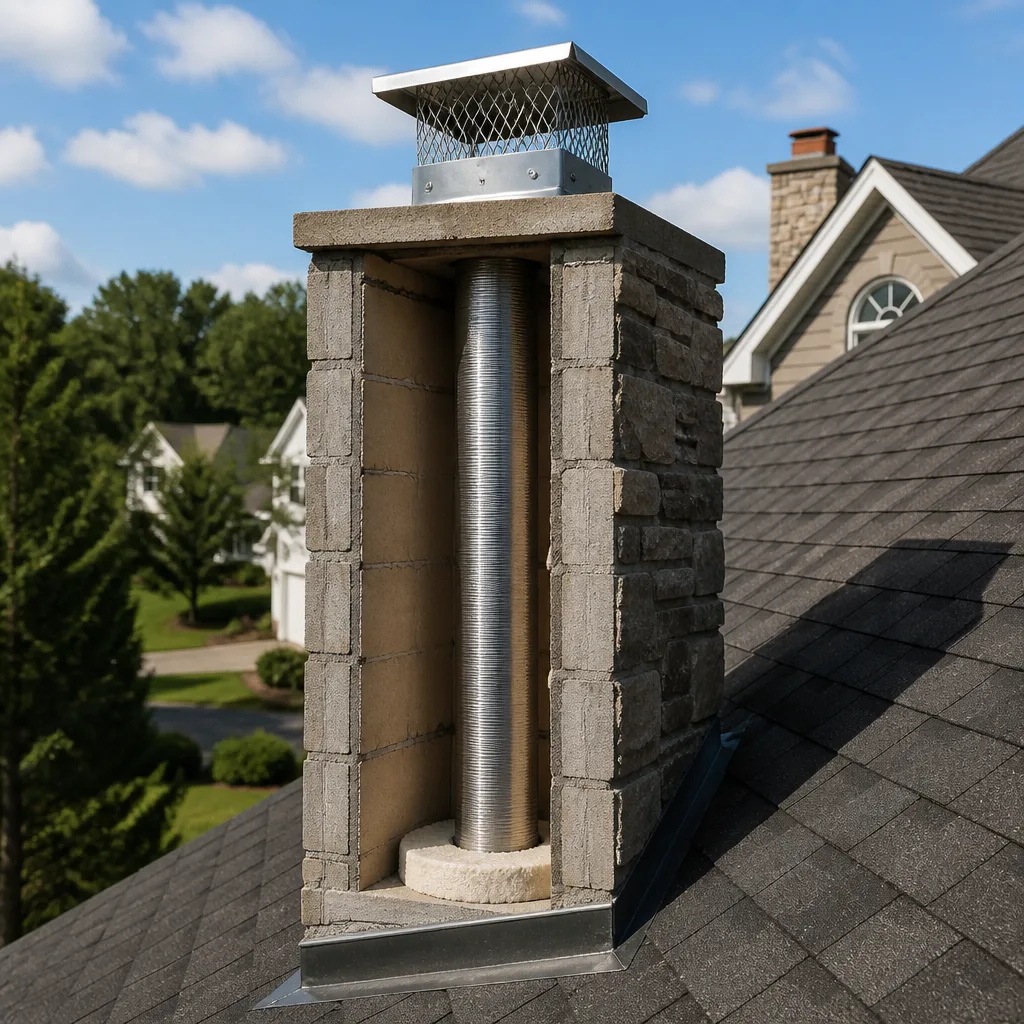
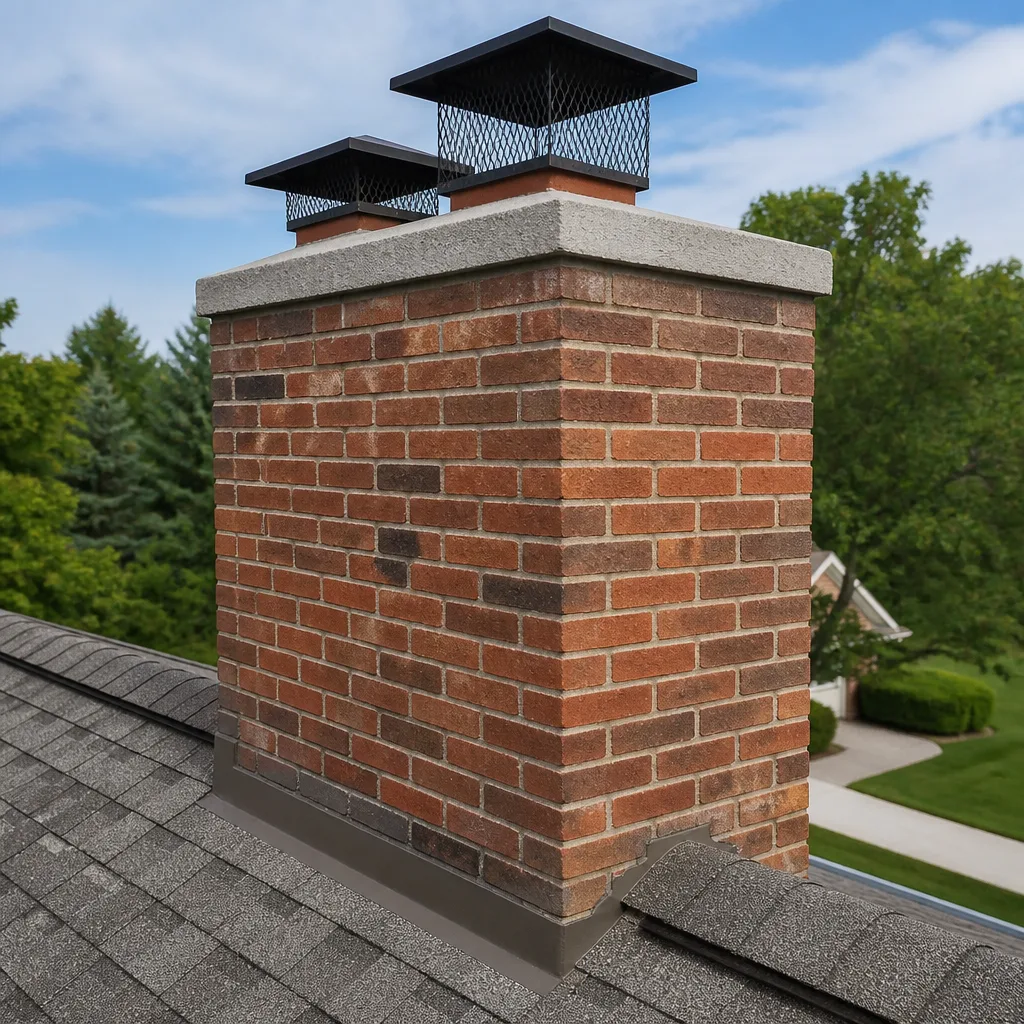
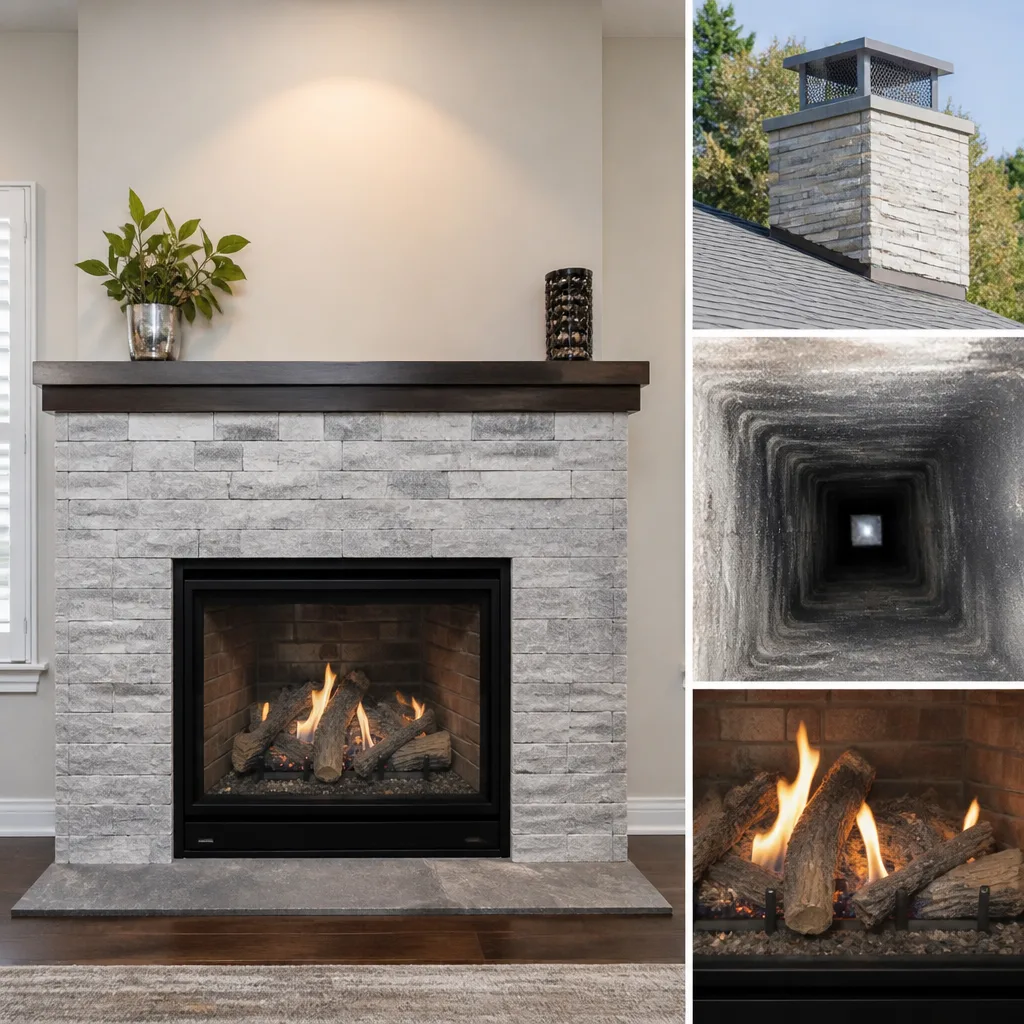
 Before
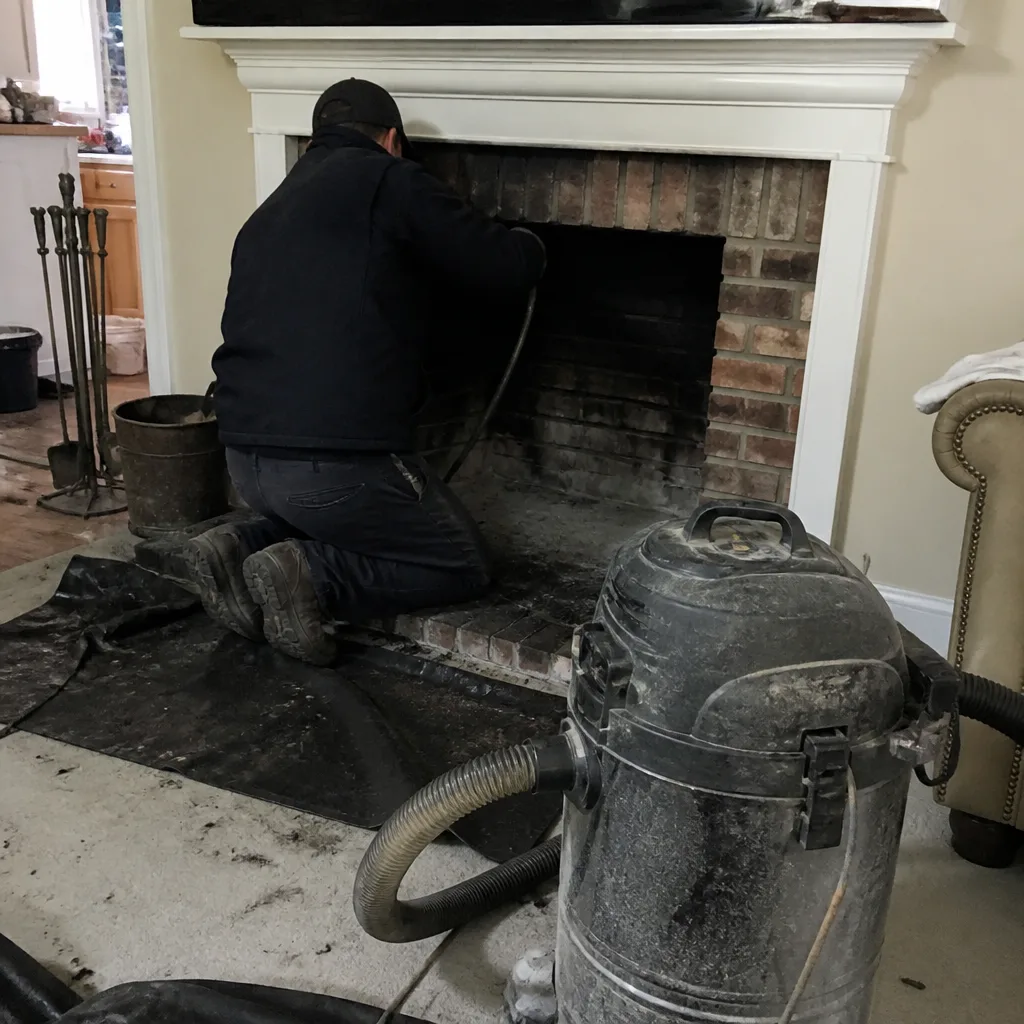
 After
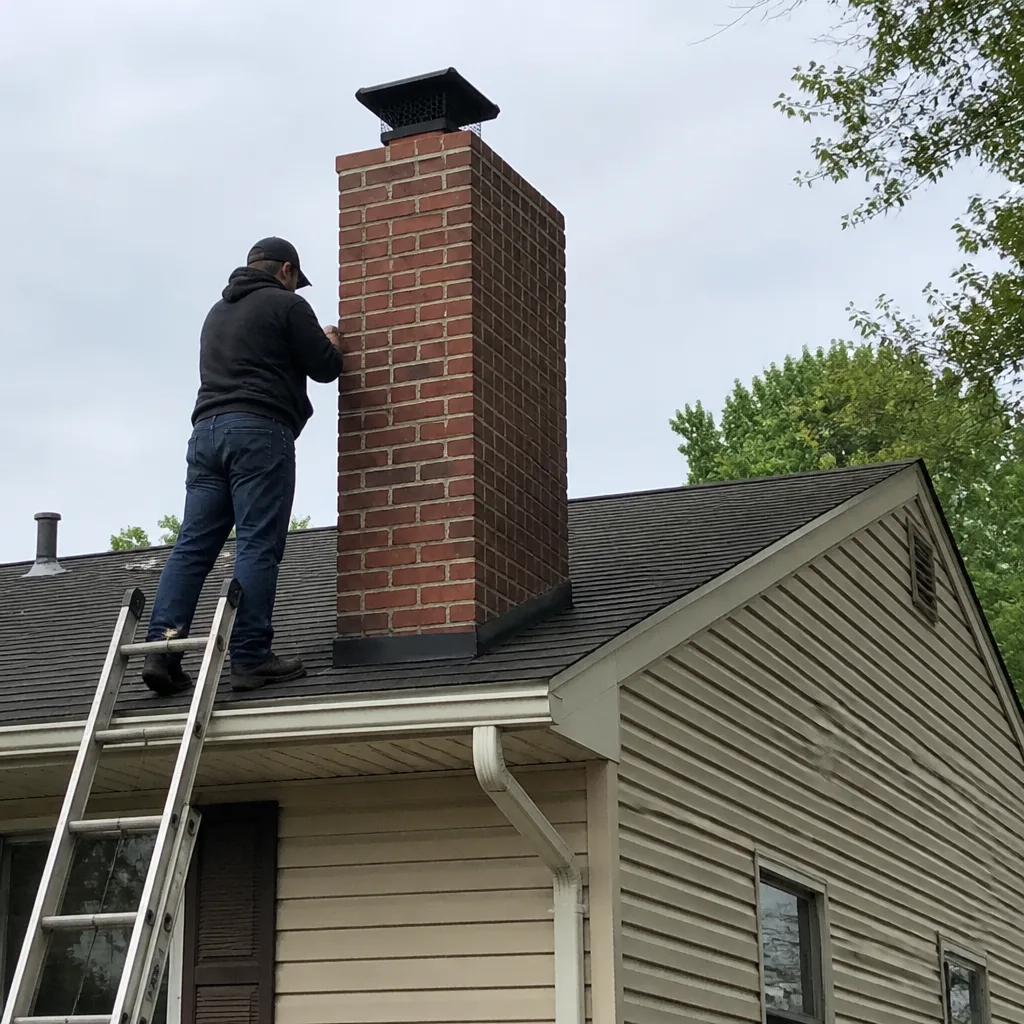
After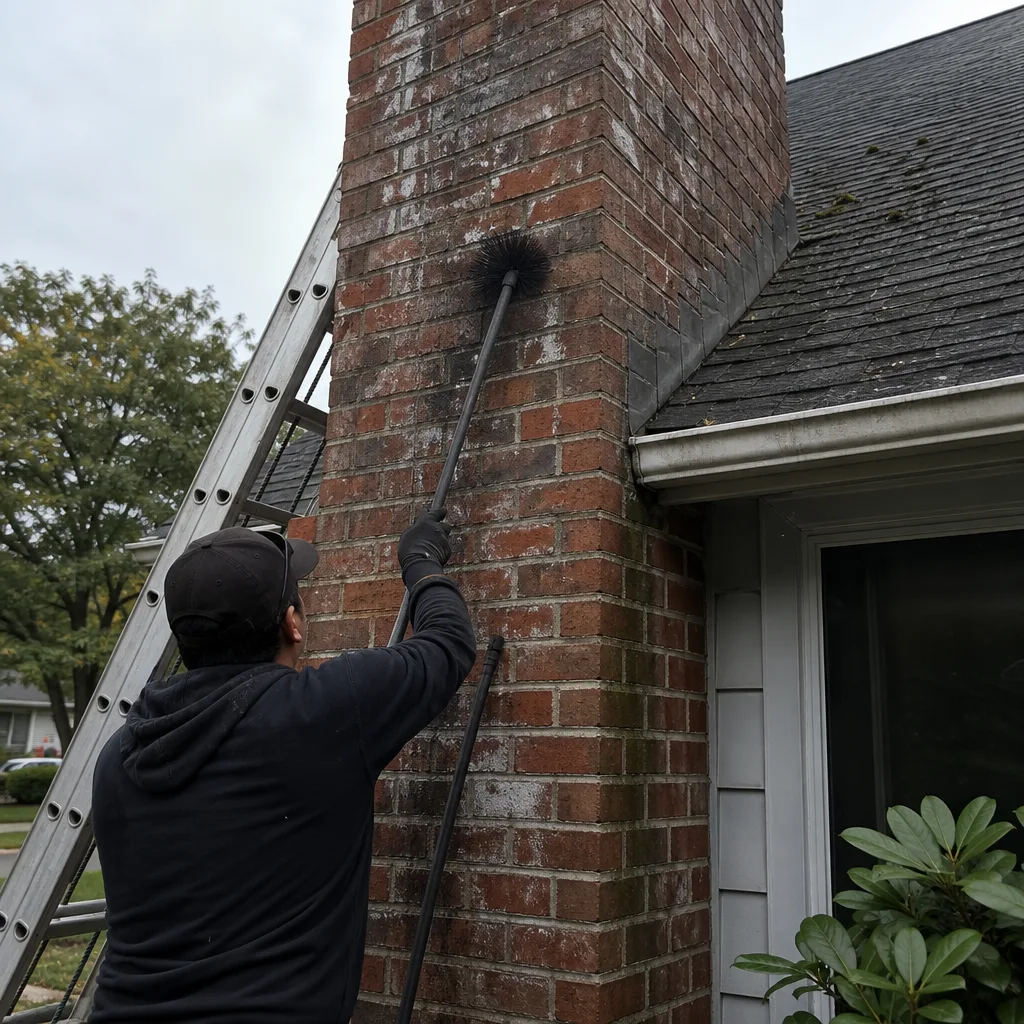 Before
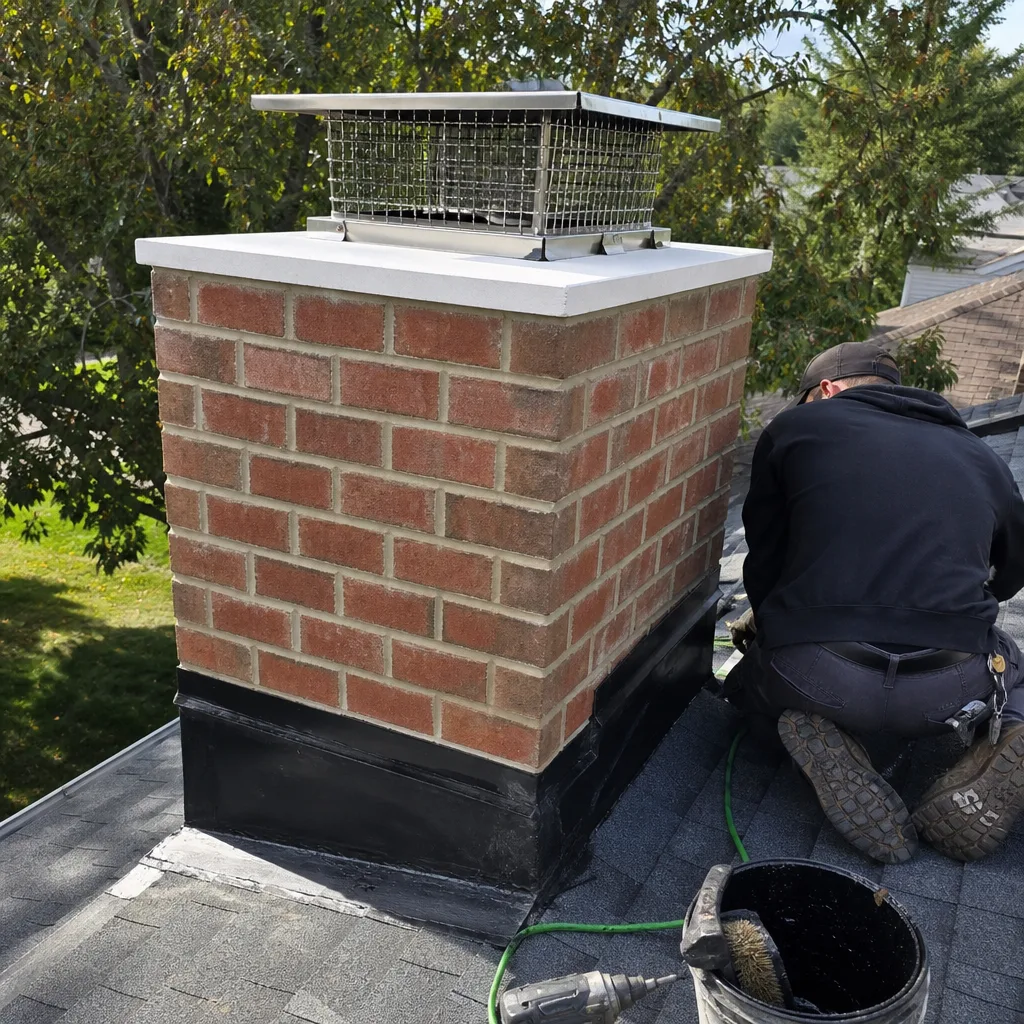 After
After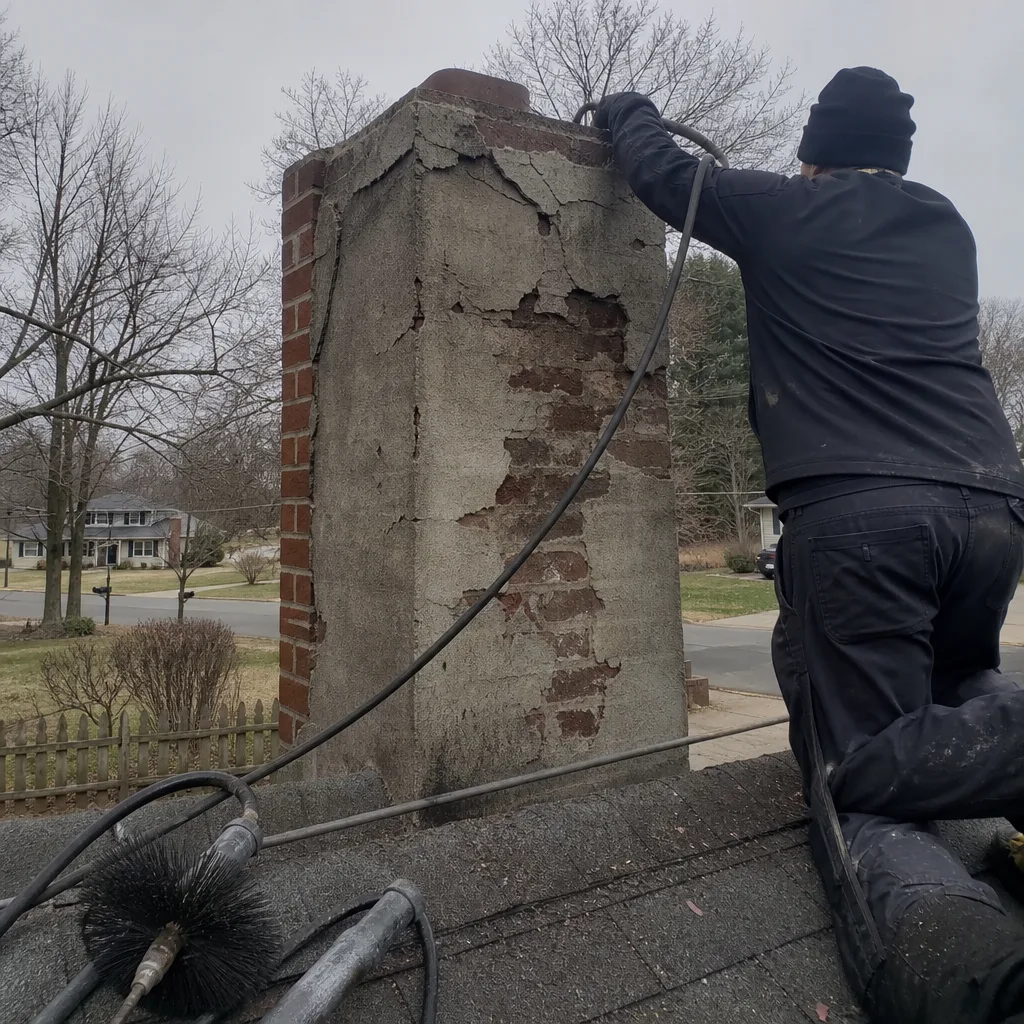 Before
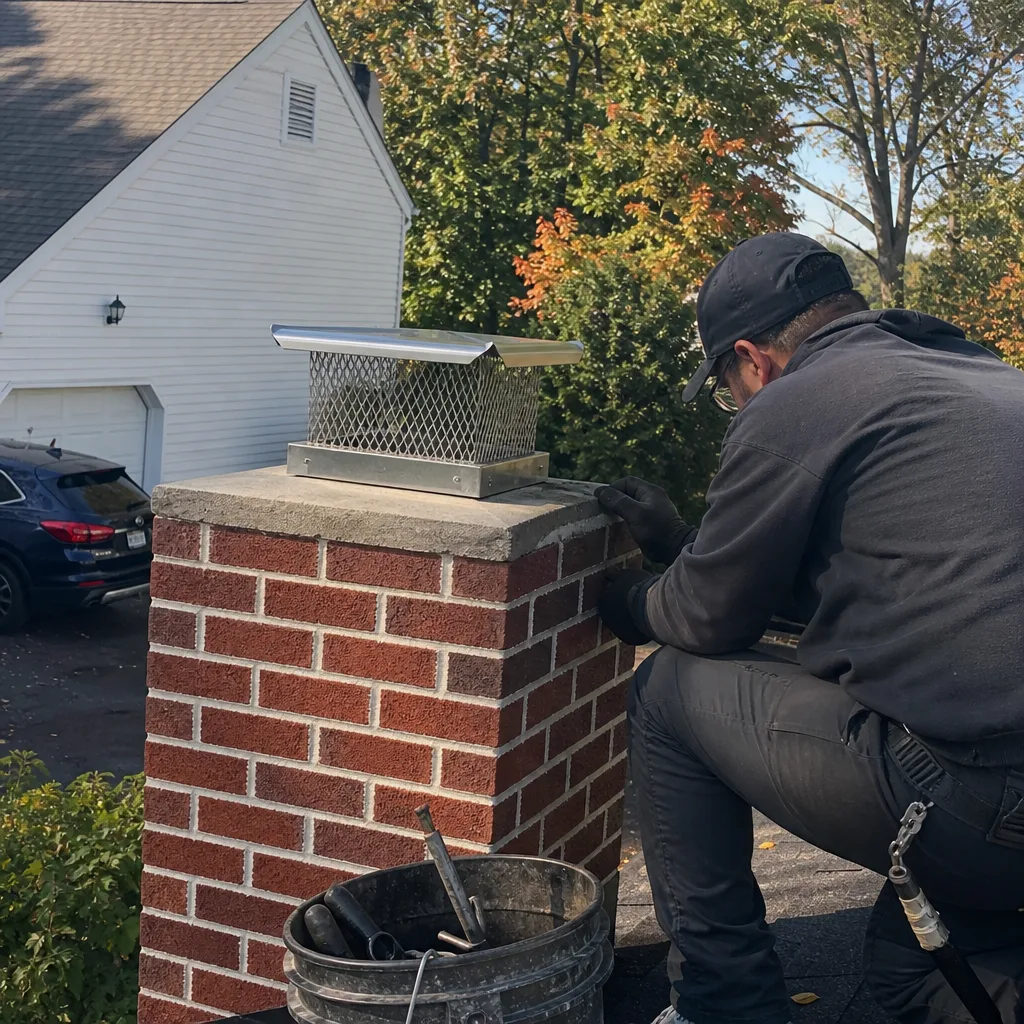 After
AfterSeasonal Chimney Cleaning Care for Gaithersburg: Year-Round Homeowner’s Guide
The creosote that causes most flue fires in Gaithersburg accumulated during October and November, not January, because that’s when fires are lit with green wood on cold-but-not-freezing nights that reduce draft and slow combustion. Homeowners think about the chimney when they’re about to light a fire. By then, the problem has been forming for months in conditions nobody noticed. This guide walks through what actually happens inside your flue across all four Gaithersburg seasons, when to clean, what to inspect, and how to build a maintenance checklist that protects your home and your resale value.
Quick Answer
Chimney cleaning in Gaithersburg should happen twice a year: a post-season sweep and inspection in April or May to assess winter buildup, and a pre-season check in September or early October before burning season begins. The April visit gives the most accurate inspection data because creosote has settled and moisture damage from spring rains is fully visible. A single annual fall cleaning means you’re burning all winter without knowing what’s accumulating in the flue.
Table of Contents
- Why Gaithersburg’s Shoulder Seasons Matter Most
- Month-by-Month Breakdown of a Gaithersburg Flue
- Post-Season Cleaning vs. Pre-Season Cleaning: What Each One Actually Does
- Summer Moisture Infiltration: What to Check in July That Has Nothing to Do With Fire
- Scheduling Around HVAC Contractors, Roofers, and Other Trades
- What a Full-Year Maintenance Record Looks Like (and Why It Matters)
- Common Mistakes to Avoid
- When to Call a Professional
- Frequently Asked Questions
- The Bottom Line
BeforeAfterWhy Gaithersburg’s Shoulder Seasons Matter Most
Gaithersburg sits in a climate band where the shoulder seasons of October-November and March-April produce the widest temperature swings of the year. On a 45-degree November night, the temperature differential between the inside of your home and the outside air is substantial enough to pull smoke up the flue, but not strong enough to create the kind of aggressive draft you get in January when it’s 20 degrees outside. The fire burns slower. Combustion is incomplete. And incomplete combustion is what drives creosote formation.
Creosote is not one substance. It’s a family of combustion byproducts that condenses on flue walls as smoke cools. The amount and type depend heavily on burn conditions. Class I creosote is dusty and loose, a light brown soot that brushes off easily. Class II is flaky and tar-like, harder to remove. Class III is the dangerous one: a hardened, glossy glaze that forms when creosote is repeatedly heated and cooled without being removed. Class III is a tar concentrate that ignites at roughly 350 to 450 degrees Fahrenheit, well within the range of a normal chimney fire once it starts.
What we see in Gaithersburg, year after year, is that October and November fires lit on marginally seasoned wood produce Class II creosote at a faster rate than January fires on properly dry wood. The homeowner doesn’t notice because the fireplace works fine. Smoke goes up. The room gets warm. But the flue is accumulating a fuel layer that will keep building all winter. By February, the deposits are thick enough that a hot fire can ignite them.
March and April present a different problem. Gaithersburg’s spring rains, combined with freeze-thaw cycles on masonry, push water into any crack or spall point in the crown or brickwork. That water carries creosote residue deeper into the masonry and accelerates deterioration. A chimney that was fine in February can show measurable spalling, which is the flaking or crumbling of brick surfaces caused by water infiltration and freeze-thaw expansion, by late March.
This is why we built our maintenance calendar around shoulder seasons. The problems form then. Discover them then.
Month-by-Month Breakdown of a Gaithersburg Flue
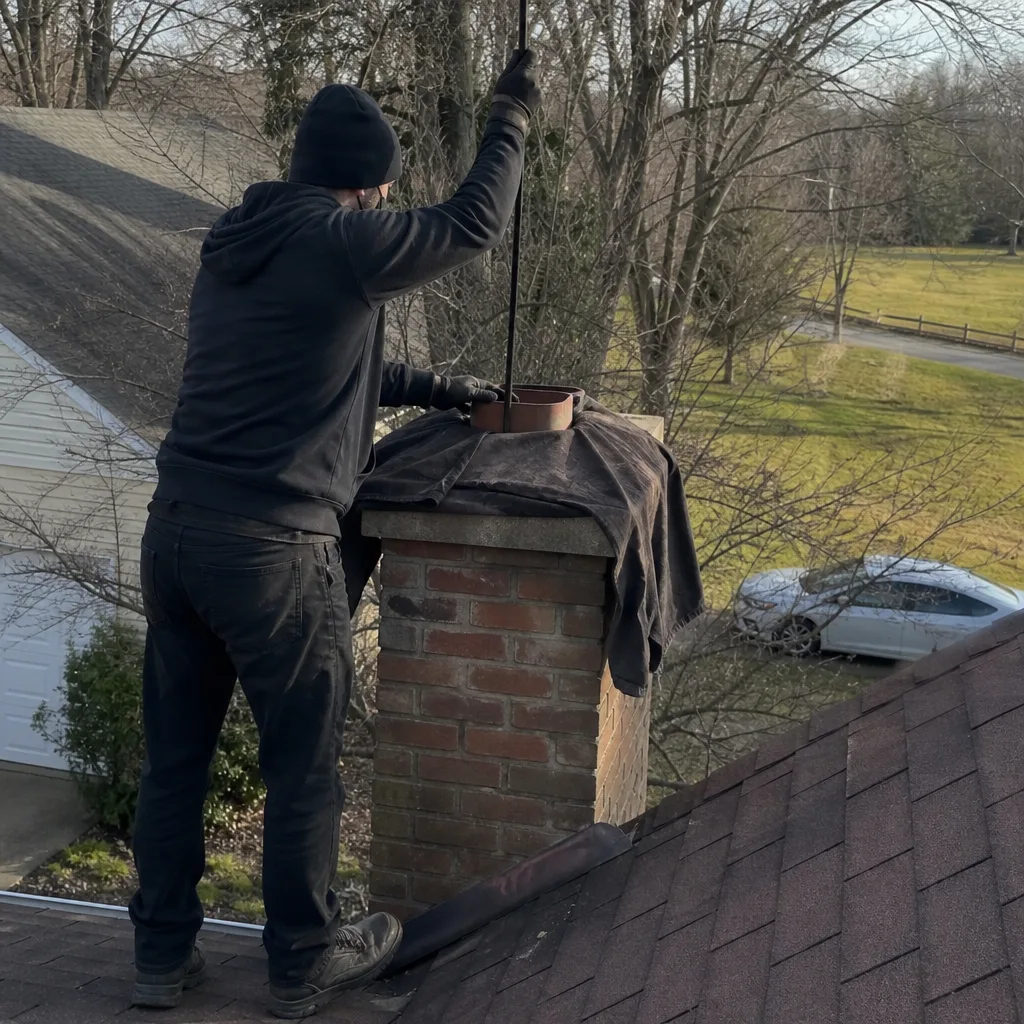
Here’s what actually happens inside a masonry chimney in Gaithersburg across a full year, and when you should act.
January: Peak Burn Month
Fires are burning hot and frequent. Draft is strong because the temperature difference between indoors and outdoors is at its widest. You’re adding creosote daily, but the hot burns keep deposits from building too thick. The risk now is overconfidence: a January fire that burns too hot can ignite Class III deposits left over from years past. If you hear a sound like a freight train or jet engine coming from the chimney, that’s a flue fire. Close the damper, shut the air supply, and call 911. After the fire is out, before you use the fireplace again, have the flue camera-scanned to check for structural damage. This is exactly what a Chimney Cleaning & Sweep in Gaithersburg visit covers.
February: Peak Creosote Accumulation
By now, a chimney last cleaned in October has accumulated 12 to 16 weeks of continuous creosote buildup. If you burned green wood in November, the flue now holds a mixture of Class II and possibly Class III deposits. This is the month when most flue fires happen, and few homeowners expect it because the weather is cold and the fire feels routine. If you notice a sudden change in draft, a smell in the room even when the fire is out, or visible tar-like buildup on the damper plate, stop burning and schedule a sweep.
March: Transition Creep
Fires become sporadic. You might light one on a cold Thursday night and not again for two weeks. Those intermittent fires are the worst for creosote, because deposits cool and harden between burns, and the next fire’s low-temperature smoke won’t burn them off. Gaithersburg’s March rains also start infiltrating any crown cracks. If you’re not going to clean until fall, you’re leaving March’s new moisture in contact with February’s creosote for six months. That moisture and creosote combination corrodes the flue liner slowly, even when no one’s using the fireplace.
April: The Post-Season Window
This is the ideal month for a full sweep and inspection in Gaithersburg. The burning season is over or nearly over, creosote has settled into its post-season state, and spring moisture has had a few weeks to reveal any water entry points. An April inspection sees the flue in its worst condition, which is exactly what you want: an honest read on what winter did and what spring is doing. At Level Two Chimney Gaithersburg, we camera-scan every flue during the April visit and provide a written photo record, so you know precisely what’s there before we quote any repair work.
May: Repair Season Opens
Masonry repair, liner replacement, and crown restoration work is best done when temperatures are consistently above 50 degrees and rain is intermittent. Gaithersburg’s May weather is cooperative, and contractors have open schedules. Any issues found during the April inspection can be addressed now, before the summer heat and before fall’s demand spikes.
June through August: Moisture Watching
Fires are done. The chimney sits dormant. But this is when masonry chimneys take on the most water. Summer thunderstorms dump rain on Gaithersburg, and a cracked crown or missing cap lets water run straight down the flue and into the smoke chamber. If you have a basement fireplace or a wall-vent furnace connected to the chimney, summer humidity pulls dampness into the house. A musty smell near the fireplace in July is a reliable indicator of water entry. More on this below.
September: Pre-Season Check
Before you burn anything in October, have the chimney checked. A September sweep removes summer debris, bird nests, spider webs, and any creosote that remained from last season. But the September visit is more about readiness than inspection depth. The flue has sat unused for months, and a quick check confirms the cap is on, the damper opens and closes, and no animal has claimed the space.
October through December: Burn Smart
Burn only seasoned hardwood, meaning wood cut and split at least 12 months prior and stored off the ground with good airflow. Gaithersburg’s fall humidity averages around 70 percent, so seasoned wood stored outdoors can reabsorb moisture unless it’s covered. A moisture meter reading above 20 percent means the wood is too wet to burn efficiently. Burn hot fires. A smoldering fire is a creosote factory. And if you cleaned in April, you’re burning with a known-clean flue instead of an unknown one.
Post-Season Cleaning vs. Pre-Season Cleaning: What Each One Actually Does
Most Gaithersburg homeowners do a single fall cleaning, and the fall sweep industry has built its entire model around that habit. But the pre-season clean has a significant blind spot, and you should know what it is-along with local permits and codes-before you decide the fall-only approach is enough.
A September sweep removes creosote deposits, yes. What it cannot do is tell you what’s going to happen to your flue in November, because the conditions that cause November’s buildup haven’t happened yet. You’re cleaning a flue that has been dormant for five months. It’s like checking your roof in August and thinking you’re fine for winter. The August roof check is useful, but it doesn’t tell you what February’s ice dams will do.
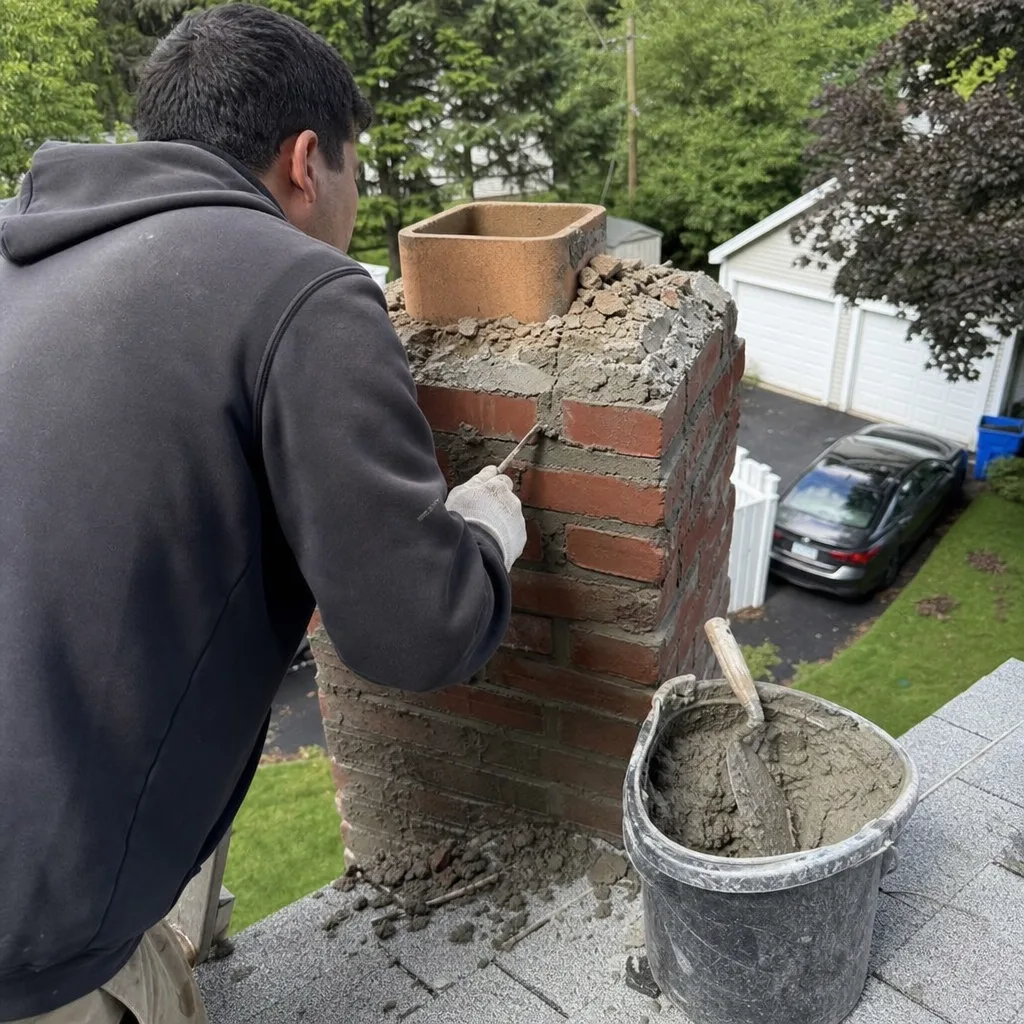
An April post-season sweep does something different. It removes that winter’s full creosote accumulation, including the Class II and Class III deposits that formed from October through March. It also lets us inspect the flue after an entire season of thermal stress has run through it. Any liner cracks, any crown spalling, any mortar joint failure caused by freeze-thaw cycles is fully visible in April. We can photograph it, document it, and tell you what it means in plain terms.
Here’s our recommendation for Gaithersburg homeowners:
- April or May: Full sweep, camera-scan inspection, written photo record. This is your primary annual cleaning. It leaves the flue clean going into summer, which prevents moisture from bonding with old creosote for six months and reduces acidic corrosion inside the flue liner.
- September or early October: Pre-season check. A quick sweep if anything has accumulated during summer. A visual and camera-scan review of the cap, crown, and flue. Confirm the damper operates correctly. This is a readiness check, not a deep inspection.
- Mid-season (optional, for heavy users): If you burn more than 40 fires per season or you burn green wood, consider a third sweep in January to reset the flue before the peak of the season.
You don’t need to do both full visits every year if you’re a light burner. But doing the April sweep and the September readiness check once in the same calendar year will give you the most accurate picture of your chimney’s health that you’ve ever had. And if you later go back to a single annual clean, you’ll know from evidence which season actually matters for your home.
If the April inspection turns up liner damage, we’ll quote the repair in writing before any work starts, and we’ll show you the camera footage that justifies it. For homeowners who want a second set of eyes, we offer a free second opinion on any written estimate. Bring us a competitor’s quote and we’ll tell you honestly whether we can beat it, match it, or whether the other guy’s scope is more than you need. That’s part of how we work under the Haven Standard, and it’s been our practice in Gaithersburg since 2009.
Summer Moisture Infiltration: What to Check in July That Has Nothing to Do With Fire
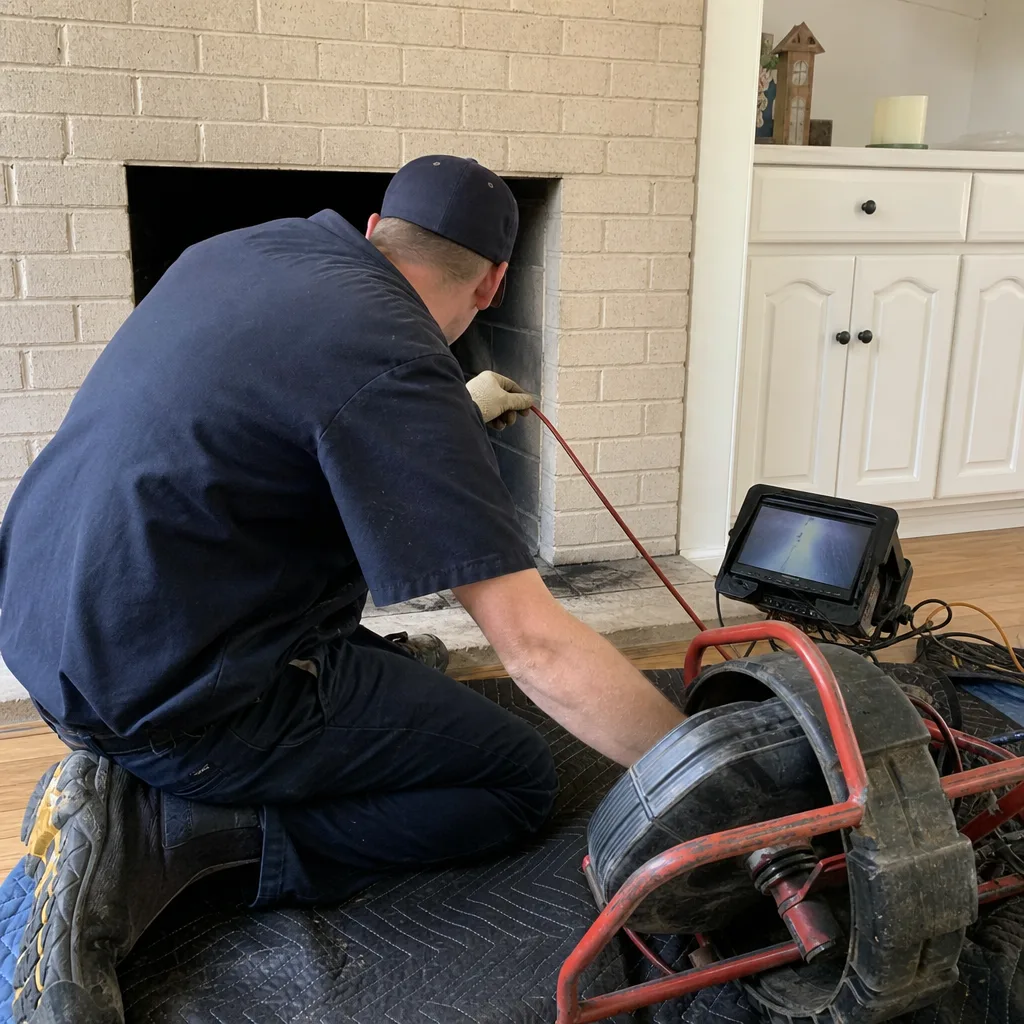
The biggest threat to a Gaithersburg chimney in summer isn’t creosote. It’s water. And the damage water does in July is invisible until October, unless you know what to check.
Gaithersburg averages roughly 40 inches of rain per year, with July and August among the wettest months. A masonry chimney without a proper cap or with a cracked crown absorbs that water directly. Here’s what you can check yourself in July, without touching anything on the roof:
- Stand in the room and smell. If the fireplace area has a musty, damp odor in humid weather, water is likely entering the flue. In a masonry chimney, that water carries residual creosote down the flue walls, and the smell is distinctive: like a wet campfire that never dried out.
- Look for efflorescence. Efflorescence is a white, chalky deposit on brick surfaces that appears when water moves through masonry and carries soluble salts to the surface. If you see it on the chimney-facing wall inside your house, or on the exterior brick where the chimney meets the roofline, you have active moisture movement.
- Check the smoke chamber for staining. The smoke chamber is the sloping area above the firebox that funnels smoke into the flue. If you shine a flashlight up from the firebox and see dark stains or drips, water has been running down the flue liner and condensing in that space.
- Listen during heavy rain. If you hear dripping inside the chimney during a storm, that’s water hitting metal, which means the cap is missing, damaged, or improperly sized.
The best way to confirm what’s happening is to have the chimney camera-scanned in early summer. Clause 4 of the Haven Standard requires a photo record on every job, and that record is what tells us whether the moisture you’re smelling is from a missing cap, a cracked crown, a failed liner, or just high summer humidity being drawn down an unsealed flue. Each fix has a different price and a different urgency, and you shouldn’t pay for a liner replacement when the only problem is a $150 cap.
On the cap issue specifically: a proper chimney cap for a Gaithersburg home does three jobs. It keeps rain out of the flue when there’s no fire. It keeps animals out; Gaithersburg’s tree canopy means squirrels and raccoons are regular chimney tenants in summer. And it has a spark arrestor mesh that prevents hot embers from escaping onto your roof or a neighbor’s roof during a fire. If your cap is rusted through, missing its mesh, or sized incorrectly for the flue, the fix is straightforward and should happen before October.
Materials matter here, and we source caps and crowns from Copperfield and Olympia Chimney because their stainless steel and cast aluminum components hold up to Mid-Atlantic freeze-thaw cycles better than the thin galvanized caps sold at home centers. A cap that fails in three years isn’t a bargain. A Copperfield stainless cap should last 15 to 20 years on a Gaithersburg roofline.
Scheduling Around HVAC Contractors, Roofers, and Other Trades
Here’s a pattern we see in Gaithersburg more often than homeowners expect. A roofing crew replaces shingles in July. In August, a plumber runs a new vent line through an interior wall. In September, an HVAC contractor installs a new high-efficiency furnace and ties the exhaust into the existing chimney. In October, the homeowner lights the first fire, and the draft is terrible. Smoke backs into the room. The homeowner calls us. The camera scan shows a roof vent that’s too close to the chimney cap, a flue shared by a furnace and a fireplace that shouldn’t share a flue, and a liner cross-section that’s now undersized for the appliances feeding it.
The trades didn’t do anything wrong within the scope of their own work. But none of them were looking at the chimney, and none of them knew the chimney’s history. And the homeowner, reasonably, assumed that if there was a problem, someone would have mentioned it.
No one disclosed it, and no one will. That’s where you have to be proactive. Here’s how to schedule around other trades so their work doesn’t compromise your flue:
- Camera-scan the chimney before a roof replacement is scheduled. If the roofer is going to be working around the chimney, you want a written record of the flue’s condition before work begins. If the roofer damages the cap or crown, or if they install new flashing incorrectly, the before-photos tell you exactly what changed and when. Any Chimney Repair in Gaithersburg claim becomes straightforward when you have the documentation.
- If you’re upgrading to a high-efficiency furnace, ask where the exhaust will vent. Many new furnaces vent through sidewall PVC rather than the chimney. But some installations still tie into the existing flue, and a modern furnace’s lower exhaust temperature can condense more heavily inside the old liner. That condensation is acidic and accelerates liner damage. Tell the HVAC contractor the chimney is fitted with a liner installed in a specific year, or have us camera-scan before the furnace work so you know what the flue can handle.
- After any roof work, check the crown and flashing. A roofer who’s replacing shingles has to work around the chimney. If they pry against the crown or step on it, hairline cracks open. Those cracks let water in. Within a season, you’ll see spalling on the brick or damp staining at the roofline. A quick post-roof camera scan catches this before the damage compounds.
- If a pest control company tells you there’s a bird or squirrel in the chimney, don’t just have them remove the animal. Ask how the animal got in, and then have the cap inspected. A missing or compromised cap is an invitation for the next animal. Gaithersburg’s mature trees make this a recurring issue in spring and early summer.
The thread running through all of these is the same: get the flue on record before other people work near it, and after. The record protects both you and the other contractor. It turns “he said, she said” into a date-stamped photo showing exactly what the flue looked like before and after.
What a Full-Year Maintenance Record Looks Like (and Why It Matters)
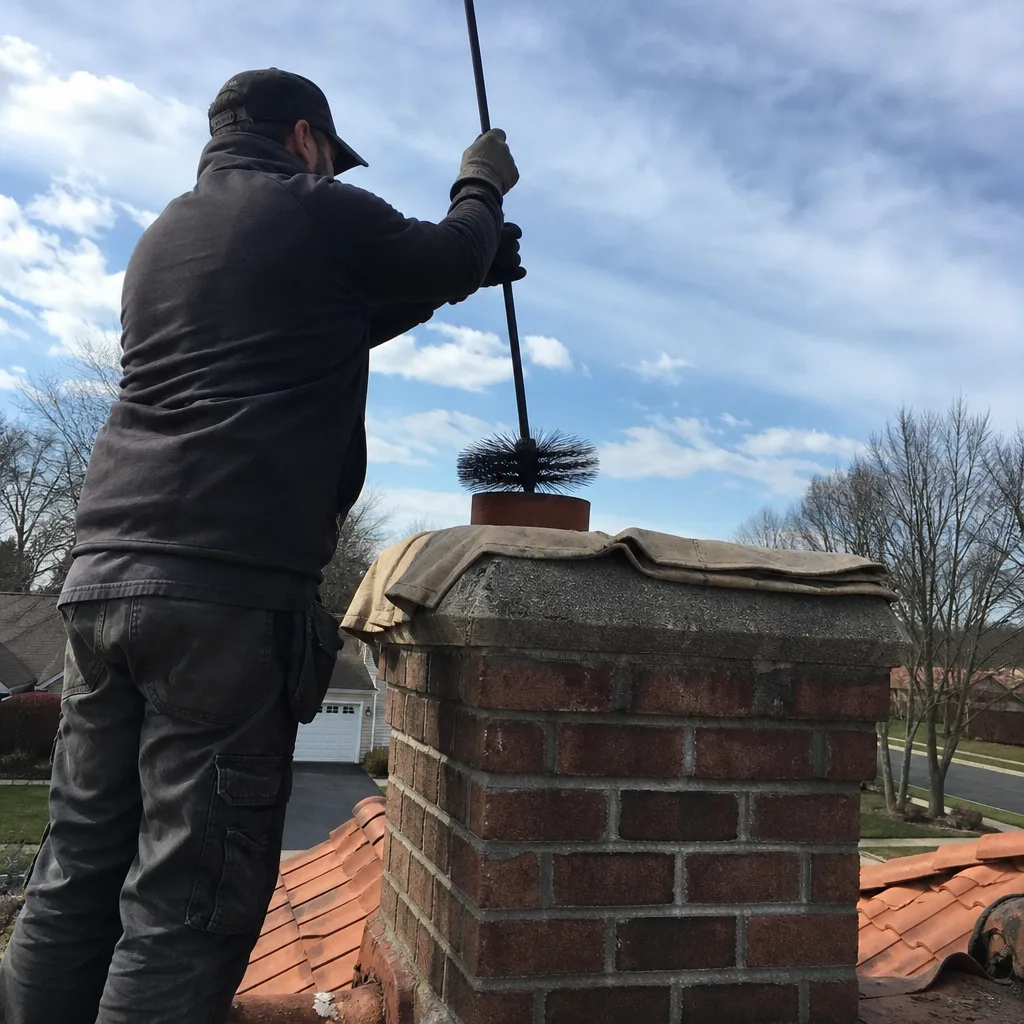
Most Gaithersburg homeowners have no maintenance record for their chimney, not because they don’t care, but because no one ever gave them one. They’ve paid for sweeps. They know a company came out. But there’s no document showing what was found, what was cleaned, what was recommended, and what was deferred. That’s a problem for insurance claims, for resale, and for your own decision-making.
A proper maintenance record for a chimney in Gaithersburg should include, at minimum:
- Date of service and service type. Sweep only, sweep plus inspection, inspection only, repair.
- Technician name and certification status. A named tech, not just a company name.
- Camera-scan photos and/or video. Stills of the flue liner, smoke chamber, damper, cap, and crown, taken during the visit, with a date stamp.
- Creosote findings. Class I, II, or III, and where in the flue it was found.
- Structural findings. Liner condition, crown cracking, spalling, flashing condition, mortar joint erosion.
- Recommendations. What was fixed, what was deferred, and why it can wait. A deferred recommendation should always include a written reason and a date by which it should be reassessed.
- A written price for any recommended work. Not a verbal quote. A written price.
That record does three concrete things for you. First, on insurance: if you ever have a chimney-related fire or a water-damage claim and the adjuster asks when the flue was last inspected, a dated photo record is the difference between a claim that gets paid and a claim that gets denied. “We had it cleaned a few years ago” is not a document. Clause 4 of the Haven Standard exists because of this exact situation, and we’ve been camera-documenting every visit since 2009, not because regulators required it, but because our own customers needed it for their records.
Second, on resale: Maryland home inspections do not include a camera scan of the chimney. The home inspector will shine a flashlight up the flue and note whether it’s clean. That’s it. If you’re selling a home in Gaithersburg and you hand the buyer a folder showing three years of dated camera-scan photos and a clean bill of structural health, you have moved the negotiation. The buyer’s inspector is not going to find a problem you didn’t disclose, because the problem isn’t there. And if the buyer asks for a chimney credit, you have the evidence to decline.
Third, for your own planning: when you can pull up last April’s inspection and see that the liner was clean with no Class III deposits, but this April’s scan shows glaze forming in the upper third, you know something changed. Maybe you burned greener wood this season. Maybe the damper isn’t seating as tightly. Maybe the liner is aging. You’re making decisions from evidence, not from a vague sense that “it’s probably fine.”
If you’re working with us, the record is automatic. Every visit at Level Two Chimney Gaithersburg includes a camera-scan photo report, whether it’s a sweep, an inspection, or a repair. The 365-Day Done Right Promise backs the work: if it’s not done right, we make it right. That promise is stamped on every job under the Haven Standard, and it’s not a warranty slogan. It means if you find something wrong with work we did, within a full year, you call and we fix it. No argument about whose fault it was. No re-quote. Done right, or made right.
Common Mistakes to Avoid
- Cleaning only in the fall. The April sweep catches what winter actually did. The September sweep only removes what’s there, which is often nothing, because the flue sat dormant all summer. If you do one clean a year, make it April. Do the September check as a separate, lighter-touch visit.
- Burning green wood in October and November. Gaithersburg’s fall humidity means wood stored outside without a cover reabsorbs moisture fast. If you don’t have a moisture meter, buy one. It’s a $25 tool that tells you in two seconds whether the wood you’re about to burn is going to build up a chimney’s worth of creosote.
- Ignoring a musty smell around the fireplace in summer. That smell is water, and it’s either coming down the flue from a failed crown or cap, or condensing inside the smoke chamber from summer humidity. Neither one fixes itself. The longer it sits, the more expensive the repair.
- Assuming the roofer or HVAC contractor checked the chimney. They didn’t, and it wasn’t their job. If roof work happened and you didn’t camera-scan before and after, you have no way to connect new chimney damage to the roof work, and you’ll be paying for it yourself.
- Deferring a cracked crown because “the chimney still works.” A cracked crown doesn’t affect draft. It affects masonry integrity, and by the time it shows up as spalling brick or a leaking roofline, the repair is no longer a crown patch. It’s a rebuild.
- Not keeping records. A paid invoice with no findings report is not a maintenance record. If you can’t produce a dated photo of your flue’s condition from last year, you don’t have a maintenance program. You have a habit of paying a company to come by.
- Using the fireplace to burn anything other than seasoned wood. Wrapping paper, cardboard, pizza boxes, and pressed-wood logs produce high-volume, fast-burning fires with unpredictable creosote profiles. The dyes, adhesives, and paraffin in manufactured products leave residues that are harder to remove and more corrosive to liners than plain wood creosote.
When to Call a Professional
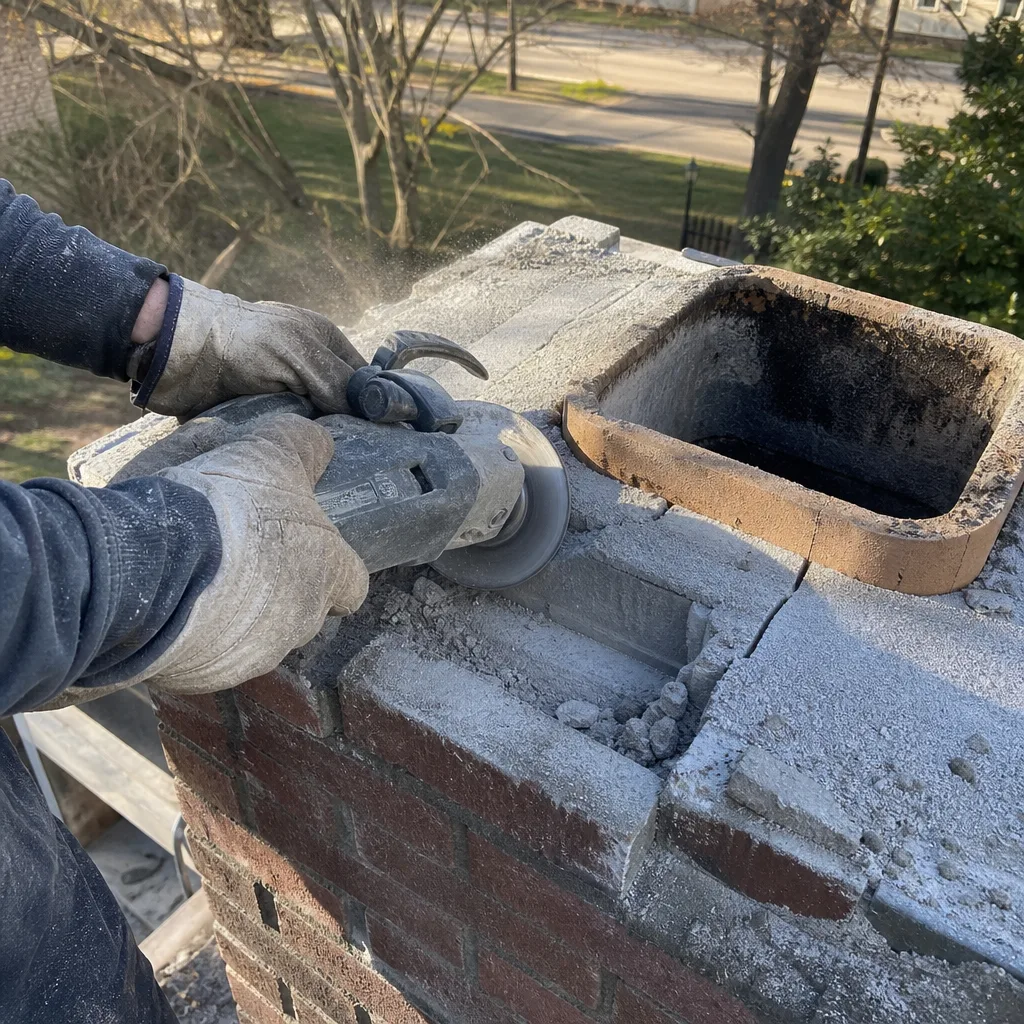
Some chimney work is DIY-safe and we’ll say so; for more guides & resources, check our blog. Checking the damper, cleaning glass doors, running a moisture meter on your firewood, inspecting the cap from the ground with binoculars: all fine. Other work is not. If you see flaking brick, a cracked crown, water staining, Creosote buildup you can’t reach, or an animal in the flue, call someone with a camera and a license. If you hear a noise like a jet engine from the chimney during a fire, close the damper and call 911 first, then us after. If your carbon monoxide detector goes off near the fireplace, same order: first responders, then us. And if you’re buying a home in Gaithersburg with a fireplace, get the flue camera-scanned before closing, because the standard home inspection doesn’t do it. Level Two Chimney Gaithersburg offers free estimates in Gaithersburg; call (240) 220-9395 and we’ll get you a written price before any work starts.
Frequently Asked Questions
Twice a year for most homes: a full post-season sweep in April or May, and a pre-season readiness check in September or early October. Homes that burn fewer than 20 fires per season can get away with an annual April sweep. Homes that burn 40-plus fires or burn green wood should consider a mid-season sweep in January as well.
In Gaithersburg, a standard chimney sweep runs between $180 and $350, with most single-flue masonry chimneys landing around $220 to $280; see our Chimney Cleaning Cost Breakdown for a full Gaithersburg homeowner’s reference. The price moves with the flue’s condition: Class III glazed creosote takes longer to remove and can push the price higher. Any camera-scan inspection, damper check, and cap inspection should be included or itemized separately, never hidden. At Level Two Chimney Gaithersburg, we quote a written price before any work starts, and the camera-scan photo record is included on every visit, not an add-on.
You need a new flue liner only if the camera shows one of three things: cracks or gaps that let heat and gases escape into the chimney structure, spalling or deterioration that has reduced the liner’s wall thickness below safe levels, or a liner that’s undersized for the appliance venting into it. Many liners that “need” replacing after a visual-only inspection are actually serviceable for years. That’s why we don’t recommend a liner replacement in Gaithersburg without showing you the camera footage first. If a company recommends a liner replacement and won’t show you the scan, get a second opinion. We offer one free on any written estimate.
If you’re a light burner, possibly nothing visible. If you burn regularly, you’re accumulating creosote that makes the next fire slightly riskier at best, and you’re leaving the flue uncleaned through a full summer of moisture exposure, which accelerates corrosion. The more common problem is what you miss in a skipped year’s inspection: a cracked crown, a missing cap, a damaged liner. Those problems don’t announce themselves. They’re found on camera when someone looks. Skip the look, and you won’t know until water damage shows up inside or the flue can’t draft.
You can buy brushes and rods at any hardware store, and for a single-story, straight-run flue with light Class I creosote, a DIY sweep is physically possible. What you can’t DIY is the camera scan and the structural assessment. A brush job doesn’t tell you whether Class III glaze is hiding in the upper third, whether the liner has a crack opening, or whether the cap is about to fail. In our experience with Gaithersburg homes, the most valuable part of a sweep is what the camera sees, not what the brush removes. If you DIY, you’re paying zero for the part that doesn’t help and skipping the part that does.
April, full stop. The burning season has ended, the creosote has settled, and spring moisture has exposed any water entry points. An April sweep and camera scan gives you the most accurate picture of the flue’s condition at any point in the calendar year. You can then address any repairs in May before summer humidity compounds the problem, and you’ll enter the fall knowing the flue is clean and documented as clean.
The Bottom Line
Gaithersburg’s chimney problems form in the shoulder seasons when the temperature swings are widest and the fires are most inefficient. The fix to that is not more frequent cleaning in January. It’s cleaning and camera-scanning in April, when the evidence of winter is fully on display, and doing a lighter readiness check in September before the first fire. Keep records. Check moisture in summer. Schedule around other trades. And when you need a sweep, an inspection, or a repair, get a written price and a documented photo record before you agree to anything. Level Two Chimney Gaithersburg home service area covers Gaithersburg and nearby communities. For Fireplace Services in Gaithersburg, chimney cleaning, and repairs, call (240) 220-9395 and we’ll put a written quote in your hands before any work begins.
Written by Corrine Halstead, Owner at Level Two Chimney Gaithersburg, serving Gaithersburg since 2009.