
Last updated September 20, 2026
Level 1 sweep and inspection to the NFPA 211 annual standard - flue, crown, cap, and flashing checked and photographed
Chimney sweep logs do not sweep chimneys. They loosen some creosote - which then falls where a brush and vacuum still have to collect it.
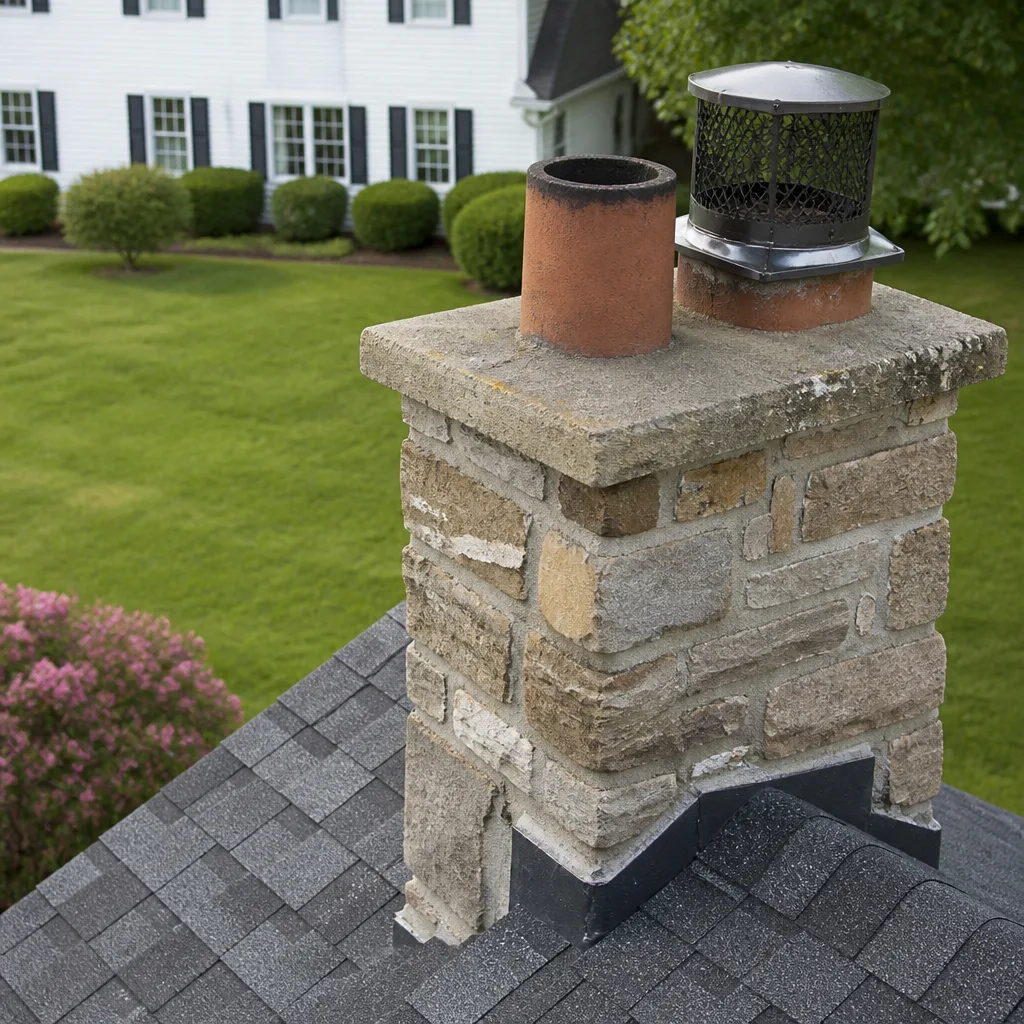
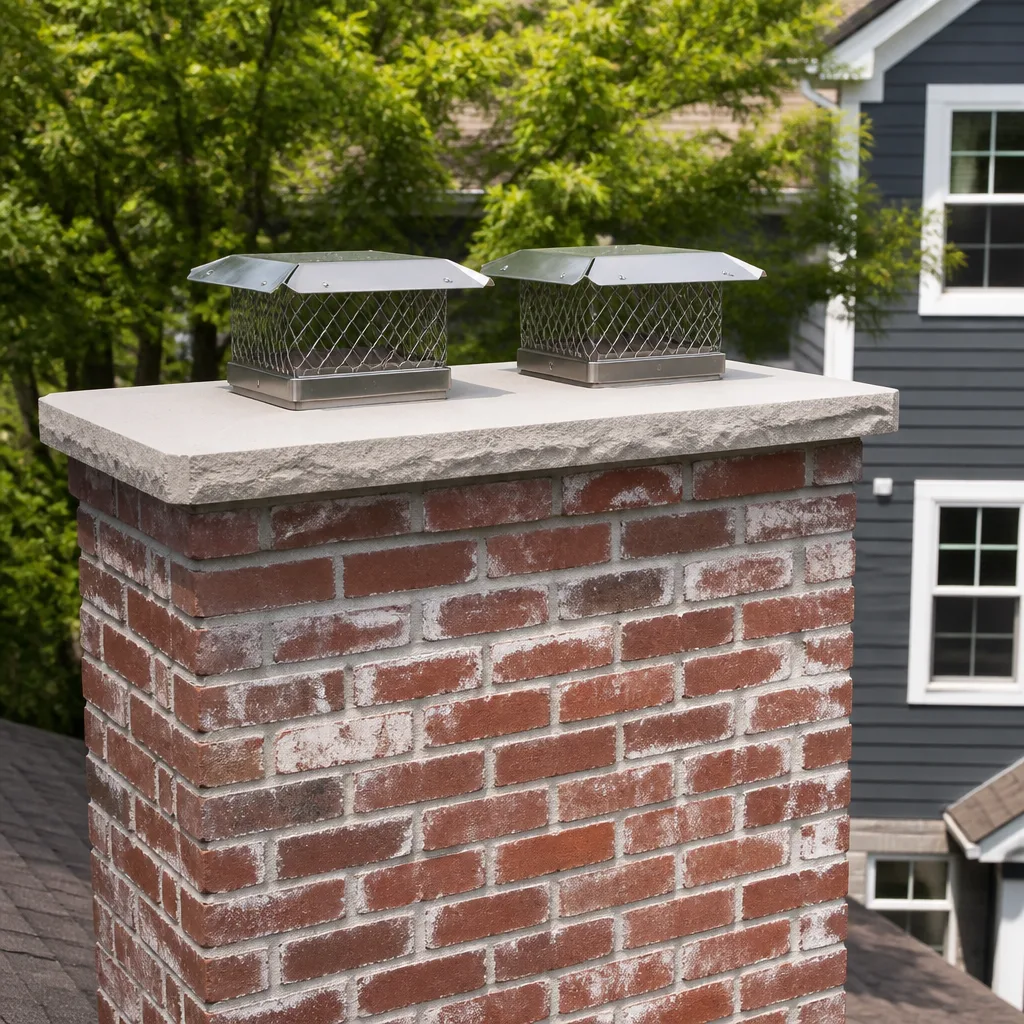
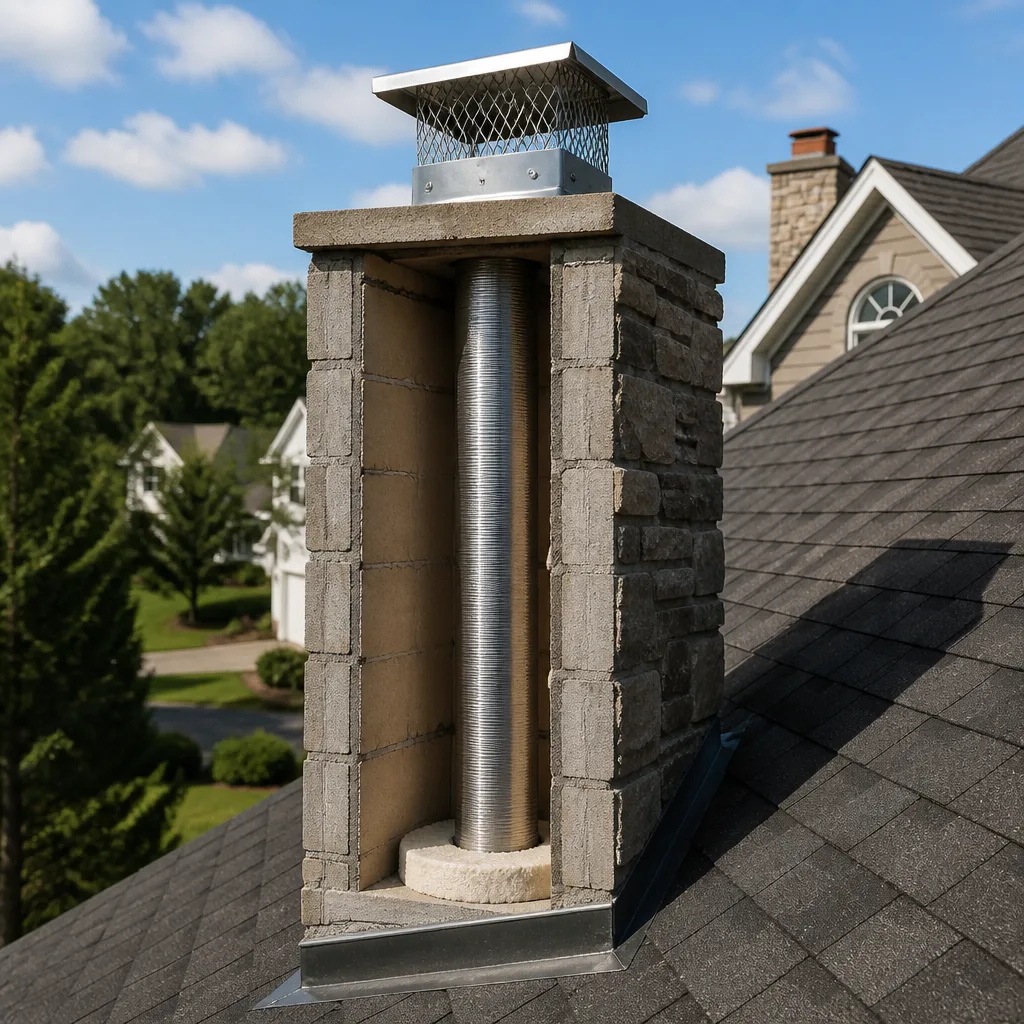
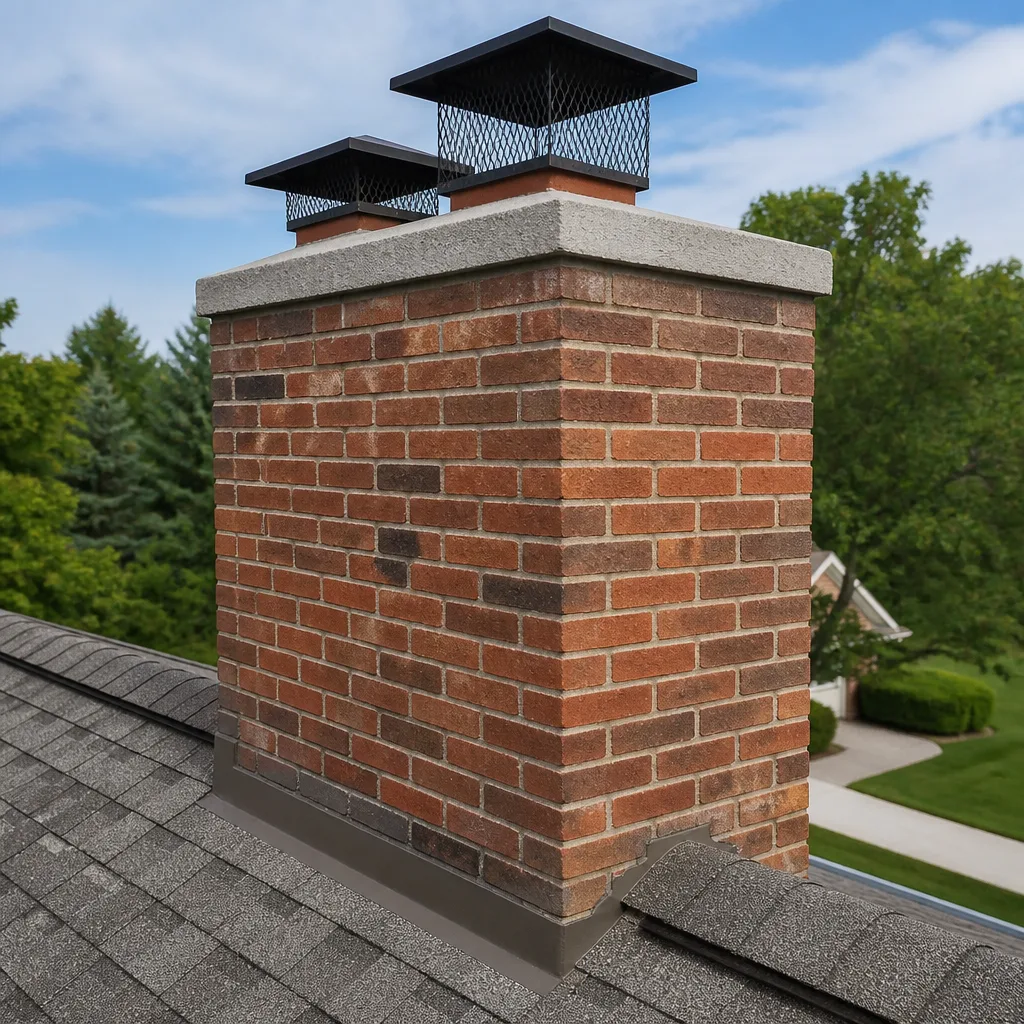
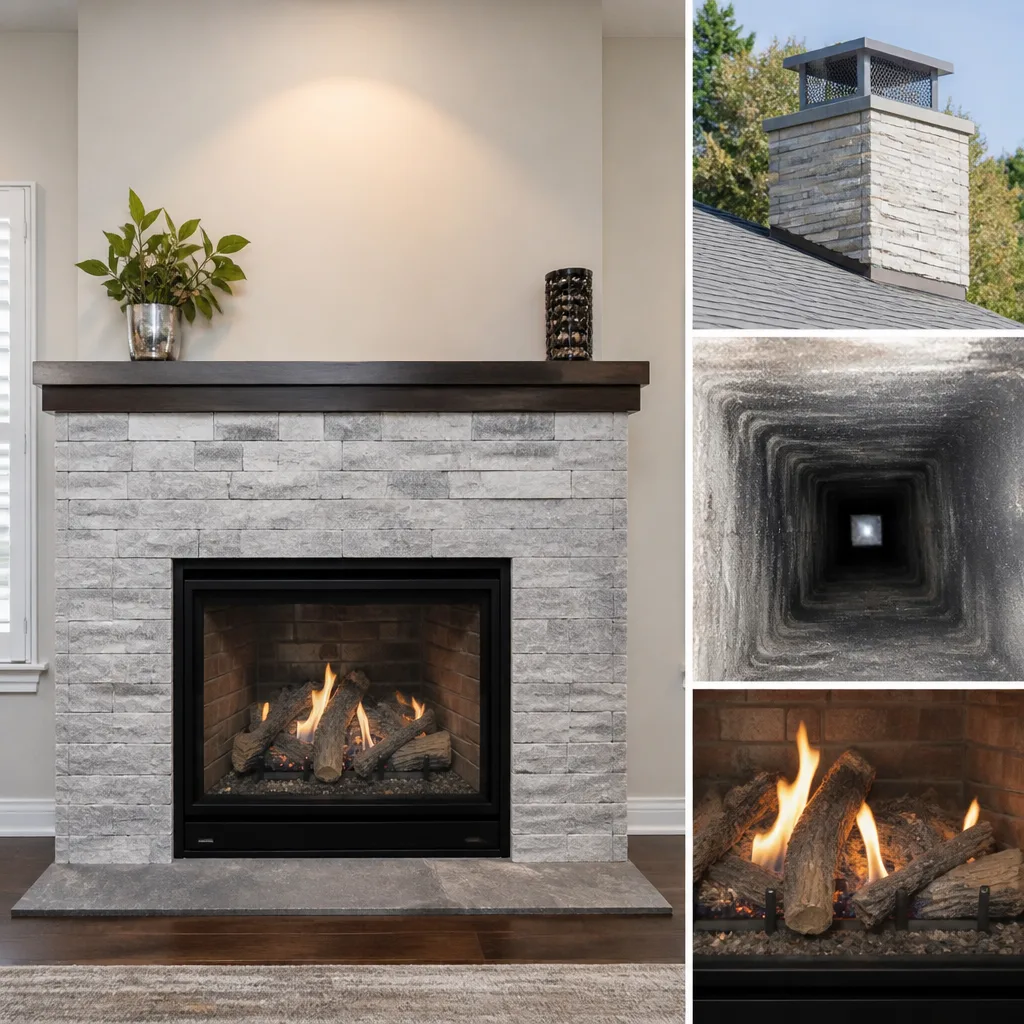
 Before
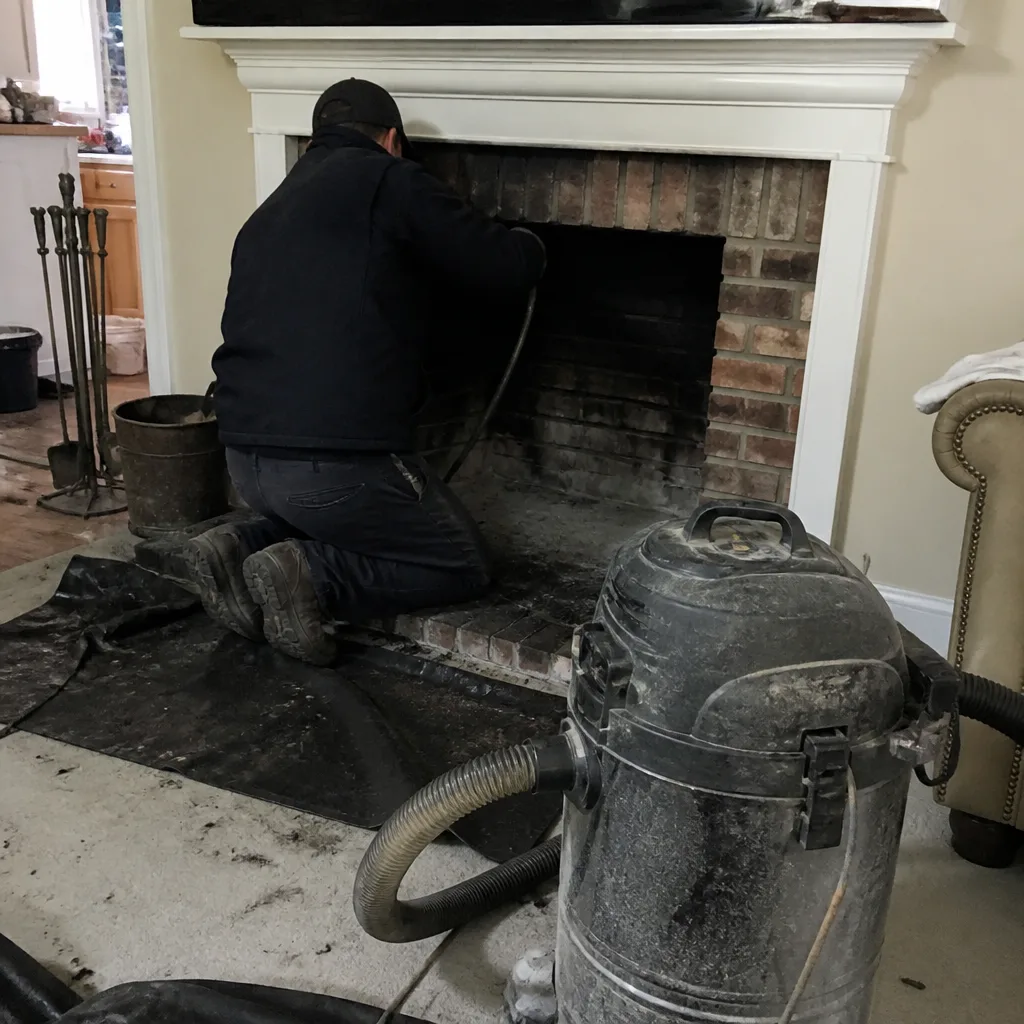
 After
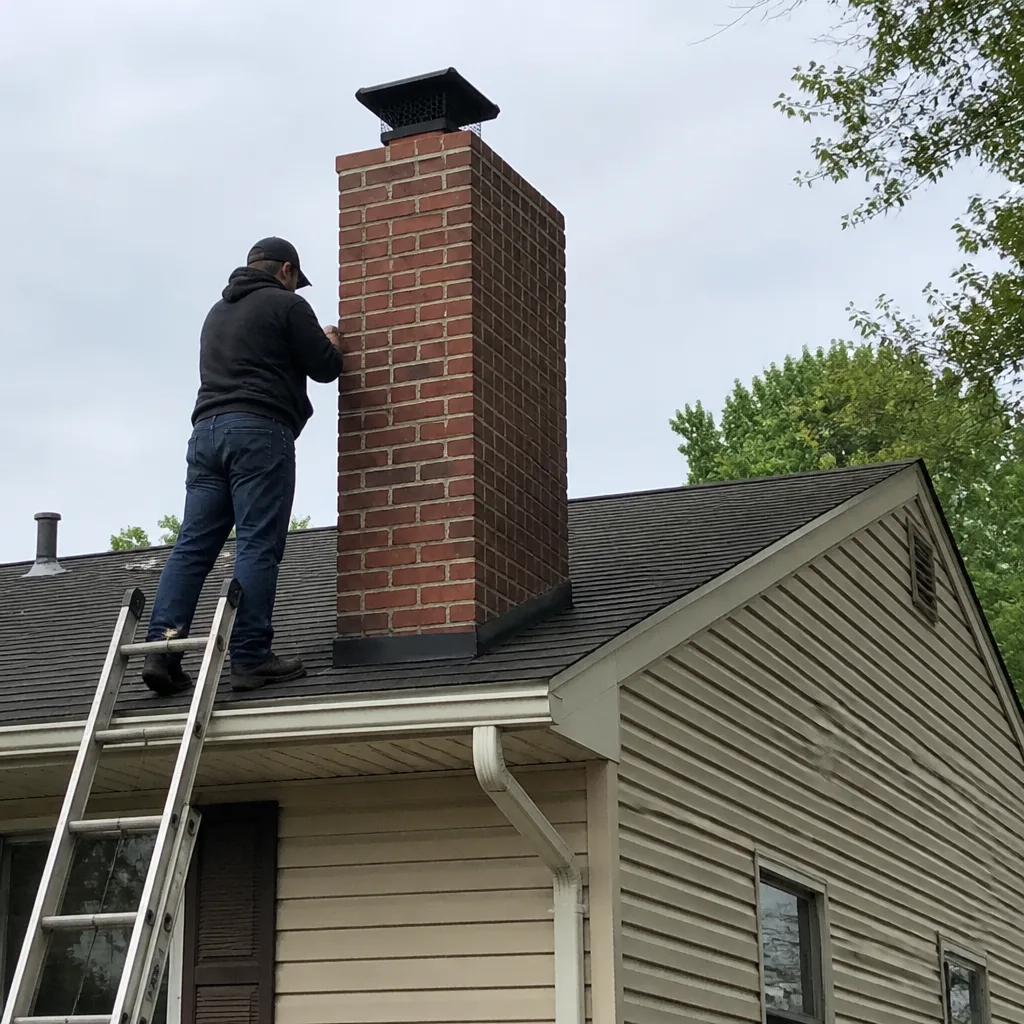
After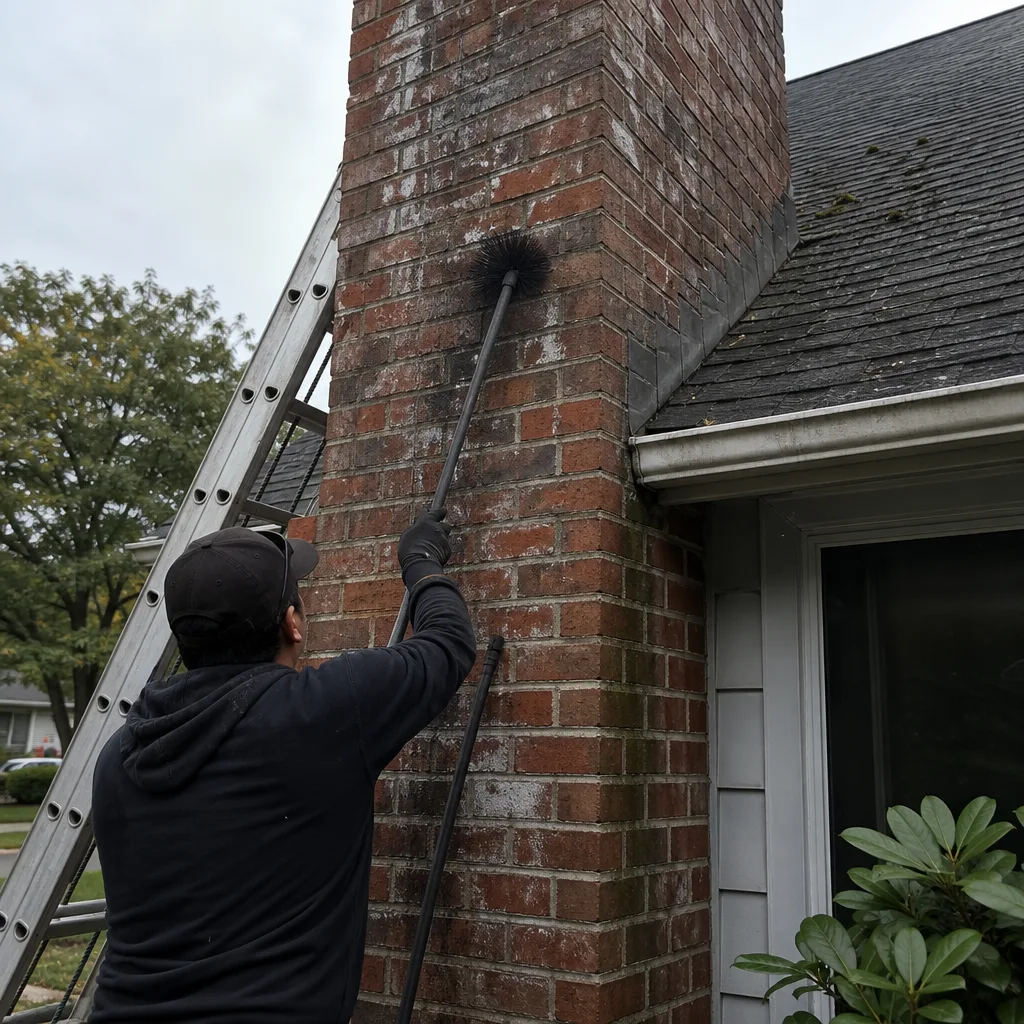 Before
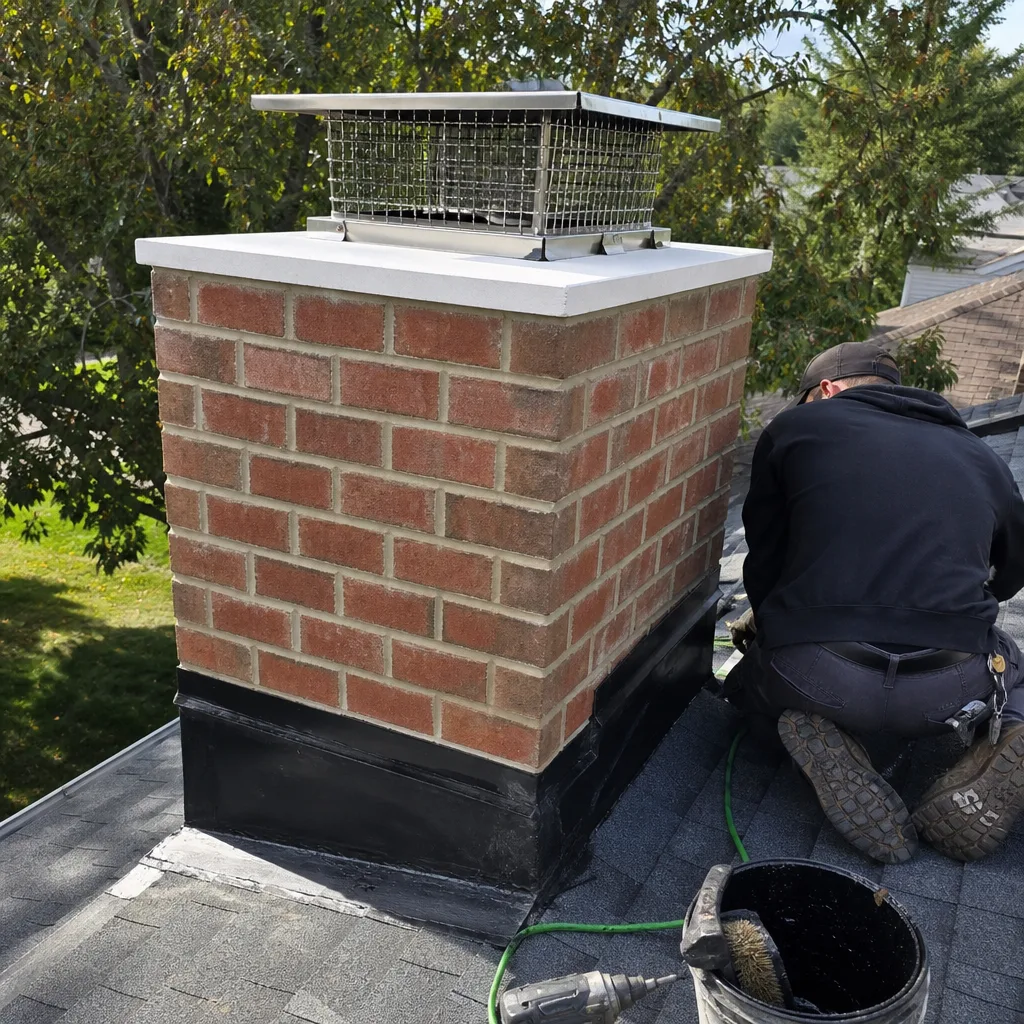 After
After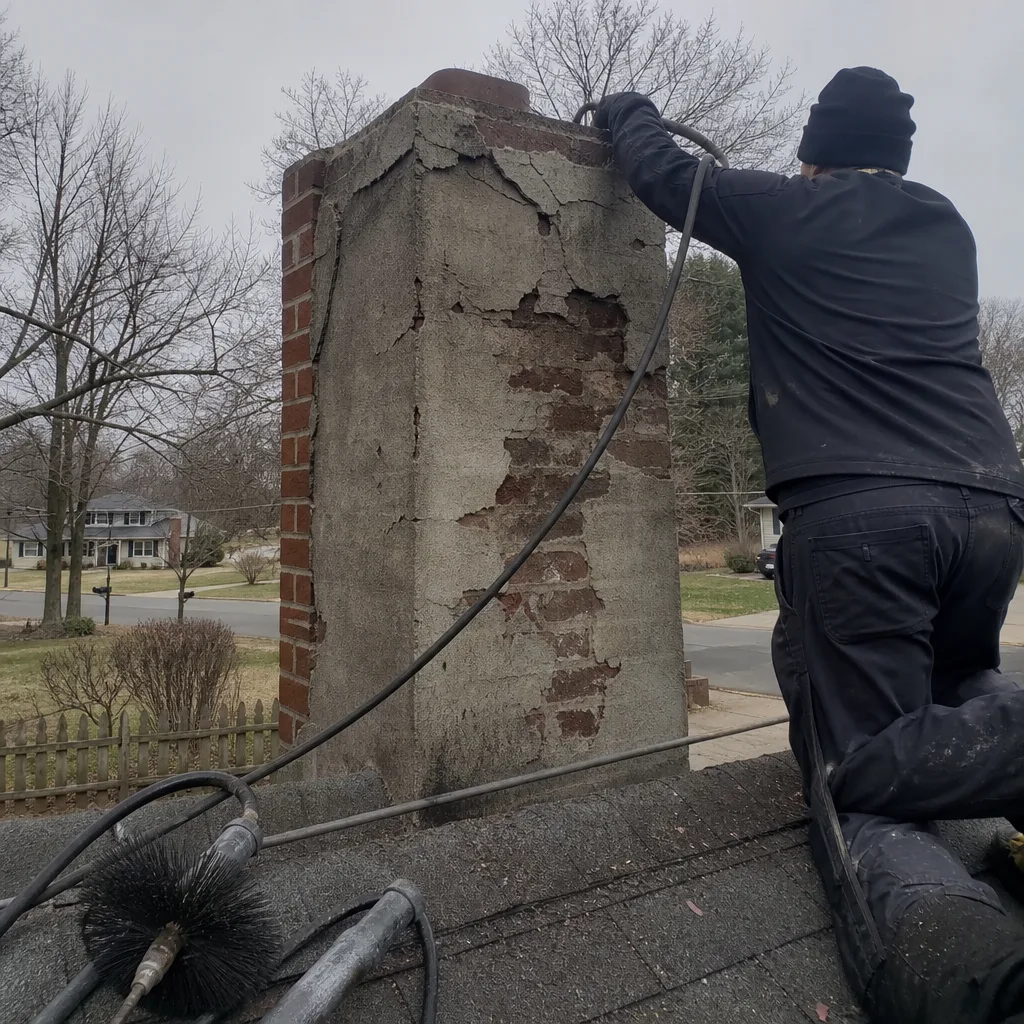 Before
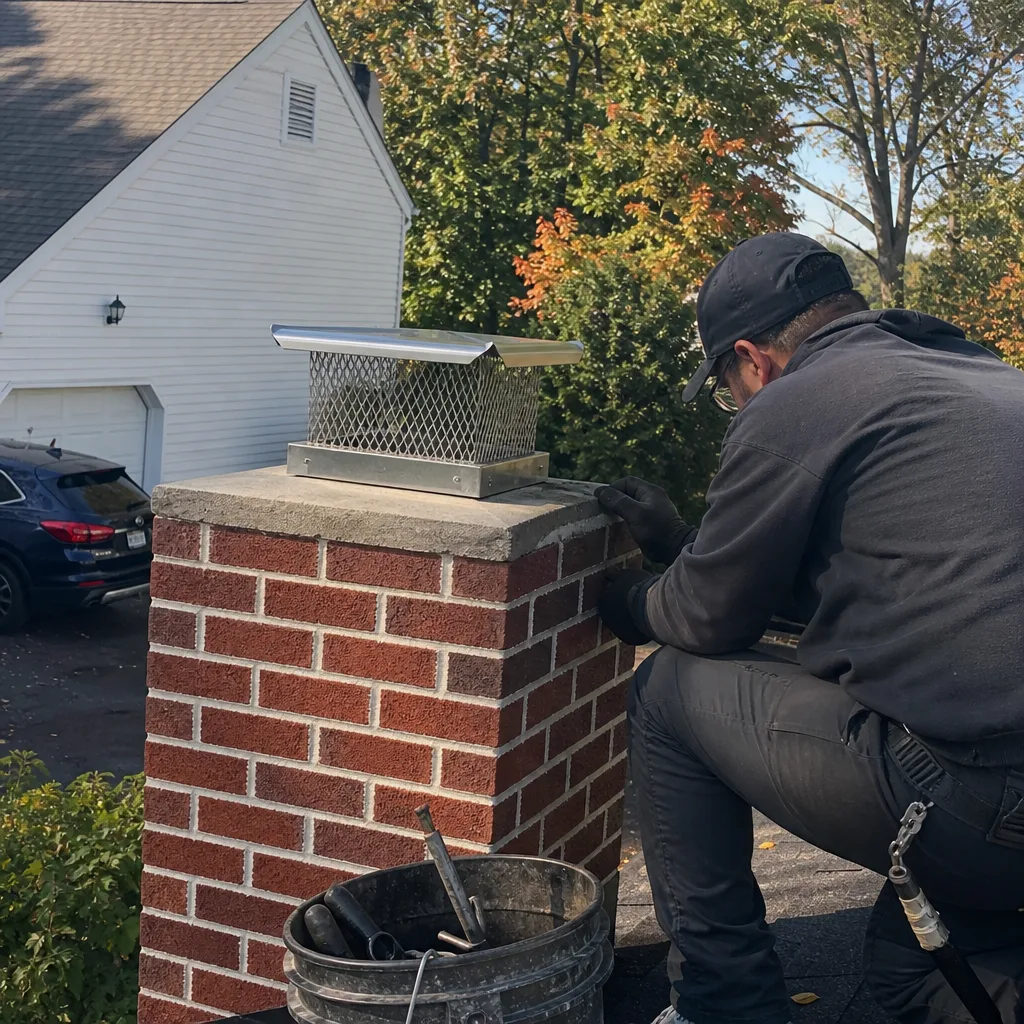 After
AfterChimney Cleaning Cost Breakdown: The Gaithersburg Homeowner’s Reference for 2026
Here’s a number that should stop you cold: the $89 chimney cleaning advertised in Gaithersburg and the $350 chimney cleaning quoted by a licensed sweep can describe work that shares almost nothing but the word “cleaning.” One is a brush on a rod pushed up a flue. The other is a documented inspection of the entire venting system, a camera scan of the liner, a written report of what was found, and a warranty on the condition of the chimney when the job was done. This guide breaks down exactly what each price tier includes, what it leaves out, and how to read a chimney cleaning estimate in Gaithersburg without getting burned by the fine print. For more on spotting trouble early, see our Chimney Cleaning Warning Signs: A Gaithersburg Homeowner’s Reference Guide.
We’re going to name prices in dollars, line by line, because that’s the only way this conversation is useful. You’ll learn what drives cost variation in Montgomery County specifically, which low-bid omissions create real liability for homeowners, and what a written price guarantee actually means when you read the contract language. By the end, you’ll know more about chimney cleaning economics than most companies want you to know.
Quick Answer
A legitimate chimney cleaning in Gaithersburg costs between $189 and $450 for a standard single-flue residential job in 2026, depending on creosote stage, flue height, liner condition, and whether a camera scan and written report are included. The $89-$129 advertised price covers labor and a brush pass only, with no inspection, no documentation, and no warranty. A complete Level 2 cleaning with camera documentation, written scope, and a 365-day warranty runs $299-$350 for most single-flue Gaithersburg homes.
Table of Contents
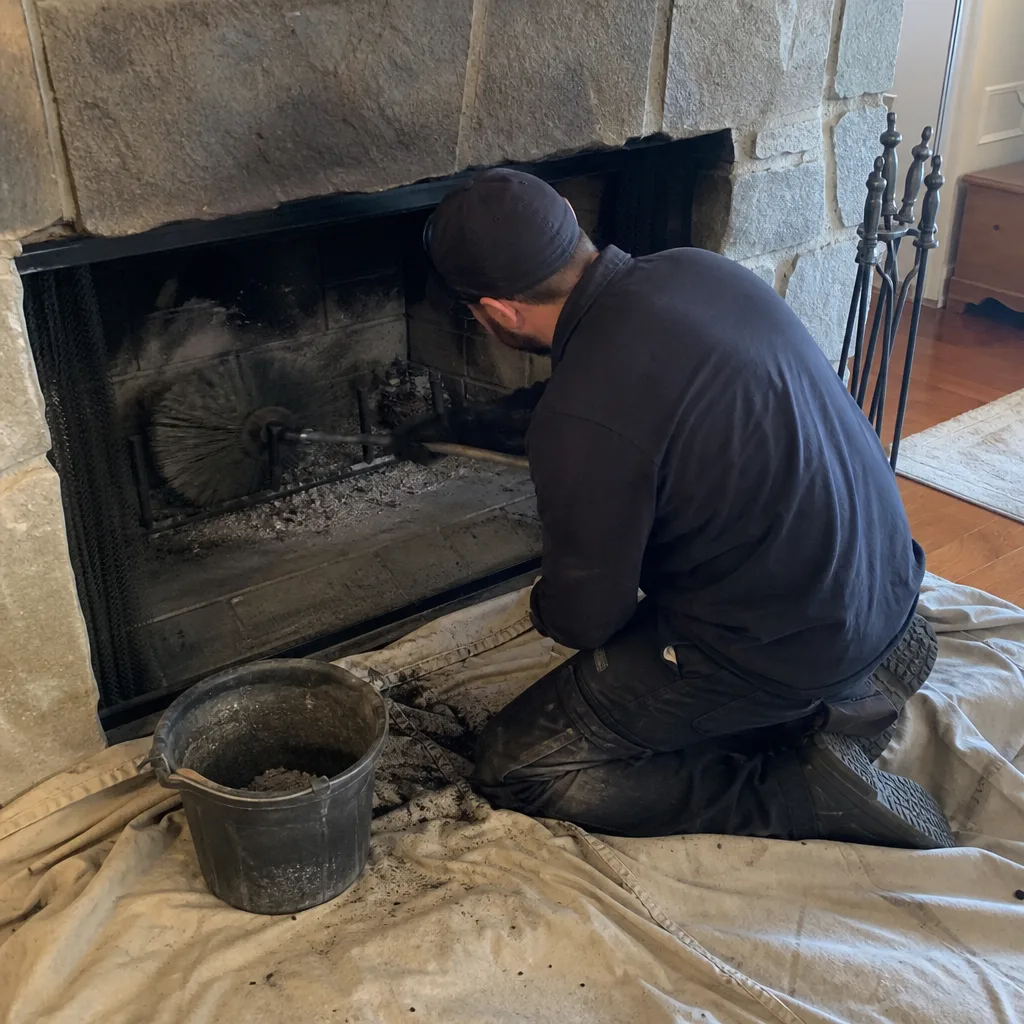
- The Three Price Tiers: What $89, $225, and $350 Actually Buy in Gaithersburg
- Line-Item Breakdown of a Complete Level 2 Cleaning
- What Drives Price Variation in Gaithersburg
- How to Evaluate a Low-Bid Estimate (and What’s Missing)
- The Cost of Deferred Cleaning: Gaithersburg Repair Scenarios
- What a Written Price Guarantee Means in Practice
- How Often Should Gaithersburg Chimneys Be Cleaned?
- Creosote Stages: What Each Level Means for Your Cost
BeforeAfterThe Three Price Tiers: What $89, $225, and $350 Actually Buy in Gaithersburg
Chimney cleaning prices in Gaithersburg fall into three distinct tiers, and the boundaries between them are rarely explained clearly. Here’s what each one includes.
Tier 1: The $89-$129 Brush Pass. This is the coupon price you see on postcards and Facebook ads. Technically, it buys a chimney sweep’s labor for 30-45 minutes and a wire brush run through the flue. What it does not include: any inspection of the liner, any camera documentation, any written report, any check of the smoke chamber or firebox, any verification that the flue is actually safe to use after cleaning. In our experience in Gaithersburg, this tier is most often sold by companies whose business model depends on finding “repairs” once they’re already on your roof, because the cleaning fee alone doesn’t cover their truck roll.
Tier 2: The $189-$250 Standard Cleaning. This is the price range for a legitimate cleaning from a licensed, insured sweep who runs a brush, visually inspects the accessible portions of the flue, checks the damper and cap, and provides a basic written receipt. Some companies at this tier include a top-down photo of the flue. Most do not include interior flue footage, a written condition report, or a warranty. This is the tier that most Gaithersburg homeowners actually receive, and it’s a reasonable option if you had a full inspection within the last two years and know your liner is sound.
Tier 3: The $299-$350 Documented Level 2 Cleaning. This is the full service: brush cleaning, full NFPA 211 Level 2 inspection, camera scan from the top down and from the firebox up, written photo report, written scope of any recommended work, and a warranty on the documented condition. Clause 4 of the Haven Standard, which has governed our work since 2009, requires a documented photo record on every visit, and that archive travels with the home if it’s sold. You walk away knowing what your flue actually looks like, not what someone told you it looks like. Our Chimney Cleaning & Sweep in Gaithersburg service operates at this tier, with a written price before any work starts.
The gap between Tier 1 and Tier 3 is not markup. It’s scope. A brush pass is labor; a documented Level 2 service is a professional inspection that happens to include a cleaning. The liability burden is entirely different.
Line-Item Breakdown of a Complete Level 2 Cleaning
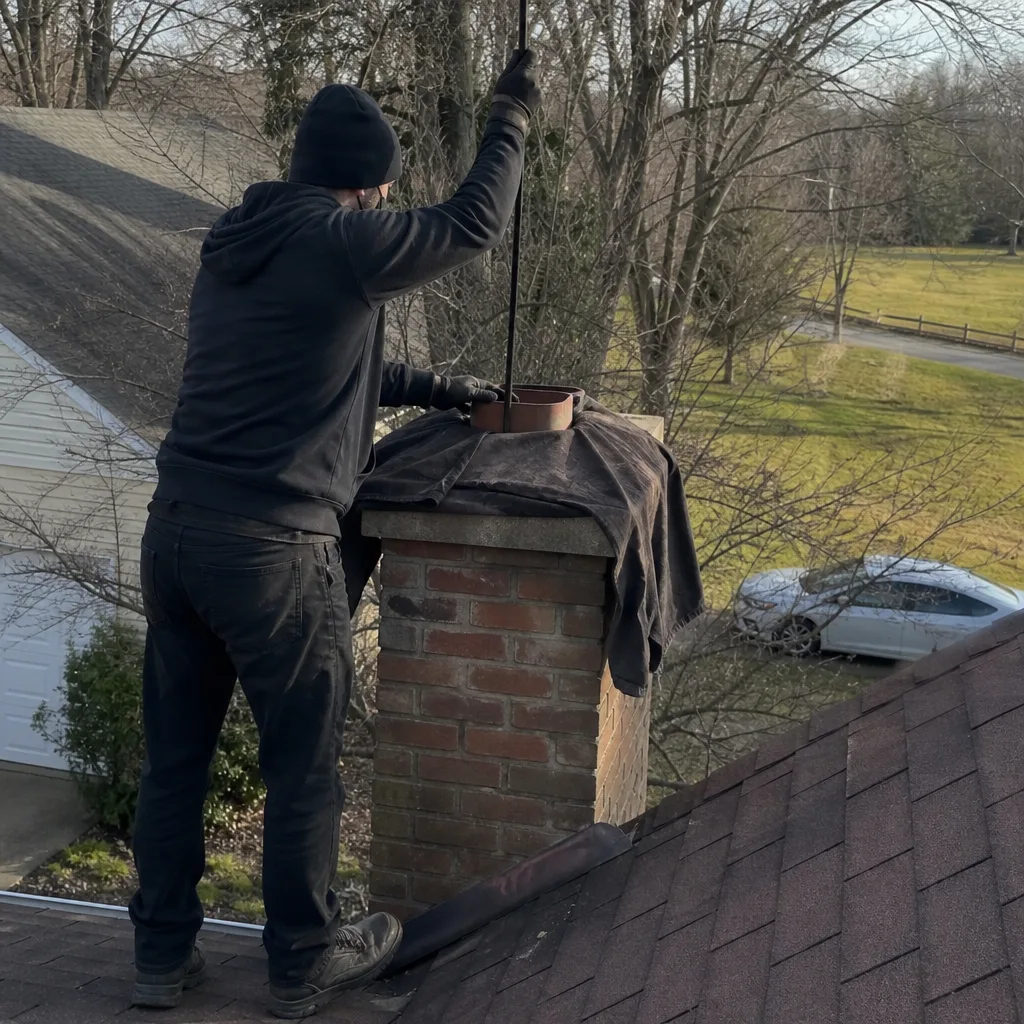
One reason chimney cleaning prices seem opaque is that most companies quote a single bundled number. Here’s what that number actually contains when it’s itemized honestly. These are 2026 market rates for the Gaithersburg and upper Montgomery County area, based on what our own crews and our competitors’ written estimates show.
| Line Item | What It Includes | Standalone Cost | Bundled Cost |
|---|---|---|---|
| Brush cleaning labor | Sweep and vacuum of flue, smoke shelf, and firebox | $95-$140 | $70-$90 |
| Camera scan (NFPA 211 Level 2) | Top-down and bottom-up video of liner, joints, and flue path | $120-$175 | $80-$110 |
| Written condition report | Photos, findings, creosote classification, moisture readings where taken | $40-$75 | $25-$40 |
| Chimney cap check and screen | Removal, cleaning, re-installation, replacement if damaged (material separate) | $45-$85 | $25-$45 |
| Firebox and smoke chamber visual | Inspection of refractory panels, mortar joints, and smoke chamber walls | $50-$90 | $30-$50 |
| Warranty administration | Registration of documented condition, 365-day coverage on the service | $25-$50 | Included |
| Total | $375-$615 | $299-$350 |
Bundling changes the per-unit math because the technician is already on site with equipment staged. Running a camera after a brush pass adds twenty minutes, not a second truck roll. That’s why a documented Level 2 cleaning at $325 is cheaper than buying the components separately, and why a $299 price with all of these line items is genuinely fair market value in Gaithersburg. If you’re quoted $299 but the camera scan is “extra,” you’re being sold Tier 2 at a Tier 3 price.
What Drives Price Variation in Gaithersburg
Chimney cleaning costs in Gaithersburg are not flat because chimneys are not flat. Here are the five factors that move your price most.
Flue height and roof pitch. Gaithersburg’s housing stock splits between 1960s-1980s colonials and split-levels with 25-35 foot flues, and newer Kentlands and Lakelands townhomes with shorter runs. Roof access on a steep colonial pitch costs more because it takes two technicians and fall-protection rigging. Flue height also determines how many rod sections and how much brush wear the job requires. We typically quote a two-story colonial in Montgomery Village $25-$40 higher than a single-story rambler in the same zip code simply due to access.
Liner type. Terra cotta tile liners, which dominate Gaithersburg homes built before 1990, clean differently than stainless steel. Terra cotta can crack under aggressive brushing; it requires a gentler pass and a more careful camera inspection afterward. Stainless steel liners, common in homes where a chimney was relined during a 2010s renovation, clean faster and rarely hide damage, so the service cost lands at the lower end of the range.
Creosote stage at time of service. Stage I creosote (flaky soot) brushes off in a standard pass. Stage II (tar-like glaze) requires chemical treatment or rotary loop work and adds $50-$100. Stage III (glazed, rock-hard coating) cannot be cleaned by brushing at all, requires chemical or mechanical removal, and sometimes signals liner replacement rather than cleaning. More on this below.
Last cleaning date. Gaithersburg homeowners who use their fireplaces as primary heat in December and January (common in older brick colonials without updated HVAC) build up creosote faster than occasional burners. A flue that hasn’t been cleaned in five years is almost always a more expensive job than one cleaned annually, because accumulation drives both time and risk.
Moisture and crown condition. Montgomery County gets enough freeze-thaw cycles in January and February to stress chimney crowns. A crown with visible cracking or spalling (concrete breaking into flakes) slows the cleaning because the tech has to work around deteriorated material, and it should trigger a repair recommendation. The cleaning price itself doesn’t change much, but the total job quote often does. This is a good moment to note our Chimney Repair in Gaithersburg work starts with the same camera documentation, so you know exactly what’s degraded before you approve any repair.
How to Evaluate a Low-Bid Estimate (and What’s Missing)
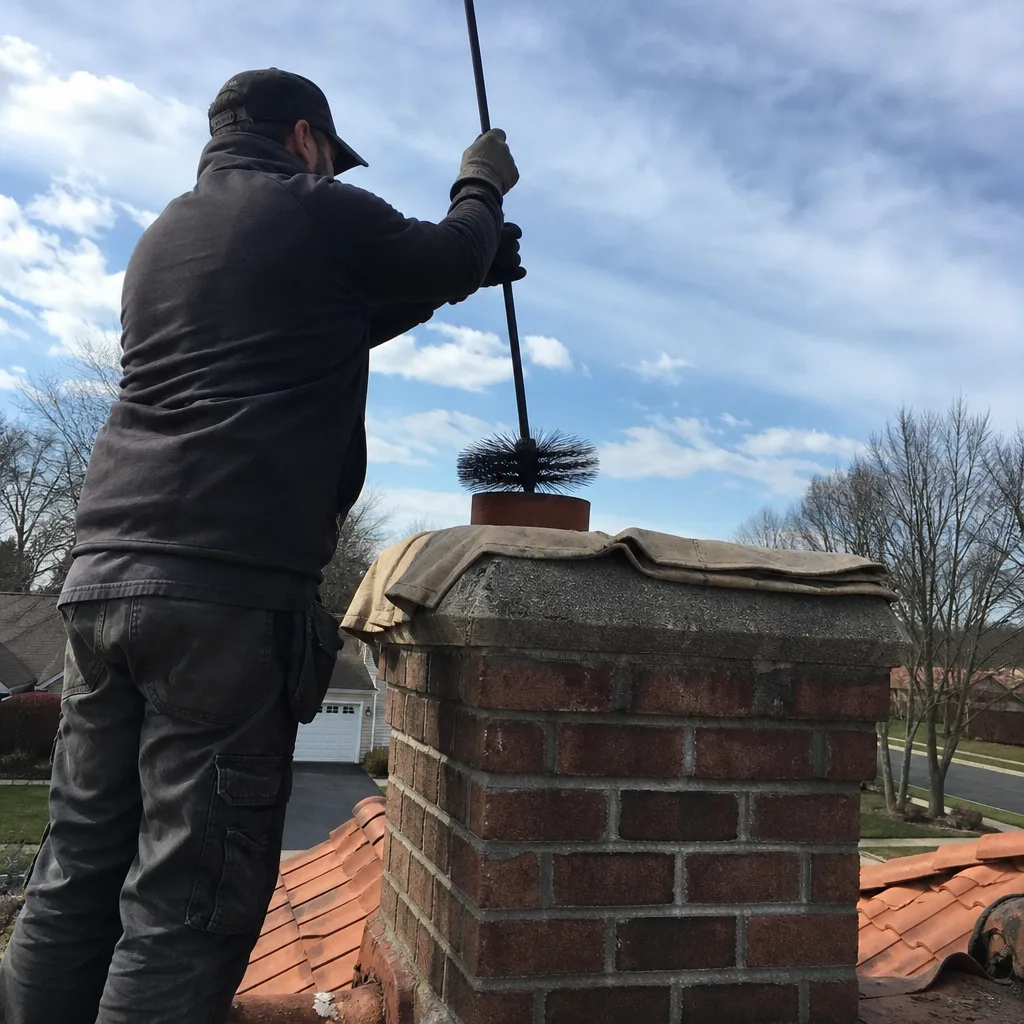
The hardest part of comparing chimney cleaning estimates in Gaithersburg is that you’re comparing written descriptions, not apples. Here’s the checklist we give friends when they get a $99 postcard quote and want to know what it really means-adapted from our full Chimney Cleaning & Sweep Maintenance Checklist for Gaithersburg Homeowners.
- Does the written estimate include a camera scan? If the words “Level 2” or “camera” don’t appear, you’re buying a brush pass. That’s not inherently wrong, but you should know it’s what you’re getting.
- What documentation do you receive afterward? A receipt is not a report. Ask directly: “Will I get photos of the flue interior or a written condition report?” If the answer is no, you have no baseline for future comparison.
- Is the price written, or is there an inspection fee first? Some low-bid companies charge $39 to “inspect” then quote cleaning separately. By the time you’re quoted, you’ve already paid. The entire job should be quoted in writing before work starts.
- Who is doing the work? Subcontractors are common in Gaithersburg’s seasonal chimney market. Ask if the technician is an employee or a subcontractor, and whether the company carries workers’ comp. A company that can’t answer is shifting liability onto you.
- What happens if they find something? The low-bid model often depends on finding “damage” the homeowner can’t verify. Ask: “Will you show me the issue on camera before you recommend work?” If the answer is no, walk.
- Is there a warranty on the cleaning itself? Most companies warranty nothing. A 365-day written warranty means the company stands behind its own documentation.
Here’s the liability reality. If a $99 sweep cleans your flue and misses a cracked liner that later causes a chimney fire, your insurance company is going to ask one question: do you have documentation that the chimney was inspected? A brush pass produces no such documentation. A camera-scan cleaning produces it. That’s the real cost difference, and it’s not small.
The Cost of Deferred Cleaning: Gaithersburg Repair Scenarios
We’ve pulled three real scenarios from our service records in Gaithersburg and Montgomery County. In each case, a $299-$350 annual cleaning with camera documentation would have caught the problem at a stage where repair was minor.
Scenario 1: The Kentlands Firebox, $4,200. Homeowner skipped cleaning for four years because the fireplace “wasn’t used much.” A Stage II creosote buildup near the smoke shelf ignited during a winter fire, cracking two refractory panels and scorching the damper. Repair required firebox rebuild, new damper, and a full liner evaluation. Cost: $4,200. The annual cleaning that would have removed the creosote before it reached Stage II: approximately $325.
Scenario 2: The Montgomery Village liner crack, $3,800. A homeowner using a $89 sweep for three years never received camera documentation. When we arrived for a second opinion, the camera showed a vertical crack in a terra cotta flue liner that had been present for at least two seasons, based on staining. The repair required a stainless steel liner installation using DuraFlex materials, plus crown sealing. Cost: $3,800. If the crack had been caught in year one, the fix was a HeatShield resurfacing at roughly $1,100.
Scenario 3: The Laytonsville crown failure, $6,000. A crown with spalling that went unreported for five years allowed water into the chimney chase. By the time it was caught, the masonry had deteriorated to the point of a partial rebuild. Cost: $6,000, using materials from Famco and Copperfield for the cap and damper work. A documented inspection at any point in the prior four years would have shown the crown cracking and triggered a $400-$700 repair.
The pattern here is not “cleaning prevents all chimney damage.” Some chimneys fail regardless. But deferred cleaning is deferred inspection, and deferred inspection is how $300 problems become $4,000 problems. Our Fireplace Services in Gaithersburg page covers the full range of what happens after a camera scan finds something you need to act on.
What a Written Price Guarantee Means in Practice
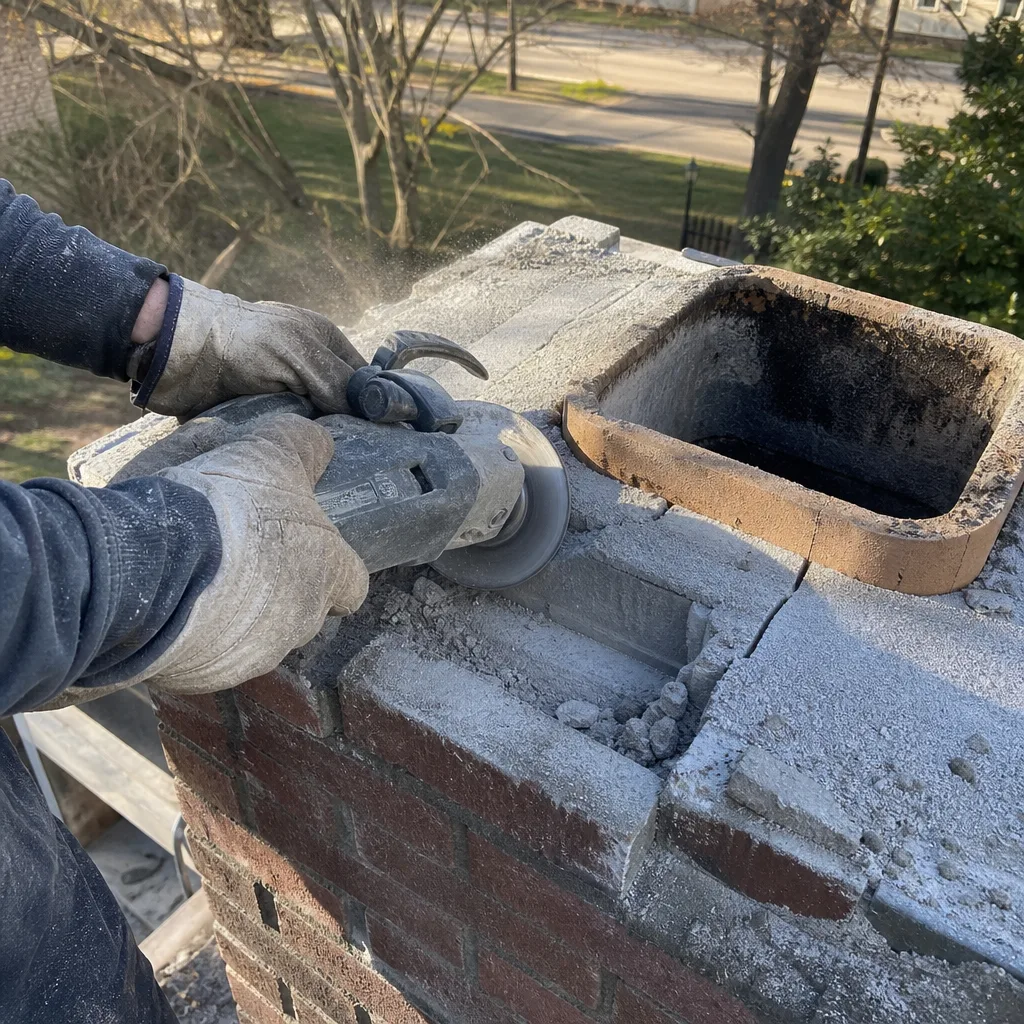
“Written price guarantee” is a good phrase worth exactly nothing if it isn’t backed by specific contract language. Here’s what we put in writing before anyone starts, and what you should ask any Gaithersburg chimney company to put in writing before they start.
- A written scope of work. Not a verbal description. A line-by-line list of what’s included: cleaning, camera scan, cap check, report, warranty.
- A written price for that scope. Flat, not hourly, not “estimate.” The number on the page is the number you pay unless you authorize additional work in writing after seeing photographic evidence.
- A written warranty term. “365-Day Done Right Promise” means if we missed something in the scope we said we’d do, we correct it at no charge. It does not cover new damage or normal wear. Ask what the warranty actually covers, in writing.
- A written photo record clause. You should be told, in writing, that you’ll receive dated photos of the flue interior and any findings. Haven Standard Clause 4 has required this on every job since 2009.
- A written change-order process. If we find something that needs repair, you get a written addendum with photos, a scope, and a price. You approve or decline before any additional work happens. No pressure, no “while I’m here” surcharges.
Three questions reveal whether a company’s written price is enforceable: “Will you put the scope in writing before work starts? Will you show me photographic evidence of anything you recommend? What’s your written warranty term?” A company that hesitates on any of them is not offering a written price guarantee. They’re offering a verbal estimate with extra steps.
How Often Should Gaithersburg Chimneys Be Cleaned?
The NFPA 211 standard, the reference used by most Gaithersburg building inspectors and insurance adjusters, says chimneys should be inspected annually and cleaned when creosote builds up to 1/8 inch or more. For details on local requirements, see Chimney Cleaning Permits, Codes & Inspections in MD: What You Need to Know. In practice, that means most active fireplaces in our service area need a sweep every one to two years. Here’s the more granular truth.
Burn more than three cords a year? Clean annually. That’s roughly three or more fires per week through the burning season.
Burn one to two cords a year? Every 18-24 months is usually sufficient, assuming the wood is seasoned. Unseasoned or green wood produces dramatically more creosote and can require annual cleaning even at low volume.
Use a wood stove insert? Clean annually regardless of volume. Inserts have smaller flues and run hotter, which accelerates creosote deposition.
Never use the fireplace? You still need an inspection every two to three years. An unused chimney is not a stable chimney. Unused flues accumulate moisture, animal nests, and crown deterioration without the drying effect of regular fires. We’ve found raccoon nests and dead birds in Gaithersburg chimneys that hadn’t seen a fire in a decade.
For most Gaithersburg homes with a wood-burning fireplace in regular winter use, budget $300-$350 every year or two. It’s the cheapest insurance against a four-figure repair.
Creosote Stages: What Each Level Means for Your Cost
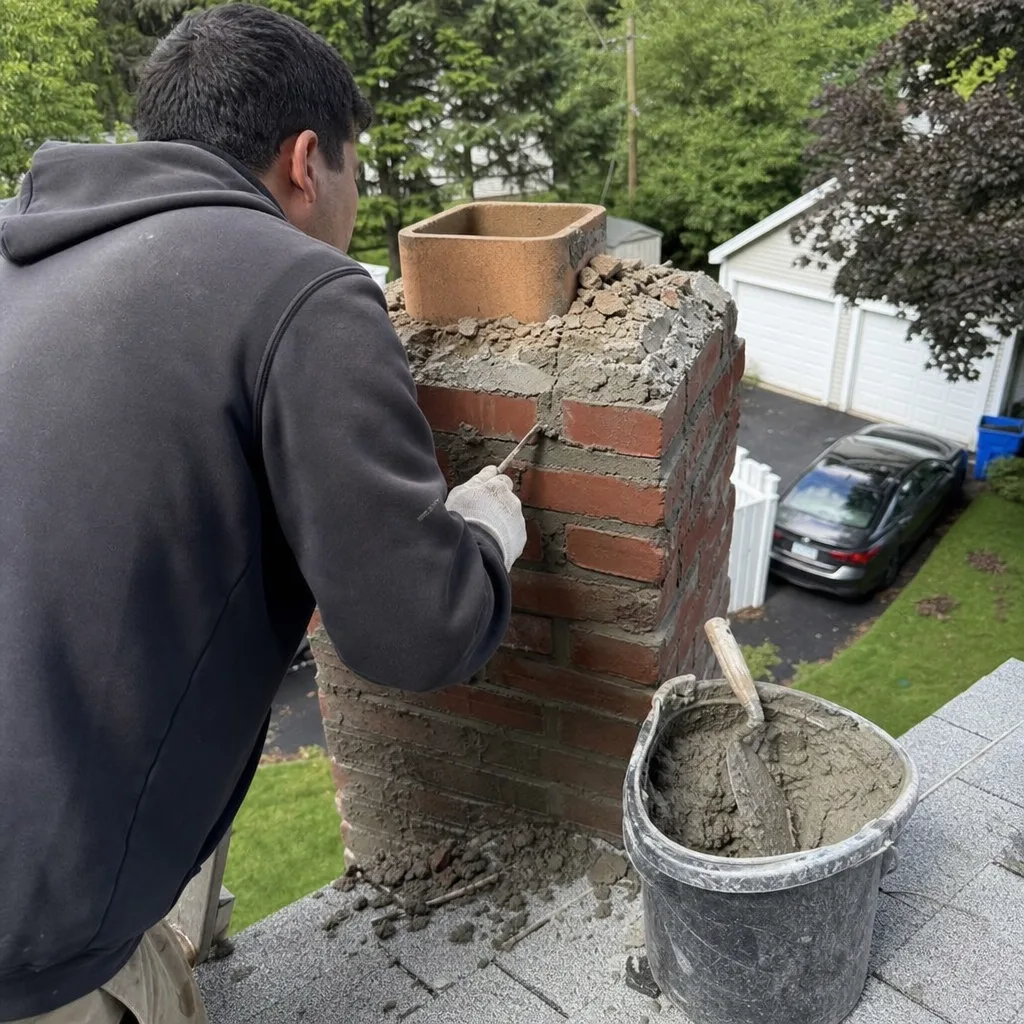
Creosote is the byproduct of wood combustion: a tar-like substance that condenses on the cooler walls of the flue as smoke rises. Its stage at the time of cleaning is the single biggest variable in your service price, so here’s what each stage means in plain terms.
Stage I: Flaky soot. Brushes off easily, standard cleaning removes it completely. Most annual cleanings handle Stage I. Your price stays at the base rate.
Stage II: Tar-like glaze. Shiny, sticky, and requires chemical treatment or rotary loop agitation. Adds $50-$100 to the cleaning cost because of the extra time and materials. Common in Gaithersburg homes that burn pine or unseasoned oak from local Breezewood-area firewood sellers.
Stage III: Glazed, rock-hard coating. This is the dangerous one. Stage III creosote cannot be removed by brushing and often signals that the flue has been heated to the point where the creosote has cured in place. In some cases, chemical removal works; in others, the liner has been compromised and needs replacement. We’ve seen Stage III in Gaithersburg homes where a wood stove was overfired repeatedly, and the repair bill was never under $2,000.
You can’t see creosote stage without looking down the flue, which is why a camera scan matters. A brush pass doesn’t tell you what stage the creosote was at, because it’s all been brushed away before anyone looks. The documentation is what tells you whether next year’s cleaning should be scheduled sooner.
Common Mistakes to Avoid
- Booking based on the postcard price alone. The $89 Gaithersburg chimney cleaning is a loss leader designed to get a technician on your roof. Once they’re there, the upsell begins. Read the fine print, and ask what’s included before you book.
- Assuming a smoke check is an inspection. Lighting a match and checking draft is not an NFPA 211 Level 2 inspection. It tells you nothing about liner integrity, creosote load, or crown condition. If “inspection” isn’t documented with a camera, it isn’t an inspection.
- Skipping annual cleaning to “save money.” The math doesn’t work. A $325 cleaning every year costs less than one $3,800 liner repair every decade, even before you factor in fire risk and insurance documentation.
- Burning green or unseasoned wood to save on firewood costs. Green wood produces two to three times the creosote of seasoned wood, and it burns less efficiently, so you’re buying more of it. The $50 you save on a cord of green oak becomes a $100 upcharge on your next cleaning.
- Accepting a verbal “looks fine” as a report. You have no record of that. If the chimney fails later, your insurance company has no reason to believe you maintained it. Always get a written report with photos.
- Ignoring the cap and crown between cleanings. The cap and crown are your chimney’s roof. If they’re degraded, every cleaning is a temporary fix on a structure that’s actively taking on water. A $75 cap check during a cleaning catches problems that become $700 crown repairs if left for three years.
When to Call a Professional
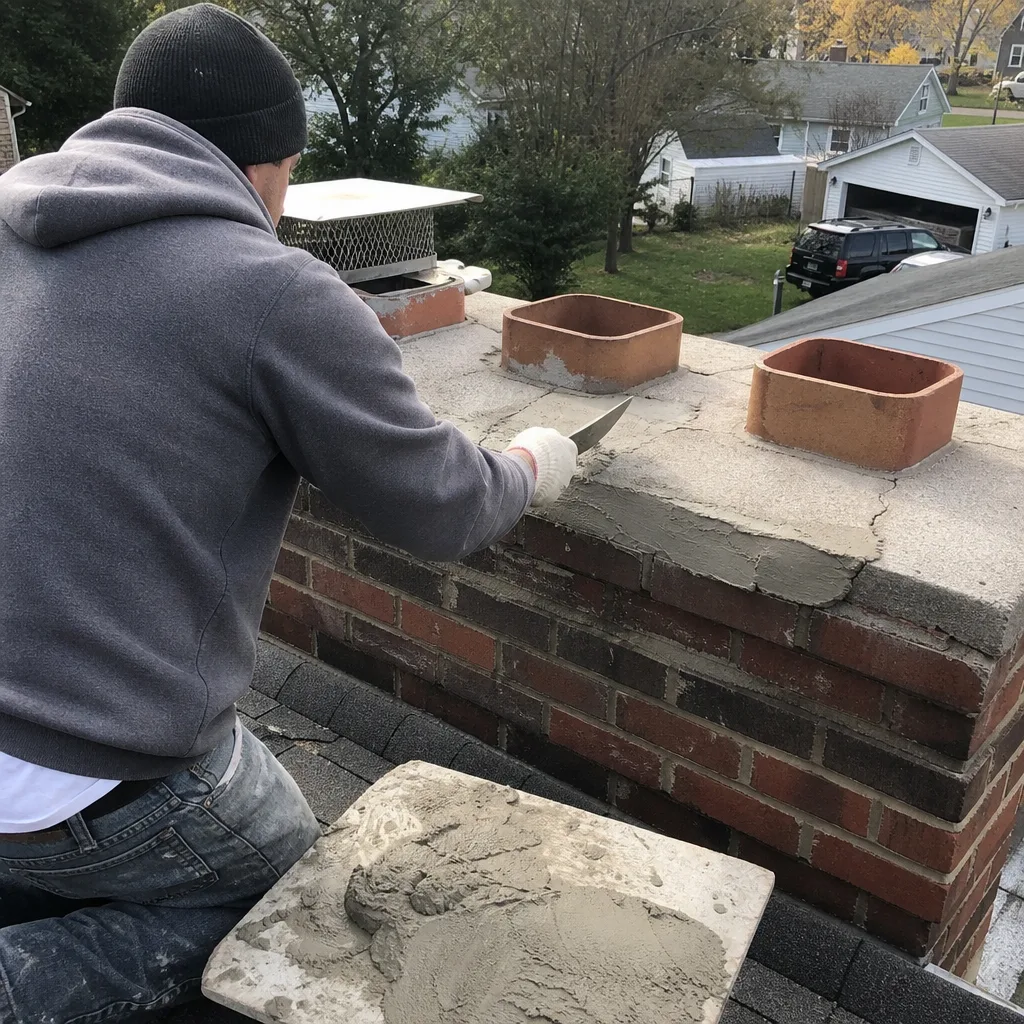
You need a professional when creosote builds to 1/8 inch, which you cannot see without a camera or a mirror and flashlight. You need one immediately if you smell a strong campfire odor in your home when the fireplace isn’t in use, see black staining around the damper, notice smoke backing up into the room, or hear animals in the flue. Any of those signals means something has changed in your venting system, and the next fire could be unsafe. If you’re in Gaithersburg or upper Montgomery County and want a documented answer, our team at Level Two Chimney Gaithersburg home provides written estimates before any work starts. Call (240) 220-9395 for a free estimate.
Frequently Asked Questions
A chimney sweep in Gaithersburg costs $189 to $450 for a standard single-flue residential job as of 2026, with the most common documented Level 2 cleaning landing between $299 and $350. The $89 advertised price is a brush pass only, with no inspection or documentation. Call (240) 220-9395 for an exact written quote for your chimney.
Ask for camera evidence before you approve any liner work. A legitimate recommendation comes with dated video or photos showing the specific crack, separation, or deterioration, and a written explanation of why it matters. If a company recommends a $3,000 liner replacement without showing you the problem on camera, get a second opinion. We offer a free second opinion on any written estimate.
Every one to two years for most actively used fireplaces. The NFPA 211 standard is annual inspection with cleaning as needed based on creosote buildup. Homes burning more than three cords a year or using a wood stove insert should clean annually.
Creosote accumulates to Stage II or III, which increases fire risk and turns a $300 cleaning into a $100-$200 premium cleaning plus a higher chance of a four-figure liner or firebox repair. Skipped cleanings also mean skipped inspections, so cracks and crown damage go unreported until the repair cost has tripled. Call (240) 220-9395 if it’s been more than two years since your last service.
Most policies cover chimney damage only when it results from a covered peril like a fire, lightning strike, or falling tree. Gradual deterioration from deferred maintenance is excluded, and insurers often ask for documentation that the chimney was maintained. A written photo record from your annual cleaning is your evidence.
A Level 2 inspection includes a camera scan of the entire flue from both directions, visual inspection of the firebox, smoke chamber, damper, cap, and crown, and a written report with photos. It’s required by NFPA 211 when a home is sold, after a chimney fire, or with any change to the venting system. Our cleaning service includes a Level 2 inspection on every visit.
The Bottom Line
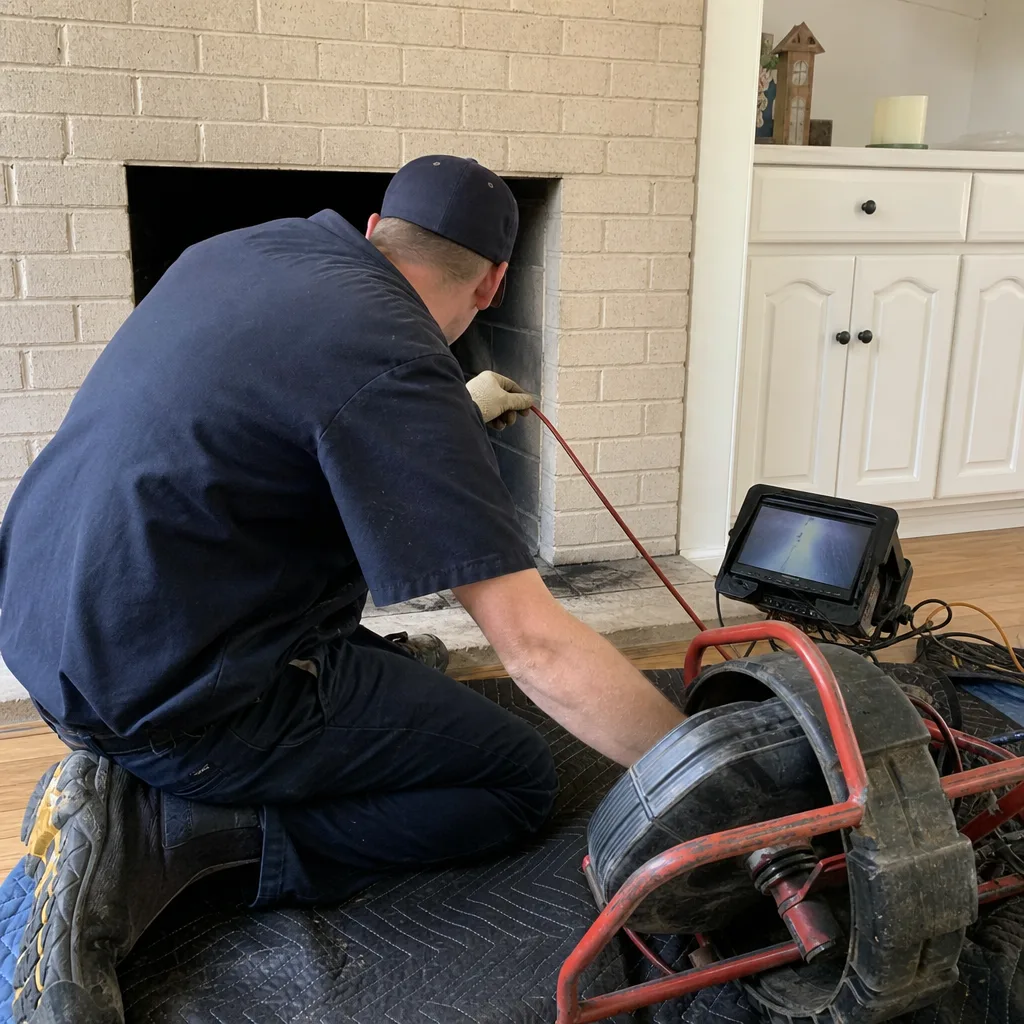
Chimney cleaning prices in Gaithersburg range from $89 to $450 for what companies call the same service, and the difference is scope, not markup. A documented Level 2 cleaning at $299-$350 is a materially different product from a $99 brush pass: it includes camera evidence, a written report, a warranty, and a baseline you can use to make future repair decisions. Skipping cleanings to save money is a false economy when a $300 annual service prevents a $3,000 liner repair. Demand a written price, a written scope, and photographic evidence. That’s the only way to know what you actually bought. Browse our more guides & resources for additional homeowner tools.
Ready for a documented, written-price chimney cleaning in Gaithersburg? Call Level Two Chimney Gaithersburg at (240) 220-9395 for a free estimate. Every job includes a camera scan, a written photo report, and a 365-day warranty.
Written by Corrine Halstead, Owner at Level Two Chimney Gaithersburg, serving Gaithersburg since 2009.