
Last updated September 20, 2026
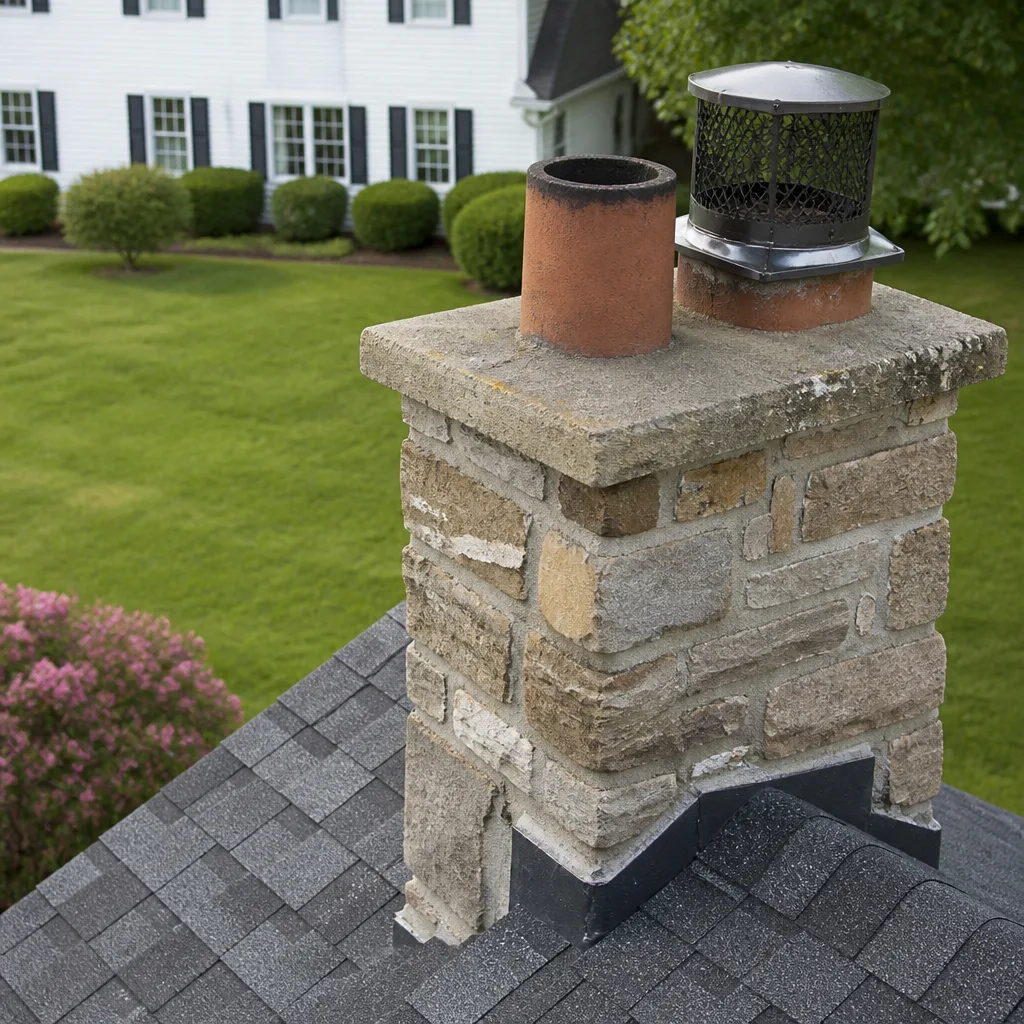
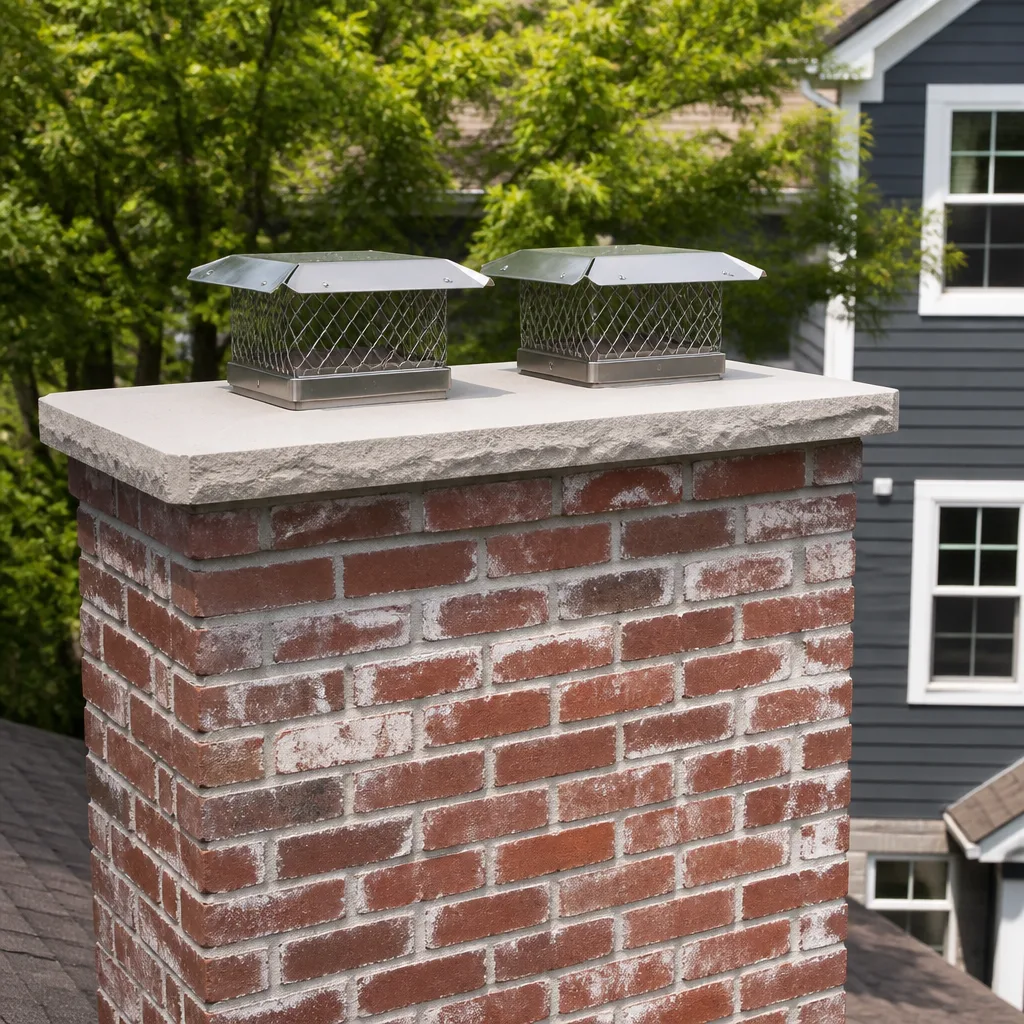
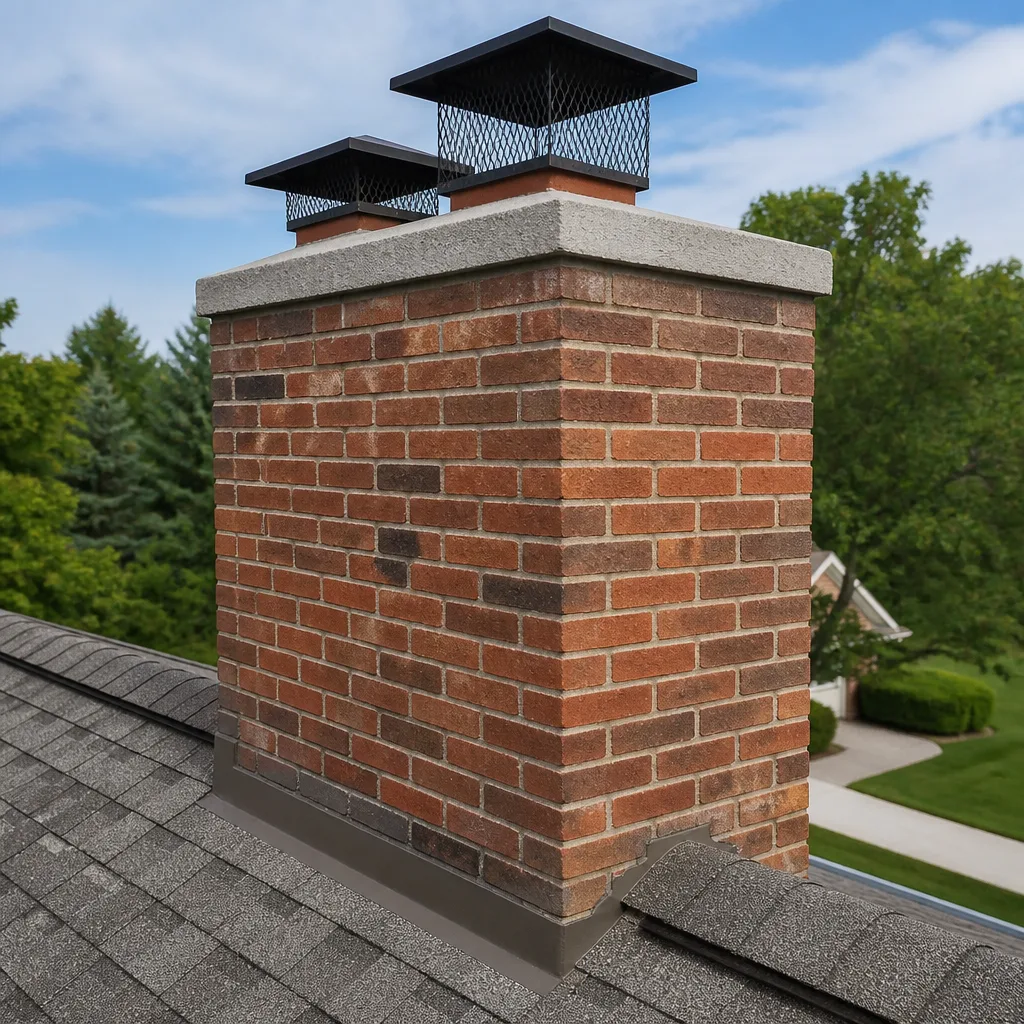
Level 1 sweep and inspection to the NFPA 211 annual standard - flue, crown, cap, and flashing checked and photographed
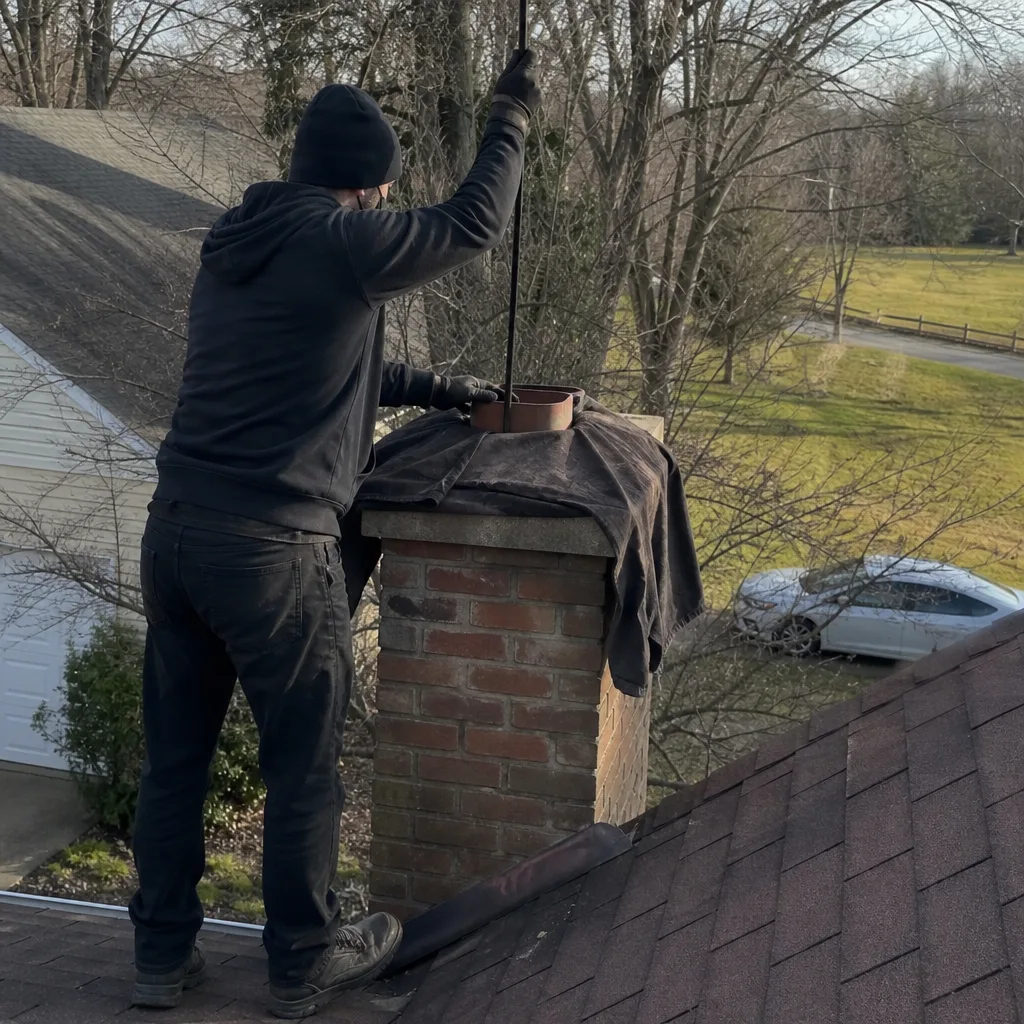
Chimney sweep logs do not sweep chimneys. They loosen some creosote - which then falls where a brush and vacuum still have to collect it.
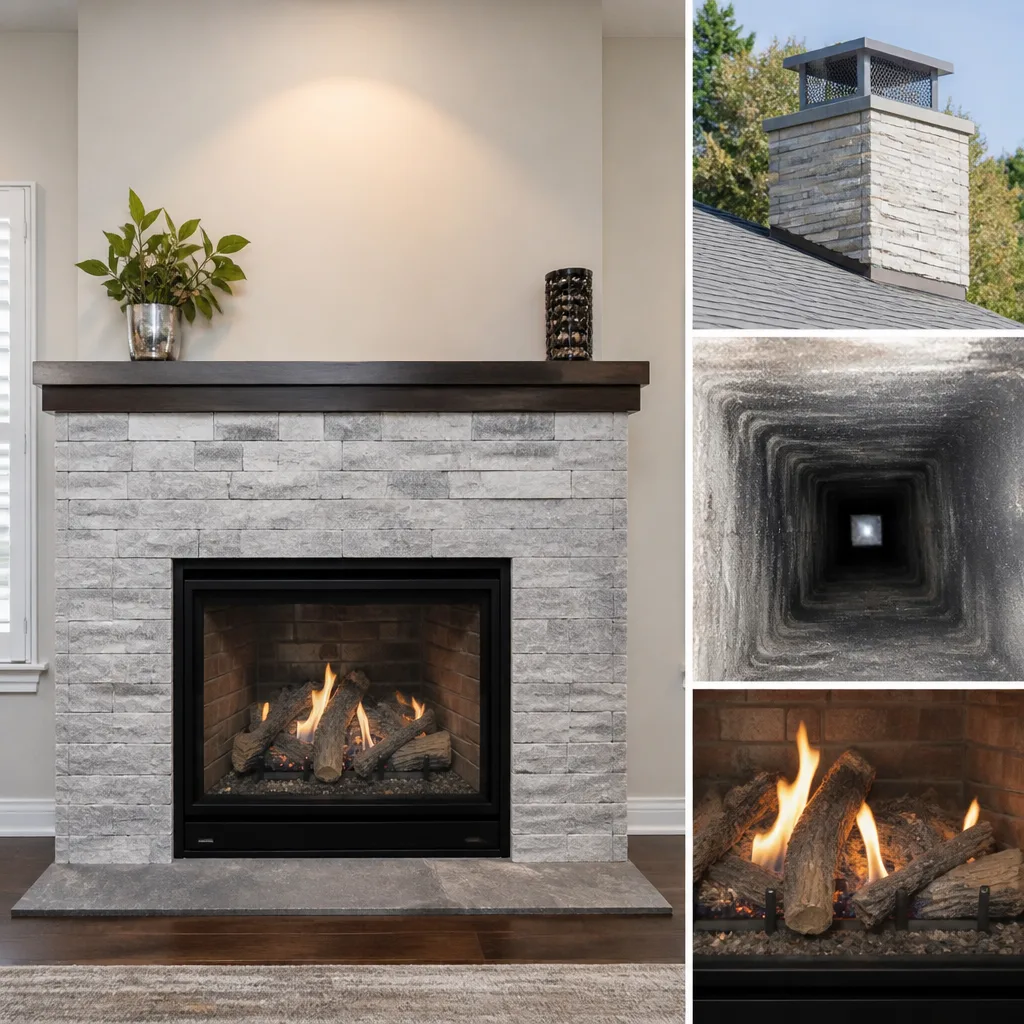
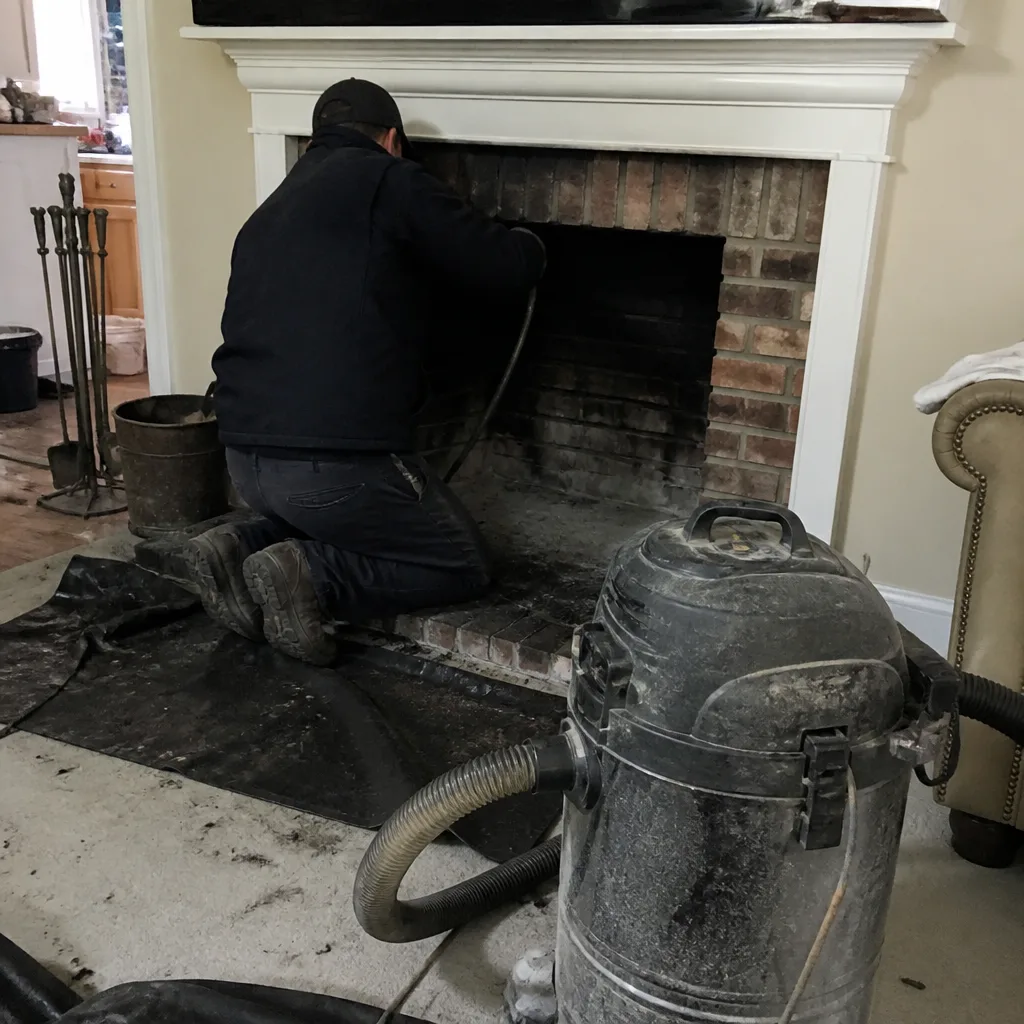 Before
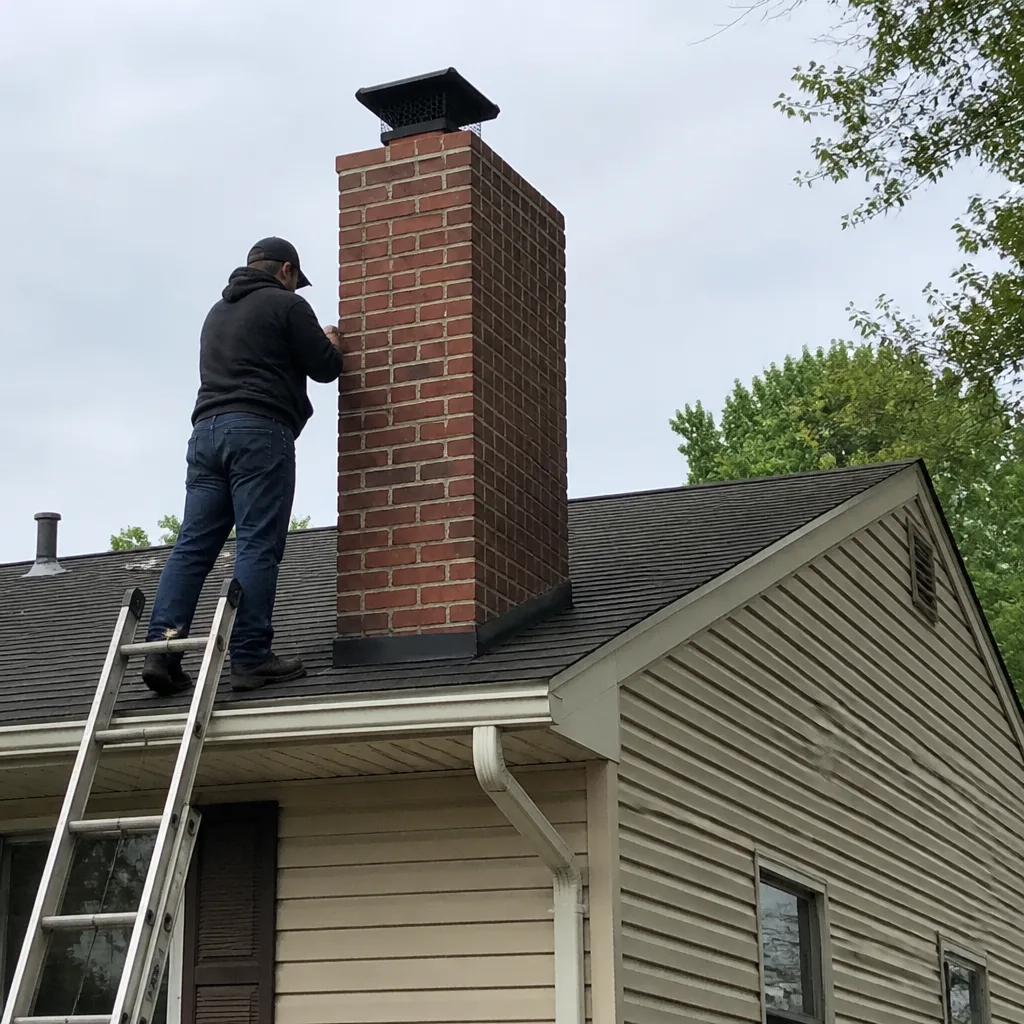 After
After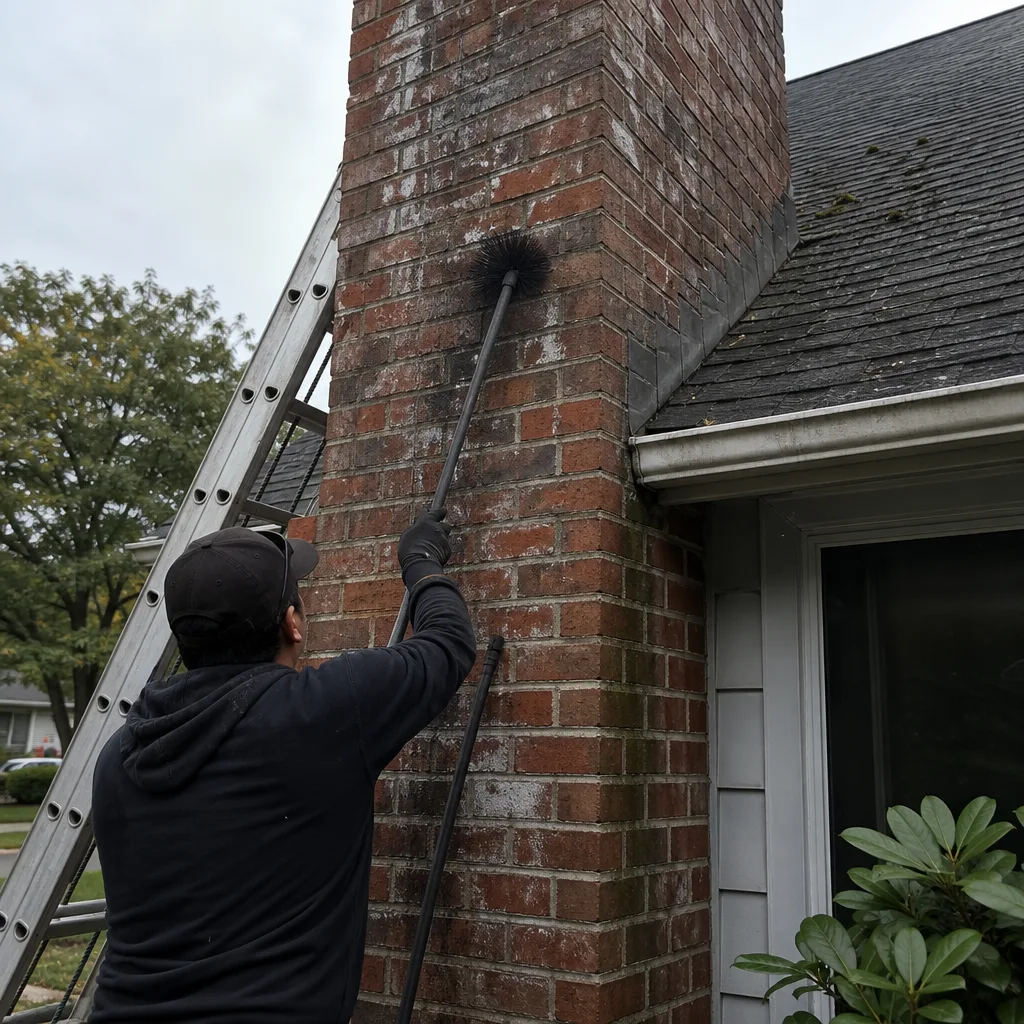 Before
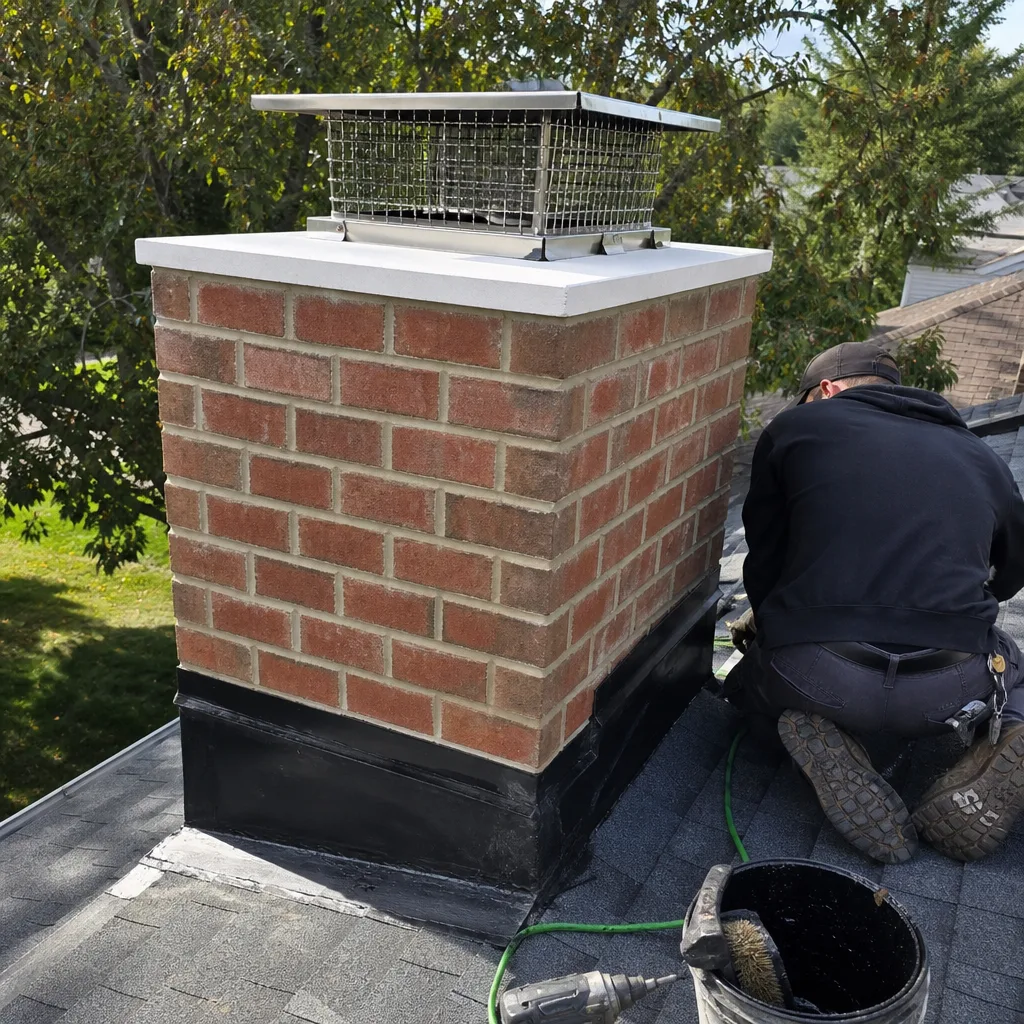 After
After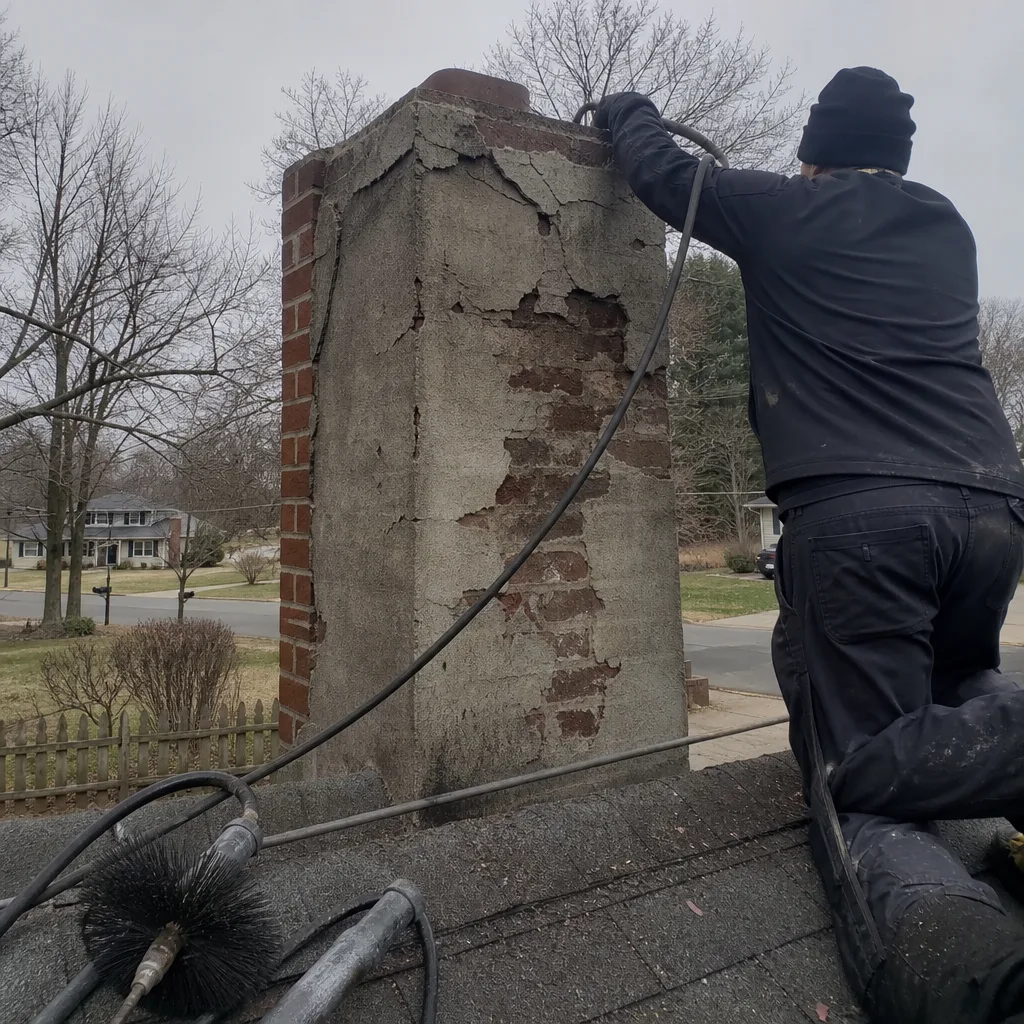 Before
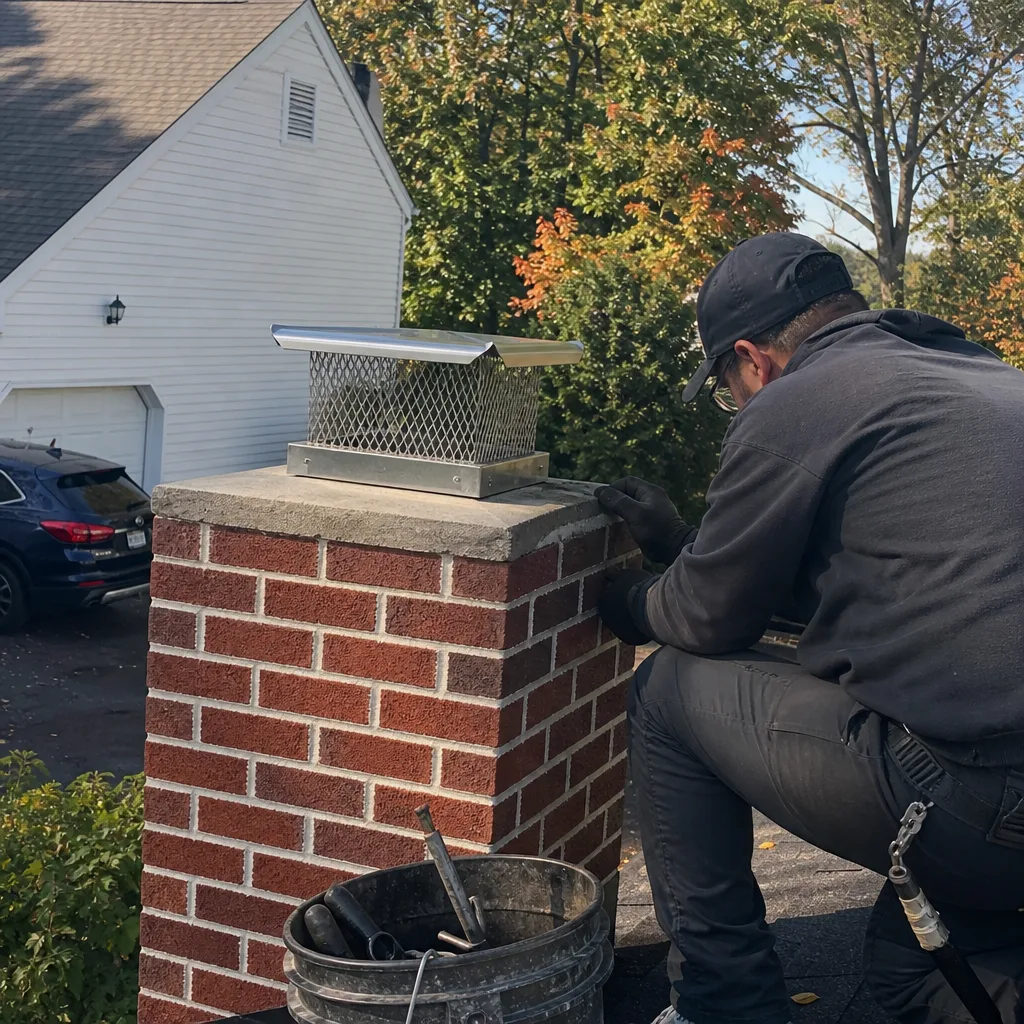 After
AfterChimney Cleaning & Sweep Maintenance Checklist for Gaithersburg Homeowners
The most common chimney checklist item you’ll find online is “check for creosote buildup.” That advice is nearly useless without telling you what you’re actually looking at. Creosote doesn’t arrive as one uniform substance. It deposits in three distinct stages, and each one carries a different level of risk and requires a different response. This guide is built for Gaithersburg homeowners who want a checklist that names specific conditions, gives you measurable benchmarks, and tells you exactly when to pick up the phone. We’ll walk through what you can observe from your firebox, what takes a flashlight at the throat, and what only a camera scan down the flue can reveal.
Quick Answer
A working chimney maintenance checklist for Gaithersburg homeowners has three tiers: what you can see from the firebox (creosote stage, damper movement, debris), what you can check with a flashlight at the throat (smoke chamber coating, damper seal, flue misalignment), and what requires a professional camera scan (liner cracks, hidden Stage 3 glazing, crown spalling from Maryland freeze-thaw cycles). A professional Chimney Cleaning & Sweep in Gaithersburg runs $189 to $379 as a standalone service. If you see Stage 2 (tar-like) or Stage 3 (glazed) creosote, don’t light another fire before a Level 2 inspection.
Table of Contents
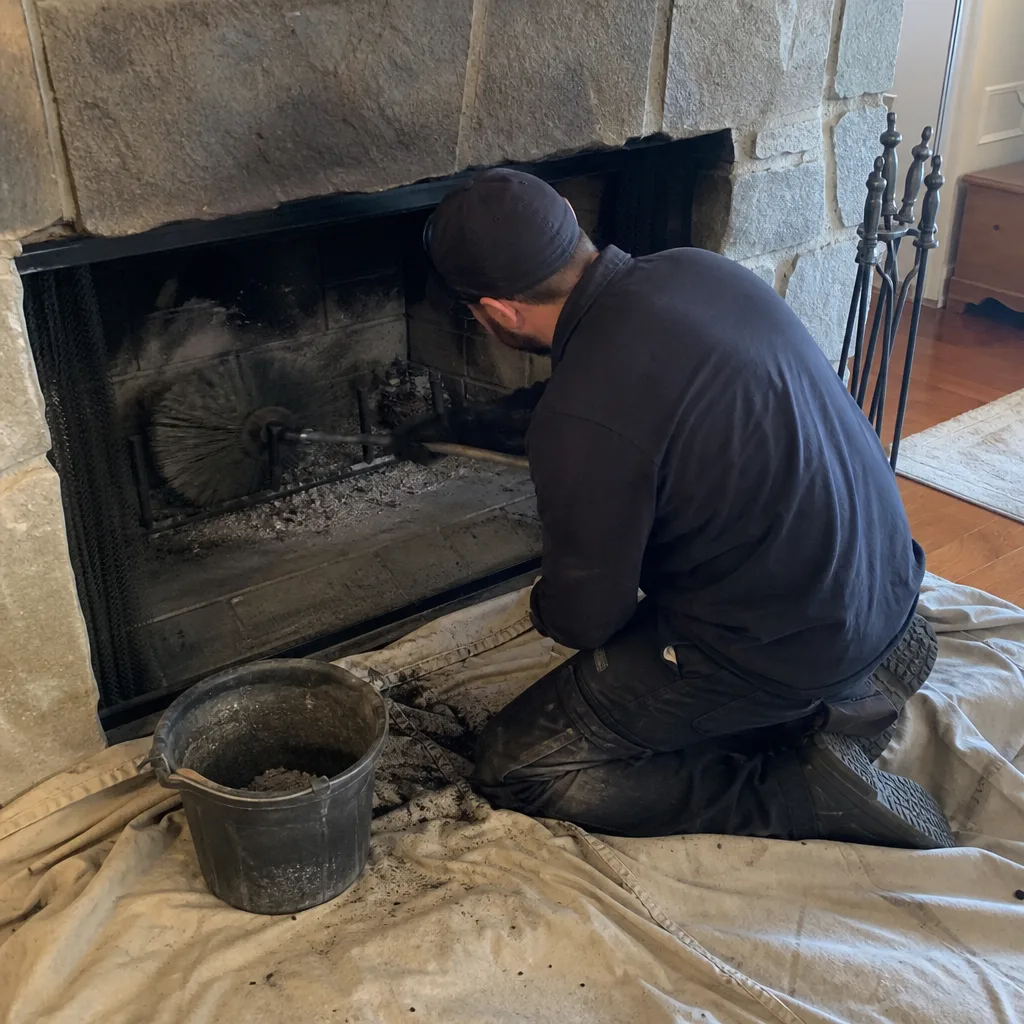
- Why Gaithersburg’s Climate Changes the Checklist
- Tier 1: What You Can Check From the Firebox
- Tier 2: What Takes a Flashlight at the Throat
- Tier 3: What Only a Camera Down the Flue Can Show
- Creosote Stages: What to Measure and What the Measurement Means
- Seasonal Timing: When Gaithersburg Homeowners Should Schedule
- What a Professional Visit Should Add to the Checklist
- Common Mistakes to Avoid
- When to Call a Professional
- Frequently Asked Questions
- The Bottom Line
BeforeAfterWhy Gaithersburg’s Climate Changes the Checklist
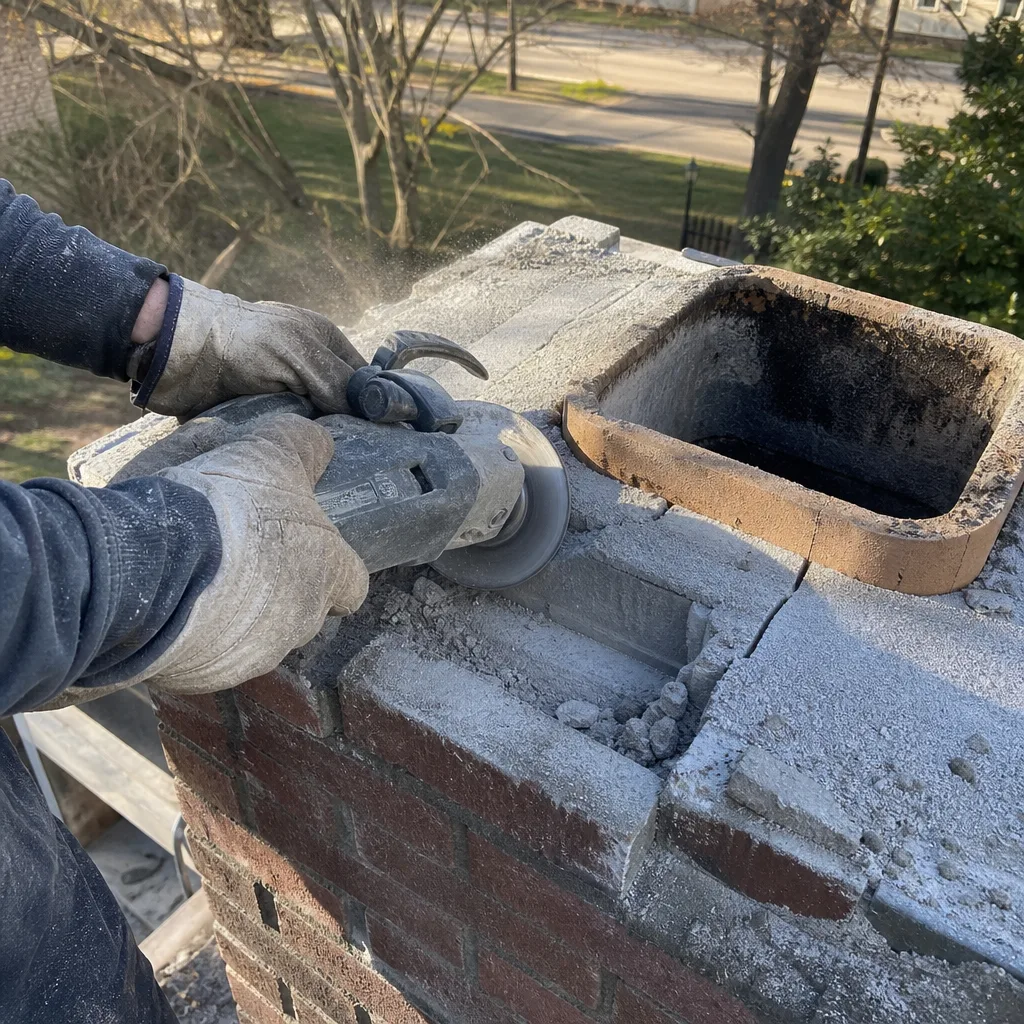
Gaithersburg sits in a freeze-thaw band that punishes masonry. The average winter sees enough nights below freezing and enough days above it that water works its way into hairline cracks, freezes, expands, and widens those cracks each season. A hairline crack in a chimney crown that would stay dormant in a drier climate becomes a spalling problem in Gaithersburg within three to five years. That’s not a guess. We see it in neighborhoods across Montgomery County, from Washingtonian Woods to Kentlands to Lakelands, where crown deterioration follows the same freeze-thaw pattern year after year.
What this means for your checklist: crown inspection isn’t a “once every few years” item here. It’s an annual observation, and the question isn’t whether the crown has cracks. It’s whether those cracks have changed since last year. The second Gaithersburg-specific factor is humidity. Summer humidity in this part of Maryland keeps creosote deposits softer and more tar-like longer into the season than in dry western climates. Stage 2 creosote, the sticky, tar-like deposit that scares professionals, forms faster here because combustion byproducts bond with ambient moisture before they can fully cure into Stage 1 flakes.
Tier 1: What You Can Check From the Firebox
This tier requires no tools beyond your eyes, a flashlight, and about five minutes. You’re looking for conditions you can observe while standing in front of the fireplace with the damper open. None of these items require you to climb onto the roof or reach into the flue. They’re observations, not repairs. And they tell you whether a professional sweep is a routine matter or something more urgent.
- Creosote stage visible on the damper plate or firebox walls. Scratch the surface lightly with a fireplace poker or metal tool. If it flakes off dry and measures under 1/8 inch, that’s Stage 1, normal. If it smears and feels tacky, that’s Stage 2. If it’s shiny, hard, and looks like black glass, that’s Stage 3. Each stage tells you something different, and the full breakdown is in the section below.
- Damper opens, closes, and holds position. A damper that won’t fully open restricts airflow and sends smoke back into the room. One that won’t fully close leaks conditioned air up the chimney year-round, which shows up as a Gaithersburg utility bill that’s stubbornly high in July for no obvious reason. If the handle sticks or the plate feels loose, note it.
- Debris in the firebox. Twigs, leaves, or nesting material at the base usually means the chimney cap is damaged, missing, or the wrong size. In Gaithersburg, squirrels and starlings actively look for uncapped or poorly capped flues, and a blocked flue is a carbon monoxide risk, not just a nuisance.
- Moisture staining on the firebox walls. Dark water stains or white mineral streaks on the brick or refractory panels mean water is entering from above, typically through the crown, flashing, or a damaged cap. In Gaithersburg’s freeze-thaw climate, this is a repair that gets more expensive every season it’s deferred.
- Spalling in the firebox. Crumbling brick faces, thin flaky brick shards on the floor, or exposed mortar joints indicate the firebox is absorbing moisture and failing. If the brick crumbles when you press it with a gloved thumb, you’re past the observation stage and into repair territory.
None of these observations require you to do anything dangerous. If any of them look off, photograph them. A clear photo on your phone gives the sweep something concrete to review before arriving, which gets you an accurate scope and avoids a tech showing up to find a different problem than described.
Tier 2: What Takes a Flashlight at the Throat
The throat is the area just above the damper where the firebox narrows into the flue. It’s the transition zone, and it’s where several problems show up early. You’ll need a bright flashlight and ideally a small mirror to see the full throat surface. This is still done from inside the home. You’re not on a ladder, not on the roof, and not reaching past the damper frame.
- Smoke chamber coating condition. The smoke chamber is the angled section between the throat and the flue. Most older Gaithersburg chimneys have corbeled brick smoke chambers that were never parged, or had the parge layer degrade years ago. Parging is a smooth, heat-resistant coating applied over the corbeled brick. Without it, creosote accumulates in every brick ledge. What you’re checking: can you see rough, stepped brick surfaces above the damper? If yes, and especially if there’s black, tarry material accumulated in those ledges, that’s Stage 2 creosote in a hard-to-reach spot, and it’s a professional job.
- Damper seal integrity. With the damper closed and a flashlight pointed at the edges, look for slivers of daylight around the frame. A worn damper seal leaks air continuously. Over a Maryland heating season, that’s real money, and it also changes how your chimney drafts on cold starts.
- Flue tile alignment at the first joint. With the damper open, angle the flashlight upward. Look for any tile that appears shifted, cracked, or has a visible gap at a joint. You may not see far, but the first tile is often the one that shifts first when the crown or cap has failed and water has been running down the flue interior. If you see a step or offset at that joint, note it.
- Evidence of a past chimney fire. Warped damper metal, rainbow-colored heat markings on the throat metal, or cracked flue tiles are indicators that a chimney fire happened before you owned the home. Chimney fires can burn at 2,000 degrees Fahrenheit, and the damage doesn’t always announce itself. If you see these signs, the chimney needs a camera inspection before it’s used again.
This tier catches things that Tier 1 can’t. The throat is where smoke transitions from a wide space into a narrow one, and that’s exactly where turbulence deposits creosote fastest. Gaithersburg homes built in the 1980s and 1990s, common in neighborhoods like Quince Orchard and Montgomery Village, often have unparged smoke chambers. If your home falls in that window, check this area more closely, not less.
Tier 3: What Only a Camera Down the Flue Can Show
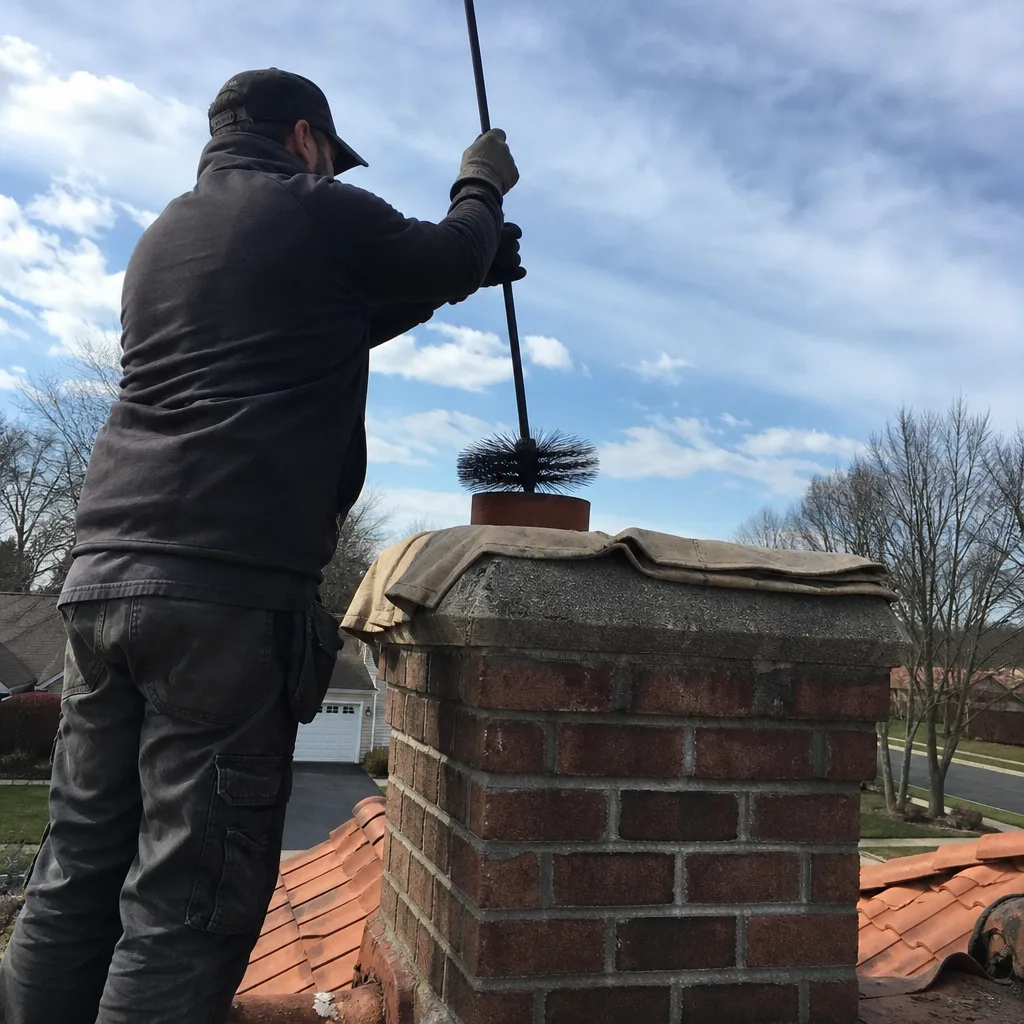
Some conditions are invisible from the firebox, no matter how bright your flashlight or how carefully you angle a mirror. The flue runs 15 to 35 feet up through the center or side of your home. Its middle section can hold a crack, a blockage, or a Stage 3 glaze that you’d never see from below. A professional camera scan, the same kind that’s standard on every visit under Chimney Cleaning & Sweep in Gaithersburg, is the only way to document these conditions. Here’s what the camera typically reveals:
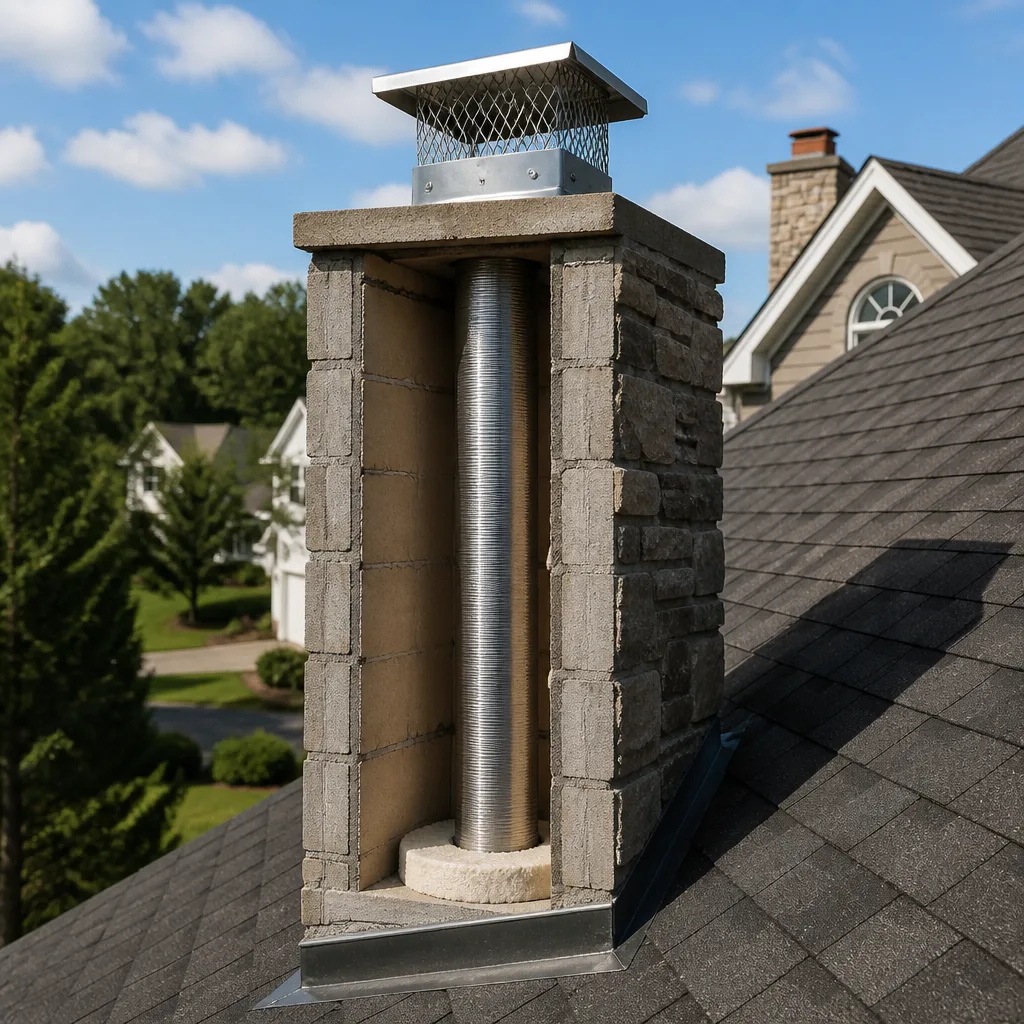
- Hidden flue liner cracks. Hairline cracks in clay tile liners, especially common in Gaithersburg homes where freeze-thaw has worked on the crown for decades, allow heat and gases to reach the chimney structure. The camera shows the crack, its location, and its length.
- Stage 3 glazed creosote mid-flue. Glazed creosote doesn’t need to start at the firebox. In a flue that’s seen low-temperature fires or unseasoned wood, the glaze can form in the middle segments where the chimney passes through a cold attic, condensing the smoke before it exits. This deposit is fuel, and it’s stubborn fuel. Chemical logs don’t remove it. A brush doesn’t remove it. It takes mechanical removal or chemical treatment specifically for glaze.
- Mid-flue blockages. A nest, a dead bird, or accumulated creosote can create a bottleneck in a flue segment that looks clear from below. Gaithersburg’s older housing stock, particularly split-level and center-hall colonials, often has flues with bends, and bends collect debris.
- Separated flue sections. When mortar between flue tiles fails, sections can shift. The camera shows an offset that creates a ledge where creosote piles up and where hot gases leak laterally into the chimney chase. This is a repair condition, not a cleaning condition.
- Damaged crown visible from the flue interior. The camera view doesn’t replace a roof-level crown inspection, but water tracking down the flue interior is often visible on camera before the crown damage is visible from outside. The camera gives you an inside-out view of what the weather is doing to the top of your chimney.
Under Clause 4 of the Haven Standard, every visit includes a camera-scan inspection and a documented photo record. That standard has been in place since 2009, when we made camera documentation the default rather than an add-on. The result is a record you can pull up next year, compare to this year, and use to make a decision based on change, not guesswork.
Creosote Stages: What to Measure and What the Measurement Means
Creosote is the residue from incomplete wood combustion. It’s made of tar, soot, and moisture, and it deposits on flue walls at different densities depending on fire temperature, wood moisture, and chimney draft. The stage of creosote in your flue changes the answer to “when do I need a sweep” from a vague recommendation to a measurable decision, as detailed in our Complete Guide to Chimney Cleaning in Gaithersburg. Here’s how we classify it in the field, and what each stage means for a Gaithersburg homeowner.
Stage 1: Flaky, dusty, under 1/8 inch
Stage 1 creosote is dry, flaky soot that brushes off easily. It measures under 1/8 inch thick, usually much thinner. You’ll see it as a dull black dusting on the damper plate, firebox walls, or the first few feet of flue. This is normal for any active fireplace and represents a routine cleaning condition. A standard sweep with brushes removes it. You’re not in danger, and your chimney can continue operating normally. But this is also the stage that progresses to Stage 2 if you’re burning green or partially seasoned wood, which is very common in Gaithersburg’s humid summers, where firewood left uncovered absorbs moisture from the air even after it’s seasoned.
Stage 2: Tar-like, shiny in patches, smears when touched
Stage 2 creosote is a different animal. It’s condensed tar, black and brown in patches, and it smears rather than flakes when scraped. It forms when flue temperatures stay below 250 degrees, which happens with low-burning fires, oversized flues, unseasoned wood, or a chimney that runs through a cold exterior wall. Humidity accelerates it. A Montgomery County home with a damp crawlspace or a woodpile stored against a north-facing wall will produce Stage 2 creosote faster than a dry, interior chimney burning properly seasoned hardwood. Stage 2 does not brush out with standard sweeping. It requires mechanical removal with rotary tools or chemical treatment, and it’s concentrated fuel for a chimney fire. If you identify Stage 2 in your chimney, schedule a professional sweep before the next fire. This is the single most common finding we see in Gaithersburg homes where the fireplace has been used for a season or two without maintenance.
Stage 3: Glazed, rock-hard, glass-like surface
Stage 3 creosote is the result of a chimney fire or repeated high-heat cycles that have baked Stage 2 deposits into a hard, caramelized glaze. It looks like black glass, often with a sheen, and it rings when tapped with a metal tool. It’s also extremely difficult to remove. Standard brushes bounce off it. Rotary wire brushes struggle. The removal process usually involves chemical treatment, dwell time, and repeated mechanical passes. Stage 3 is the condition where a chimney fire has already happened or is waiting to happen, and it’s the most common condition we find when a homeowner in Gaithersburg says, “We haven’t had the chimney cleaned since we bought the house.” If you have Stage 3, don’t attempt any DIY removal. A professional needs to see it on camera, measure its thickness, and recommend a removal plan. This is also the condition most likely to require a liner evaluation afterward, because the glaze often masks cracks that only a camera reveals once the coating is removed.
What these stages mean for your checklist: when you scrape the firebox or damper, you’re measuring the stage, not guessing at it. Under 1/8 inch and flaky means schedule a sweep on a normal timeline. Tar-like and sticky means schedule before you burn again. Glazed and hard means the chimney needs a professional evaluation before you put a match near it. The measurement tells you what to do next.
Seasonal Timing: When Gaithersburg Homeowners Should Schedule
Gaithersburg’s heating season runs roughly from mid-October through late March, with the first fires usually lit in October and the last in April. The practical question is when to book a sweep, and the answer depends on whether you’re planning for the season ahead or reviewing what the season did to your chimney.
Pre-season scheduling: August through mid-October. The best time to have your chimney inspected and cleaned in Gaithersburg is before you light the first fire. August and September are ideal because the flue is dry from summer heat, which makes cleaning more effective and inspection photography clearer. Creosote that’s been baking in a warm flue for months flakes more readily. A dry flue also shows hairline cracks better on camera, because moisture hasn’t filled them in and obscured the photo. October gets busy, and you’ll be competing for appointments with everyone who waited until the first cold snap. If you want the technician to take their time and you want dates that fit your schedule, August and early September are the practical window.
Post-season scheduling: April and May. A post-season sweep has one real advantage: it removes the season’s creosote before it has a full Maryland summer to absorb humidity and convert from Stage 1 to Stage 2. Creosote is hygroscopic. It pulls moisture from the air, and Gaithersburg summers are humid enough to turn a thin, brushable Stage 1 deposit into a sticky Stage 2 problem by September. Cleaning in April or May also means the chimney sits clean and dry all summer, and you’re not worried about acidic creosote interacting with humid air against your liner for months. The trade-off is that most people aren’t thinking about their fireplace in April, and scheduling a sweep when the weather turns warm takes more discipline than booking one when the forecast says frost.
If you burn more than a cord of wood per season, split the difference. Gaithersburg homeowners who are their primary heat source, not just the occasional weekend fire, should sweep mid-season. A cord of hardwood produces enough creosote in a standard flue that a single annual cleaning after the season is running on a thin margin. The National Fire Protection Association standard, NFPA 211, says chimneys should be inspected at least once a year and cleaned when soot or creosote accumulation reaches 1/8 inch. Heavy burners hit that threshold in six weeks, not six months. If you’re in this camp, pre-season and post-season both matter, and for many, a mid-season cleaning between January and February is the layer that keeps Stage 2 from ever forming.
For reference, standalone chimney sweep pricing in the Gaithersburg area runs roughly $189 for a basic sweep of a straight, accessible flue to $379 for a larger home, a two-story chimney with a roofline that requires more setup, or heavy creosote that calls for rotary cleaning. A Chimney Repair in Gaithersburg evaluation is a separate service, but if the sweep turns up a repair condition, you’ll want a written scope and a written price before any work is approved.
What a Professional Visit Should Add to the Checklist
Your home checklists are observations. A professional visit should produce documentation. When the sweep is done, you should walk away from the appointment with things you can hold, review, and file. If a company’s entire deliverable is “we cleaned it,” you’ve missed the value of the visit, and you have no record to compare against next year. Here’s what a documented visit under the Haven Standard includes in Gaithersburg:
- Camera scan photos. Before and after images of the flue interior. You should be able to see the same sections, the same angles, and the same conditions. Under Clause 4 of the Haven Standard, the photo record has been required on every job since 2009, and it’s the only way to verify whether a crack is new this year or unchanged from three years ago.
- Written scope and written price before work starts. Clause 1 of the Haven Standard, which we call H.A.V.E.N. ‘Have it in writing,’ requires a written scope and written price delivered before anyone starts. Not a verbal estimate. Not a “we’ll see what we find and bill you later.” When the tech arrives, you get a written document that says: this is the condition, this is what we’ll do, this is what it costs.
- Written warranty on completion. Whatever work was done carries a written warranty, and it’s handed to you on the way out, not emailed two weeks later. If you need to make a claim, you have the document in hand.
- Named technician and dispatch notification. You should know who is coming to your home before they arrive. Background-checked, uniformed technicians with license information on the page are the baseline. A text when the tech is on the way is standard practice, not an upgrade.
- Comparison notes for next year. The photo record from this visit becomes the baseline for the next visit. When next year’s sweep produces fresh photos, you can lay them side by side and see what’s changed. That’s the difference between a maintenance program and a series of disconnected one-off sweeps.
If a company in Gaithersburg offers you a cleaning with no camera, no written scope, and no photos, you’re getting a flashlight and a brush. That’s what the industry standard was before camera documentation became the norm. It’s not enough when the stakes are a chimney fire or a carbon monoxide leak.
Common Mistakes to Avoid
- “Checking” for creosote without measuring its stage. Seeing black residue and saying “yep, there’s creosote” tells you nothing. Flaky under 1/8 inch and glossy hard glaze are different conditions requiring different responses. Measure, don’t just look.
- Burning unseasoned wood because “it was cheap.” Gaithersburg’s humid summers mean wood needs a covered, ventilated storage area or it reabsorbs moisture. Green or damp wood produces Stage 2 creosote fast, and the “savings” get eaten by a heavier cleaning and a higher fire risk.
- Skipping the damper check because “it always worked before.” A damper that’s been wearing out for years reaches a point where it leaks enough to matter. If your July cooling bill climbs for no apparent reason, or your fireplace gets a draft when the wind blows, the damper seal is the first place to look.
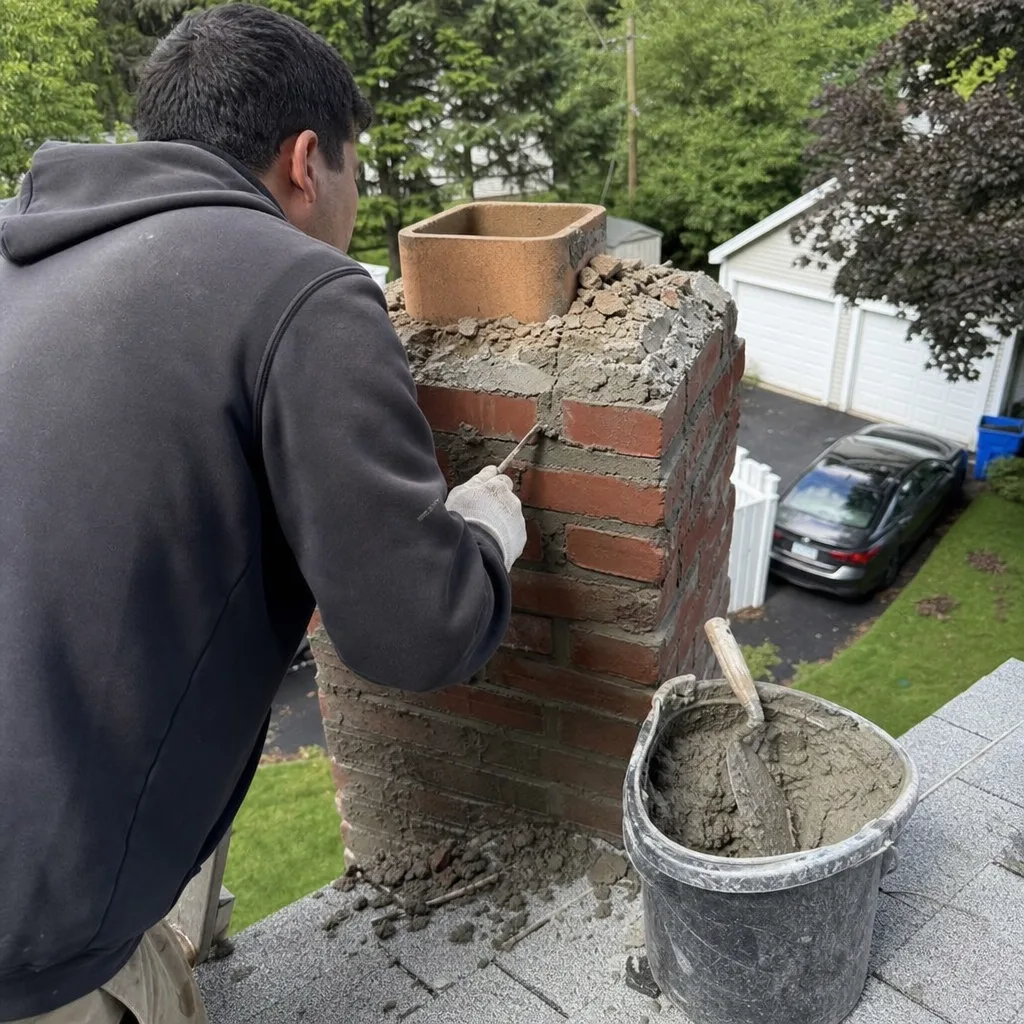
- Deferring crown repair because “it’s just a hairline crack.” In Gaithersburg’s freeze-thaw cycle, a hairline crack is the leading edge of spalling. Crown replacement costs real money. Rebuilding a chimney that’s been spalling for a decade costs a lot more. The crack doesn’t self-heal.
- Using chemical “creosote removal” logs as a substitute for sweeping. These products can alter Stage 1 deposits and make them easier to remove. They do not remove Stage 2 or Stage 3 creosote, and they don’t tell you whether the flue is actually clean. They’re a supplement at best, and using them year after year creates a false sense that the chimney is maintained.
- Burning the fireplace with a known obstruction because “it seemed fine last time.” A nest, a dead animal, or a partial blockage changes your draft, and a changed draft means combustion gases can enter the home. If the chimney has been unused for a season and you haven’t had it inspected, assume something may have moved in. It’s not paranoia. It’s what Gaithersburg’s squirrel population does every spring.
- Treating the sweep and the inspection as the same thing. A sweep removes deposits. An inspection tells you whether the chimney is structurally sound enough to use. You can have a clean chimney that’s still unsafe. A camera scan answers the second question, and it’s the only thing that does.
When to Call a Professional
Call a professional when your observations cross from routine to risky. You see Stage 2 tar-like creosote or anything glossy and hard at Stage 3. You see a shifted flue tile, a mid-flue blockage, or water staining that appeared since last year. You had a chimney fire, saw smoke backing into the room, or your carbon monoxide detector has gone off near the fireplace. You bought a home in Gaithersburg and don’t know the chimney’s history. Any of these conditions warrants a camera-scan inspection before the next fire. Level Two Chimney Gaithersburg offers free estimates in Gaithersburg - call (240) 220-9395. You’ll get a written price before work starts, nothing recommended without photo evidence you can see for yourself, and a clear answer on what can wait.
Frequently Asked Questions
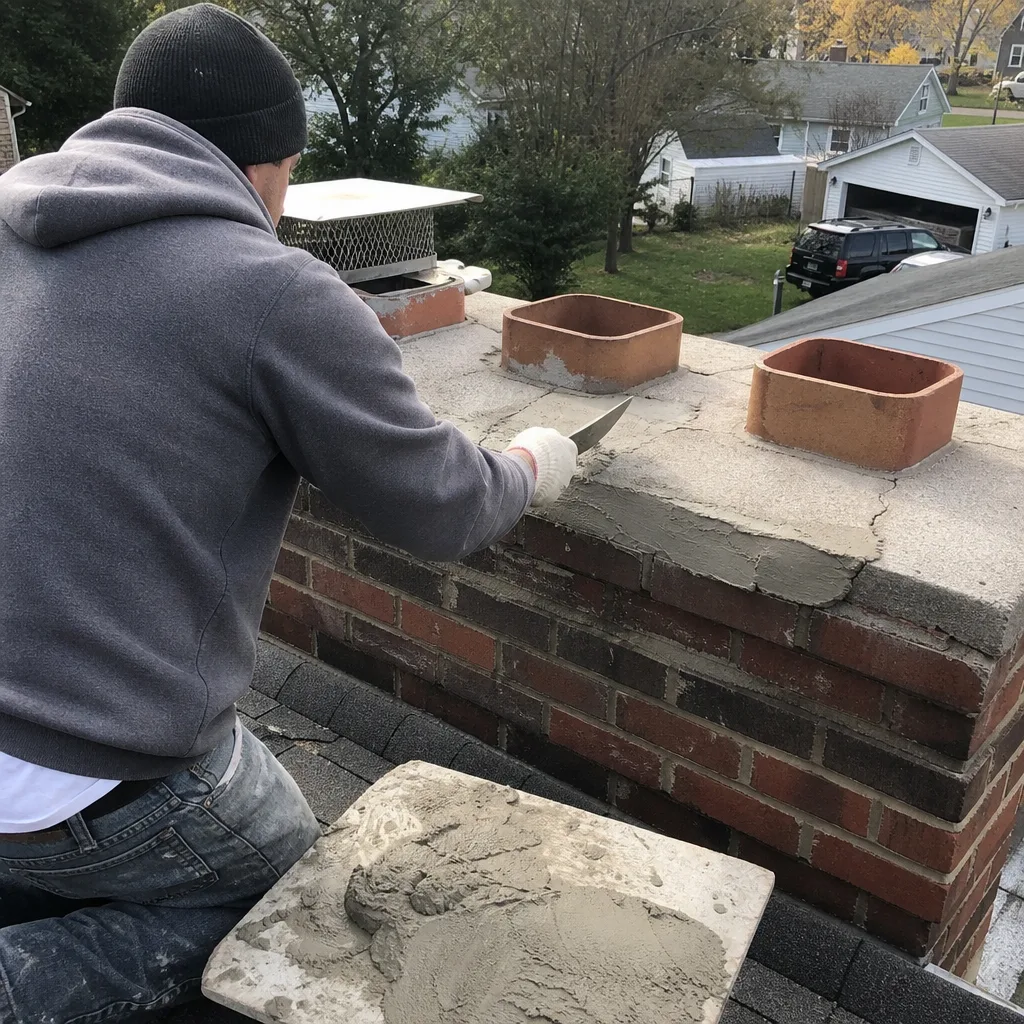
Have your chimney swept when creosote reaches 1/8 inch, which for most Gaithersburg homeowners who burn fires regularly from October through March means once a year as a minimum. If you burn more than a cord of wood per season, plan on two cleanings a year. The moisture in Maryland’s air accelerates creosote conversion from Stage 1 to Stage 2 during the humid summer months, so even light burners should schedule an annual inspection regardless of how few fires they lit. Call (240) 220-9395 to get on the schedule before the fall rush.
A standalone chimney sweep in Gaithersburg runs roughly $189 to $379 depending on flue accessibility, roof pitch, and creosote stage. Basic sweeps of a straight, easily accessed flue are at the lower end. Multi-story chimneys, complex rooflines, and Stage 2 or Stage 3 creosote that requires rotary or chemical treatment push the price toward the upper end. Every job at Level Two Chimney Gaithersburg is quoted in writing before work begins, so you’ll know the exact number before anyone starts. Call (240) 220-9395 for a free estimate.
Not necessarily. A liner recommendation should be based on camera evidence: a cracked flue tile, a separated section, a gap that’s allowing heat and gases to reach the chimney chase, or a liner that’s undersized for the appliance it serves. If a company recommends a liner without showing you the camera images that justify it, get a second opinion. Level Two Chimney Gaithersburg offers a Free Second Opinion on any written estimate, and Level Two Chimney Gaithersburg home information covers what we include on every job. Call (240) 220-9395 with the written quote in hand.
Creosote accumulates, and in Gaithersburg’s humid climate it progresses from Stage 1 flaky deposits to Stage 2 tar-like deposits faster than you’d expect. Stage 2 is concentrated fuel. When it ignites, a chimney fire can reach 2,000 degrees and crack flue tiles, warp dampers, and damage the chimney structure. Even without a fire, accumulated creosote restricts draft, which sends more smoke and combustion byproducts into the living space. The short version: skipping a year is a gamble. Skipping three years is how chimneys get condemned. Call (240) 220-9395 for a camera-scan inspection and a written quote.
You can observe from the firebox, but you can’t clean the full flue from there. The flue runs 15 to 35 feet, and the only way to remove creosote from its entire length is with professional brushes from the roof or a rotary system from below. Any method that claims to clean a chimney from the firebox alone either doesn’t reach the upper flue or involves chemicals that merely alter the creosote without removing it. Leave the cleaning to a professional sweep with the right equipment and the camera to prove the flue is actually clean.
Photograph the firebox, the damper plate, any visible flue tile you can see from below, and the chimney exterior from the ground if there’s visible cracking, spalling, or staining. Send these photos to the company when you book. They give the tech a preview of what they’re walking into and help them come prepared with the right equipment. The more accurately you document what you see, the more accurately the Fireplace Services in Gaithersburg visit can be scoped in advance. Call (240) 220-9395 with questions about what to photograph.
The Bottom Line
A chimney maintenance checklist for Gaithersburg homeowners only works if it asks you to measure, not just look. Measure creosote thickness and stage. Measure damper movement and seal. Document what you see with photos and compare it year to year. In this climate, water and humidity accelerate every problem, so annual attention isn’t a suggestion, it’s the minimum. When you bring in a professional, insist on camera documentation, a written scope, and a written price before work starts. If you can’t see the evidence for a recommendation, don’t approve the work. That’s the whole checklist, and it’s enough to keep a Gaithersburg chimney safe, efficient, and honest for decades. For more guides & resources, visit our blog.
Written by Corrine Halstead, Owner at Level Two Chimney Gaithersburg, serving Gaithersburg since 2009.