
Last updated September 20, 2026
Level 1 sweep and inspection to the NFPA 211 annual standard - flue, crown, cap, and flashing checked and photographed
Chimney sweep logs do not sweep chimneys. They loosen some creosote - which then falls where a brush and vacuum still have to collect it.
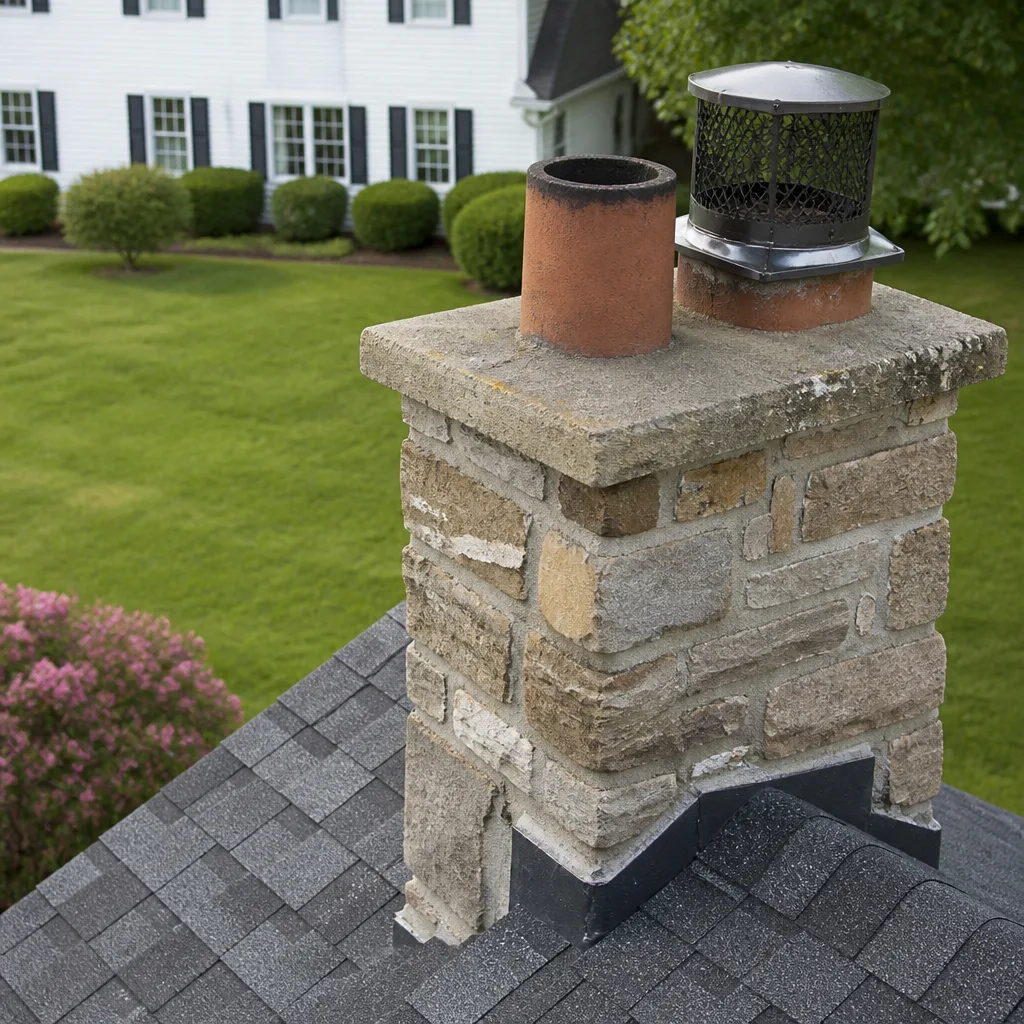
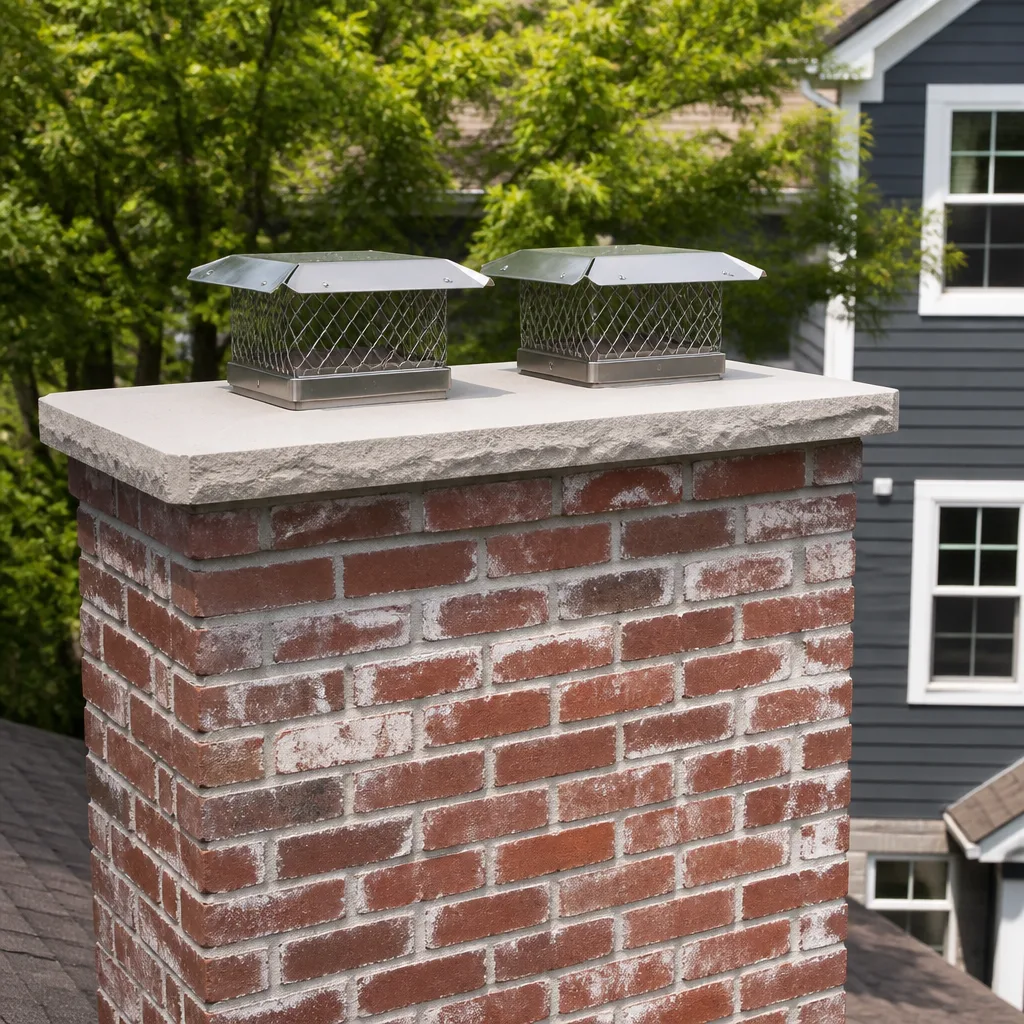
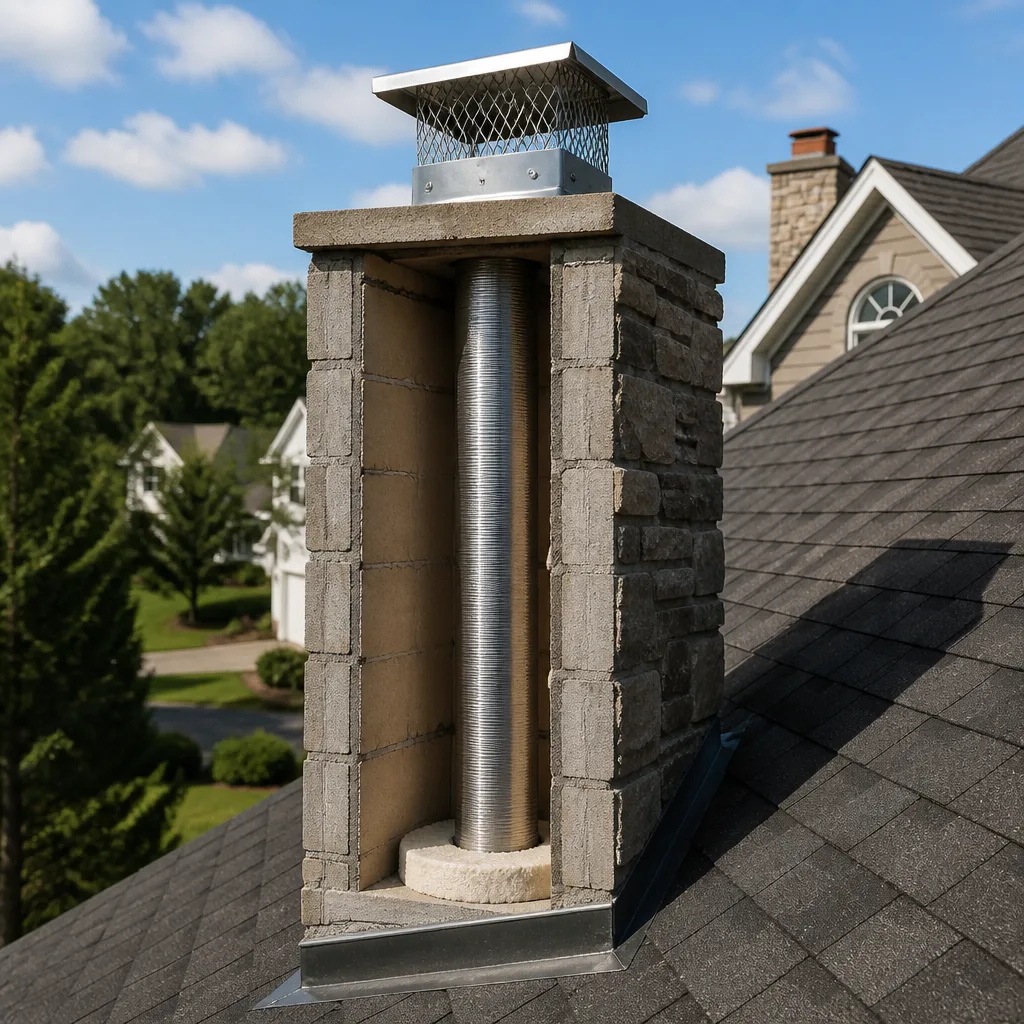
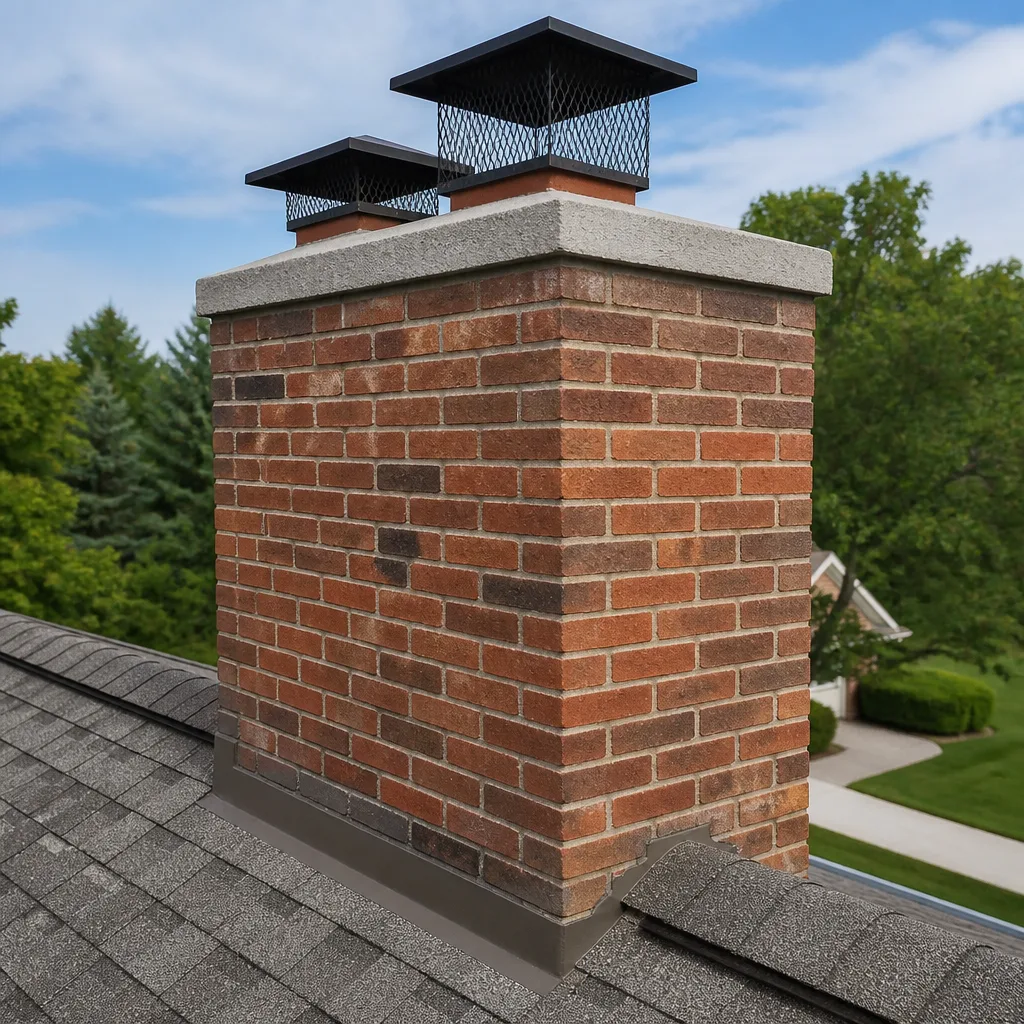
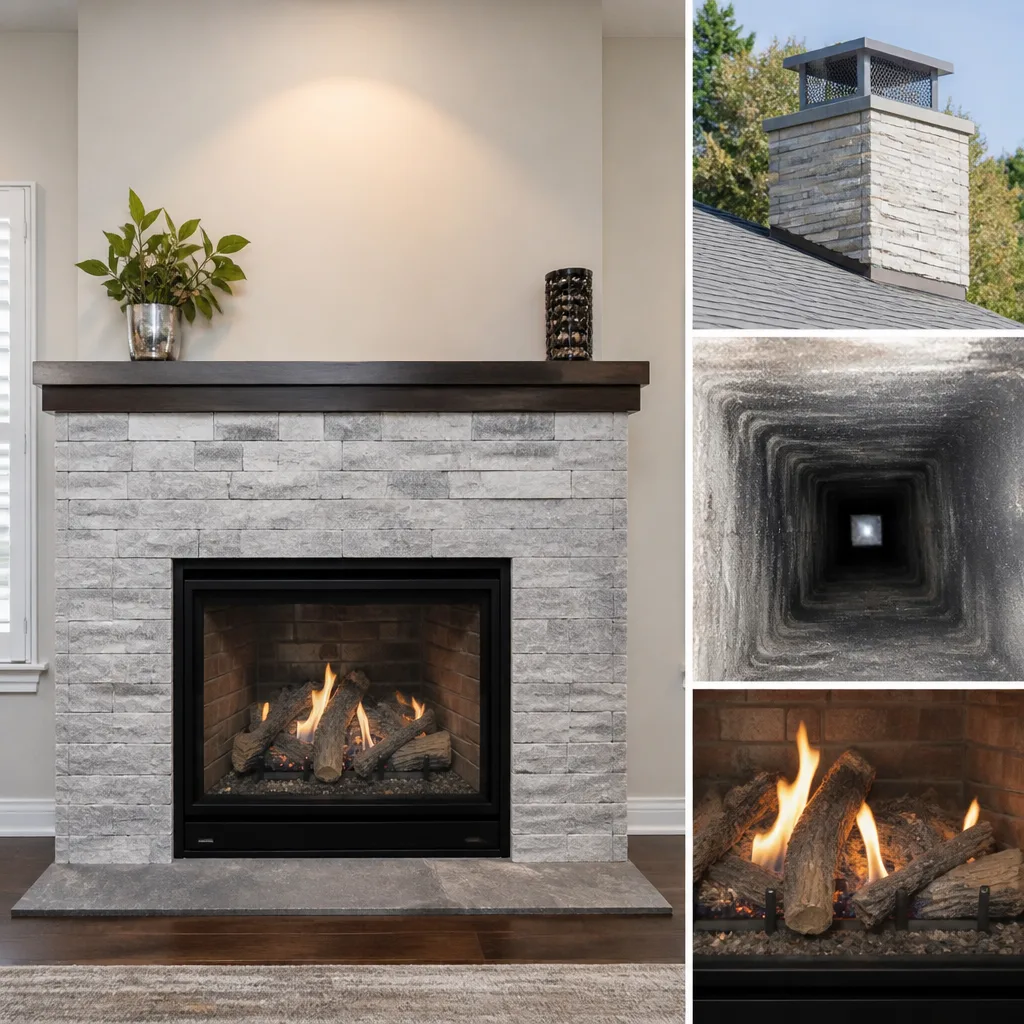
 Before
 After
After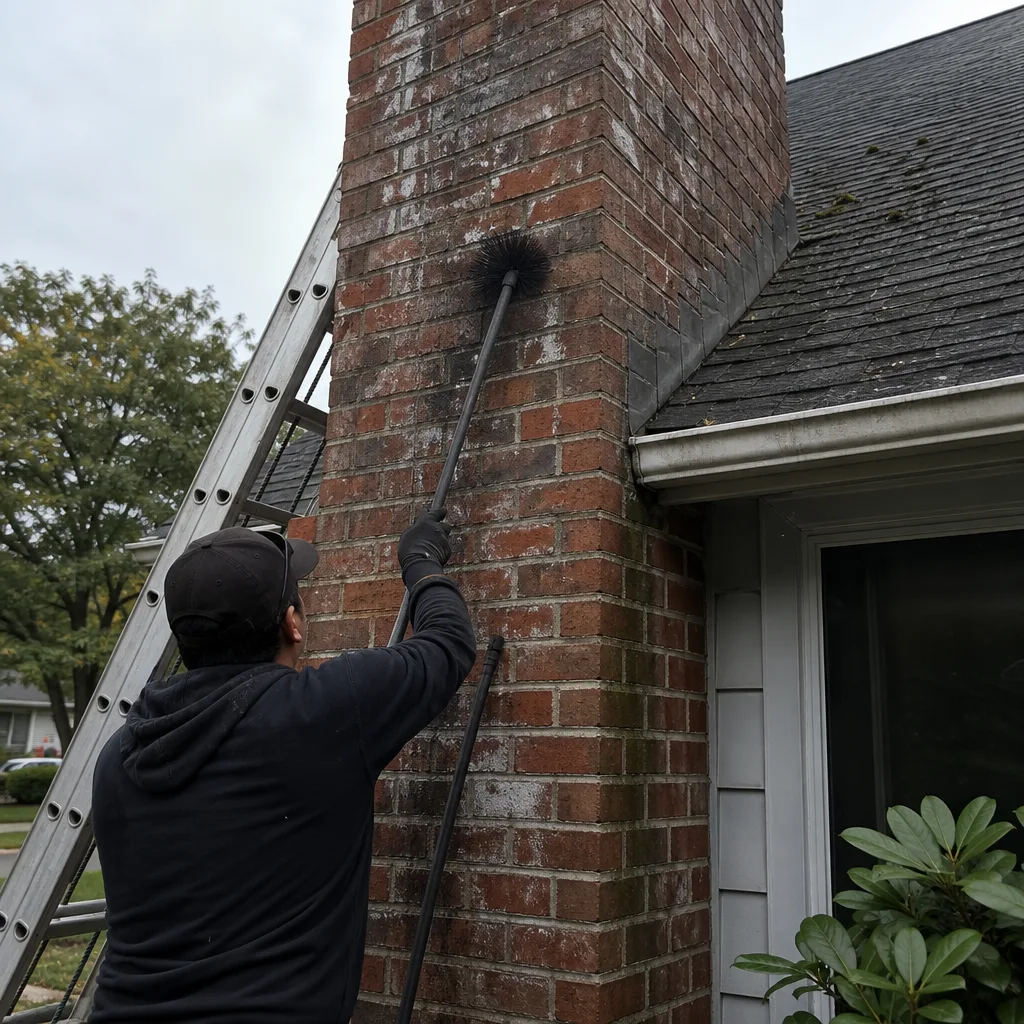 Before
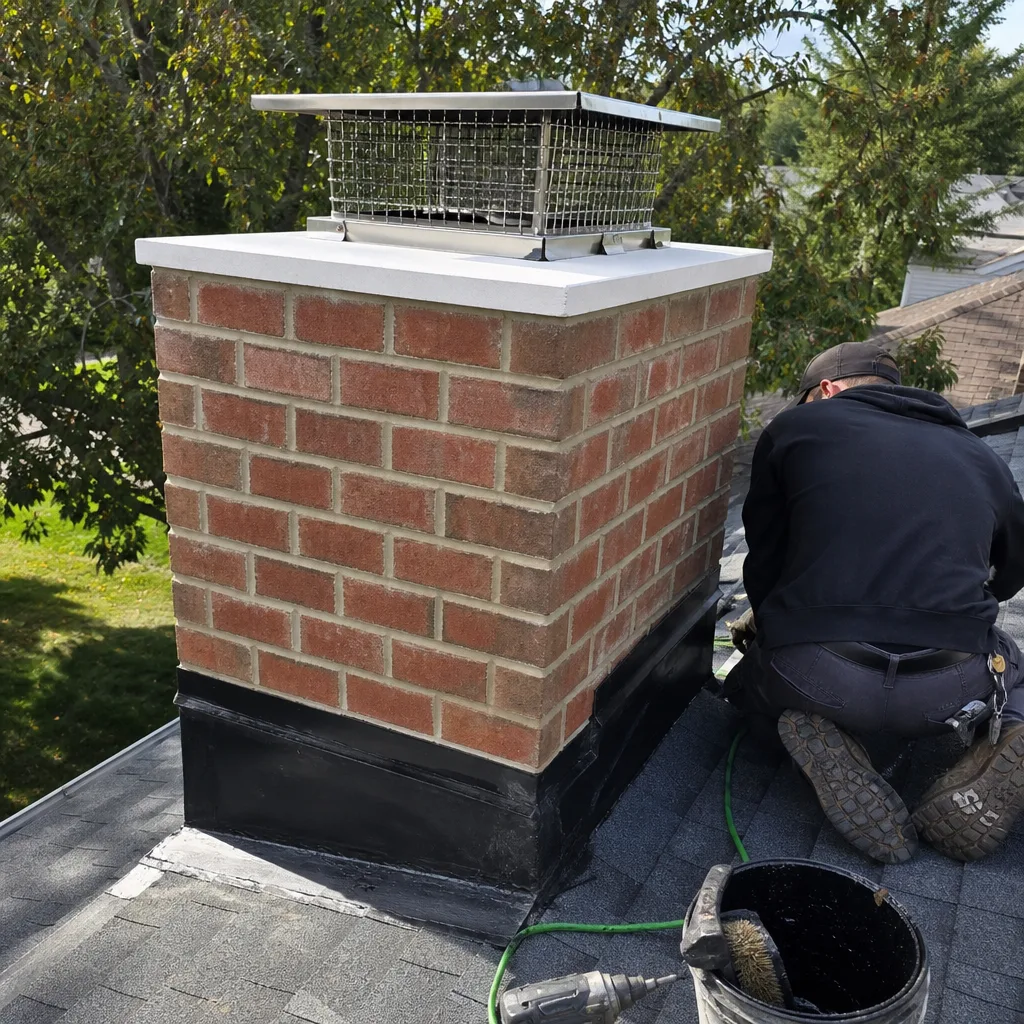 After
After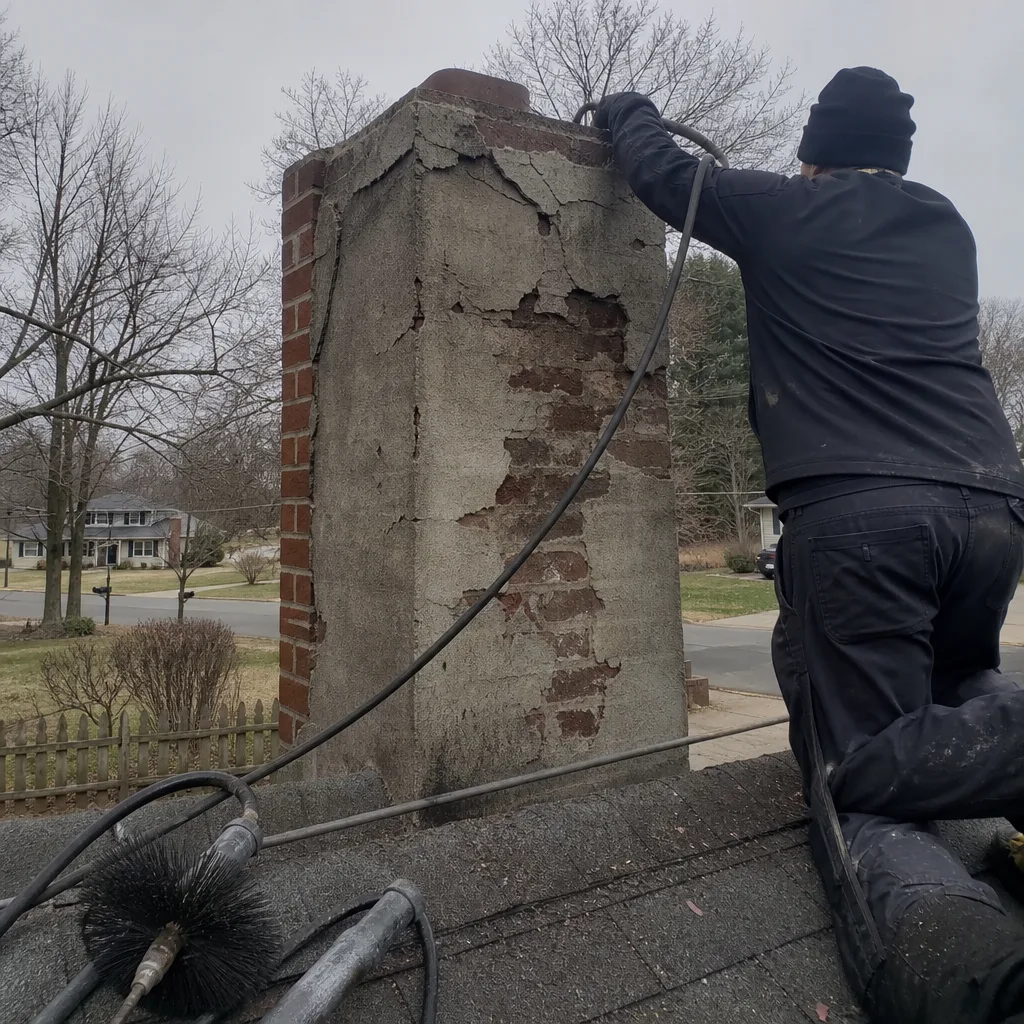 Before
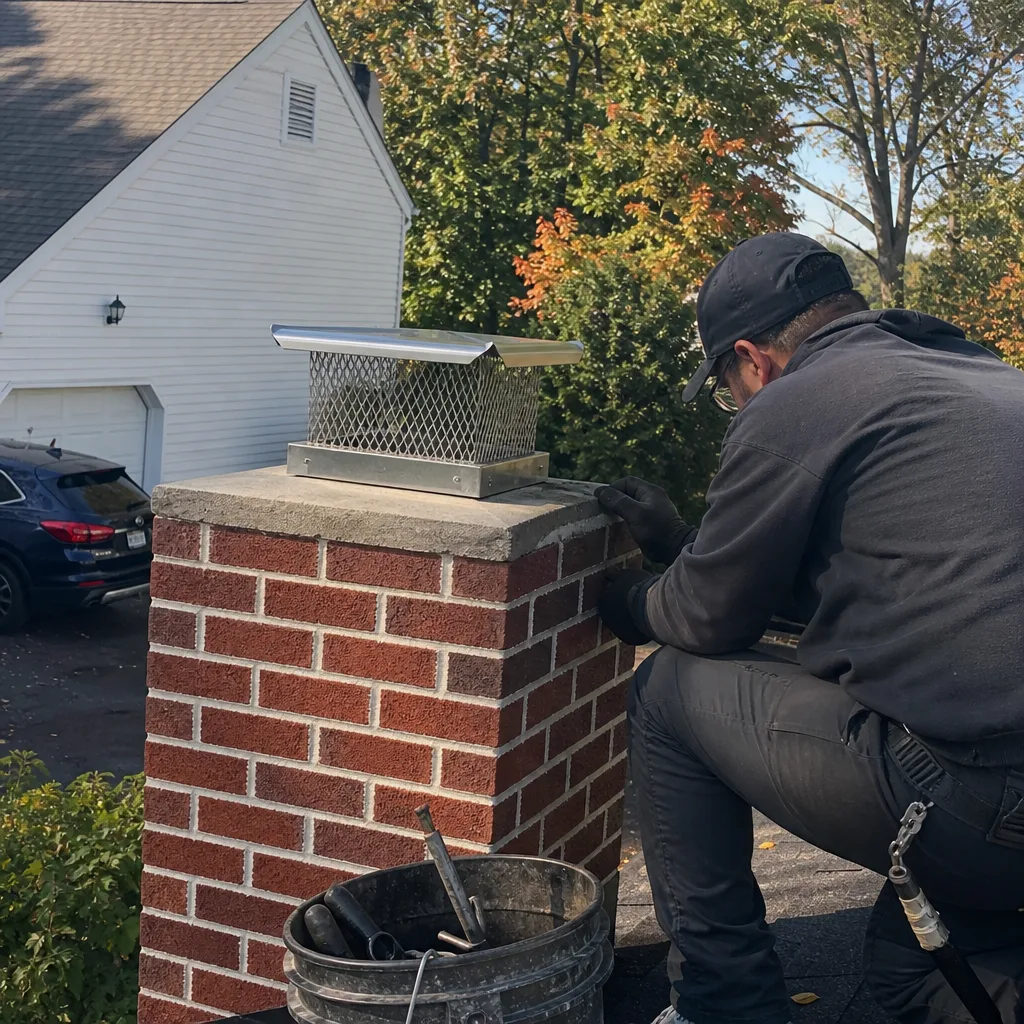 After
AfterDIY vs Professional Chimney Cleaning: The Gaithersburg Homeowner’s Decision Guide
Here’s a number most Gaithersburg homeowners never hear: the equipment to clean your own chimney properly, once, costs about as much as two professional sweeps, and it produces exactly zero documentation. You’ll spend a Saturday on the roof with a brush, a drill, and a shop vac, and at the end you’ll have a cleaner flue than you started with and no way to prove it, no record of what was there before, and no camera footage of what’s still clinging to the liner. This guide walks through the real decision between DIY and professional chimney cleaning for Gaithersburg homes, where our housing stock, our burning season, and our insurance expectations make the choice more specific than most generic advice suggests. For seasonal chimney cleaning care tailored to Gaithersburg, timing and documentation matter as much as the sweep itself. By the end, you’ll know exactly which deposits you can handle yourself, what the equipment actually costs, where documentation becomes the deciding factor, and when the honest answer is that a professional sweep is the only rational choice.
Quick Answer
DIY chimney cleaning is physically feasible for light, powdery Stage 1 creosote on a straight, unlined or clay-lined flue with easy roof access. But the real argument against DIY isn’t danger alone; it’s that brushing without a camera produces no usable information about what was removed, what remains, or what condition the liner was in before you started. For most Gaithersburg homes, a professional sweep with camera documentation costs $189 to $349 and delivers what DIY structurally cannot: a written condition record, a before-and-after photo archive, and an insurance-acceptable maintenance log. If you have anything beyond Stage 1 deposits, a liner, a steep roof pitch, or a pending real estate transaction, the professional route is the only route that leaves you with evidence.
Table of Contents
- What DIY Chimney Cleaning Actually Involves
- Where DIY Is Honestly Feasible in Gaithersburg
- What DIY Cannot Produce: The Documentation Gap
- Equipment Cost Reality: The Break-Even Math
- Liability and Documentation: What Happens in a Claim
- The Decision Matrix: Three Gaithersburg Homeowner Profiles
- How a Professional Sweep Actually Works
- Common Mistakes to Avoid
- When to Call a Professional
- Frequently Asked Questions
- The Bottom Line
BeforeAfterWhat DIY Chimney Cleaning Actually Involves
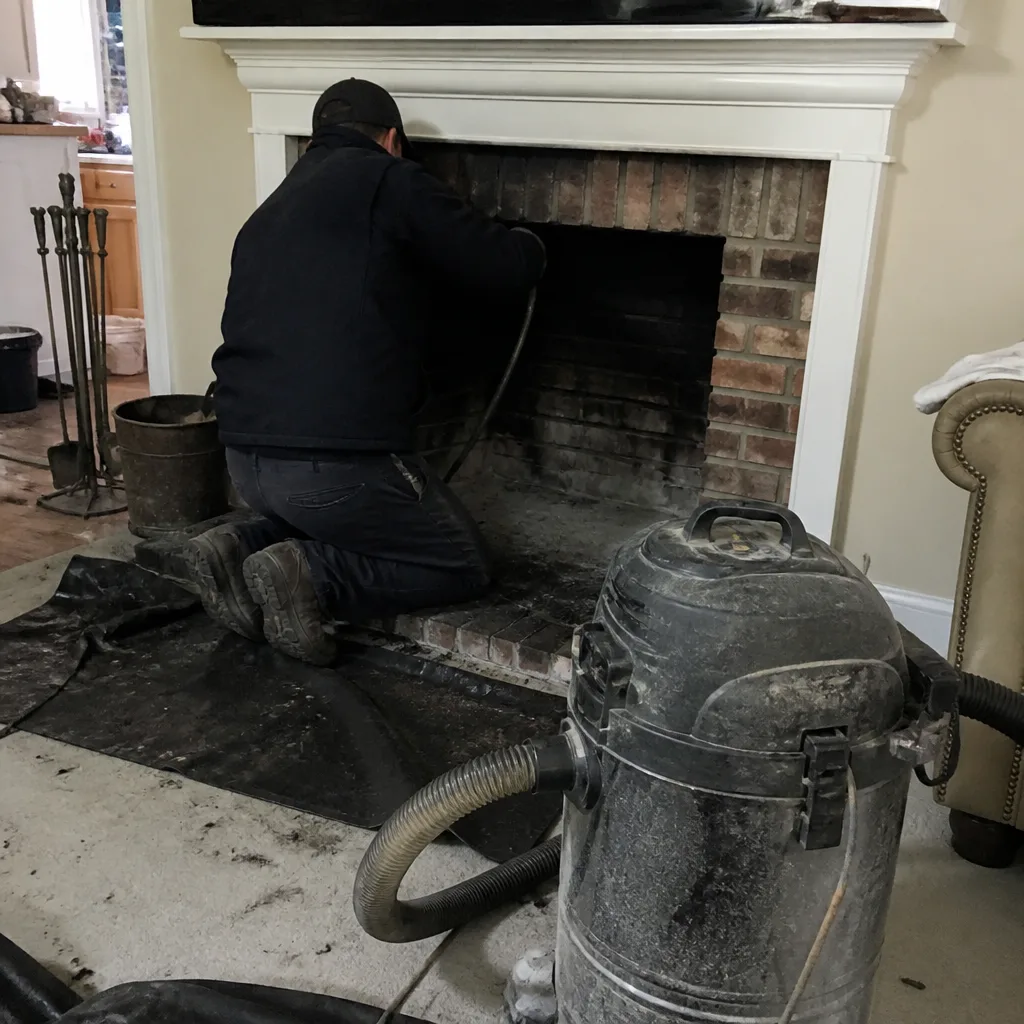
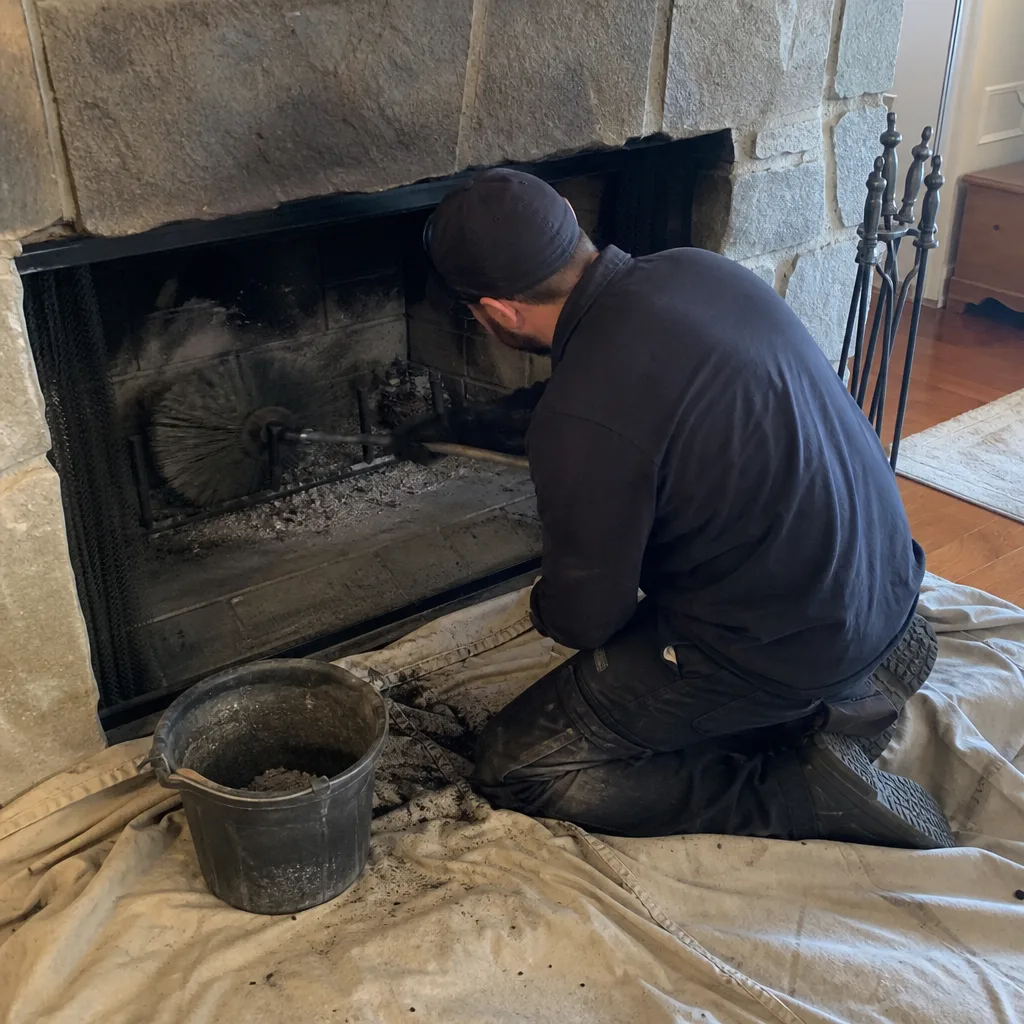
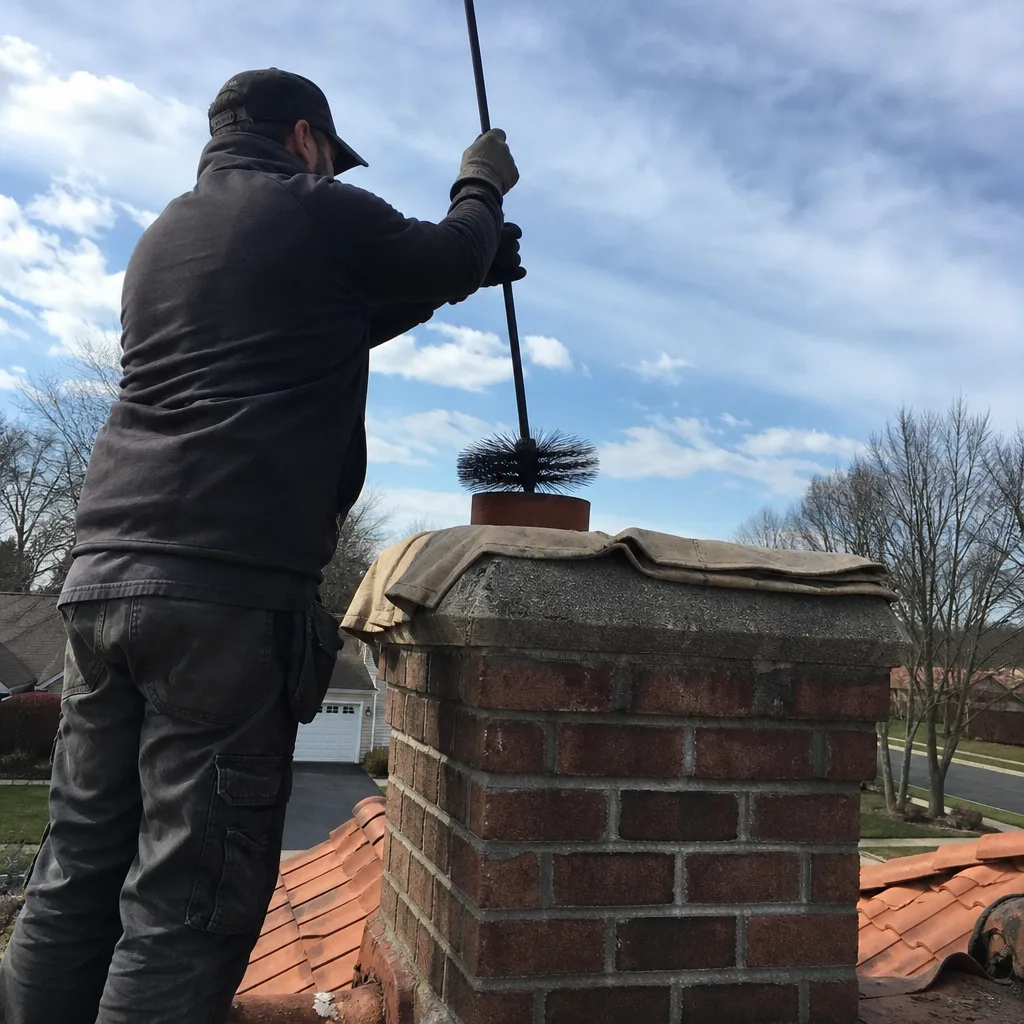
Let’s be precise about what a DIY sweep is, because the YouTube videos make it look like twenty minutes and a little dust. A real chimney cleaning means you are on the roof with a rotary brush system or a manual rod-and-brush setup, working from the top down, with a shop vac sealed at the fireplace opening below to catch what falls. You’re removing creosote, the tar-like or flaky byproduct of wood combustion that condenses on the flue walls as smoke cools. Creosote comes in three stages. Stage 1 is a light, dusty film. Stage 2 is flaky, bubbled, or granular. Stage 3 is glossy, tar-like, and hardened, and it is a fuel source, not a coating; a hot fire can ignite Stage 3 creosote and produce a chimney fire that reaches 2,000 degrees Fahrenheit.
The physical act of brushing a straight flue is not complicated. You attach the correct diameter brush to your rods or drill attachment, run it up and down the flue until the visible residue stops falling, vacuum what landed in the firebox, and call it done. What you cannot do from that position is see the upper flue, the smoke chamber, the smoke shelf, or the throat of the chimney. You cannot tell whether the coating you removed was Stage 1 or hiding Stage 2 underneath. You cannot inspect the liner for cracks, the crown for spalling, or the mortar joints for gaps. You cleaned the flue, yes. You did not inspect the chimney. Those are two different jobs, and in Gaithersburg, where many homes date from the 1970s through the 1990s and have clay tile liners that are now 30 to 50 years old, the inspection is often the more valuable half of the service. A chimney cleaning and sweep in Gaithersburg that skips the camera is doing half the job.
Where DIY Is Honestly Feasible in Gaithersburg
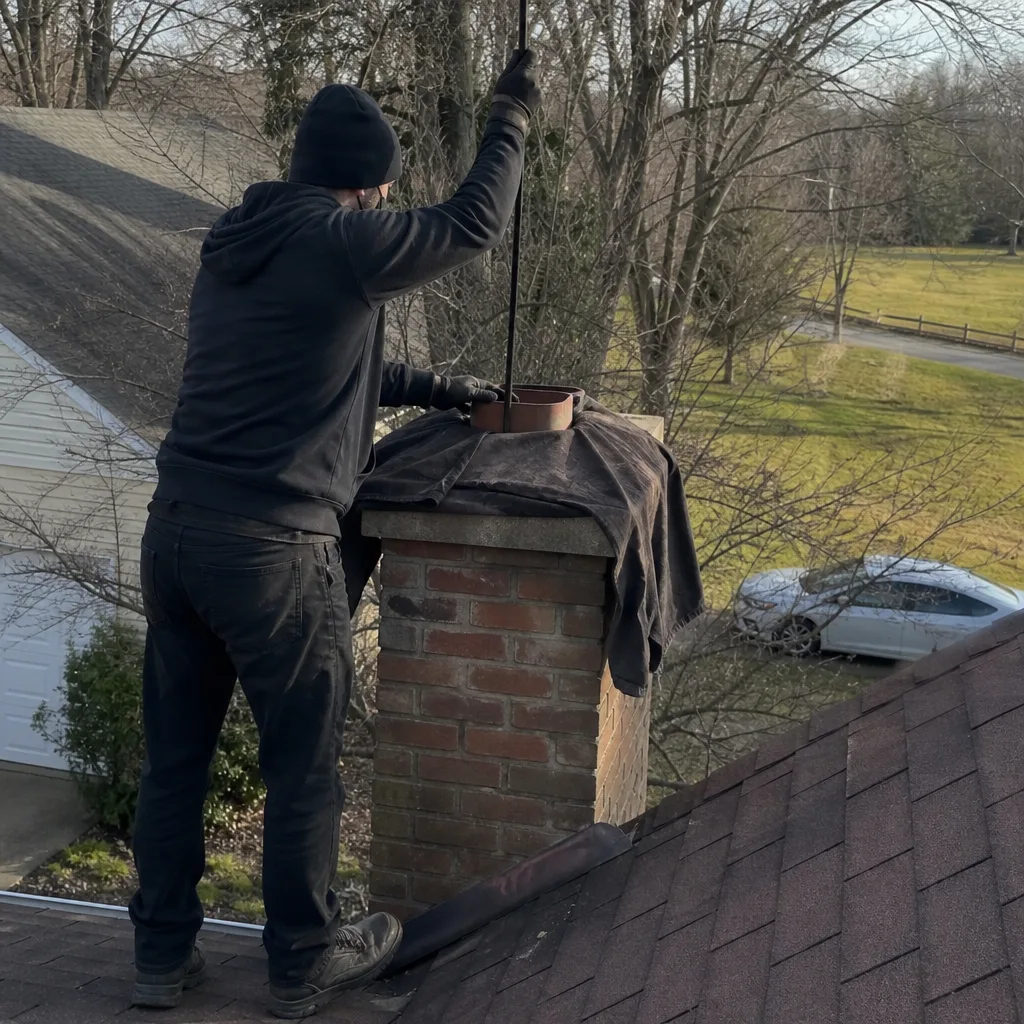
We believe in giving you the honest truth, and the honest truth is that some Gaithersburg homeowners can sweep their own chimneys without making a mistake. Here are the conditions where DIY is physically reasonable:
- Straight flue, no offsets. If your chimney runs directly from the firebox to the cap with no bends, a brush will pass cleanly through. Many Gaithersburg ramblers and split-levels built in the 1970s have straight runs. Homes with angled offsets, common in newer construction and in some Kentlands and Lakelands designs, will frustrate a straight rod-and-brush setup.
- Clay tile or unlined flue in good condition. Brush cleaning on clay tile is straightforward. Stainless steel liners, which many Gaithersburg homeowners installed in the 2000s and 2010s, require softer poly brushes and more care; a stiff wire brush can score the liner surface.
- Stage 1 creosote only. If your fires burn hot and you use seasoned hardwood, you may only ever produce light, dusty Stage 1 deposits. If you can reach up into the flue from the firebox and your finger comes back with a light gray film, not a greasy tar, you’re in Stage 1 territory.
- Walkable roof pitch and safe access. Gaithersburg gets 42 inches of rain a year and occasional ice storms. A 6/12 or 8/12 pitch roof, wet from morning dew or freezing rain, is a fall hazard that no money saved is worth. One-story homes with low-pitch roofs in Olde Towne and the older sections of Gaithersburg are the friendliest DIY candidates.
- Single story with a straight, visible flue. Two-story homes require a 30-foot ladder and the confidence to work at height while holding a drill. That’s a different risk calculation entirely.
If any of these conditions is not met, DIY moves from feasible to genuinely hazardous or ineffective. And notice what’s absent from this list: any way to confirm the flue’s condition before you brush it. A chimney that looks fine from the top down may have a cracked flue liner mid-run, a shifted tile joint, or a failed crown that’s letting water into the masonry. Brushing a damaged liner does not fix it. It may make the damage worse by dislodging already loose tiles. This is where the evidence gap starts.
What DIY Cannot Produce: The Documentation Gap
Here is the argument against DIY that most articles never make, because most articles are written by people who have never had to explain to an insurance adjuster why a chimney fire wasn’t the homeowner’s fault.
DIY chimney cleaning produces exactly one output: a flue that is less dirty than it was. It produces no record of what was removed, no image of what remains, no condition report for the liner, the crown, the smoke chamber, or the flashing. It produces no written maintenance log that an insurance company will accept as evidence of due diligence. It produces no dated before-and-after photographs that establish the chimney was maintained on a defensible schedule.
That documentation matters in three specific situations. First, if you ever file a fire claim related to your chimney or fireplace, the adjuster will ask when the chimney was last cleaned and by whom. “I cleaned it myself last October” is a statement. A dated inspection report with a camera scan image and a technician’s name is evidence. Insurers in Montgomery County have seen enough chimney fire claims to know the difference. Second, if you sell your home, a buyer’s inspector will flag the chimney and ask for maintenance records. A stack of professional sweep reports, each with photos, answers that question in ten seconds. A verbal claim that you maintained it yourself does not. Third, if you ever need a chimney repair, the repair company will want to know what the flue looked like before the problem appeared. Your memory of what you saw from the roof is not a diagnostic tool.
This is why, at Level Two Chimney Gaithersburg, every cleaning since 2009 has included a camera-scan inspection on the flue and a photo record delivered to the homeowner. NFPA 211 Level 2 is the industry term for that camera-documented interior inspection, and it became our default practice years before insurers asked for it. That practice is now Clause 4 of the Haven Standard: a documented photo record on every job. We have completed more than 38,000 chimney inspections and cleanings under that standard, each with a written price before work started and a documented record when it was done. You cannot produce that from the top of a ladder with a brush kit.
Equipment Cost Reality: The Break-Even Math
Let’s put real numbers on the DIY decision, because most advice about chimney cleaning is vague about money, and vagueness serves nobody.
What a one-time DIY setup costs
- Rotary chimney cleaning kit with drill attachment: $60 to $120. This gets you the poly brush and flexible rods. If you already own a cordless drill, you skip the largest accessory cost.
- Extension rods for two-story flues: $40 to $80. One-story homes don’t need these.
- Shop vac with a HEPA filter: $80 to $150 if you don’t already own one. A standard filter will blow fine creosote dust into your living room. You need HEPA.
- Drop cloths, painter’s tape, and sealing plastic: $20 to $40.
- Ladder, if you don’t own one tall enough: $150 to $300 for a 24-foot fiberglass ladder.
- Safety gear - N95 or P100 mask, goggles, gloves: $30 to $60.
- Total real cost for a first-time DIY sweep: $380 to $750, depending on what you already own.
A professional chimney sweep in Gaithersburg, including the camera inspection and photo record, typically runs $189 to $349 for a standard cleaning on a single flue. That’s the range we operate in, and we publish it. The DIY equipment cost, on a one-time basis, is between one and a half and three times the cost of hiring us once.
Now, if you sweep annually for five years, the equipment cost amortizes. But here’s what the math doesn’t capture: a professional sweep is not just brushing. It’s the camera scan before and after, the written condition report, the photo archive, the smoke chamber and smoke shelf cleaning, the cap and crown inspection from the roof, and the documentation package that your insurance company and future buyer will accept. DIY buys you a cleaner flue. Professional service buys you a cleaner flue plus a record. For Gaithersburg homeowners, where the median home value sits above $500,000 and property condition is a real part of the sale, the record is not an add-on. It’s the point.
Liability and Documentation: What Happens in a Claim
Here’s a scenario we know happens in Gaithersburg because we have been called in after it: a homeowner cleans their own chimney every year, or claims to. In year six, a chimney fire breaks out. The fire department responds. The insurance adjuster arrives and asks for the maintenance record. The homeowner says they cleaned it themselves and, perhaps, shows a photo of a brush on the roof. The adjuster notes there is no dated, third-party inspection record, no camera footage of the flue interior, and no written condition report. The claim is then processed with a question mark hanging over it, and sometimes that question mark becomes a reduced payout or a denied claim.
We are not saying every DIY-cleaned chimney leads to a denied claim. We are saying that an undocumented chimney cleaning is, from an insurer’s perspective, indistinguishable from no chimney cleaning at all. What you can prove is what you can produce. A professional sweep report with a date, a technician’s name, a camera scan image set, and a written summary of the flue’s condition is proof. A memory of a Saturday on the roof is not.
This is also why we recommend professional cleaning before you list your home for sale in Gaithersburg. A buyer’s home inspector will visually examine the fireplace and chimney and will flag any visible creosote or water staining. A pre-listing sweep with a documented report converts a potential deal risk into an asset: you can hand the buyer a clean bill of health, with photos, before they ask. We have seen that single document move a sale forward in Montgomery County more than once. A DIY sweep does not produce that document.
The Decision Matrix: Three Gaithersburg Homeowner Profiles
Rather than a single recommendation for every home, here are the three profiles we see most often in Gaithersburg, and the honest advice for each.
Profile 1: The Single-Season Light Burner
You own a rambler or split-level with a straight clay-tile flue. You burn maybe 15 to 20 fires a year, between November and February, mostly for ambiance on weekends. You use seasoned oak or birch, never pine, and you’ve never noticed a thick, shiny glaze when you look up the flue from the firebox. For you, DIY is defensible, provided you meet all the conditions listed above and you accept that you’ll produce no documentation. If that’s fine for your situation, buy the kit and do it. But we’d still recommend a professional camera-scan inspection every third year, even if you clean the flue yourself in between. The inspection catches liner and crown problems that no amount of brushing will reveal, and those problems are common in Gaithersburg’s 1970s and 1980s housing stock.
Profile 2: The Year-Round Heavy User
You have a wood-burning insert or a stove, you burn four or five cords a year, and your fires start in October and run through March. Your creosote production is not stage one. It is stage two and sometimes stage three, with hard, tar-like deposits that a nylon brush will not remove. For you, DIY is not a money-saving strategy; it is a residue-removal strategy that leaves the most dangerous deposits in place. Heavy users need a professional sweep at least once per burning season, and sometimes twice, because the volume of creosote you produce is a fire risk that no brush kit can remediate. This is also the profile where a stainless steel liner becomes a real consideration, and liner installation is professional work, full stop.
Profile 3: The Pre-Sale Documentation Seekers
You are selling your Gaithersburg home within the next eighteen months, or you just bought one and the previous owner left no chimney records. You don’t just need a clean flue. You need a documented history that answers a buyer’s and an insurer’s questions. That means a professional sweep with a camera report, a written condition summary, and an archive of before-and-after photos. DIY cannot produce any of that. This is the profile where the decision is simplest: hire the professional, get the paperwork, and keep it. When the buyer’s agent asks for chimney maintenance records, you’ll have them. That’s worth far more than the $289 it costs.
How a Professional Sweep Actually Works
Because transparency is the point, here’s what happens when you hire a professional chimney sweep in Gaithersburg, step by step, the way we work at Level Two Chimney Gaithersburg.
- Written price before anyone starts. This is Haven Standard Clause 1 - H.A.V.E.N.: Have it in writing. You get a written scope, a written price, and a written warranty before any work begins. No estimate by phone, no “we’ll see when we get there.” If we’re on site and find something beyond the quoted scope, we stop and show you before proceeding.
- Named, background-checked technician. You know who’s coming. That person is background-checked, uniformed, and their license information is on the page. You get a text when they’re on the way.
- Interior setup. We seal the fireplace opening with a high-flow vacuum system to contain dust, then lay drop cloths from the entry to the hearth.
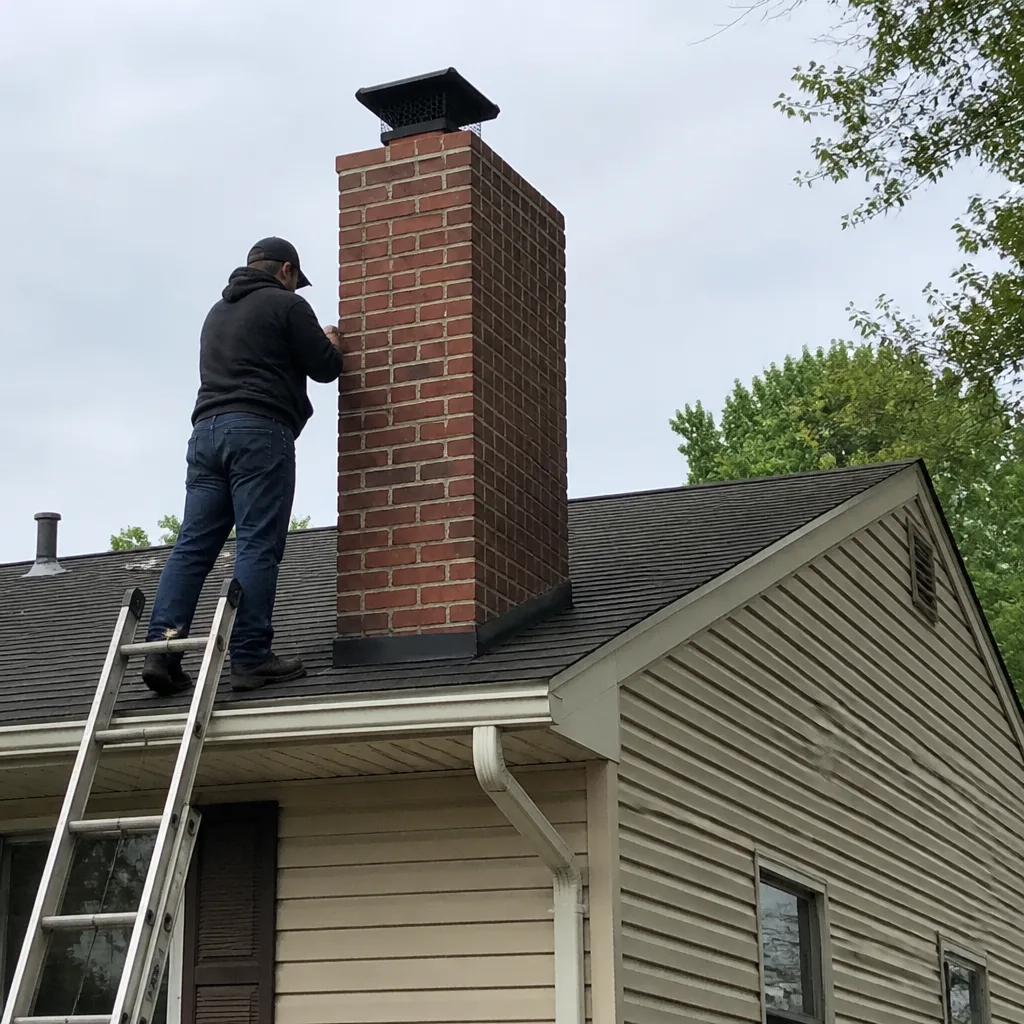
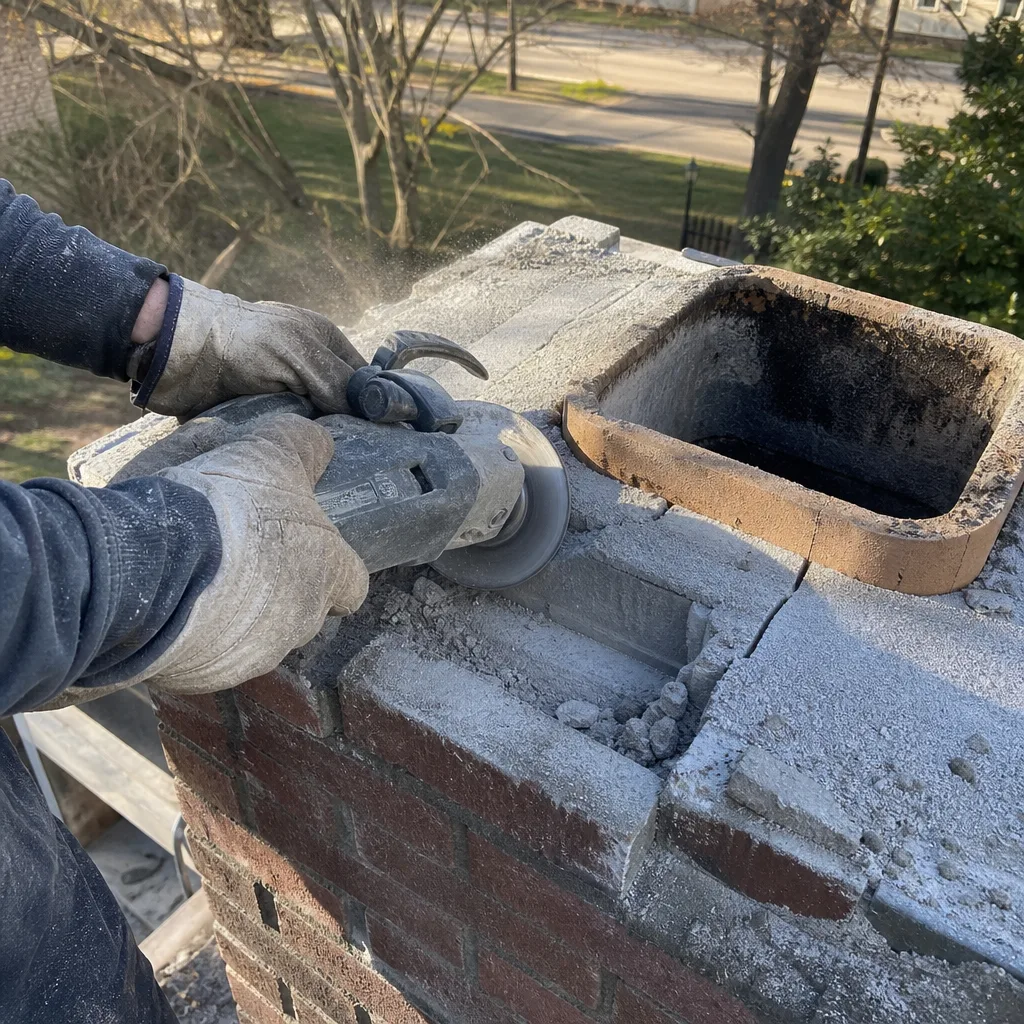
- Roof inspection first. Before we brush anything, we examine the crown, the cap, the flashing, and the exterior masonry from the roof, and we look down the flue from the top with a light.
- Camera-scan inspection before cleaning. Clause 4 of the Haven Standard. We run a camera down the flue before brushing so we can document what the liner looked like at the start. If we find Stage 3 creosote, a cracked liner, or a failed joint, we document it with stills.
- Mechanical cleaning. We use rotary equipment sized to your flue, either poly or wire depending on your liner material. We clean the flue, the smoke chamber, the smoke shelf, and the damper area. A standard sweep does not include a full smoke chamber parge or liner repair; that’s separate and quoted separately if needed.
- Camera-scan inspection after cleaning. We run the camera again to document the result and confirm nothing was missed. If we see a problem that requires chimney repair in Gaithersburg, we show you the footage on site and write a separate scope with a separate price. You are never asked to approve a repair without seeing the evidence.
- Documentation delivery. You receive a written condition report, the before-and-after photos, and your maintenance log entry. That’s not an add-on. It’s standard, and it’s been standard since 2009.
This process takes 60 to 90 minutes for a standard single-flue chimney. The camera work is what makes it an inspection, not just a cleaning. And the inspection is what protects you.
Common Mistakes to Avoid
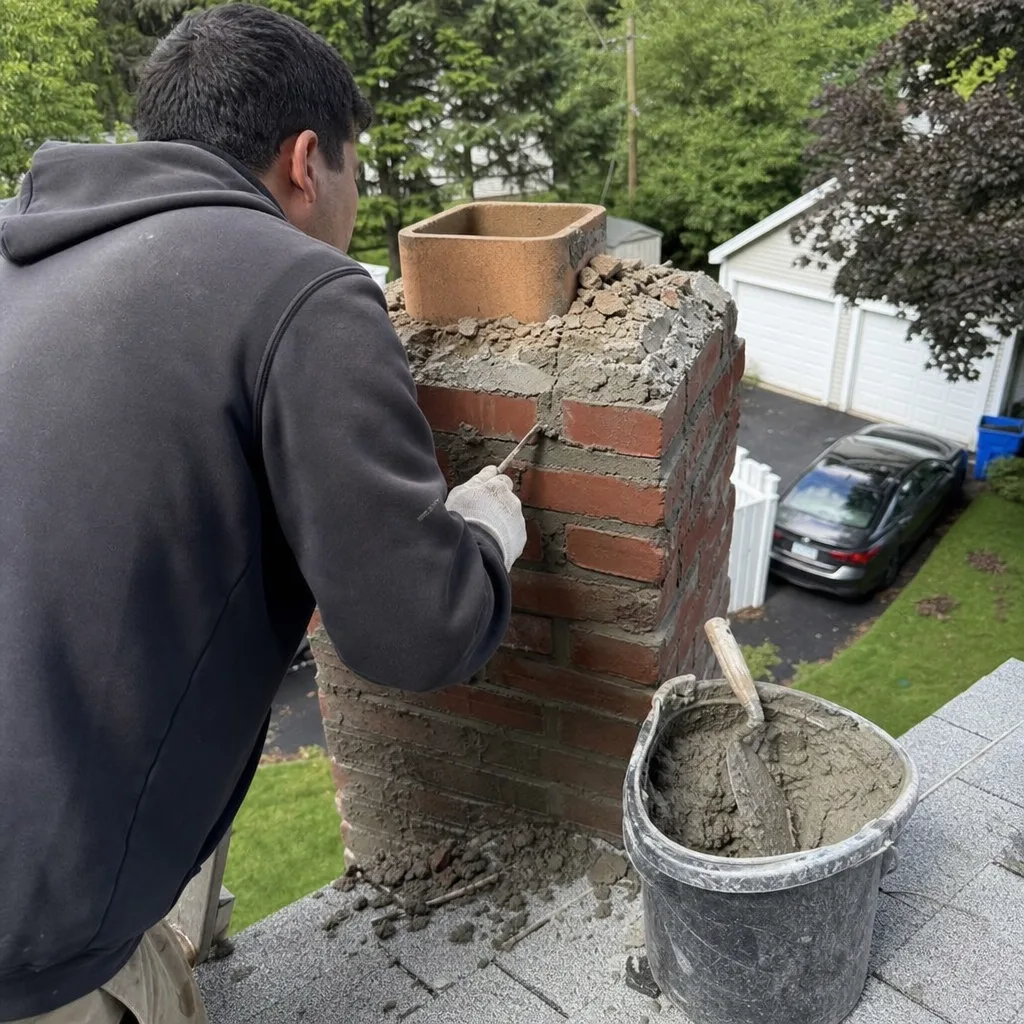
- Brushing a flue you’ve never inspected. If your liner is cracked, shifted, or already spalling, a brush can do real damage. You cannot know the liner’s condition from the firebox. Inspect first, or have it inspected, then clean.
- Using a wire brush on a stainless steel liner. Wire bristles can scratch and score stainless liners, creating micro-grooves where creosote accelerates. Use poly brushes on steel liners, or leave it to a professional who stocks the right equipment.
- Cleaning from the bottom up with a drill and no top-side inspection. Bottom-up cleaning without seeing the top of the flue misses the upper-fill area and any cap blockage. In Gaithersburg, where bird nests and squirrel debris are common in uncapped flues, a top-down view is essential.
- Treating a professional camera report as optional. The camera report is the documentation. If a company offers to sweep your Gaithersburg chimney without a camera inspection, they’re offering to remove ash without telling you anything about the chimney’s actual condition.
- Ignoring Stage 3 creosote as “just buildup.” Glossy, tar-like creosote is not buildup. It is fuel coating the inside of your flue. A chimney fire fed by Stage 3 creosote can crack a clay liner and spread into the home’s framing. This is not a brushing problem. It’s a removal and remediation problem that needs professional equipment and, often, chemical treatment.
- Sweeping your own chimney right before a sale and calling it documented maintenance. It isn’t documented in any way a buyer or insurer will accept. If you’re pre-sale, hire the professional and get the paperwork. The cost of the sweep is a rounding error on a Gaithersburg real estate transaction.
- Waiting until November to think about the chimney. Gaithersburg’s burning season starts in late October, and by November, every reputable chimney company in Montgomery County is booked weeks out. Schedule your sweep in September, before the first fire, not after.
When to Call a Professional
Call a professional if you have Stage 2 or Stage 3 creosote, a stainless steel liner, an offset or angled flue, a steep roof pitch you cannot safely walk, a two-story chimney, or a pending home sale. Call if you smell smoke in the house when the fireplace is lit, if you see water staining on the ceiling near the chimney, or if it’s been more than two years since anyone looked inside the flue with a camera. Call if you burned a chimney fire you know about, even a small one, because the liner may be damaged invisibly until the next fire. Fireplace services in Gaithersburg are not a luxury item; they’re a maintenance line item for a home system that carries fire through the middle of your house. Level Two Chimney Gaithersburg offers free estimates in Gaithersburg and throughout Montgomery County, and every estimate is in writing before any work starts. Call (240) 220-9395 and we’ll walk you through what your chimney actually needs, with the camera to prove it.
Frequently Asked Questions
A standard chimney sweep in Gaithersburg, including a camera-scan inspection and written photo documentation, typically costs $189 to $349 for a single flue. That range covers our service area and includes the before-and-after camera record, the written condition summary, and the maintenance log entry. Repairs, liner work, or cap replacement are quoted separately, in writing, before any additional work begins. Call (240) 220-9395 for a written quote on your specific chimney; estimates are free and we’ll give you the number on the phone before we ever arrive.
The National Fire Protection Association standard, NFPA 211, says chimneys should be inspected at least once a year and cleaned as needed. For Gaithersburg homes that burn two to three cords of seasoned hardwood per season, once a year is the realistic minimum. If you burn pine, use a wood stove daily, or burn more than four cords, twice a season is prudent. The camera inspection tells us the actual need rather than the calendar, which is why we always inspect before we clean.
You can get a partial view of the lower flue that way, but a phone camera from the firebox cannot see the smoke chamber, the upper flue, the crown, or the cap. NFPA 211 Level 2 inspection requires a camera run through the entire flue from top to bottom, with the technician positioned to view the liner surface in real time. That’s the inspection standard we’ve used on every job since 2009, and it’s the only way to see the liner condition in the areas where problems actually occur.
Insurance policies don’t prescribe who must clean the chimney, but they do require that a homeowner maintain the chimney to a reasonable standard. What a claim adjuster will ask for is evidence of maintenance. A written report from a professional sweep with a date, a technician’s name, and photo documentation is evidence. A homeowner’s memory of a DIY sweep is not. If you ever face a fire claim, the documented professional service is the difference between a clean claim and a contested one.
Stage 3 creosote is a glossy, tar-like coating that forms when flue temperatures stay low and smoke condenses heavily on the liner walls. It’s hardened and highly combustible; a hot fire can ignite it and produce a chimney fire. You cannot fully remove Stage 3 creosote with a standard brush. It requires professional tools, often chemical treatment or mechanical flail systems, and sometimes a liner replacement if the coating has damaged the underlying surface. This is not a DIY project under any circumstances.
Yes. Every estimate is free and every estimate is in writing before any work begins. That means a written scope, a written price, and a written warranty, delivered before we touch anything. We also offer a free second opinion on any written estimate from another company. Bring us the competitor’s quote and we’ll review it with you, on camera. Call (240) 220-9395 to schedule.
The Bottom Line
DIY chimney cleaning is a legitimate option for a narrow slice of Gaithersburg homeowners: straight flues, clay liners in good condition, Stage 1 deposits only, single-story access, and someone willing to accept zero documentation in exchange for saving a few hundred dollars one time. For everyone else, and for anyone who owns a home worth protecting, the professional sweep with camera documentation is not an upgrade; it’s the baseline. The cleaning removes what’s there. The camera tells you what remains. The written record protects you when something goes wrong. That’s the version of chimney maintenance worth paying for, and it’s the version we’ve been delivering in Gaithersburg since 2009. If you’re not sure which category you’re in, call (240) 220-9395 and ask us to look. The estimate is free, the inspection is on camera, and the documentation is on us. For more guides & resources on chimney care and home safety, visit our blog.
Written by Corrine Halstead, Owner at Level Two Chimney Gaithersburg, serving Gaithersburg since 2009.