
Last updated September 20, 2026
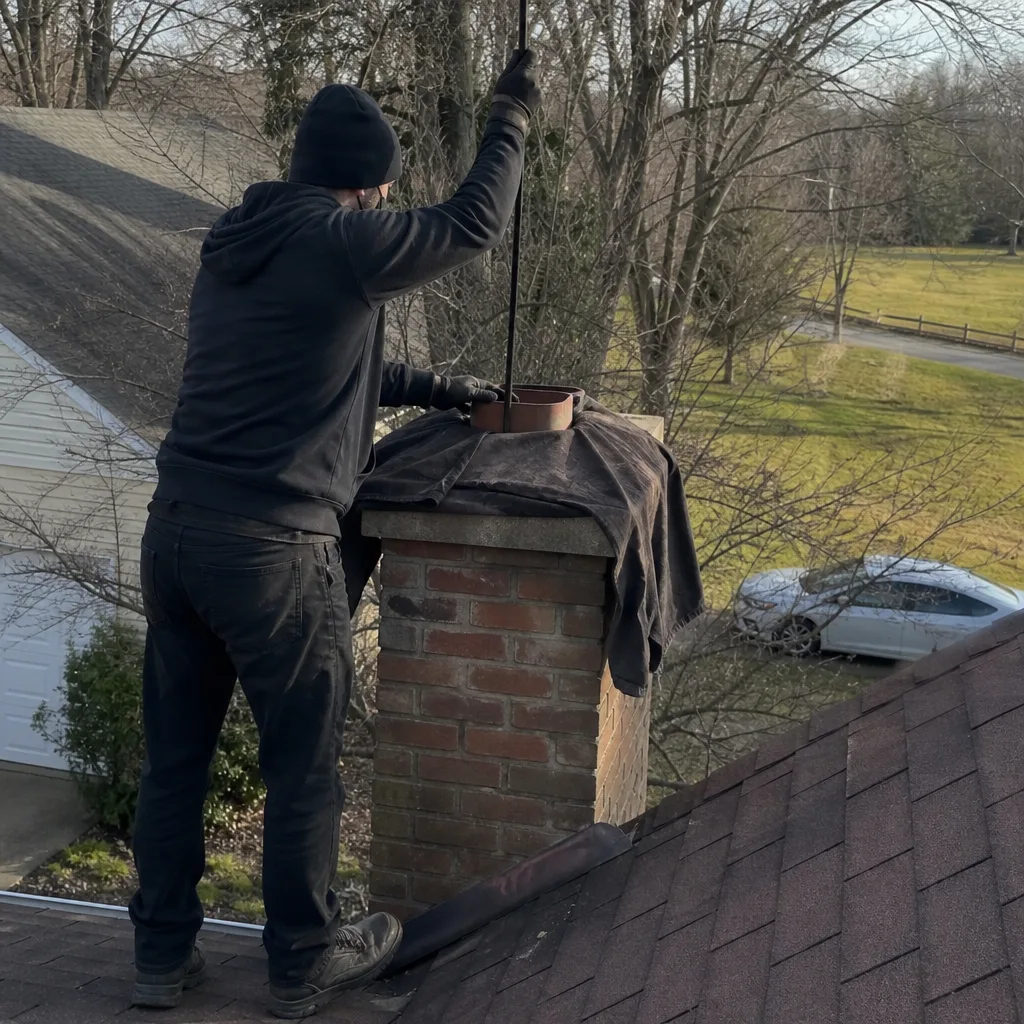
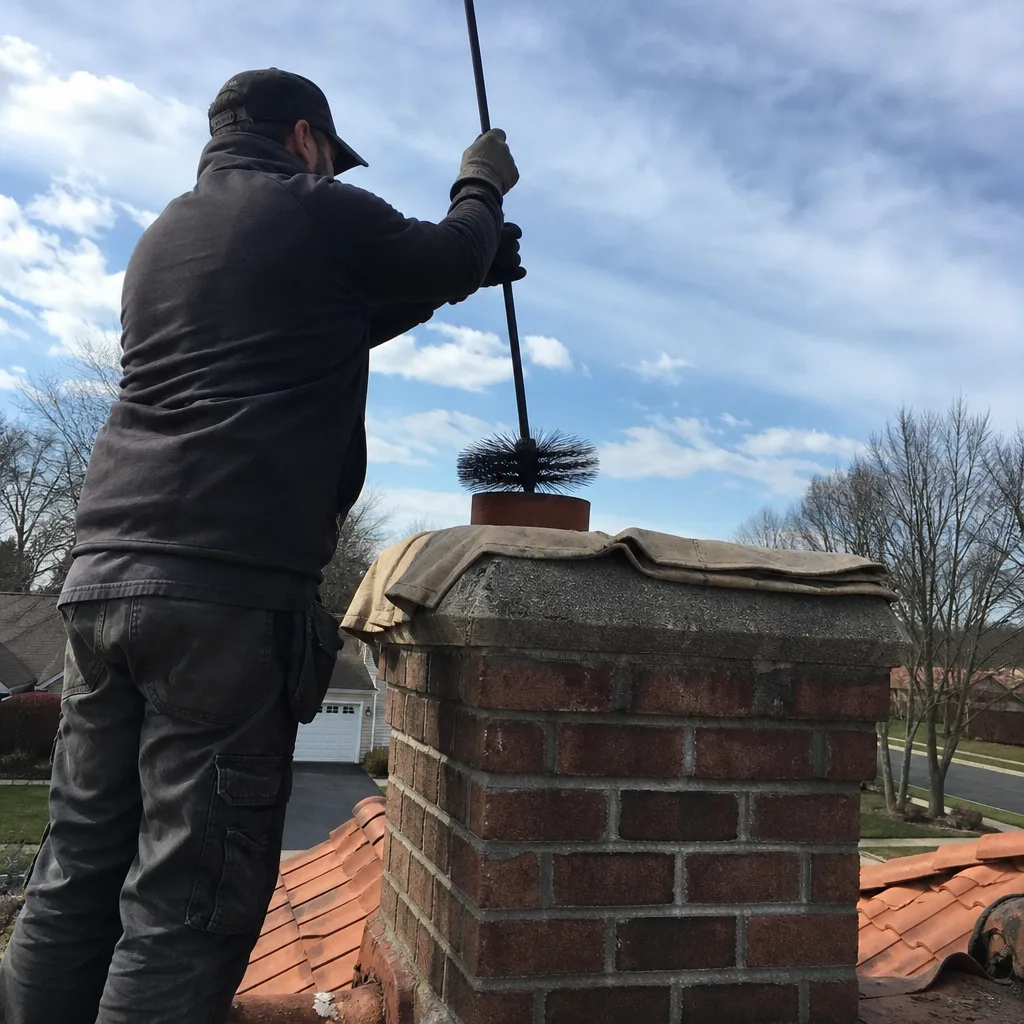
Level 1 sweep and inspection to the NFPA 211 annual standard - flue, crown, cap, and flashing checked and photographed
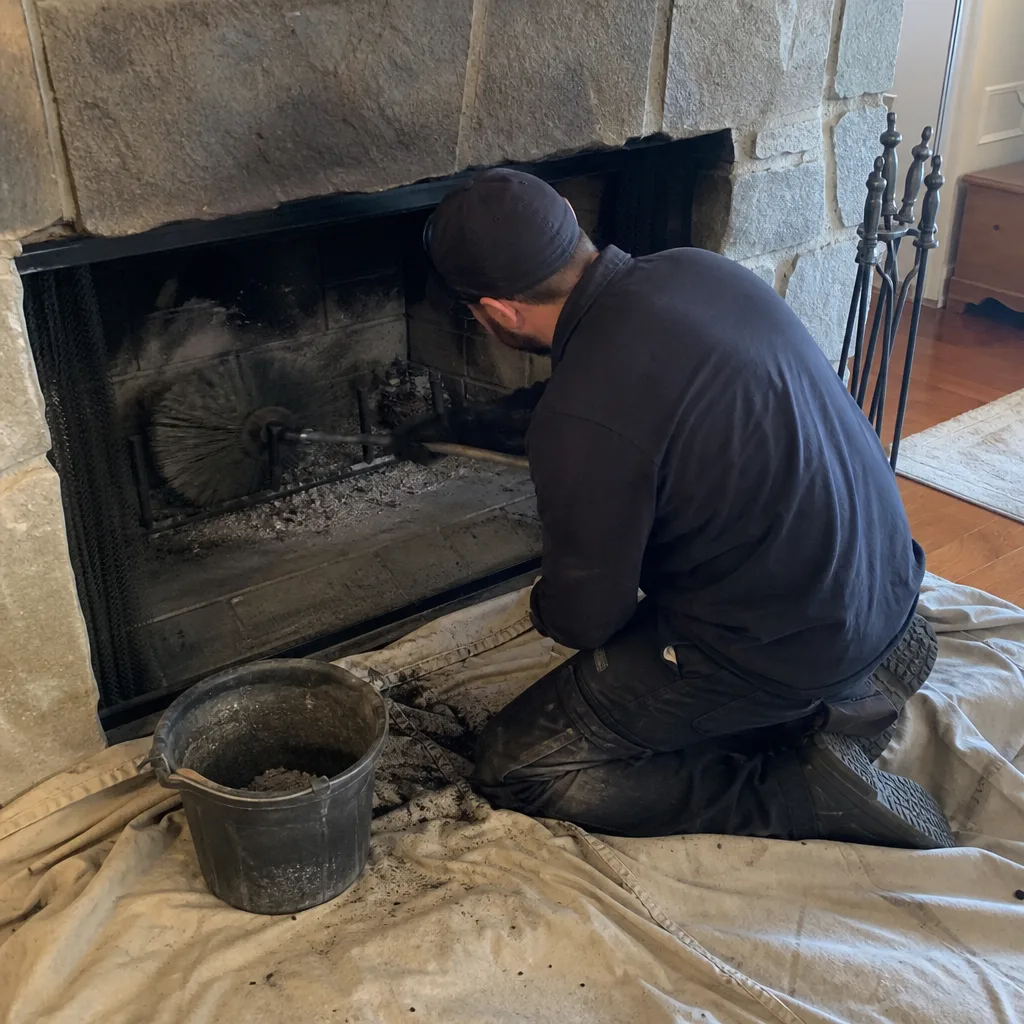
Chimney sweep logs do not sweep chimneys. They loosen some creosote - which then falls where a brush and vacuum still have to collect it.
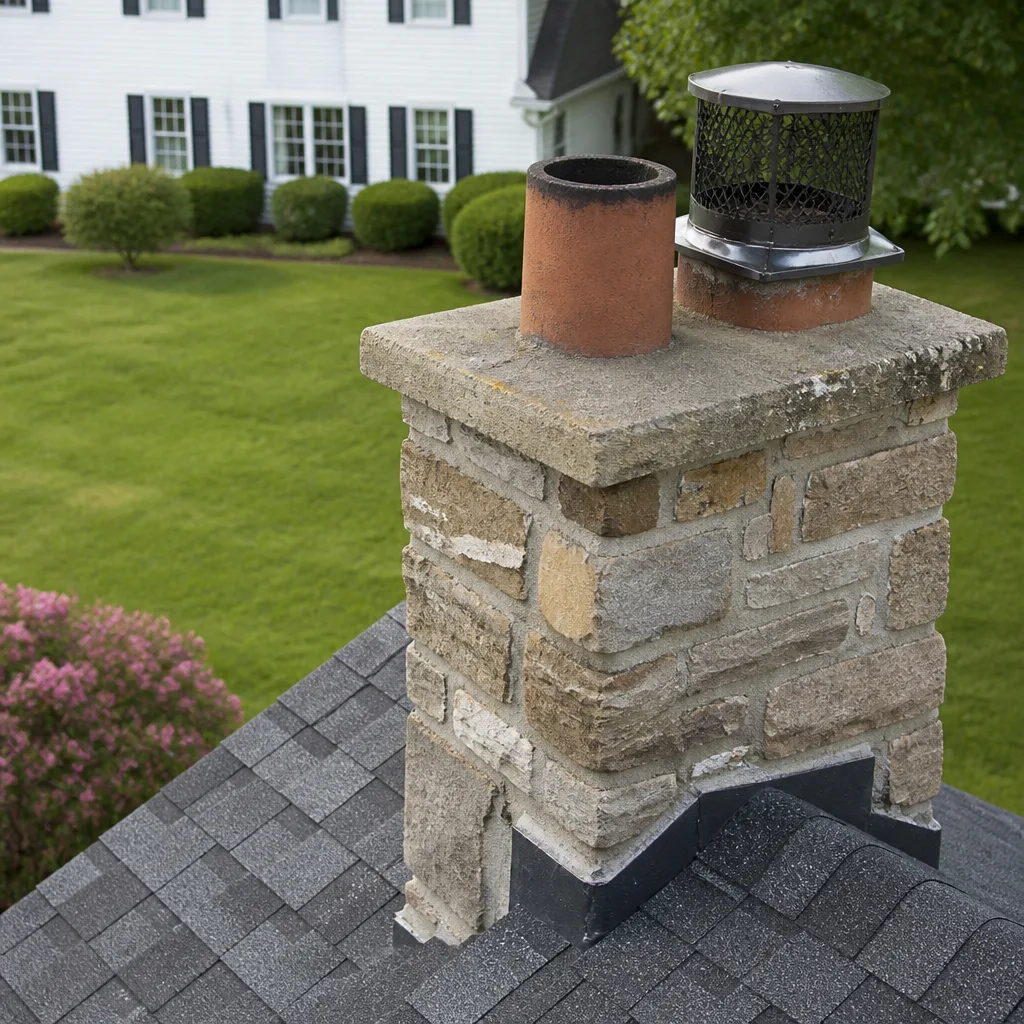
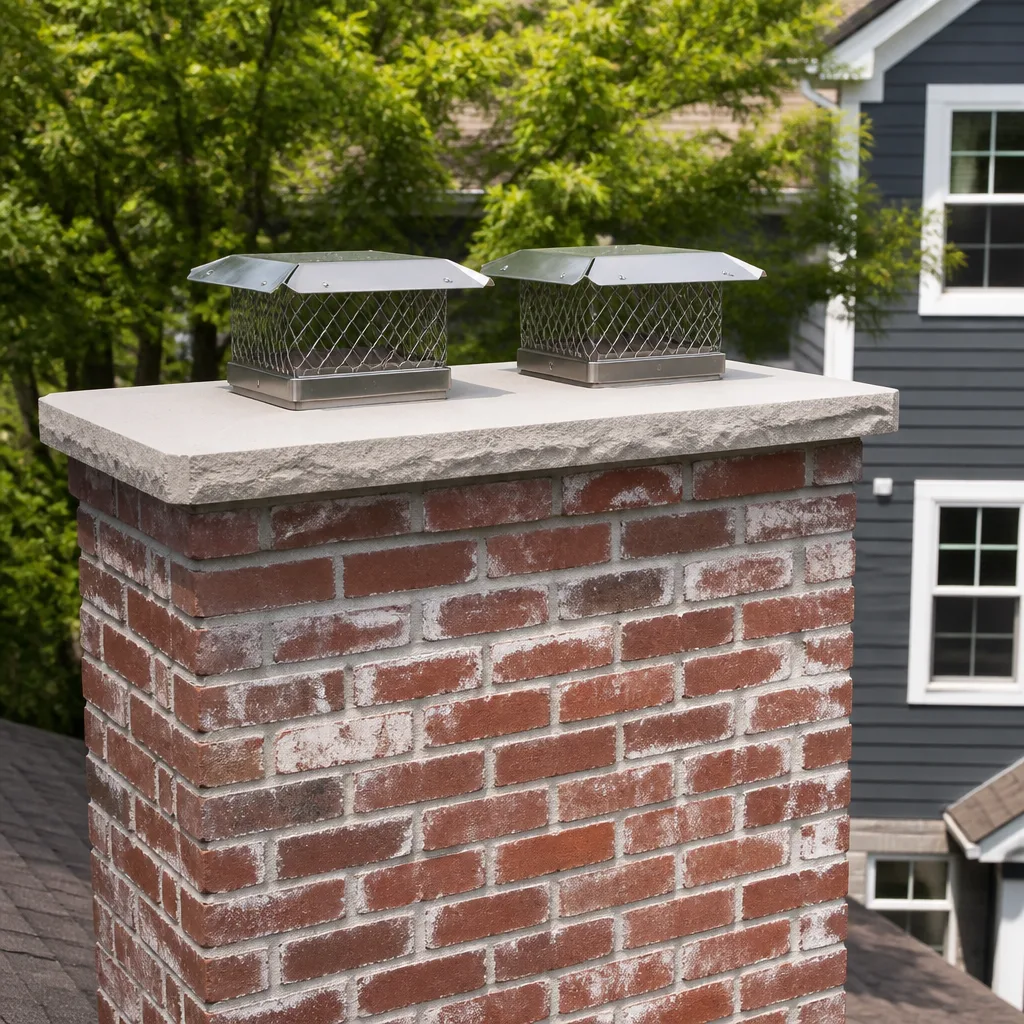
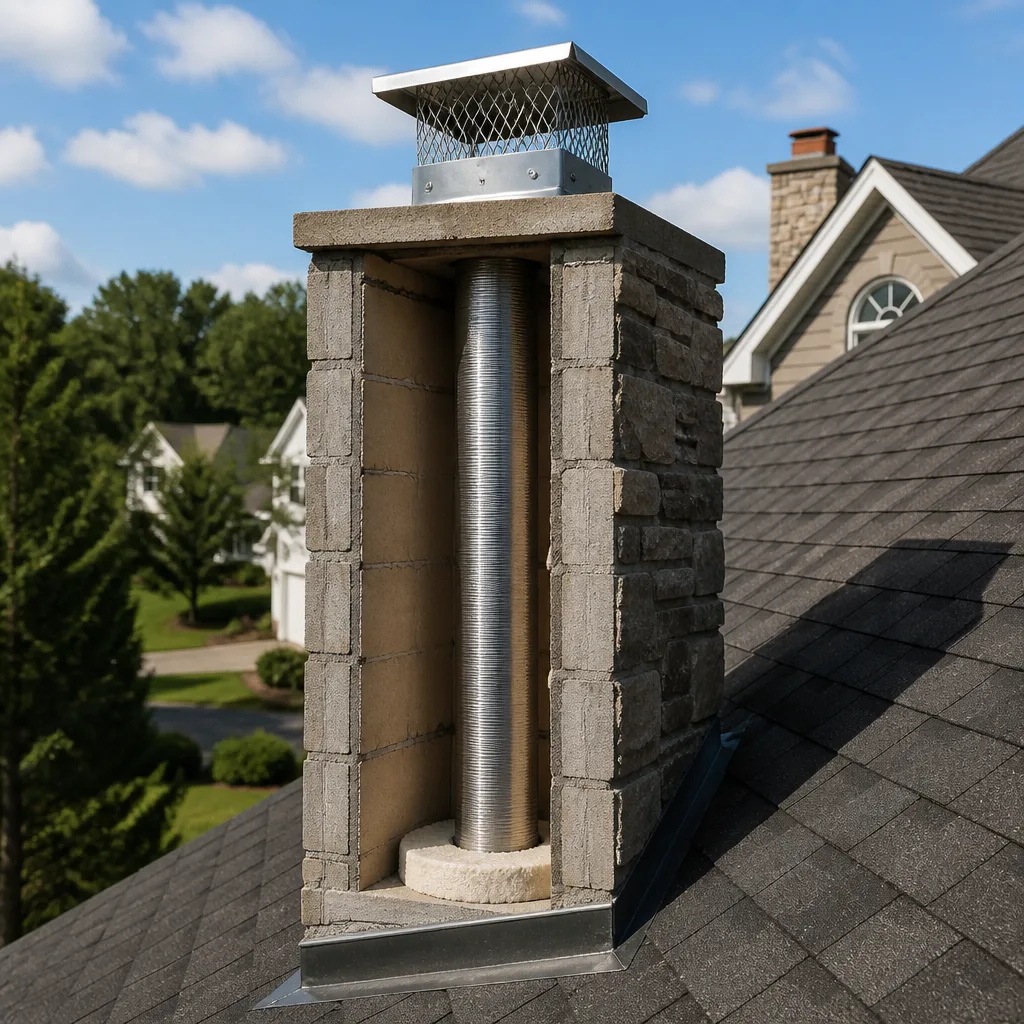
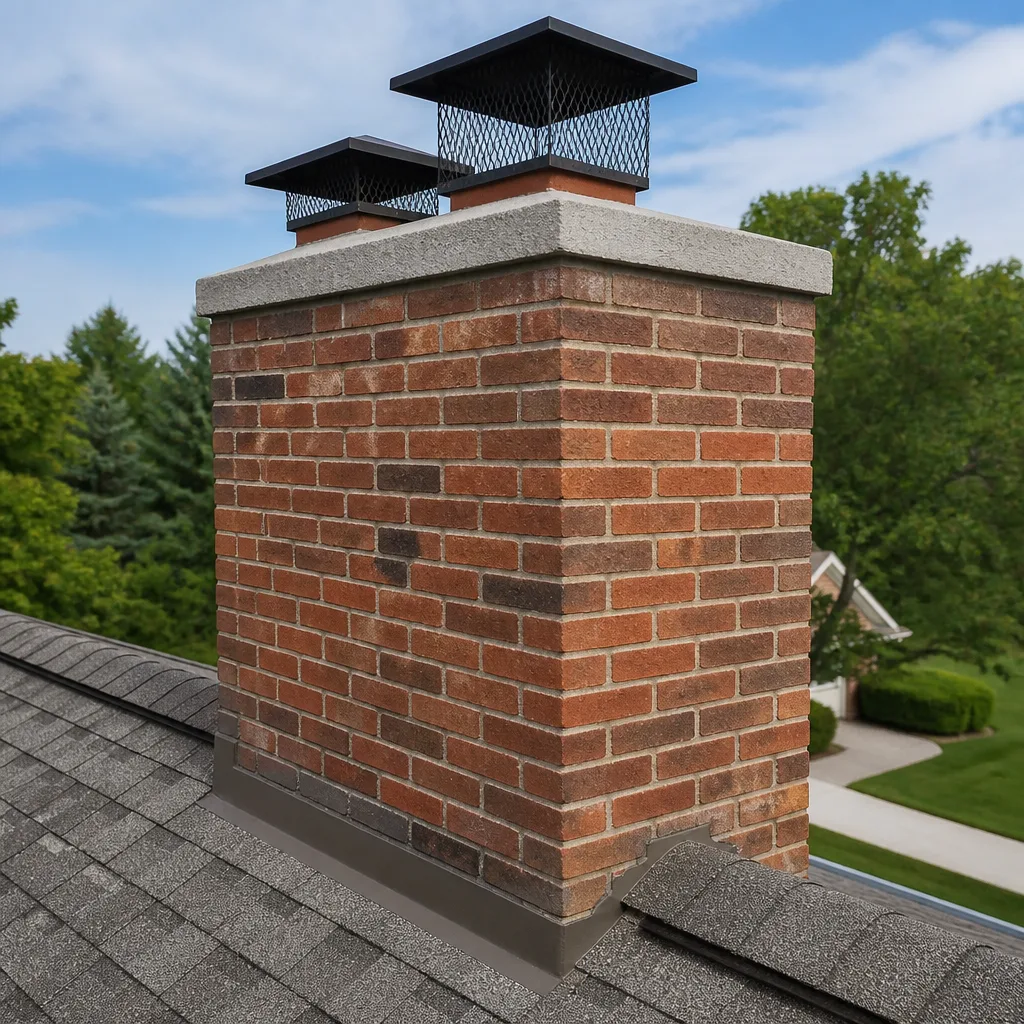
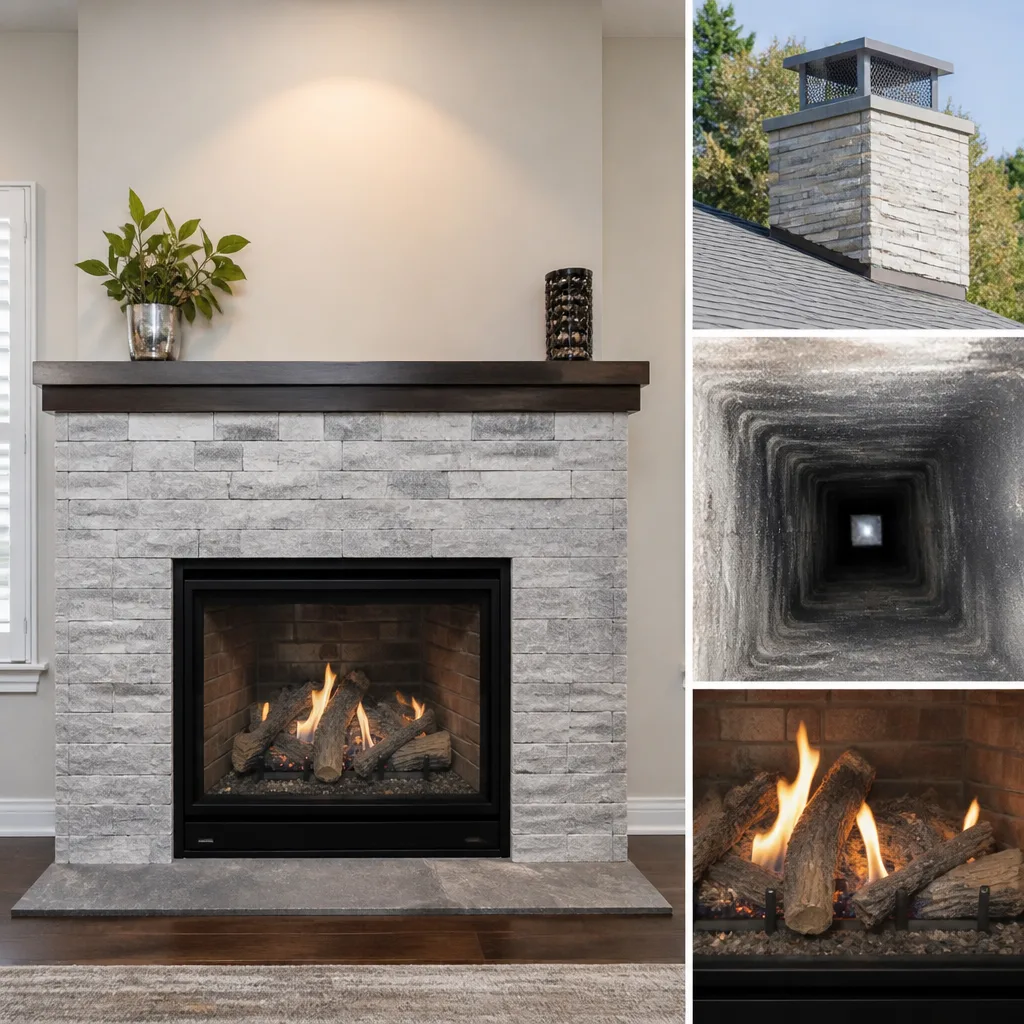
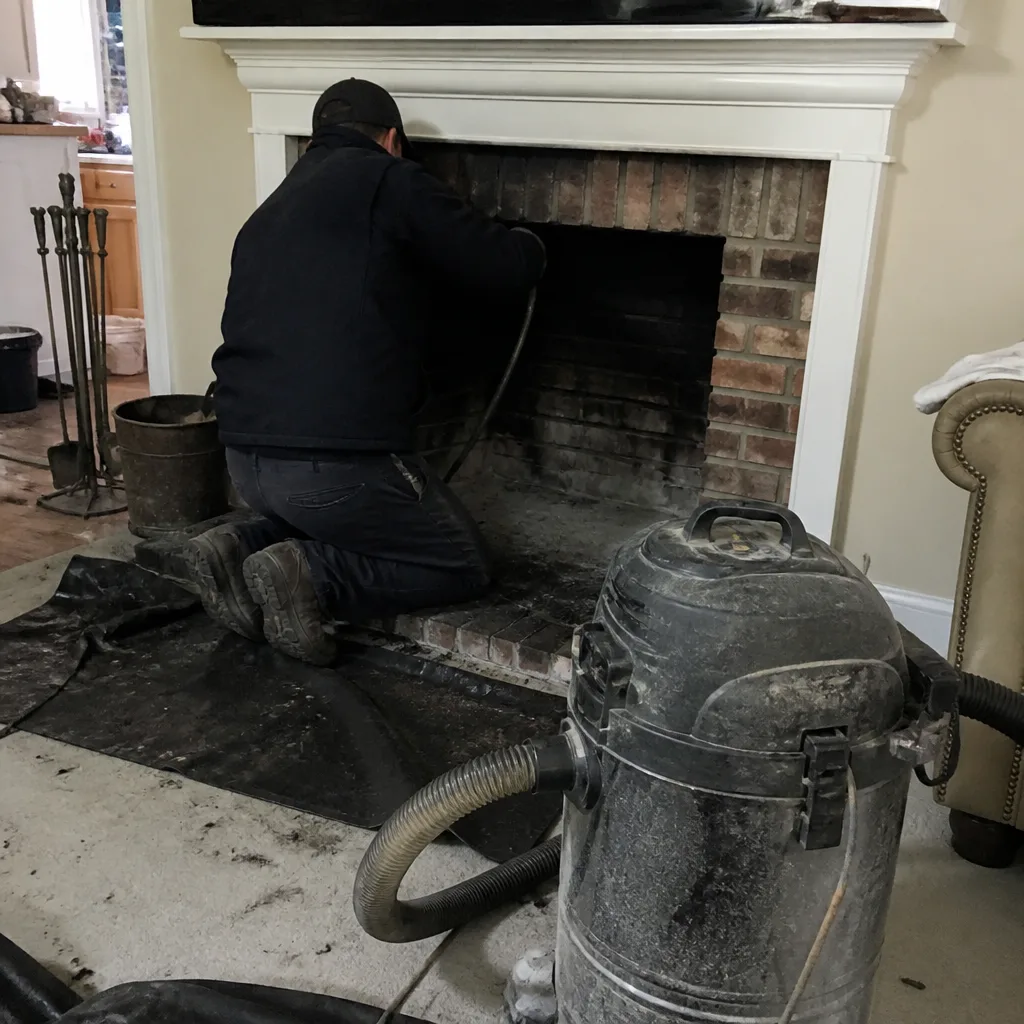 Before
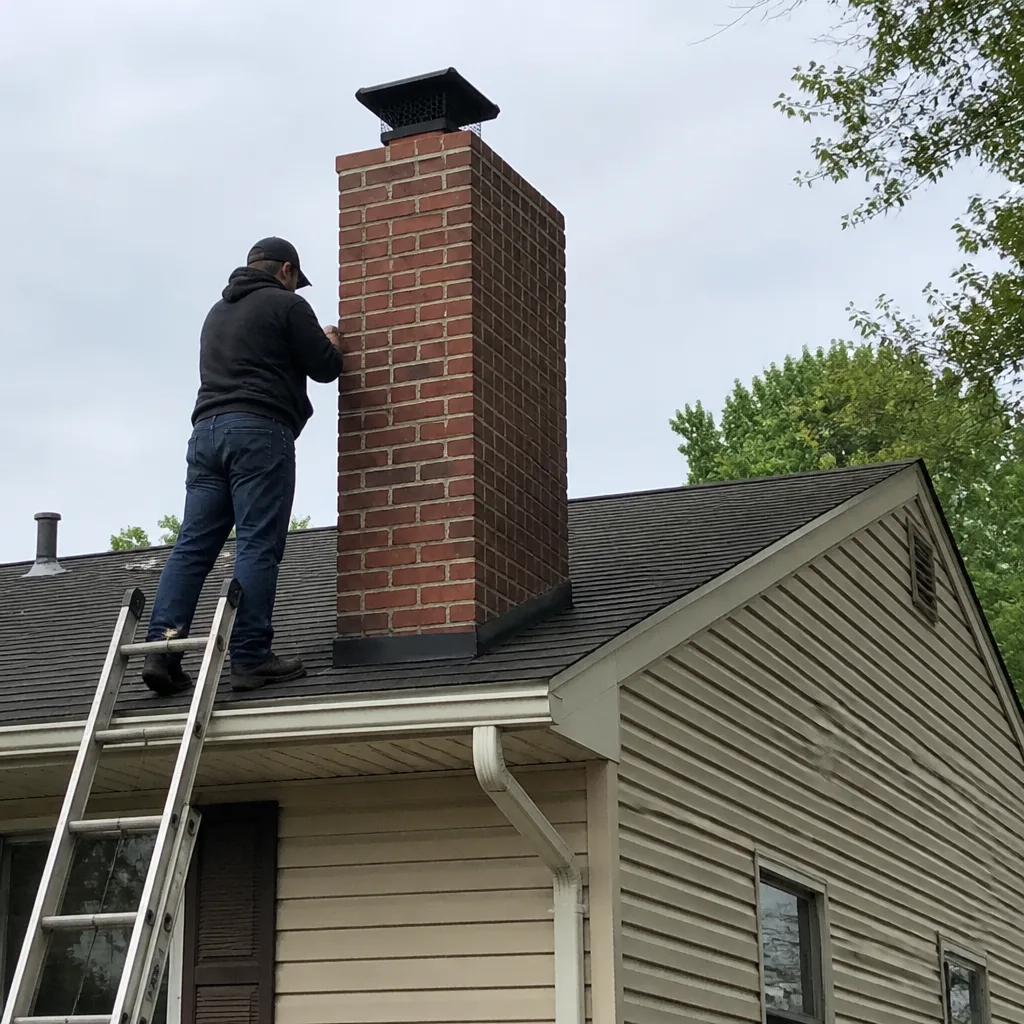 After
After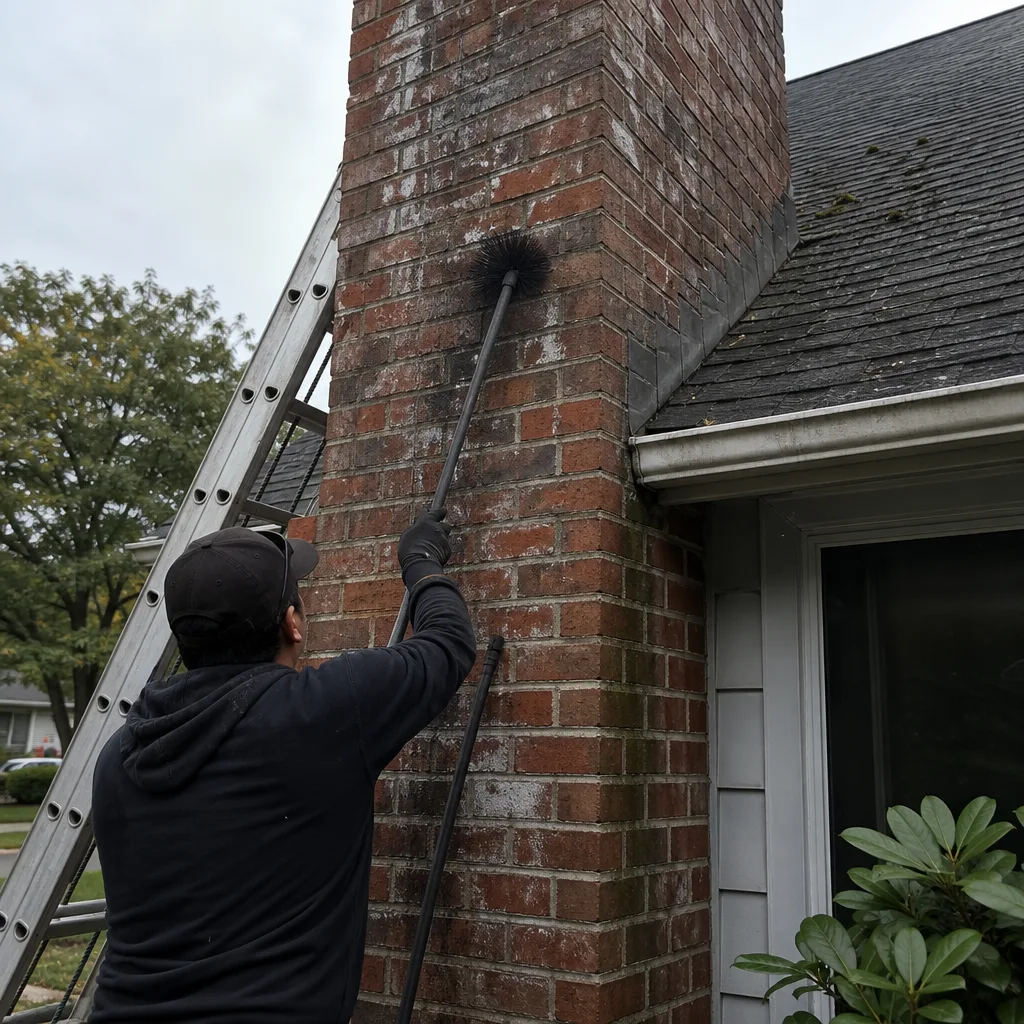 Before
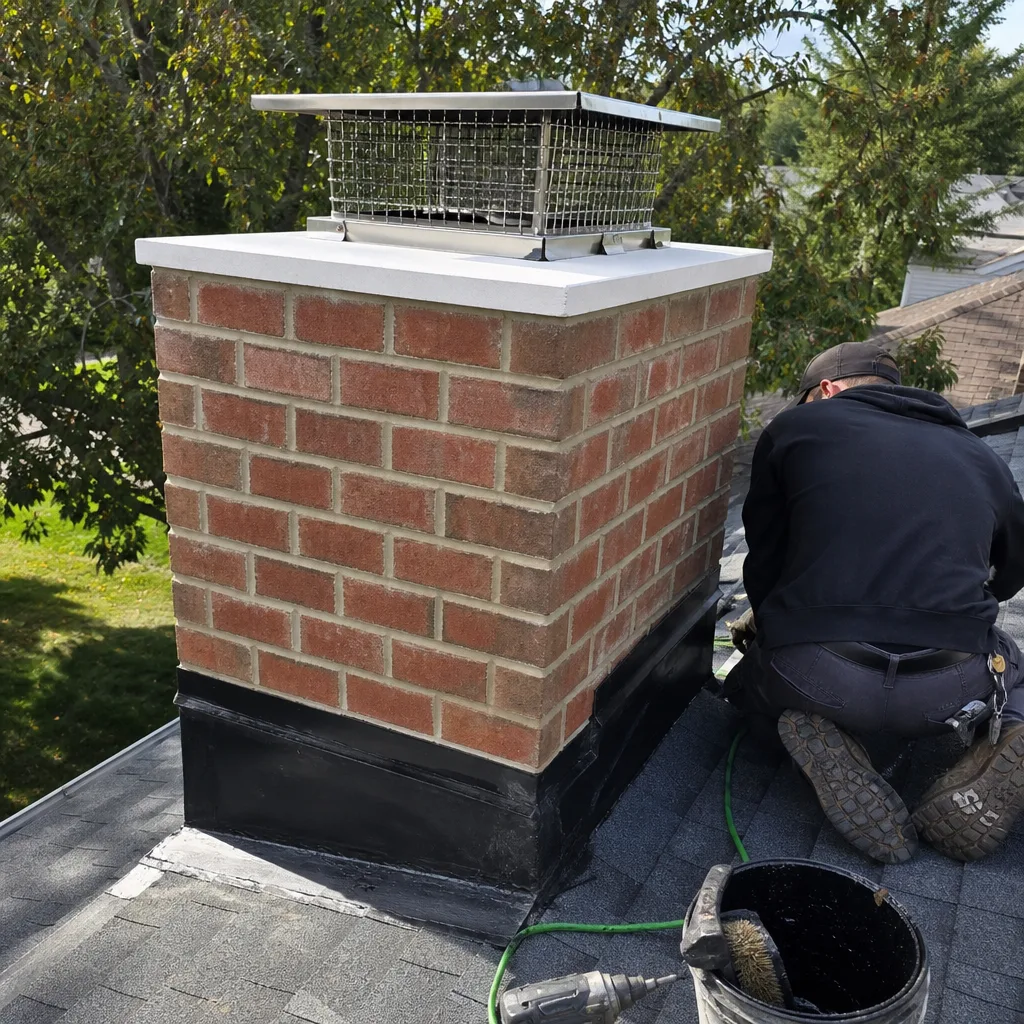 After
After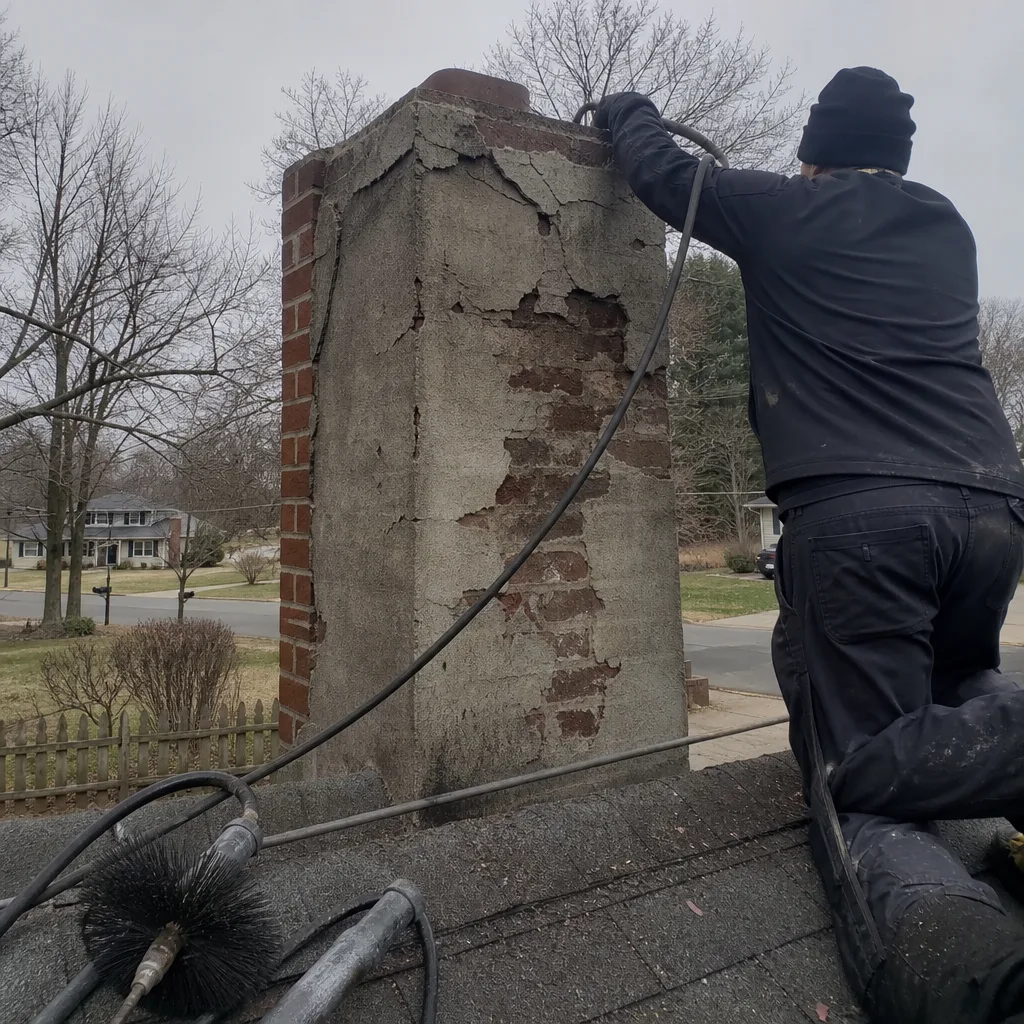 Before
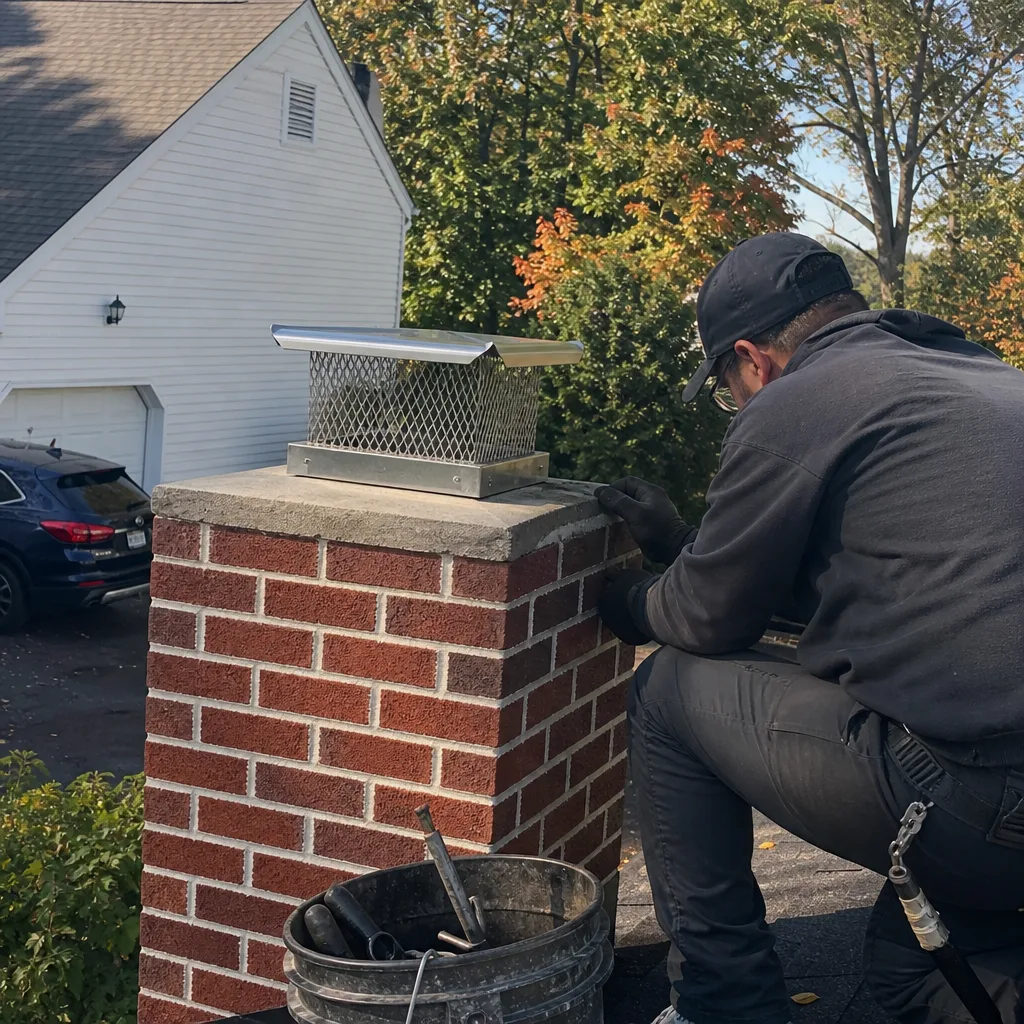 After
AfterChimney Cleaning Permits, Codes & Inspections in MD: What You Need to Know
Most homeowners in Gaithersburg assume a chimney sweep is like a furnace tune-up: schedule it, pay it, done. That assumption holds until a liner fails, an adjuster asks for maintenance records, and the homeowner discovers that chimney cleaning doesn’t need a permit in Maryland, but the $6,000 liner replacement the sweep recommended absolutely does. We’ve watched this exact sequence play out in Montgomery County more times than we can count. This guide - along with our complete guide to chimney cleaning in Gaithersburg - maps the permit line precisely: what needs a permit, what doesn’t, who can pull one, what Maryland’s code actually says, and how the documentation from a proper inspection differs from a receipt in the eyes of an insurance company. By the end, you’ll know more about chimney permits and code than most contractors who work on your house.
Quick Answer
Chimney cleaning, sweeping, and basic sealing do not require a permit anywhere in Maryland. However, chimney liner replacement, firebox reconstruction, and cap installation on a new flue generally do, and in Montgomery County specifically, the permit must be pulled by a licensed contractor, not the homeowner. The national standard governing the work, NFPA 211, is referenced by Maryland’s residential code, and it requires documented inspection levels that most homeowners have never seen in writing.
Table of Contents
- Where the Permit Line Actually Sits in Maryland
- Montgomery County-Specific Permit Requirements
- How NFPA 211 Functions as Maryland’s Backbone Standard
- What Insurance Policies Actually Say About Chimney Maintenance
- What Counts as ‘Documented’ When an Adjuster Asks
- Gaithersburg-Specific Code Realities: Climate, Age, and Stock
- Step-by-Step: Getting Chimney Work Permitted in Montgomery County
- Common Mistakes to Avoid
BeforeAfterWhere the Permit Line Actually Sits in Maryland
Maryland’s residential building code, which adopts the International Residential Code (IRC) with state amendments, draws a clear but poorly-publicized line between routine maintenance and structural modification. The rule of thumb: if the work touches the structure of the chimney or its liner system, a permit is triggered. If it’s a surface-level service, it’s exempt.
Here’s the practical breakdown we use when talking to Gaithersburg homeowners:
- Permit-exempt: chimney sweeping, flue brushing, creosote removal, minor repointing of a few loose bricks, applying water repellent sealant, replacing a rain cap on an existing flue, and installing a new damper at the firebox level that doesn’t alter flue dimensions.
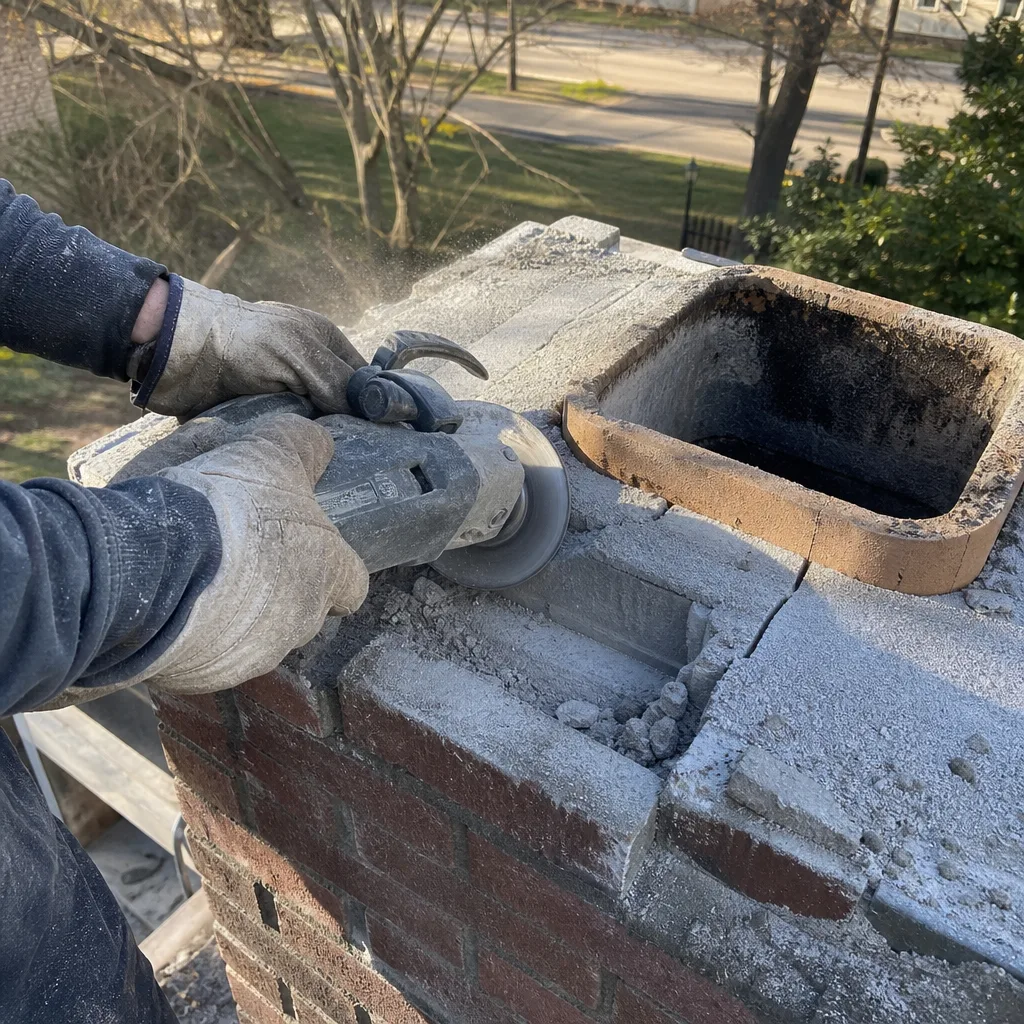
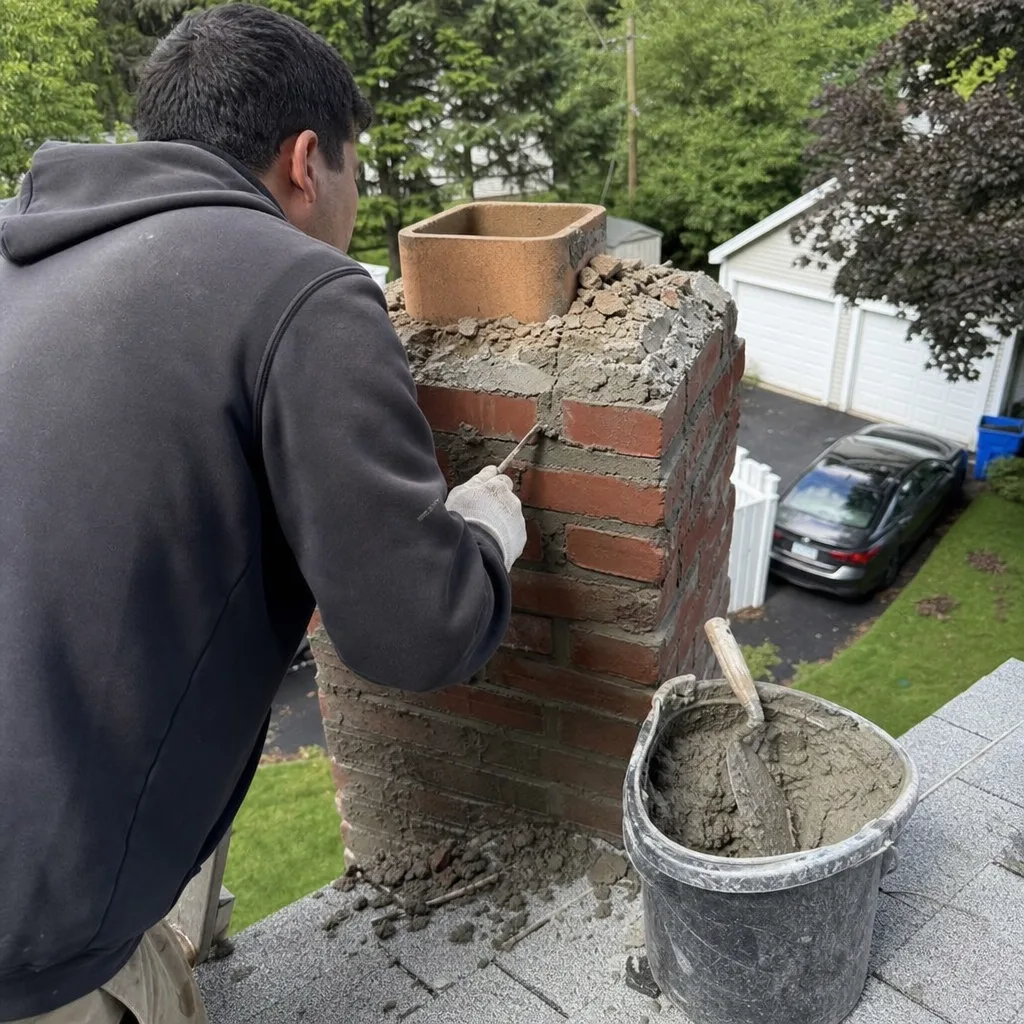
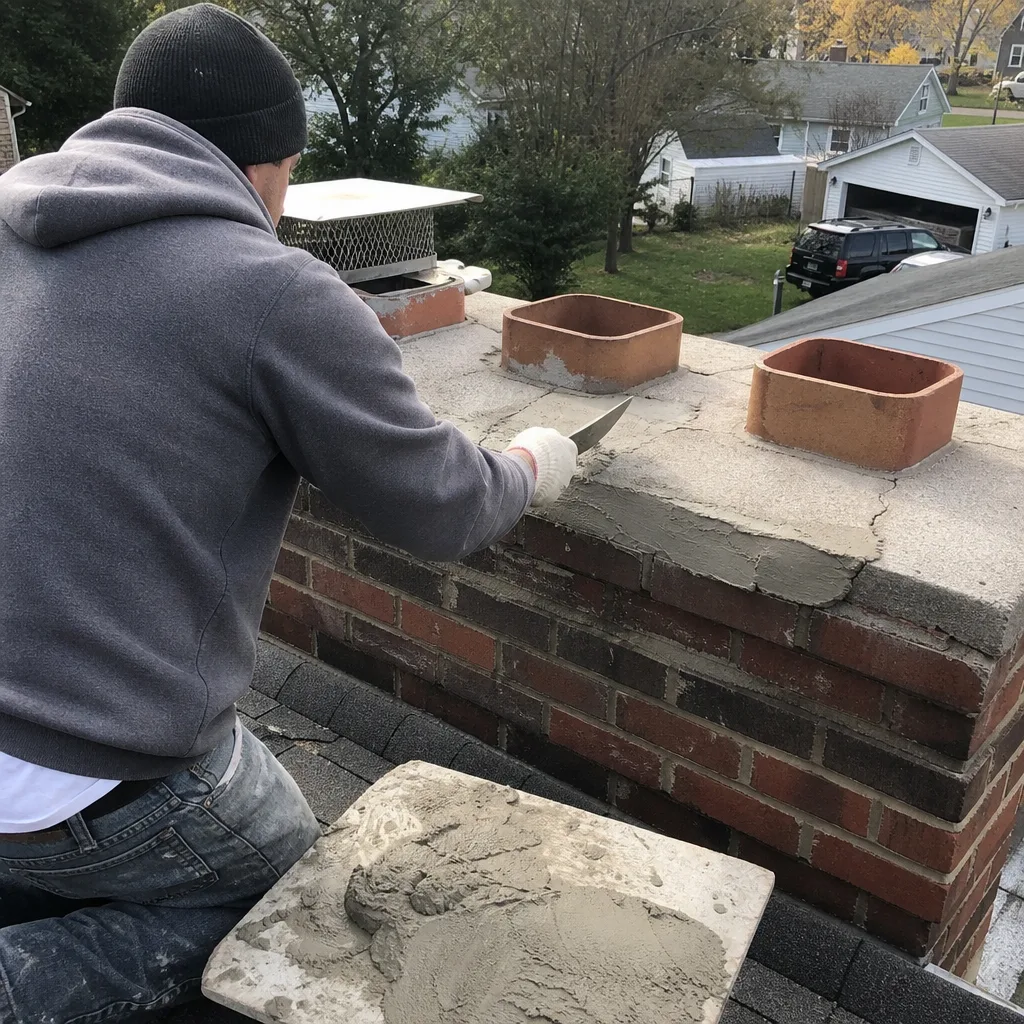
- Permit-required: stainless steel liner installation or replacement, poured-in-place liner systems (like HeatShield), firebox reconstruction, smoke chamber parging beyond surface repair, crown rebuilding, flue tile removal or replacement, adding a new flue, extending chimney height, and any work that changes the chimney’s structural load path.
The rationale is simple: a liner is a life-safety component. It contains combustion gases and protects combustible framing from heat transfer. Get it wrong and you’ve created a fire hazard inside walls. Maryland treats that as structural work, not maintenance, no matter what the marketing brochure says.
One thing that surprises Gaithersburg homeowners: installing a cap on a new flue requires a permit, while replacing a cap on an existing flue doesn’t. The distinction is whether the work is part of a new installation or a repair. In our experience, many sweeps handle the replacement side correctly but - even when chimney cleaning warning signs are evident - gloss over the permit question when the liner replacement conversation starts.
Montgomery County-Specific Permit Requirements
Montgomery County operates its own permitting system through the Department of Permitting Services (DPS), separate from the state. That means Gaithersburg, Rockville, Bethesda, Silver Spring, and the rest of the county follow county-level rules that can be stricter than Maryland’s baseline.
For chimney work, the relevant permit is a building permit, and here’s the part many Gaithersburg homeowners miss: the permit must be pulled by a contractor holding a valid Maryland Home Improvement Commission (MHIC) license. Montgomery County does not issue chimney permits to homeowners acting as their own contractor for structural chimney work. This is not a quirk - it’s a county-specific rule designed to keep unlicensed operators out of fire-safety work.
What the permit application requires:
- A description of the scope: liner type (stainless rigid, flexible, or poured-in-place), length, and diameter.
- The manufacturer’s installation specifications (DuraFlex or similar) confirming the liner is listed for the application.
- Evidence that the flue has been properly sized for the connected appliance or fireplace, per NFPA 211 and the manufacturer’s clearances.
- Inspection scheduling: Montgomery County requires a rough-in inspection after the existing liner is removed and before the new liner is concealed, and a final inspection after installation.
The inspection requirement is the invisible cost in a lowball liner quote. A sweep who quotes $3,400 for a liner replacement in Gaithersburg but doesn’t pull a permit isn’t just breaking the rules; they’re skipping the county inspector’s independent check on their work. You’ll pay $150-$400 for the permit itself, plus the time it takes to schedule two inspections. A written quote should show that as a line item, not fold it into a vague “miscellaneous” fee.
This is where the Chimney Repair in Gaithersburg landscape gets interesting: some contractors build the permit fee into their price, others itemize it, and a third group quietly ignores the requirement altogether. If a quote doesn’t mention a permit for liner work, that’s your signal to ask a pointed question.
How NFPA 211 Functions as Maryland’s Backbone Standard
NFPA 211 is the National Fire Protection Association’s standard for chimneys, fireplaces, vents, and solid fuel-burning appliances. It’s not a law in Maryland, but it’s incorporated by reference into the state’s residential code, which means it has the force of regulation when a county inspector or insurance adjuster invokes it. Knowing this matters because NFPA 211 defines the inspection levels, and those levels define what any documented maintenance record must actually contain.
NFPA 211 defines three inspection levels:
- Level 1: visual inspection of accessible portions of the chimney exterior and interior. Appropriate for routine maintenance when the system hasn’t changed. This is what most “free inspection” calls actually are, and it’s exactly what it sounds like: someone looks with a flashlight.
- Level 2: everything in Level 1 plus a camera scan of the flue interior, attic and crawlspace examination where accessible, and an assessment of clearances to combustibles. Required whenever the chimney system changes - new liner, new appliance, fuel conversion, or after a chimney fire, building sale, or seismic event. This is the documentation standard adjusters refer to when they ask for maintenance records.
- Level 3: Level 2 plus partial demolition of concealed areas to access what can’t be seen. Rarely needed, but sometimes triggered when a Level 2 reveals hidden damage.
- Holding up: a policyholder who can produce a Level 2 inspection report, with photo documentation, showing the flue was clean and the liner was intact within the past 12-24 months. The adjuster sees evidence of a maintained system; the fire gets classified as sudden/accidental.
- Collapsing: a policyholder with a 6-year-old receipt that says “chimney cleaned” and no photos. The adjuster cannot verify what condition the flue was in, so the loss gets classified as long-term neglect - and the claim is denied or significantly reduced, citing the policy’s exclusion for damage resulting from lack of maintenance.
- Inspection level named explicitly. “Level 2 camera inspection” means something specific under NFPA 211. “Full inspection” means nothing.
- Photo record of the flue, crown, firebox, and smoke chamber. Dated, with the address visible in the file metadata. Clause 4 of the Haven Standard requires this on every job, and it’s been our default since 2009, long before insurance companies started asking for it.
- Written condition report in plain terms. Not “some creosote buildup.” We write “Class II creosote - 1/8 to 1/4 inch accumulation, proper for a system used regularly but due for cleaning.” Adverbs don’t document anything. Specifics do.
- Written scope and written price, before work begins. That’s Haven Standard Clause 1, the H.A.V.E.N. “Have it in writing” principle. If a contractor won’t write the scope, they haven’t defined the work.
- Post-work verification. After a cleaning, a camera scan confirms the flue is clear. After a liner install, the county inspector’s final pass plus our own camera documentation goes into the file.
- Get a Level 2 camera inspection first. Before permit conversations even start, you need to know the true scope. A camera scan reveals what needs to be fixed, which determines what the permit covers. Skip this and you’re guessing.
- Obtain a written scope from a licensed contractor. The scope should name the exact work: liner material and diameter, crown rebuild dimensions, firebox materials. Haven Standard Clause 1: written scope and written price before work starts. No scope, no permit application.
- Verify the contractor’s MHIC license number. Montgomery County requires the permit applicant to be licensed. If the contractor won’t put their license number on the estimate, that’s a red flag. You can verify MHIC licenses online in under a minute.
- Apply for the building permit through DPS. The contractor typically handles this, but you should see the permit number before work starts. Ask for it in writing.
- Schedule the rough-in inspection. After removing the old liner but before the new one goes in, the county inspector needs to see the open flue and confirm the chimney’s condition supports the planned work.
- Complete the installation. The contractor installs the liner, rebuilds what needs rebuilding, and prepares for final inspection.
- Schedule the final inspection. The county inspector verifies the work matches the approved scope and meets code. If there’s a deficiency, it goes back for correction and re-inspection.
- Obtain final documentation. Your permit file with final inspection approval, plus the contractor’s photo record and warranty, completes the package. This is the file an adjuster sees if there’s ever a claim.
- Assuming a sweep’s recommendation doesn’t need a permit. A liner replacement is structural work, not maintenance. In Montgomery County, it requires a building permit pulled by a licensed contractor. If your sweep says otherwise, get a second opinion.
- Accepting a quote that doesn’t mention permits at all. If the scope includes liner work, firebox work, or structural repair and the permit isn’t addressed, the contractor is either planning to skip it or hasn’t thought it through. Either way, you carry the liability.
- Counting a Level 1 flashlight look as documented maintenance. NFPA 211’s inspection levels exist for a reason. A Level 1 isn’t a substitute for a Level 2 when the system has changed or when you need an insurance-defensible record.
- Storing receipts but not inspection reports. A receipt proves money changed hands. Only an inspection report with photos and findings proves the chimney was actually examined. When an adjuster asks for maintenance records, they mean the latter.
- Treating Gaithersburg’s freeze-thaw cycle as a one-time issue. Crown damage is progressive. In our climate, a hairline crack in October can be a structural problem by March. Annual inspection catches it before it turns into a liner replacement.
- Skipping the rough-in inspection to save time. It’s tempting to have the contractor install the liner before the county can see the open flue. But if the rough-in reveals unexpected issues - deteriorated masonry bags, clearance problems - you’ve just concealed them behind a new liner with no inspector’s sign-off.
- Signing a quote that doesn’t include written warranty terms. A verbal promise about liner lifespan is worth nothing. The manufacturer’s warranty applies to the material (a DuraFlex liner, for example), but the installation warranty is separate, and it needs to be in writing.
The practical takeaway for Gaithersburg homeowners: a Level 2 inspection is the minimum defensible documentation for any maintenance history claim. A receipt that says “chimney swept - $189” with a Level 1 checkbox doesn’t prove the flue was examined for cracks, gaps, or deteriorated mortar. It proves someone was on your roof. When an adjuster is evaluating a fire-loss claim and looking for evidence of “documented maintenance,” the difference between those two records can be the whole claim.
Here’s a specific example from our service area: we’ve inspected 1970s-era chimneys in the Kentlands and Washingtonian Woods neighborhoods of Gaithersburg where the original terra-cotta flue tile had cracked at the same spot - right where the flue bends. A flashlight would never expose it. A camera scan catches it instantly. One record shows an inspection; the other shows evidence of an actual examination.
What Insurance Policies Actually Say About Chimney Maintenance
Most Maryland homeowners have one of two types of fire-loss coverage: an HO-3 or HO-5 policy. Both contain language - typically in the “Duties After Loss” and “Conditions” sections - that requires the homeowner to maintain the insured property in a reasonable manner. What “reasonable” means is rarely defined in the policy itself. It’s defined by claims practice and case law.
In a chimney fire claim, the adjuster’s job is to determine whether the loss resulted from a sudden, accidental event (covered) or from neglect of a known maintenance issue (excluded or reduced). The single most important factor in that determination is documentation. Here’s what we’ve seen from claims that went well versus claims that didn’t:
This is not hypothetical. A 2021 chimney fire claim in Rockville was denied after the adjuster obtained the homeowner’s old records and found the last documented cleaning was four years prior with no inspection notes. The policyholder had been told by the previous owner that the chimney was “fine.” It wasn’t. The NFPA 211 reference is what made the case for the insurer: the standard explicitly calls for annual inspection of solid-fuel chimneys.
What this means for you in Gaithersburg: “documented maintenance” doesn’t mean a folder of receipts. It means a dated record that names the inspection level, describes the condition found (liner integrity, creosote class, crown status), includes photographic evidence, and recommends next steps. Without that, you’re self-insuring the chimney fire risk, whether you realize it or not.
What Counts as ‘Documented’ When an Adjuster Asks
There’s a chasm between a handwritten receipt and a defensible inspection record, and it’s one most homeowners never see until the claim is being reviewed. Here’s what we put in writing after every visit - and why each piece matters:
We’ve had Gaithersburg homeowners bring us competitor receipts and ask us to interpret them. In several cases, the receipt literally read “chimney work” - no scope, no material type, no date of completion, no license number. From an adjuster’s perspective, that piece of paper is worth less than the ink it took to print it. A defensible record is one that lets a third party verify, months or years later, what was found and what was done.
For the Chimney Cleaning & Sweep in Gaithersburg side of our practice, this is the standard: every visit produces a file that documents inspection level, findings, actions, and photos. If there’s ever a claim, the homeowner hands over that file and the adjuster has what they need to do their job. That’s the entire point of keeping records: so the person reviewing your claim doesn’t have to take your word for it.
Gaithersburg-Specific Code Realities: Climate, Age, and Stock
Gaithersburg’s housing stock and climate create specific chimney conditions that a generic guide won’t tell you about; our Chimney Cleaning & Sweep Maintenance Checklist for Gaithersburg Homeowners covers the local details. These matter for code compliance and permit decisions.
First, freeze-thaw cycling. Gaithersburg sits right in the Mid-Atlantic transition zone, which means winters deliver exactly the conditions that destroy chimney crowns: temperatures oscillating above and below freezing, often weekly. Water enters hairline cracks, freezes, expands, and widens them. A crown that was structurally sound when inspected in October can show spalling and widened cracks by March. For code purposes, spalling that compromises the crown’s drainage function triggers a repair that, depending on scope, may require a permit.
Second, the age and construction of Gaithersburg’s housing stock. The city was incorporated in 1878, but the bulk of its residential construction falls into three waves: 1960s-70s ranches and splits (terra-cotta flue liners, now past their 50-year service life), 1980s-90s colonials (mostly terra-cotta, some early stainless), and 2000s-present new construction (stainless liners from day one, but often with installation shortcuts on the roof side).
We see a specific failure pattern in older Gaithersburg neighborhoods like West Riding and the original Kentlands sections: the original terra-cotta flue tiles have cracked at the mortar joints, which means the liner no longer contains combustion gases as designed. Under county code, a cracked liner means the chimney is no longer code-compliant for solid fuel use, which means the proper fix - a stainless liner system, often DuraFlex - is permit-required work.
Third, the multi-family factor. Gaithersburg has a significant number of townhome communities and older apartment buildings, particularly around Olde Towne and the Lakelands. In attached housing, a chimney issue in one unit can affect the shared fire wall, which raises the stakes on documentation. Damage a homeowner can’t see - in the shared chase or at the firewall intersection - can be invisible, and when county inspectors review chimney work in attached housing, they often require a higher documentation bar simply because the risk profile is different.
In our experience inspecting Gaithersburg chimneys since 2009, the most common code-relevant finding is a crown in early failure, followed by a liner with hidden cracks. Both are exactly the kind of thing a Level 1 flashlight inspection misses, and both are exactly the kind of thing that, once documented, changes what needs to happen next.
Step-by-Step: Getting Chimney Work Permitted in Montgomery County
If you’re facing a liner replacement, firebox rebuild, or other structural chimney work in Gaithersburg, here’s the process, in order, from initial inspection to final sign-off. We’ve walked this path with hundreds of local homeowners.
Total timeline in Gaithersburg: typically 2-4 weeks from initial inspection to final sign-off, depending on DPS scheduling and the scope of work. Total cost for the permit itself: $150-$400, depending on the valuation of the work. If a quote for liner work doesn’t include a permit line or a license number, that’s the conversation you need to have before signing anything. We’ve seen enough unpermitted liner installs in this market to know it happens with depressing regularity - and it’s always the homeowner who carries the risk.
This is also where the Fireplace Services in Gaithersburg side of our work overlaps with code compliance, because fireplace rebuilds - firebox brick replacement, smoke chamber parging beyond surface work - trigger the same permit process. The county treats any structural work in the combustion system the same way: it must be permitted, inspected, and documented.
Common Mistakes to Avoid
When to Call a Professional
If you’re facing a liner replacement recommendation and the quote doesn’t mention a permit, stop and call a licensed contractor who will put the process in writing. If you have a chimney that has never had a camera inspection and you plan to file a homeowners insurance claim at some point in the future, that’s the gap to close now. And if you’ve just moved into a Gaithersburg home with an older chimney - particularly in the 1960s-80s construction - a Level 2 inspection should be on your first-year list, not your fifth-year list. The freeze-thaw cycle in Montgomery County is working against older masonry every winter.
Level Two Chimney Gaithersburg offers free estimates in Gaithersburg. Every quote is written, every visit includes a documented photo record, and our 365-Day Done Right Promise covers the work. Call (240) 220-9395 to schedule an inspection.
Frequently Asked Questions
No. Chimney cleaning, sweeping, and basic sealing are permit-exempt throughout Maryland, including Montgomery County. The permit requirement kicks in when the work involves the liner, firebox, crown structure, or any component that changes the chimney’s structural or safety function.
A building permit for chimney work in Montgomery County typically costs $150-$400, depending on the valuation of the work. The permit must be pulled by a licensed contractor, not the homeowner, and it covers the rough-in and final inspections. This fee should appear as a line item in your written quote.
Yes. Stainless steel liner installation, poured-in-place liner systems like HeatShield, and any liner replacement work are structural modifications under Maryland code and require a building permit in Montgomery County. Unpermitted liner work is a code violation and a significant liability if there’s ever a fire or an insurance claim.
A Level 1 inspection is a visual check of accessible chimney areas - what most people picture when they think of a sweep. A Level 2 adds a camera scan of the flue interior plus an examination of attic, crawlspace, and clearances, and it’s the standard called for by NFPA 211 whenever a chimney system changes or an insurance-defensible record is needed. We’ve performed our camera-scan standard, now Haven Standard Clause 4, on every job since 2009.
Potentially, yes. Maryland insurance policies typically exclude damage resulting from neglect or lack of maintenance. If you can’t produce a dated inspection record with photo documentation showing the flue was in good condition within a reasonable window before the fire, an adjuster may classify the loss as long-term neglect and deny or reduce the claim. “Documented maintenance” means an inspection report with findings, not just a receipt.
Annually, per NFPA 211. Gaithersburg’s freeze-thaw cycle causes progressive crown damage that a visual check in one season won’t catch in another, and older homes with terra-cotta flue liners - common in neighborhoods like West Riding and the original Kentlands sections - are now past their service life. Annual inspection with camera documentation is the baseline for both safety and insurance compliance.
The Bottom Line
Maryland’s permit line is clearer than most homeowners realize: cleaning and basic sealing don’t need one; liner, firebox, and crown work do. In Montgomery County, the stakes are higher because the permit must be pulled by a licensed contractor and the county inspects the work. The documentation you get from a proper Level 2 inspection - photos, findings, written scope, written warranty - is what protects you when an adjuster reviews a claim. Gaithersburg’s freeze-thaw climate and aging housing stock make that documentation more important here than in most of the state. Get the inspection, keep the file, and make the permit a non-negotiable on any structural chimney work. For ongoing care, see our more guides & resources.
Written by Corrine Halstead, Owner at Level Two Chimney Gaithersburg, serving Gaithersburg since 2009.