
Last updated September 20, 2026
Level 1 sweep and inspection to the NFPA 211 annual standard - flue, crown, cap, and flashing checked and photographed
Chimney sweep logs do not sweep chimneys. They loosen some creosote - which then falls where a brush and vacuum still have to collect it.
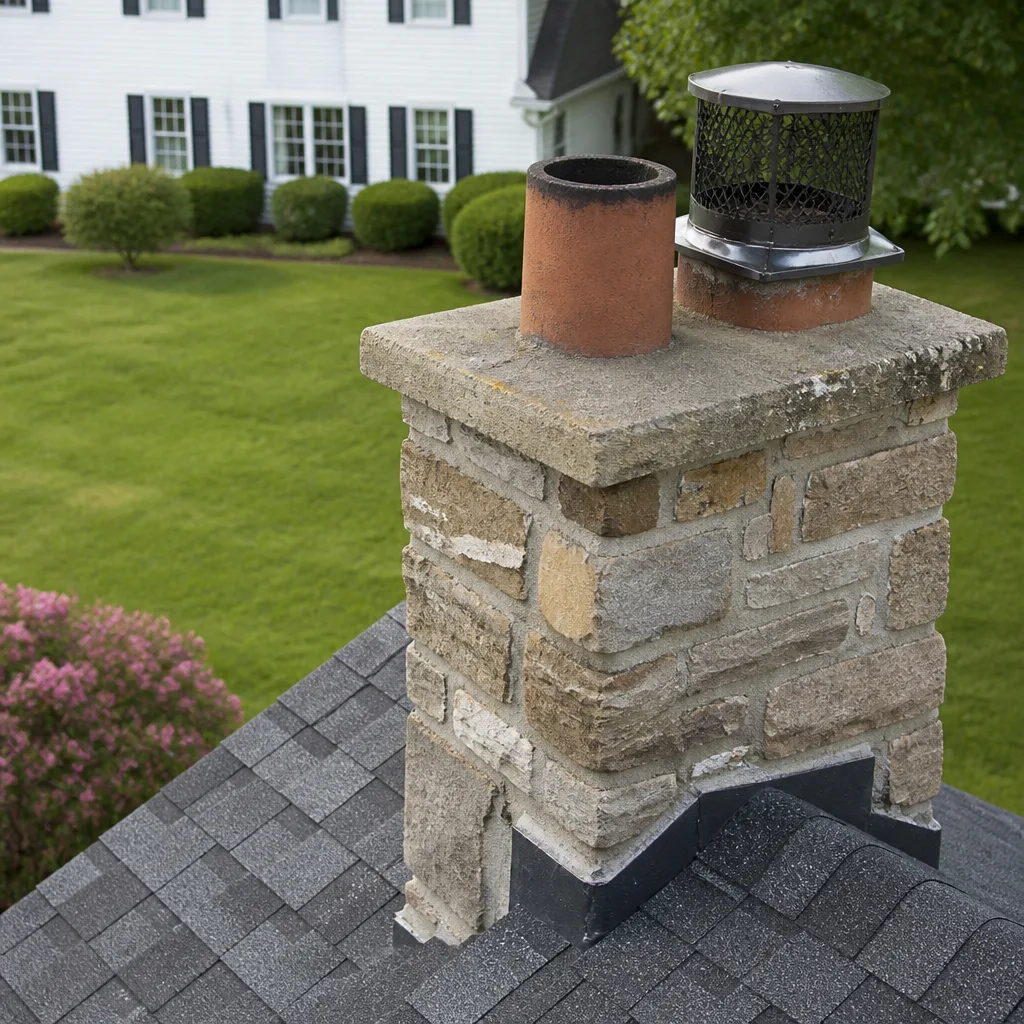
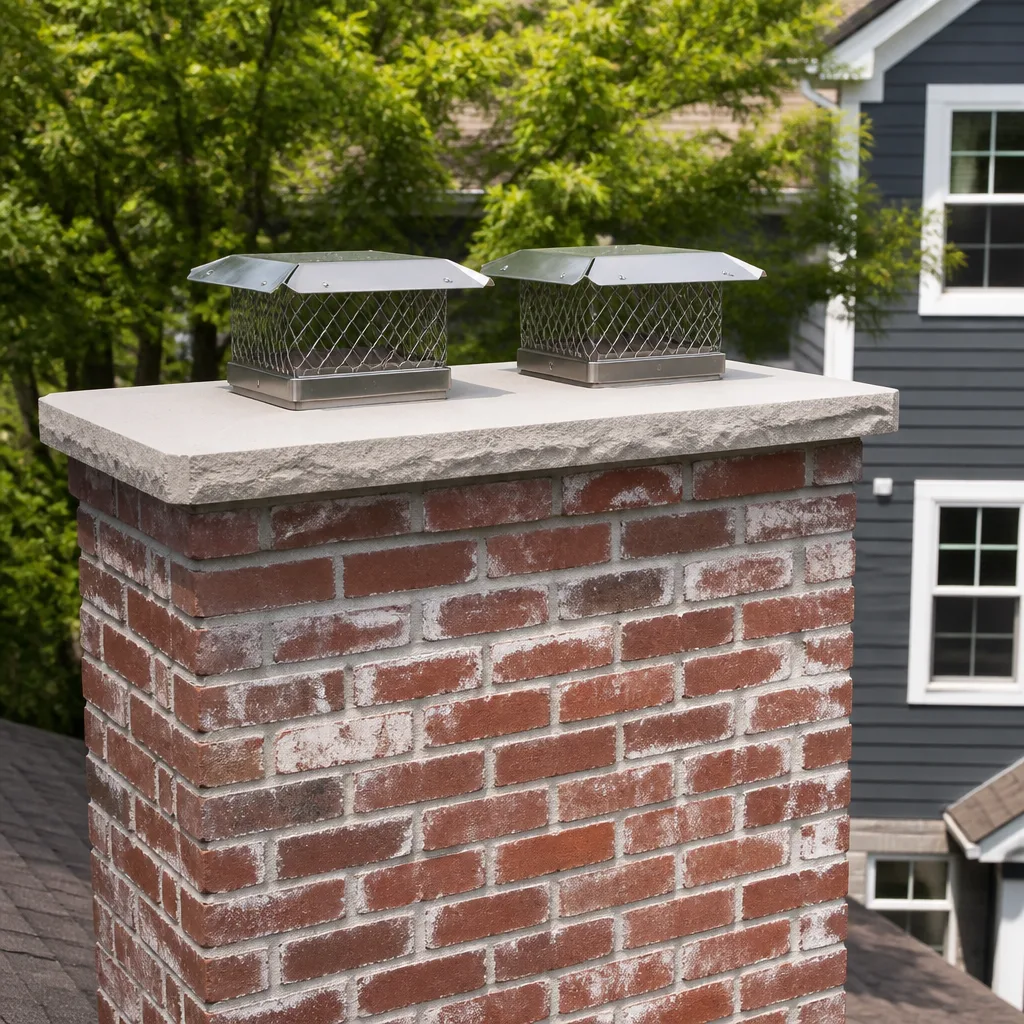
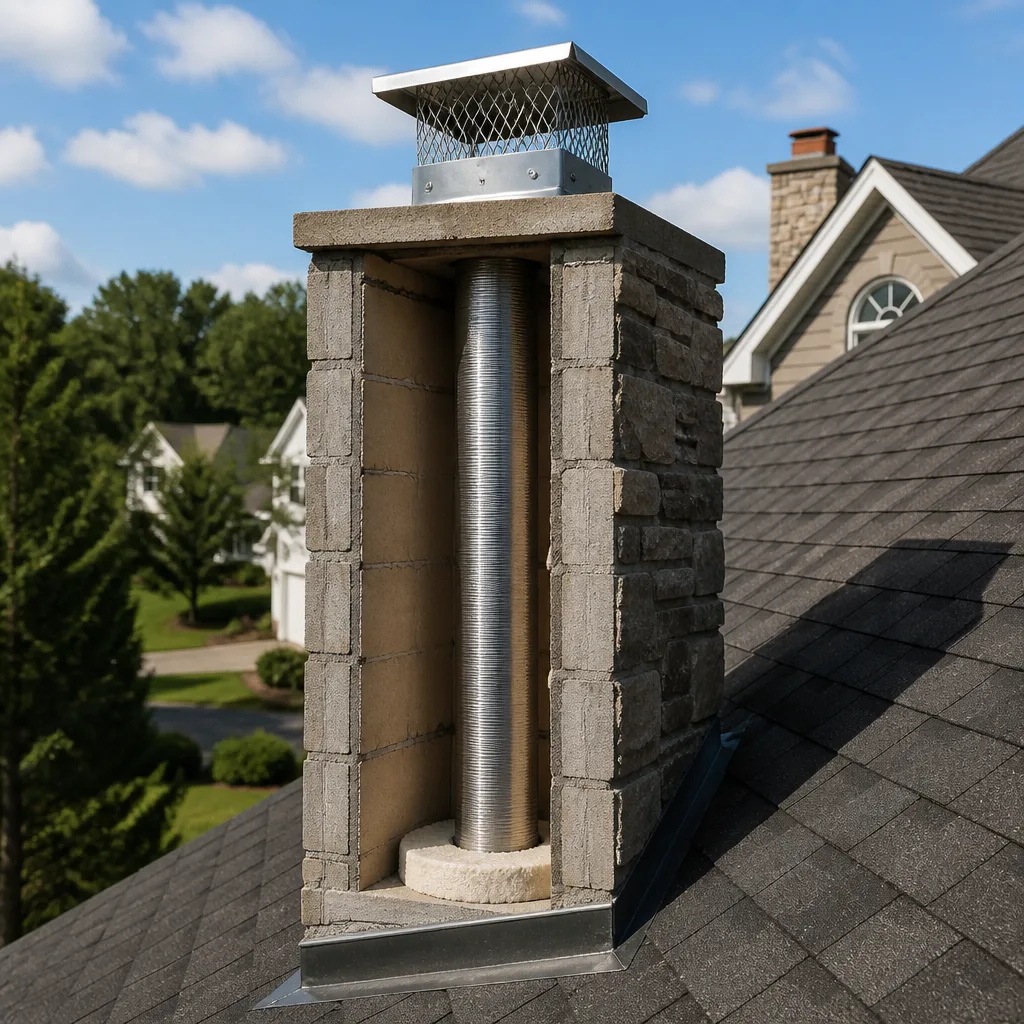
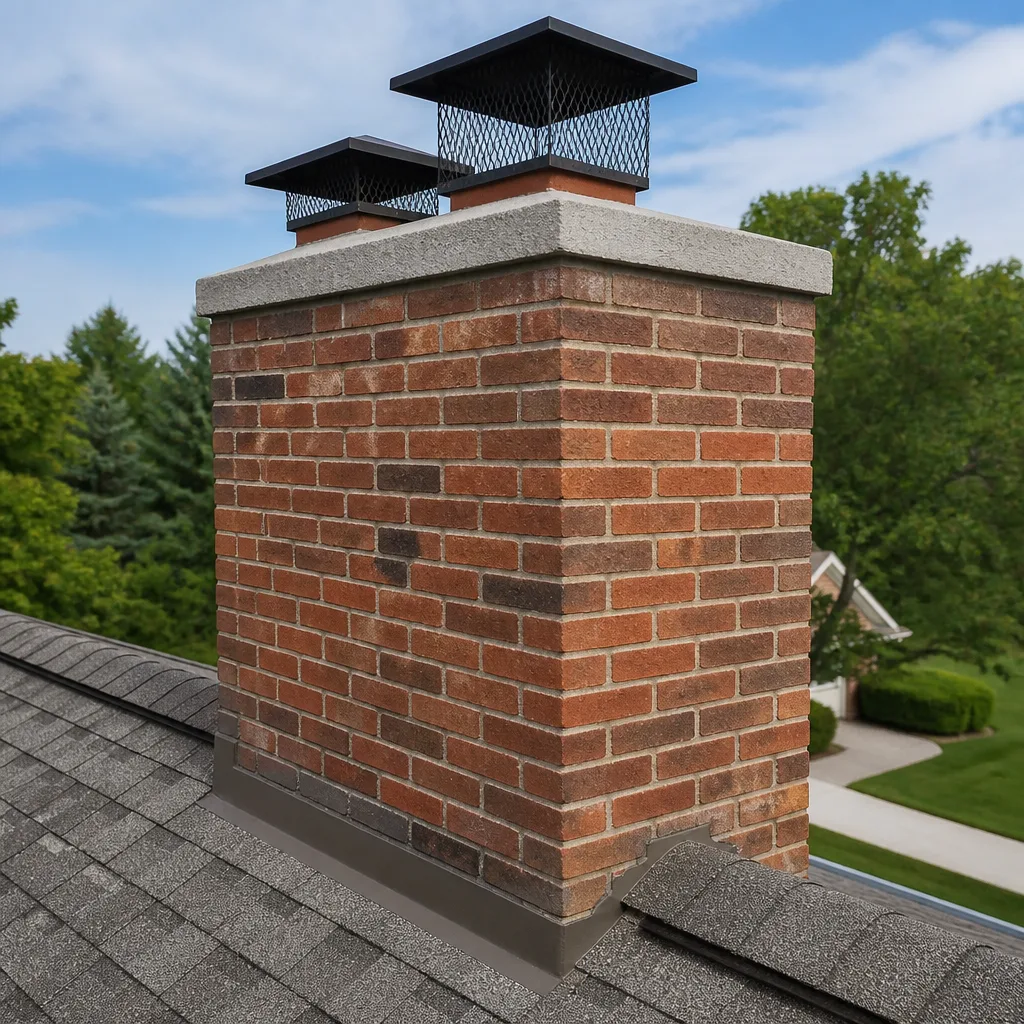
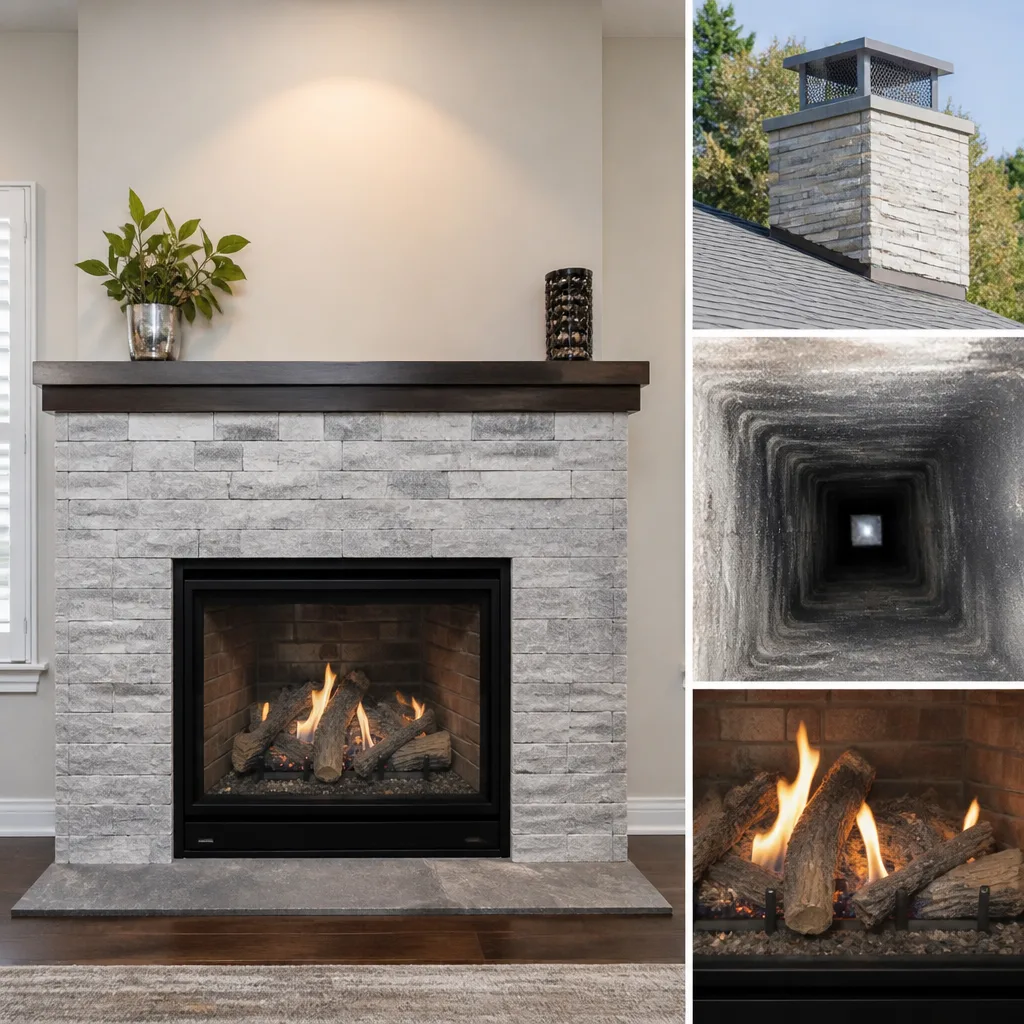
 Before
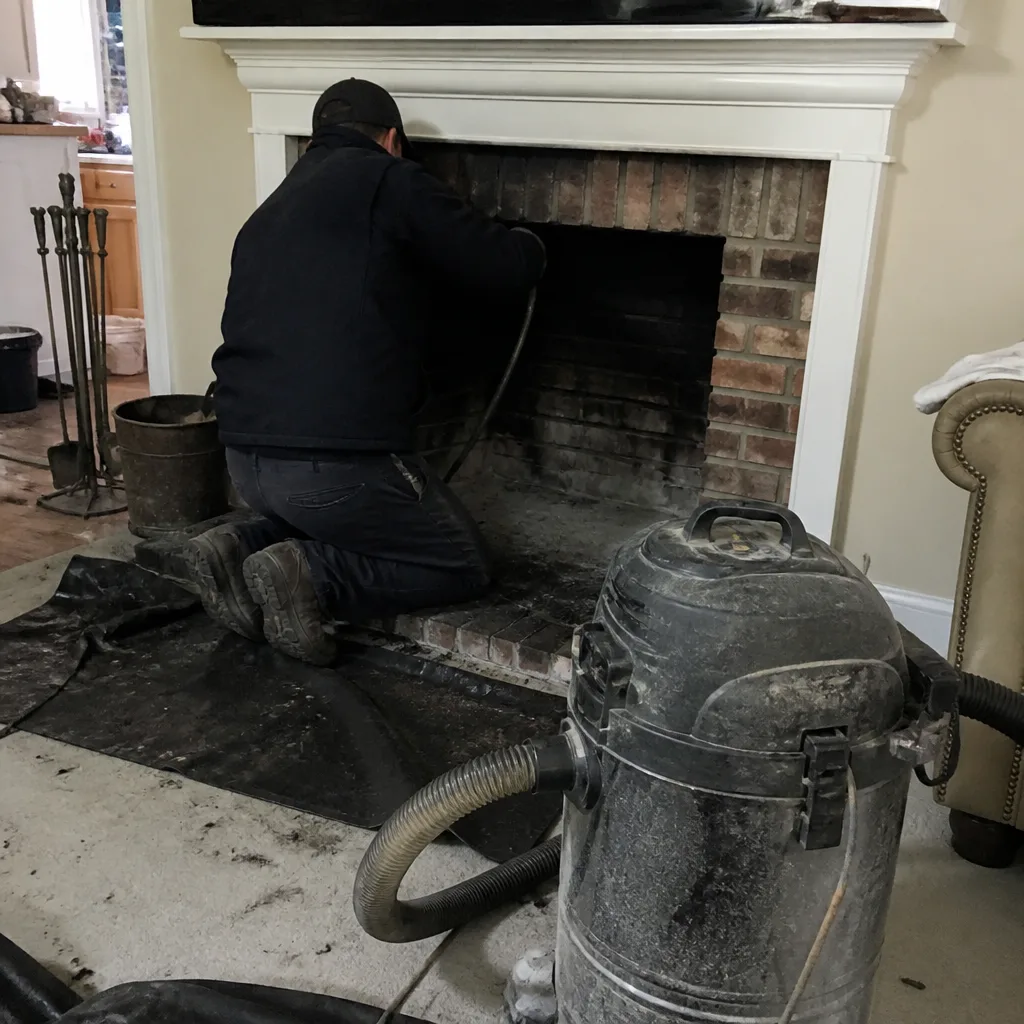
 After
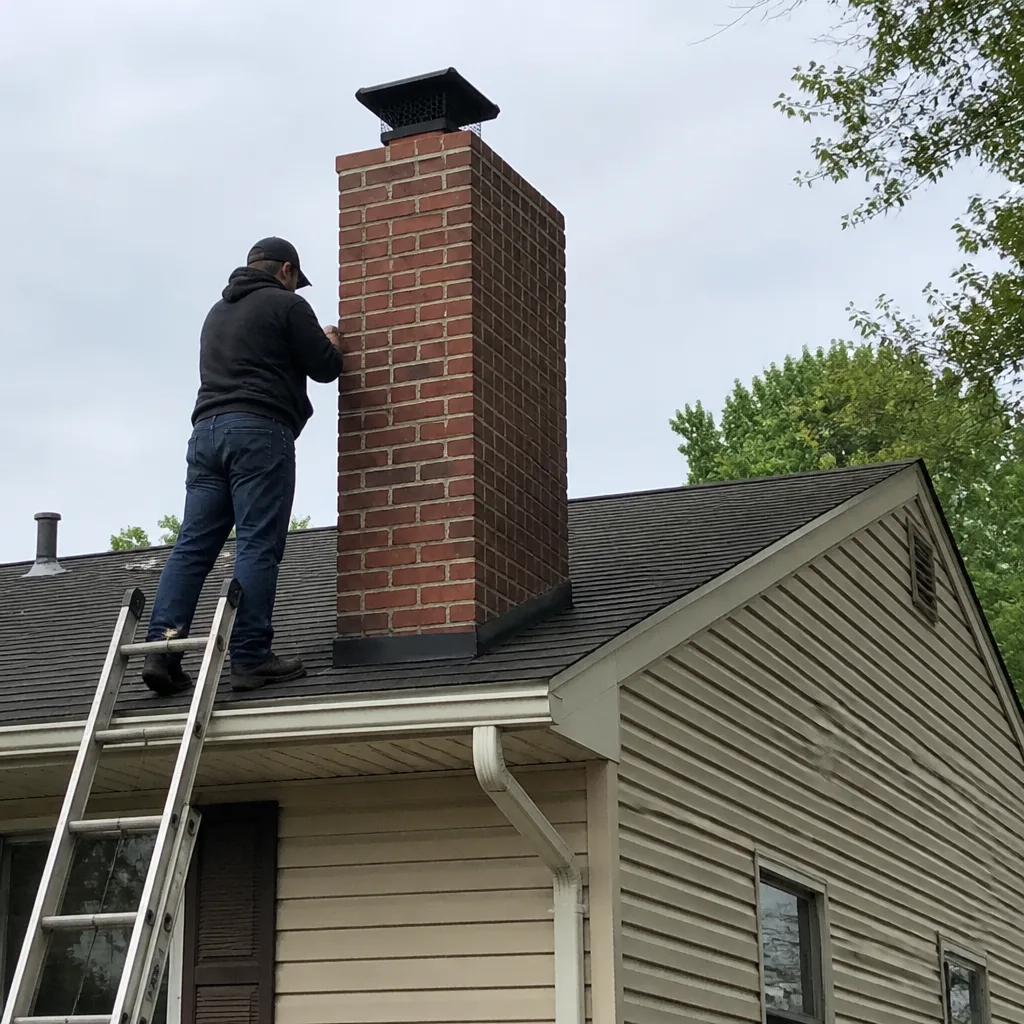
After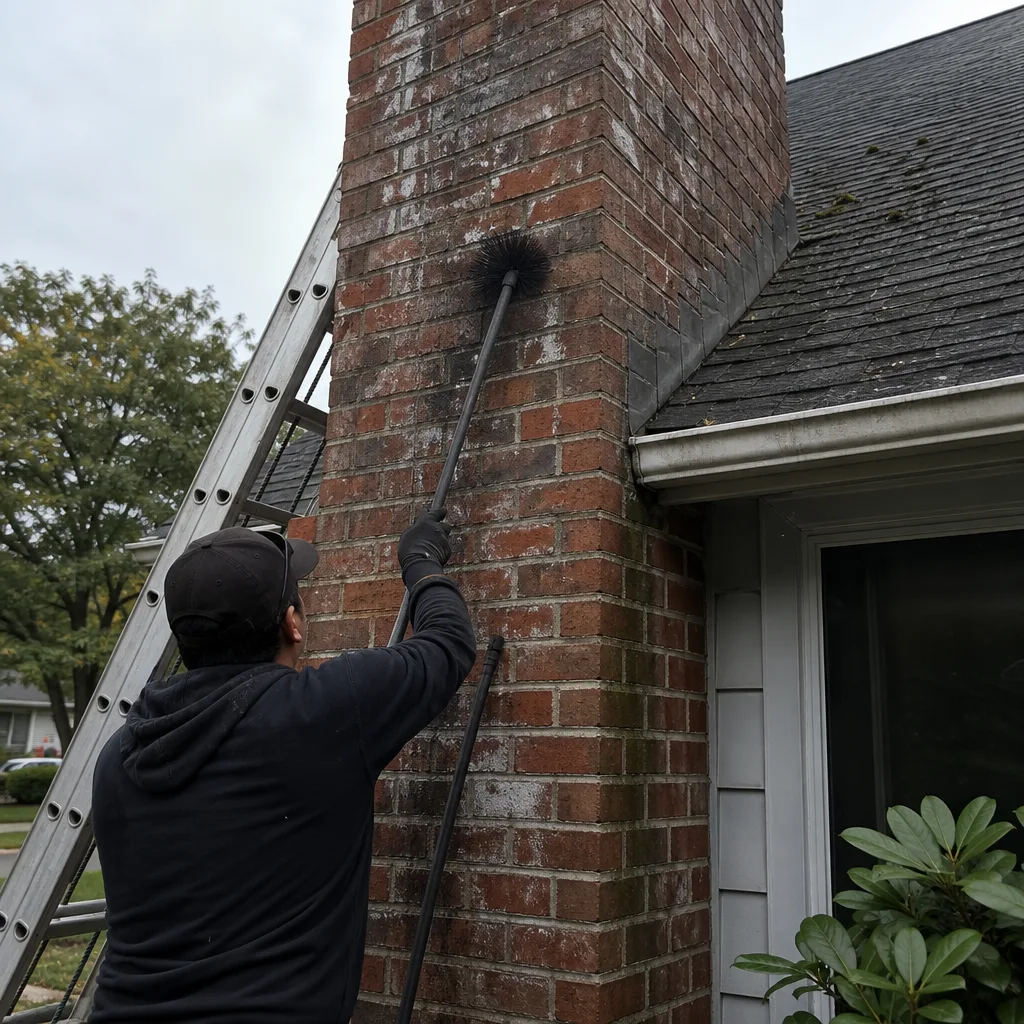 Before
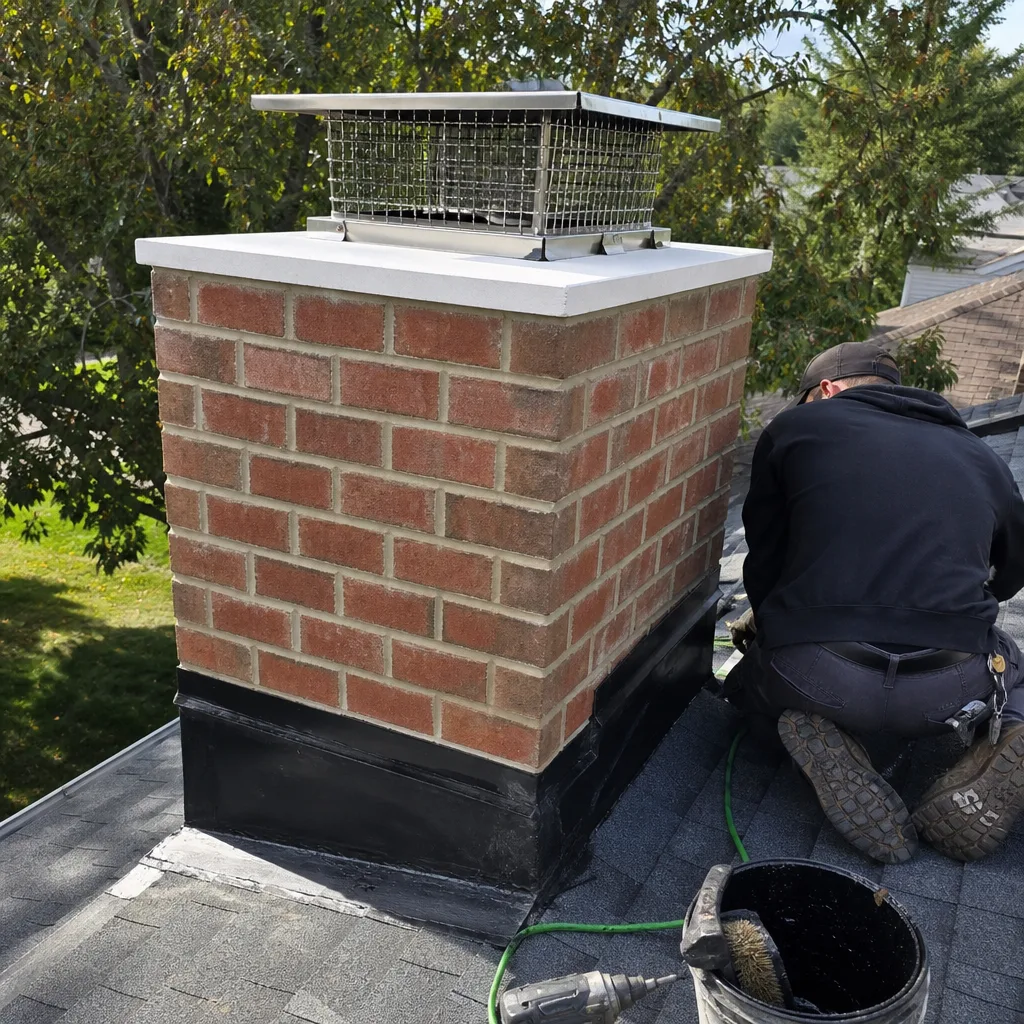 After
After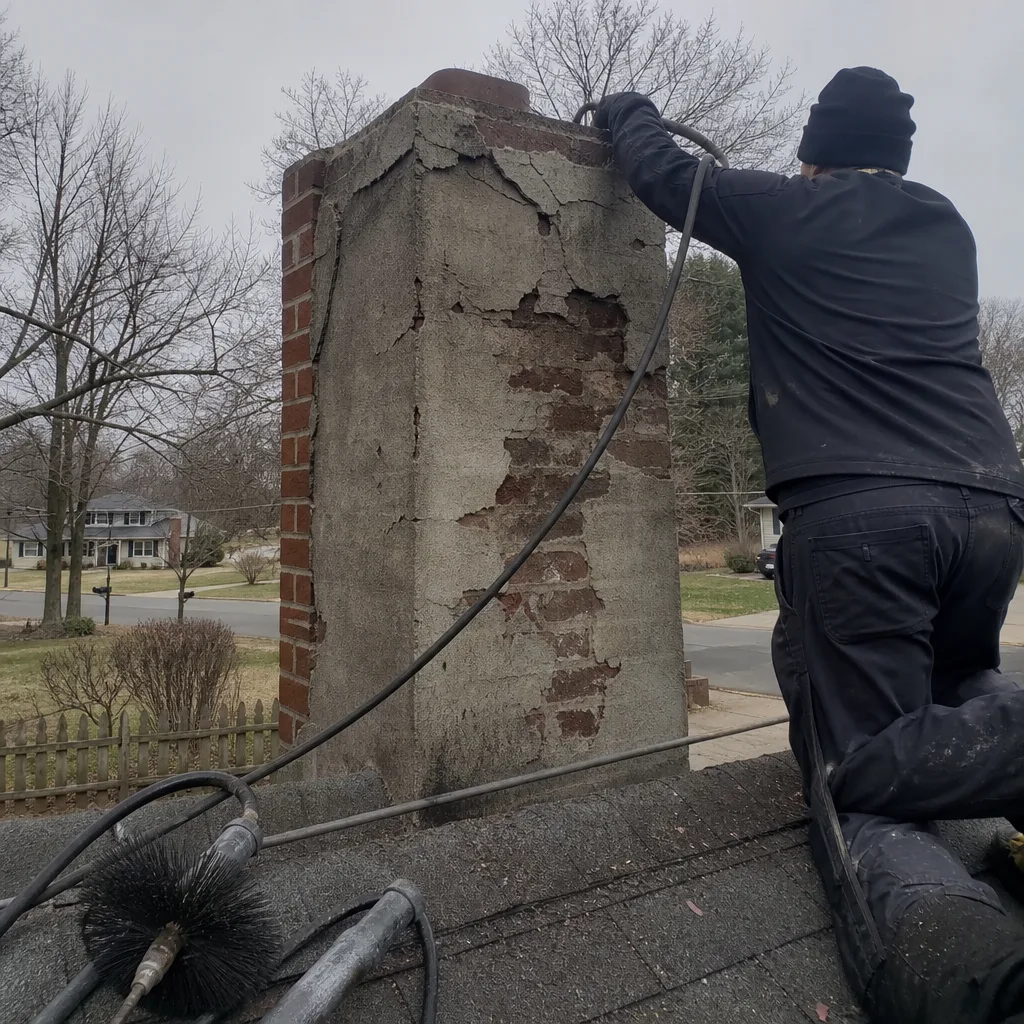 Before
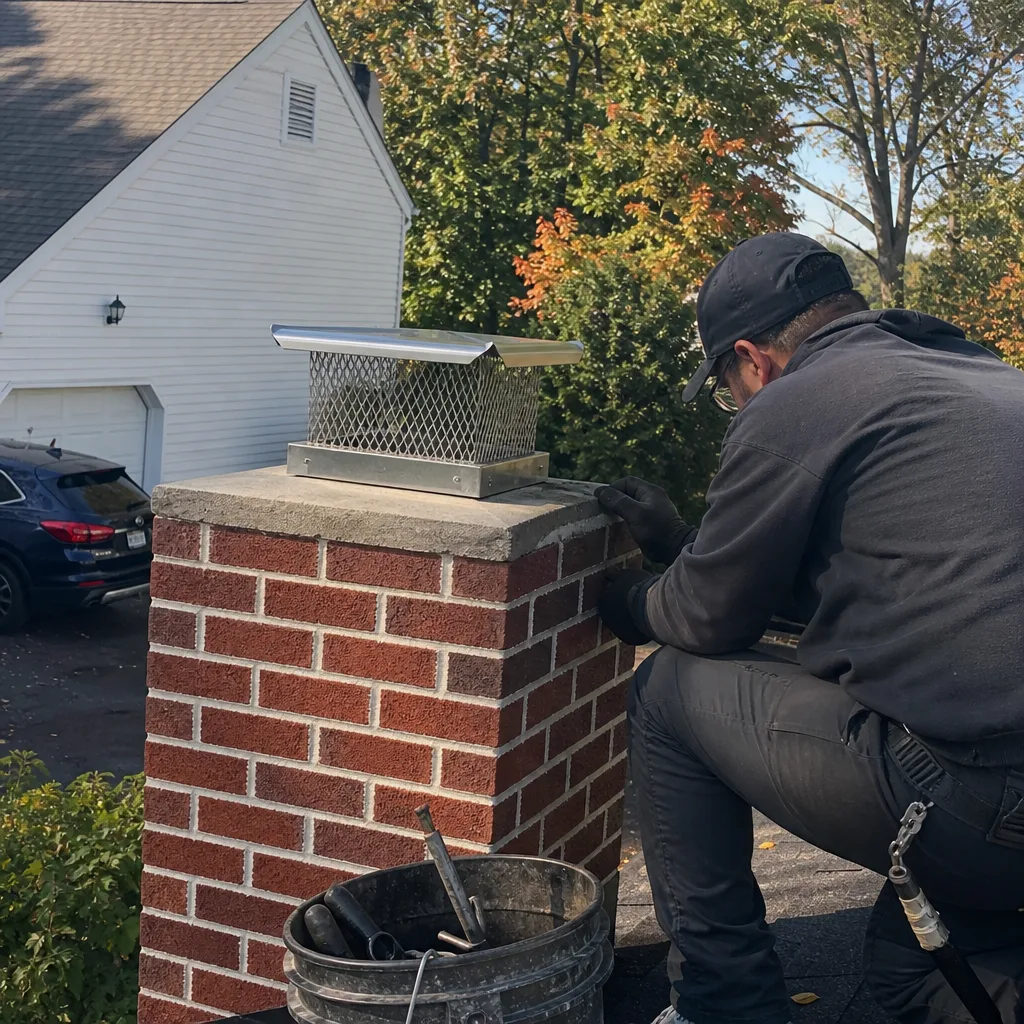 After
AfterChimney Cleaning Warning Signs: A Gaithersburg Homeowner’s Reference Guide
Most chimney warning sign lists are written to generate calls, not to help homeowners distinguish a cosmetic issue from a combustion hazard. That’s a problem when you’re standing in your Gaithersburg living room at 11 p.m. wondering whether the smell you noticed is normal or dangerous. This guide takes the opposite approach. We’ll name each warning sign, rank its urgency, explain what the sweep should find when they investigate it, and tell you what documentation you should walk away with. By the time you finish reading, you’ll know which signs mean “schedule a sweep within the week” and which mean “do not light another fire until this is inspected.”
Quick Answer
The most urgent chimney warning signs in Gaithersburg are a smoky odor with no fire lit, smoke rolling back into the room while a fire burns, and white staining that appears suddenly on exterior brick. These indicate a blocked flue, collapsed flue tile, or combustion gas leak and require inspection before the next fire. Cosmetic issues like minor surface spalling or light efflorescence can usually wait for a routine sweep.
Table of Contents
- The Triage Table: Every Warning Sign, Ranked
- Why Odor Is Your Most Reliable Early Warning in Gaithersburg
- Spalling Brick: Surface Weathering vs. Structural Failure
- Smoke Rollout: Why a Damper Adjustment Is Not the Diagnosis
- Efflorescence: When White Staining Is a Real Problem
- What Your Sweep Should Produce When They Investigate a Warning Sign
- Common Mistakes to Avoid
- When to Call a Professional
- Frequently Asked Questions
BeforeAfterThe Triage Table: Every Warning Sign, Ranked
Not every chimney issue deserves the same response. Here’s how we rank the signs we see most often in Gaithersburg homes, including what each one usually means and the diagnostic step that confirms or rules it out.
| Warning Sign | Urgency | Likely Cause | Diagnostic Step |
|---|---|---|---|
| Smoky odor in summer, no fire lit | Call today | Collapsed flue tile, blocked flue, or downdraft | Camera scan of flue interior |
| Smoke rolling into room during fire | Call today | Flue obstruction, closed damper, negative pressure | Visual inspection plus draft test |
| Sudden white staining on exterior brick | Call today | Water intrusion or gas leak through masonry | Moisture meter reading on affected area |
| Black soot or creosote dripping into firebox | Don’t light fires | Excess creosote buildup, likely Class III | Visual inspection of flue and smoke chamber |
| Crumbling mortar at crown | Schedule within a week | Water damage to crown mortar | Ground-level visual inspection, ladder for confirm |
| Slow-burning fire, weak draw | Schedule within a week | Partial obstruction or flue sizing issue | Camera scan plus flue measurement |
| Light efflorescence, stable for years | Routine sweep | Normal moisture evaporation from mortar | Note during routine inspection |
| Minor surface spalling on exterior brick | Routine sweep | Freeze-thaw weathering typical of Maryland climate | Note during routine inspection |
The distinction between “call today” and “routine sweep” comes down to whether combustion gases or water are actively threatening the structure or the people inside. A collapsed flue tile can send carbon monoxide into the house through the heat exchange into a bedroom within a single heating season. Surface spalling on a 40-year-old chimney in the Kentlands is usually cosmetic. We treat those two very differently, and so should you.
For a full chimney evaluation in Gaithersburg, our Chimney Cleaning & Sweep in Gaithersburg page explains what a camera-scan inspection covers and what you receive when we’re done.
Why Odor Is Your Most Reliable Early Warning in Gaithersburg
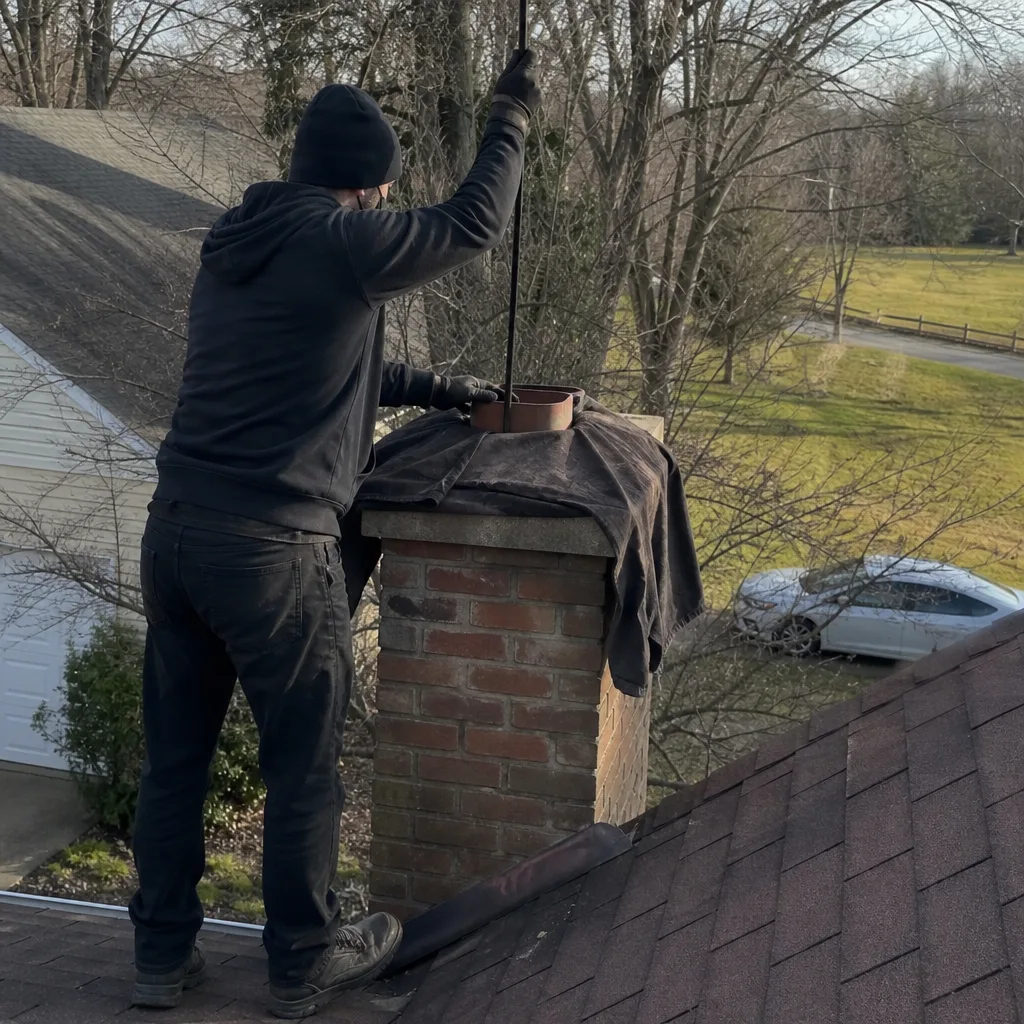
A white staining on a Gaithersburg chimney exterior looks alarming but is rarely urgent, while a faint smoky odor in summer with no fire lit can indicate a collapsed flue tile that’s invisible from the firebox and hazardous immediately. In our experience across 38,000-plus inspections since 2009, odor is the warning sign homeowners notice first and take seriously last. It shouldn’t be that way.
Most of the chimney damage that becomes dangerous in Gaithersburg happens out of sight. The flue runs through the center of your house. You can’t see a cracked tile, a separated joint, or a masonry void from your living room. You can smell it, though, and that smell arrives weeks or months before you’d see any other sign.
The type of odor matters more than most homeowners realize. Describe it to your sweep in these terms, and you’ll narrow the diagnosis before we even arrive:
- Smoky, like a campfire, when no fire is lit. This is the most common indicator of a collapsed flue tile or a partial obstruction. The flue isn’t venting as designed, and combustion byproducts from previous fires are drifting back into the living space. This requires a camera scan to locate the blockage or collapse.
- Musty or damp, like an unfinished basement. Water is entering the chimney somewhere. In Gaithersburg’s freeze-thaw climate, the entry point is usually the crown or the top courses of brick. This is a masonry issue, not a combustion issue, but water accelerates flue tile deterioration if ignored.
- Sharp, chemical, or like a running car. This is carbon monoxide territory. Open a window. Don’t light anything. Call us immediately and describe exactly what you smell. If it’s strong, leave the house and call from outside.
- Pungent, like burning plastic or hot tar. This usually indicates Class III creosote, which is a hard, glaze-like deposit that forms when fires burn too cool. It’s the most difficult creosote to remove and the most combustible. We see it frequently in homes where the previous owner burned unseasoned wood.
Gaithersburg’s masonry stock plays a role here. Homes built before the mid-1980s often have clay tile flues, which crack and separate over time. Homes in older neighborhoods like Olde Towne and Washingtonian Woods were built when heating costs were still being figured out, and some chimneys just weren’t used as hard. The result is that odor in these homes is often the first sign of a structural flue failure that a visual inspection from the firebox would miss entirely. A camera scan is the only way to know for sure.
If you need a repair rather than a cleaning, our Chimney Repair in Gaithersburg page covers liner replacement, crown repair, and full rebuild services, all quoted in writing before any work begins.
Spalling Brick: Surface Weathering vs. Structural Failure
Spalling is the word for brick faces popping off, leaving rough, pitted patches. It happens when water penetrates the brick, freezes, and expands. Maryland winters make spalling a fact of life for exposed chimneys. But not all spalling means the same thing, and telling the difference from ground level is one of the skills that separates a thorough inspection from a quick look.
Surface spalling is what you see on the exterior face of the chimney. It looks like shallow chips or a rough texture on the brick faces. From the ground, you’ll notice brick-colored dust or small fragments at the base of the chimney after rain or wind. The brick itself is still doing its job. This is a cosmetic issue that should be noted at your next sweep and repaired when convenient. It does not mean your chimney is about to collapse.
Structural spalling is different. It happens inside the flue, where you can’t see it. When flue tiles crack and the faces separate, the inner surface of your chimney is literally falling apart. From ground level, and even from the firebox, you’ll see nothing. The signs are indirect: unexplained smoky odor (see the section above), pieces of flue tile at the bottom of the chimney during a cleaning, or a sudden drop in draft. A camera scan reveals tile faces missing, joints separated, and portions of the flue wall gone entirely. This is a combustion safety issue, not a cosmetic one.
The reason this distinction matters for Gaithersburg homeowners: surface spalling on the exterior can hide structural spalling in the flue. A chimney that looks fine from ten feet away can be dangerous to use. The fix for structural flue failure is usually a stainless steel liner, and we install liners from DuraFlex and Olympia Chimney. The fix for surface spalling is tuckpointing or brick replacement. One costs a few hundred dollars. The other costs a few thousand. The wrong guess in either direction is expensive.
When we investigate any spalling complaint, the process is the same: camera down the flue, documented photo record of what we find, and a written report that tells you exactly what we saw and what it means. Clause 4 of the Haven Standard requires that photo record on every job. It’s been our standard since 2009, not an upsell after the fact.
Smoke Rollout: Why a Damper Adjustment Is Not the Diagnosis
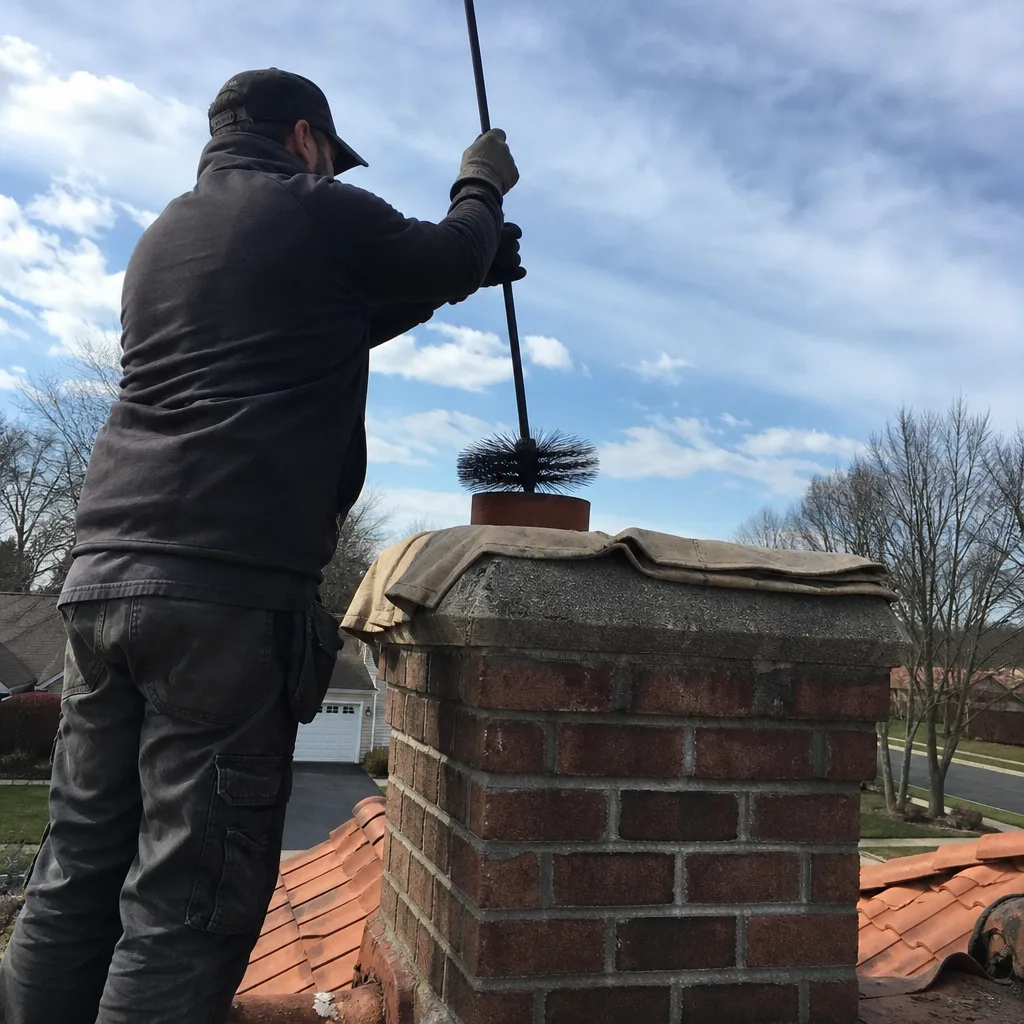
Smoke rollout, where smoke enters the room instead of going up the chimney, is one of the few warning signs that announces itself immediately. You’ll notice it the first time you light a fire in a new home, or the first time in years. The immediate instinct, and the advice you’ll get from well-meaning neighbors, is that the damper isn’t open enough. We hear this constantly. It’s almost never the whole story.
Smoke rollout rules in several possibilities and rules out several others. Here’s what actually causes it, in the order we check:
- Flue obstruction. A bird nest, squirrel nest, or years of creosote buildup can partially or fully block the flue. Smoke has nowhere to go, so it follows the path of least resistance back into the room. A camera scan confirms or rules this out in about ten minutes.
- Flue sizing or height issue. If the flue is too small for the firebox, or if the chimney is too short relative to the roof peak, the chimney won’t draw. This is common in additions where a second story or a new room changed the pressure dynamics around the chimney.
- Negative pressure in the house. Gaithersburg homes with tight windows, running bathroom fans, or competing appliances like range hoods and dryers can starve the chimney of the air it needs. This is a house-wide pressure problem, not a chimney problem, and the fix often involves adding a make-up air source.
- Damper position or damage. Yes, a closed damper causes rollout. So does a damper that’s rusted open, warped from heat, or dislodged from its track. The difference is that checking the damper is fast, and fixing it is easy. If the damper is open and rollout persists, the damper is not your problem.
The reason a damper adjustment is not the diagnosis is that most Gaithersburg homes with persistent smoke rollout have a deeper issue. Treating rollout with a damper tweak is like treating chest pain with a cough drop. It addresses a symptom, not the cause. What the sweep should do when investigating rollout is measure flue dimensions, camera-scan for obstructions, test draft, and check the damper as the final, not the first, step. If the sweep you’re talking to wants to adjust the damper and call it done, get a second opinion-our DIY vs Professional Chimney Cleaning guide explains why. We offer a Free Second Opinion on any written estimate. Bring us a competitor’s written quote and we’ll tell you honestly whether it solves the problem.
Efflorescence: When White Staining Is a Real Problem
Efflorescence is the white, crystalline staining you’ll see on brick chimneys throughout Gaithersburg and Montgomery County. It forms when water moves through masonry, dissolves salts, and evaporates on the surface, leaving the salt behind. The process is identical to the white ring inside a terra cotta pot. It looks alarming and usually isn’t.
But efflorescence is worth paying attention to because it’s evidence of water movement through your chimney. Water movement is never good. The question is how much and where it’s coming from. A light, stable, years-old efflorescence pattern that hasn’t changed means water has been moving through the brick since the home was built, and the chimney is dealing with it. A sudden, spreading, or heavy efflorescence pattern that appears over one winter means something changed. The most common cause in Gaithersburg is crown failure: the mortar crown at the top of the chimney has cracked, and rain is now entering the chimney structure rather than shedding off it.
The diagnostic step is a moisture meter reading on the affected area. We take it during the inspection and compare it to a dry section of the same chimney. If moisture levels are elevated consistently, we know water is actively entering. The fix is usually crown repair or replacement, not brick treatment. Coating efflorescence with sealant without fixing the water entry point just traps the water inside, and freeze-thaw cycles will accelerate spalling. We don’t do that, and we’ll tell you if someone else has.
For a complete evaluation of your chimney’s exterior and interior health, our Level Two Chimney Gaithersburg home page explains what’s included in every inspection we perform, from the crown down to the firebox.
What Your Sweep Should Produce When They Investigate a Warning Sign
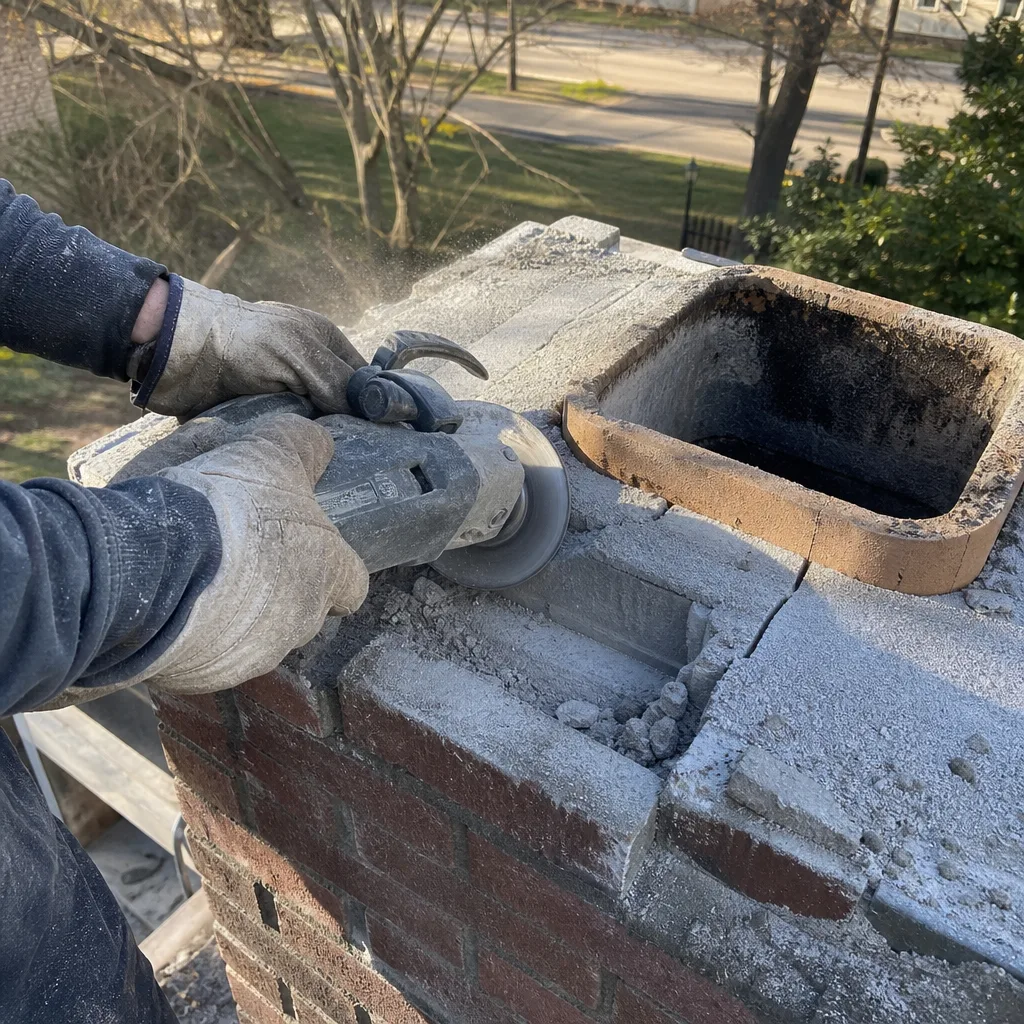
Here’s the part most homeowners don’t know to ask about. When a sweep investigates a warning sign, you should walk away with documentation. Not a verbal summary, not a handshake. Paper. Photos. A written price if work is needed. Sweeps who don’t produce documentation are asking you to trust them on a system you can’t see and don’t have a way to verify.
A thorough investigation should produce the following, and any sweep who pushes back on these is telling you something:
- Camera footage or still photos of the flue interior. This is the single most important piece of documentation you’ll receive. It shows you what the sweep saw, not what they say they saw. If a company doesn’t offer a camera scan as standard, ask whether their “inspection” is just a flashlight look. A flashlight from the firebox covers about 18 inches of a 20-foot flue.
- A written report describing what was found. It should name the specific issue: creosote class, tile separation at what height, crown crack location, moisture reading. If the report says “flue looks okay” without specifics, ask for the details.
- A written price and scope of work if repairs are needed. Not a verbal estimate. Not a range. A written number for a written scope. Level Two Chimney Gaithersburg has delivered a written price before any work starts on every job since 2009. It’s Clause 1 of the Haven Standard: have it in writing.
- A written warranty for any work performed. Again, written. The 365-Day Done Right Promise covers every job we do: if it’s not done right, we make it right. If your sweep won’t put their warranty in writing, ask why.
The documentation matters because chimney work is hard to verify from the ground. You can’t see the liner after it’s installed. You can’t see the crown repair from the kitchen. The only way to know the work was done, and done correctly, is to see the record. We archive every camera scan and photo report from every job we’ve done since 2009. When you call us about a chimney we serviced five years ago, we can pull the file. That’s what documentation is for.
Common Mistakes to Avoid
- Waiting until fall to inspect a chimney you haven’t used in years. Gaithersburg’s summer humidity and winter freeze-thaw cycles do their worst work when the chimney is dormant. A spring inspection catches water damage before it becomes a collapse.
- Ignoring a smoky smell because “it’s an old house.” Old houses have old chimneys. That’s exactly why the smell matters. A faint smoky odor in July is your flue telling you something. Listen to it.
- Trusting a visual inspection from the firebox. A firebox view covers a tiny fraction of your flue. The dangerous conditions, including the collapsed tile that’s causing your odor, are usually 10 to 15 feet up. Camera scan or no scan.
- Letting a handyman tuckpoint the crown without checking the flue. Crown repair stops water entry, but it doesn’t un-collapse a flue tile that’s already failed. If you’re spending money on the exterior, spend $200 more on a camera scan before you do.
- Burning unseasoned wood because it’s cheaper. Green wood creates Class III creosote faster than anything else. In Gaithersburg’s humid climate, unseasoned wood is also harder to keep dry. The money you save on firewood you’ll spend on creosote removal, and in the worst case, a chimney fire.
- Calling a chimney sweep without checking whether they camera-scan as standard. Ask on the phone, before you book. The answer tells you a lot. We made camera-scan documentation the default in 2009, years before insurers asked for it. It’s not an add-on and never has been.
- Treating smoke rollout as a damper problem. It’s the least common cause of the four we listed above. If you open the damper and smoke still rolls in, the damper is open. Something else is wrong.
When to Call a Professional
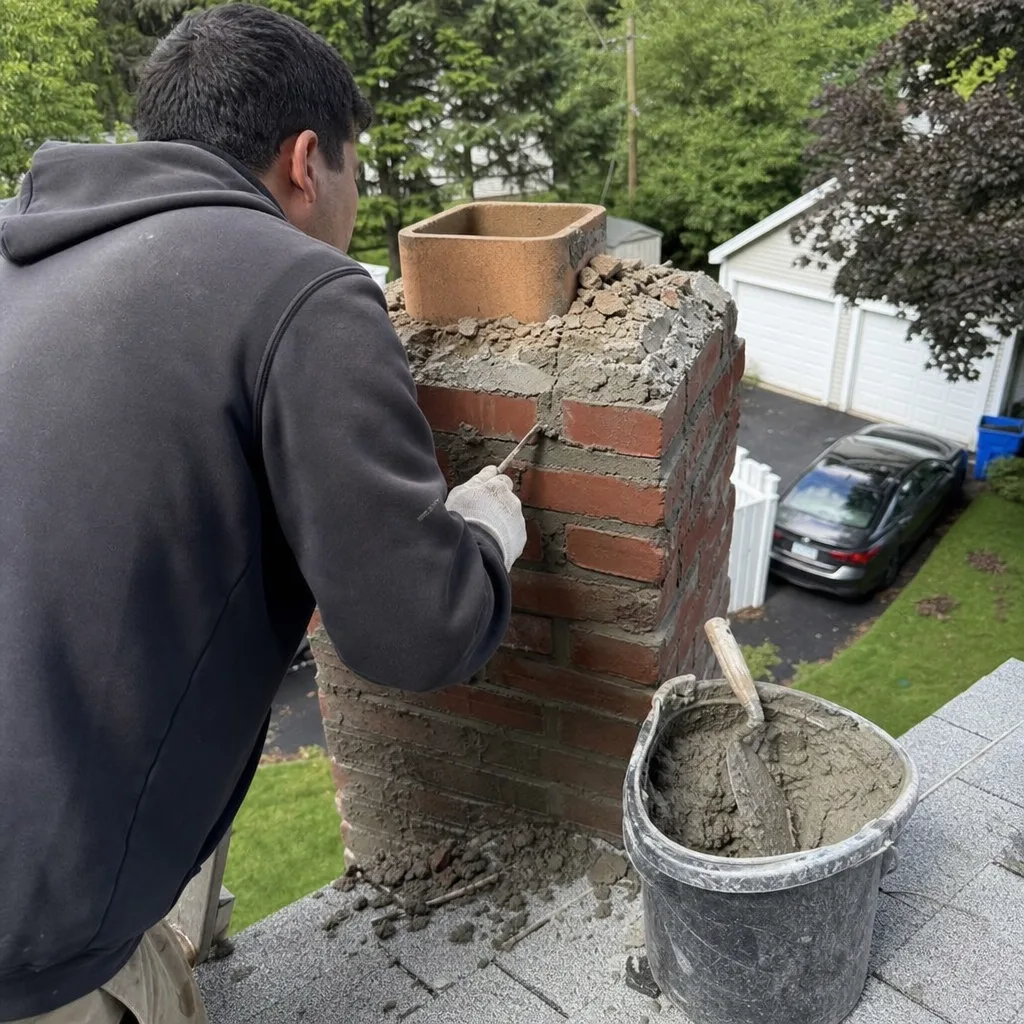
Call a professional if you notice a smoky odor with no fire lit, smoke rolling into the room, sudden white staining, or creosote dripping into the firebox; our step-by-step guide to hiring a chimney contractor shows what to look for. These are combustion or structural safety issues, not maintenance items. You should also call if you’ve never had the chimney camera-scanned and you plan to use it this season. A chimney you haven’t used in years is a system you know nothing about.
Level Two Chimney Gaithersburg offers free estimates in Gaithersburg and the surrounding Montgomery County area. We’ll camera-scan the flue, show you exactly what we found, and give you a written price before any work starts. Call (240) 220-9395 or visit our Fireplace Services in Gaithersburg page to learn more.
Frequently Asked Questions
A standard chimney sweep and camera-scan inspection in Gaithersburg typically costs between $189 and $289 for a single flue, with an additional $75 to $125 for a second flue such as a furnace vent. Cremoval of heavy creosote, especially Class III glaze deposits, adds $150 to $300 depending on severity. A complete liner replacement with stainless steel from DuraFlex or Olympia Chimney typically runs $2,800 to $5,200. Call (240) 220-9395 for an exact quote, it’s written and free.
The National Fire Protection Association (NFPA) recommends a sweep and inspection at least once per year if you use the fireplace regularly. If you burn wood, the inspection should include a camera scan to check for creosote buildup and flue tile damage. Homes in Gaithersburg that use the fireplace only occasionally can sometimes go two years between sweeps, but an annual camera-scan inspection is still the cheapest insurance against a collapsed flue tile you can’t see.
You need a new liner if a camera scan shows cracked or separated flue tiles, missing tile faces, or voids in the flue wall. These aren’t conditions we ask you to take on faith. The camera footage shows you exactly what we’re seeing. If the flue tiles are intact and the joints are tight, you don’t need a liner, and we’ll tell you that plainly. We use HeatShield and DuraFlex materials when relining is actually necessary, and we’ll show you the documentation in writing.
Creosote continues to build up in the flue. In the best case, you’re paying for a harder cleaning later. In the worst case, the creosote ignites and you have a chimney fire that runs 2,000 degrees through your flue, cracking tiles and potentially igniting the surrounding structure. A chimney fire in Gaithersburg is usually a total loss of the chimney and often a total loss of the house. The $189 sweep is the cheapest fire insurance you’ll ever buy.
Efflorescence itself is just salt deposits and isn’t dangerous. What it indicates is water moving through your chimney, and that water movement, left unaddressed, can cause the brick to spall and the flue tiles to deteriorate. If the efflorescence is old and stable, note it at your next sweep. If it’s new or spreading, call us. A moisture meter reading will tell you whether water is still entering.
A proper inspection includes a camera scan of the full flue, a check of the damper and smoke chamber, a moisture reading on the exterior masonry, and a written report of findings. It should not be a flashlight look from the firebox. The NFPA calls a camera-scan inspection a Level 2 inspection, and it’s the standard we’ve worked to since 2009. If your sweep doesn’t put a camera down the flue, you’re not getting an inspection, you’re getting a glance.
The Bottom Line
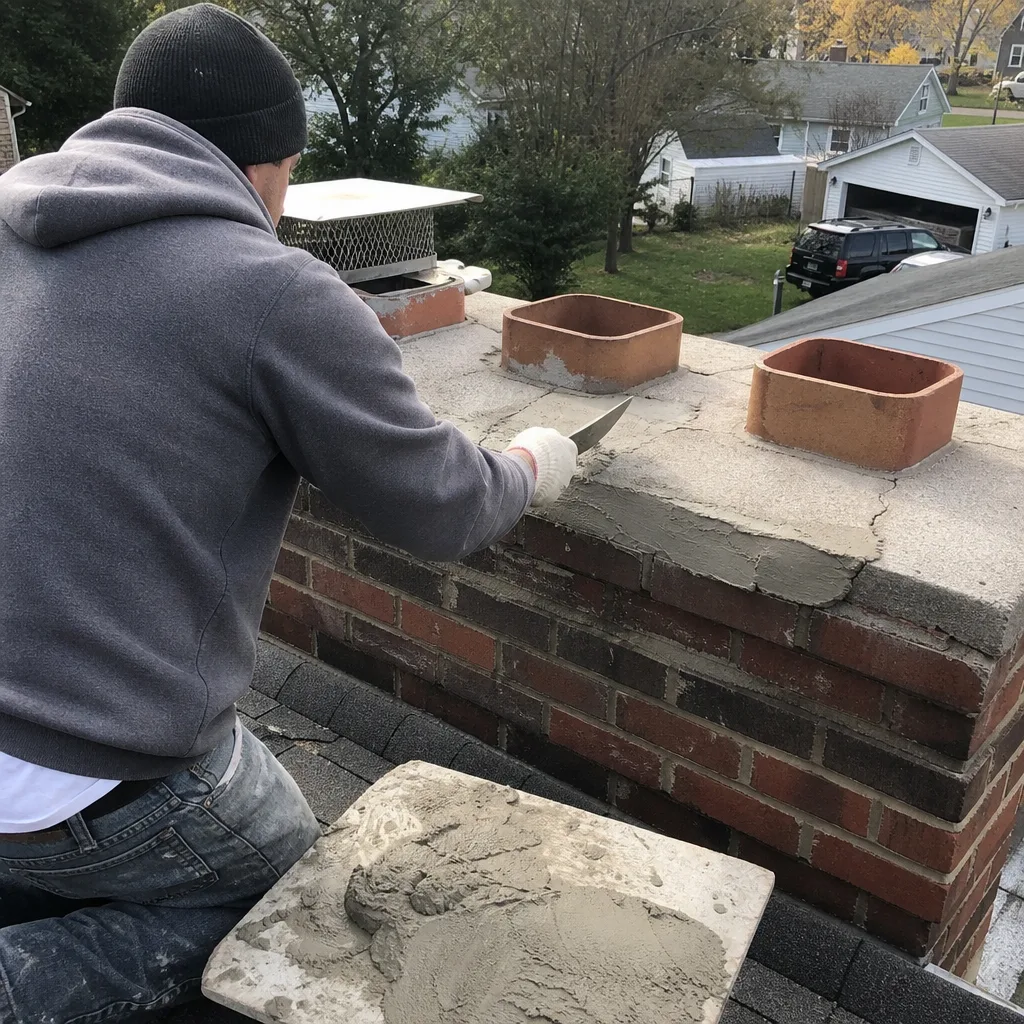
Chimney warning signs in Gaithersburg fall into three categories: cosmetic issues you can schedule around, structural issues you need to schedule within a week, and combustion hazards that require immediate attention. The skill is knowing the difference, and the difference usually comes down to one question: can combustion gases escape the house, and can water stay out of the chimney? A camera scan answers both questions in minutes. Anything short of that is guesswork.
Since 2009, we’ve put a camera down every flue we’ve inspected, delivered a written price before any work started, and given every customer a photo record of what we found. That’s the Haven Standard. If your chimney is showing any of the signs in this guide, explore our more guides & resources or call (240) 220-9395 and we’ll tell you exactly what’s going on. The estimate is free, the answer is plain, and the documentation is yours to keep.
Written by Corrine Halstead, Owner at Level Two Chimney Gaithersburg, serving Gaithersburg since 2009.