
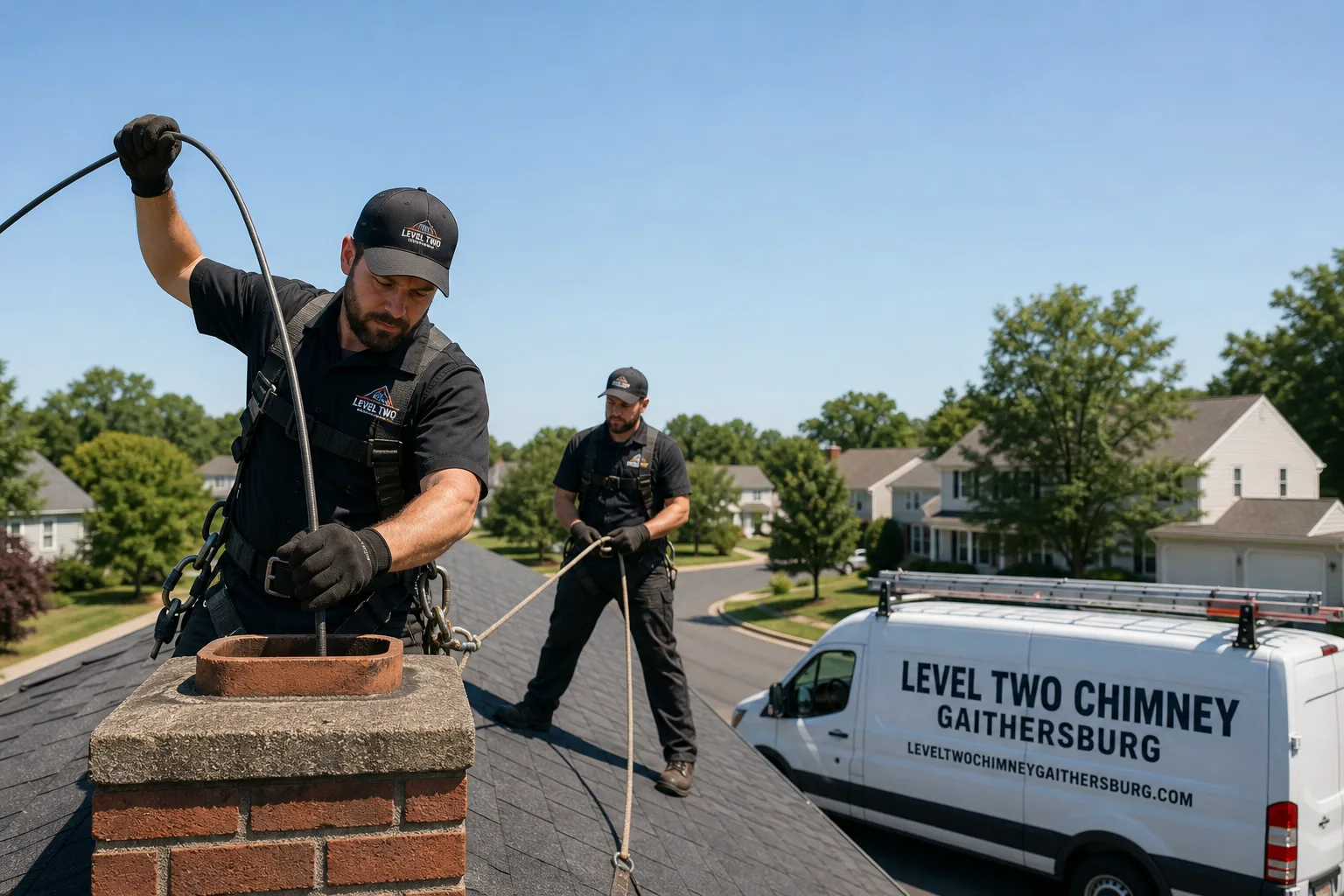
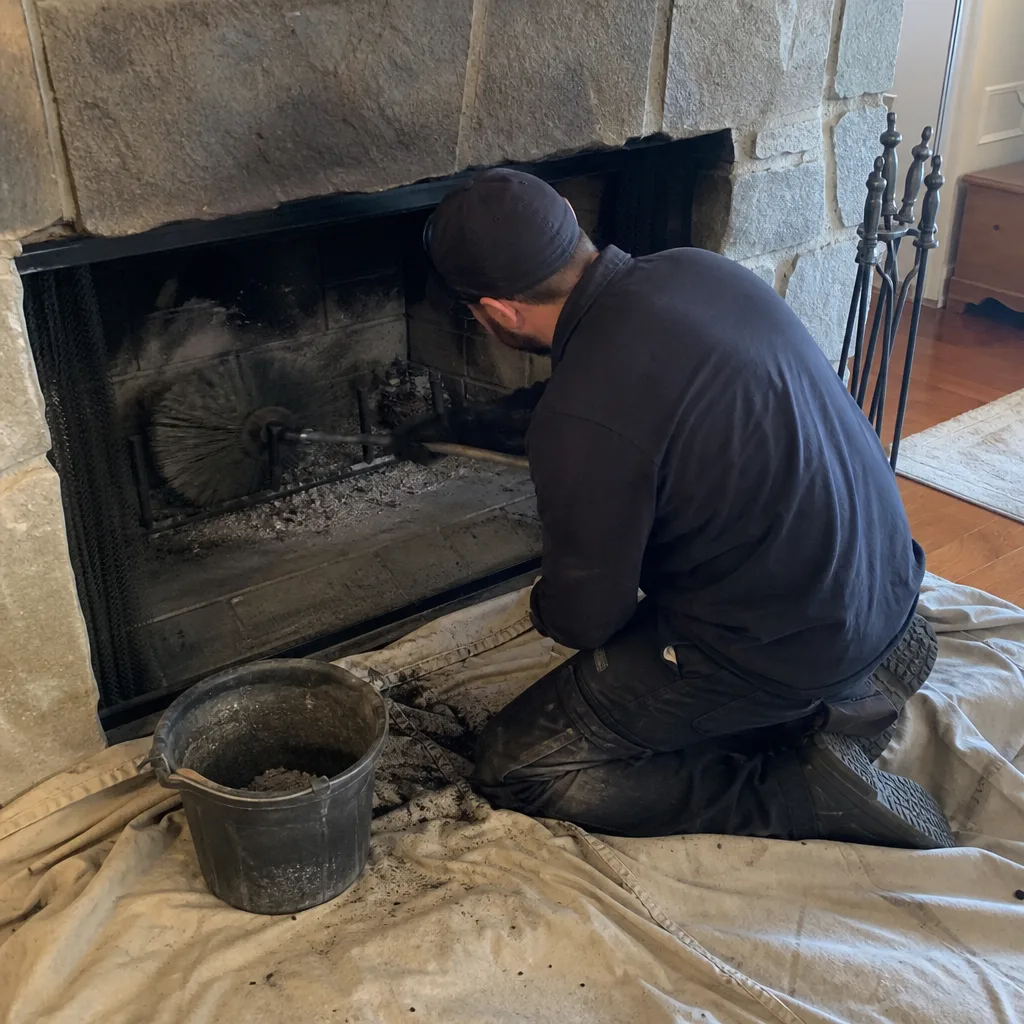
Level 1 sweep and inspection to the NFPA 211 annual standard - flue, crown, cap, and flashing checked and photographed
Chimney sweep logs do not sweep chimneys. They loosen some creosote - which then falls where a brush and vacuum still have to collect it.
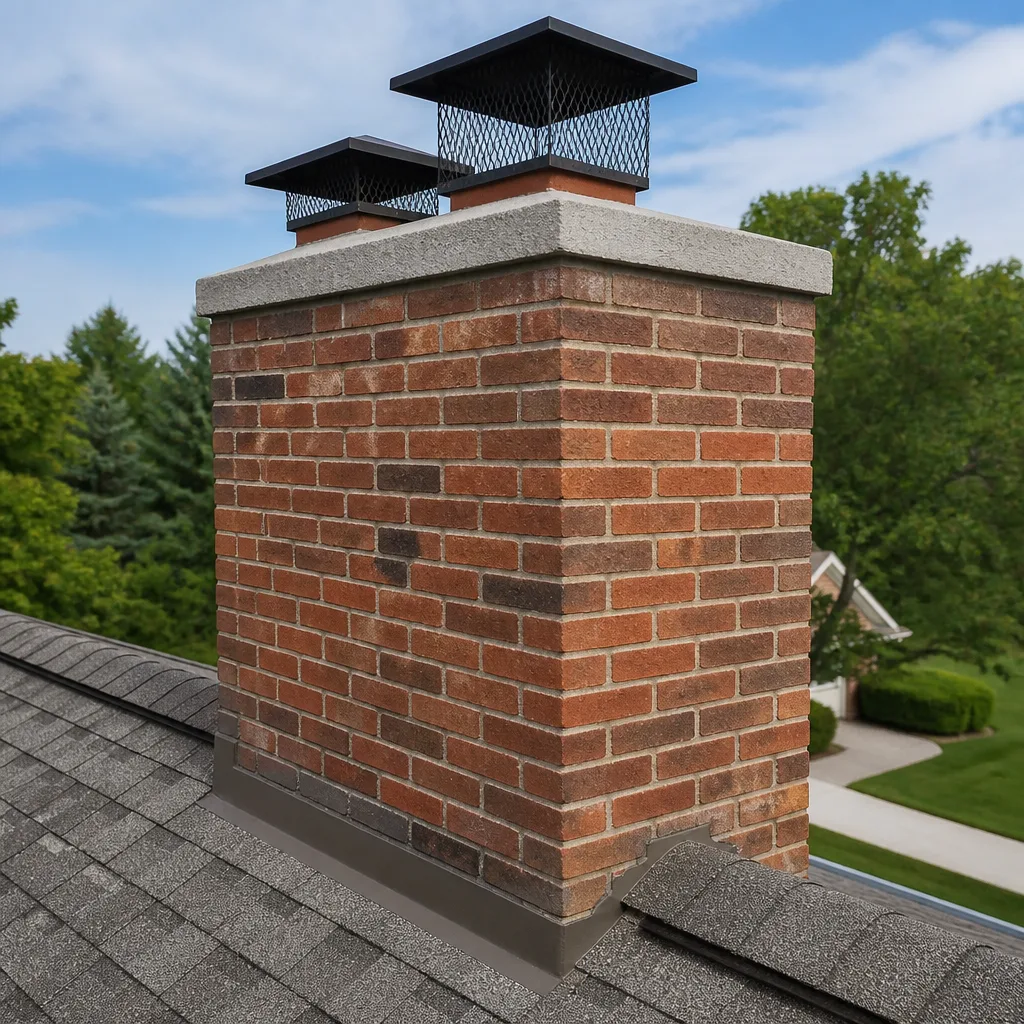
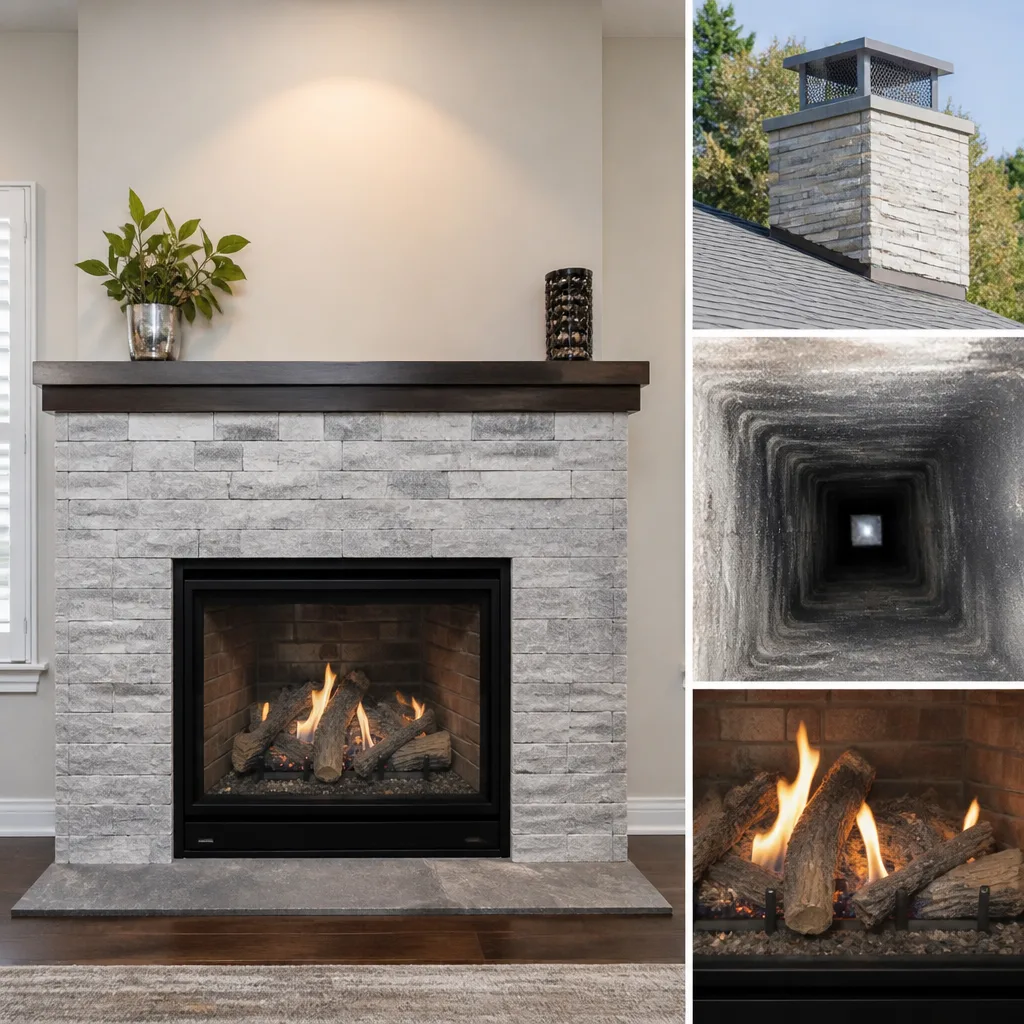
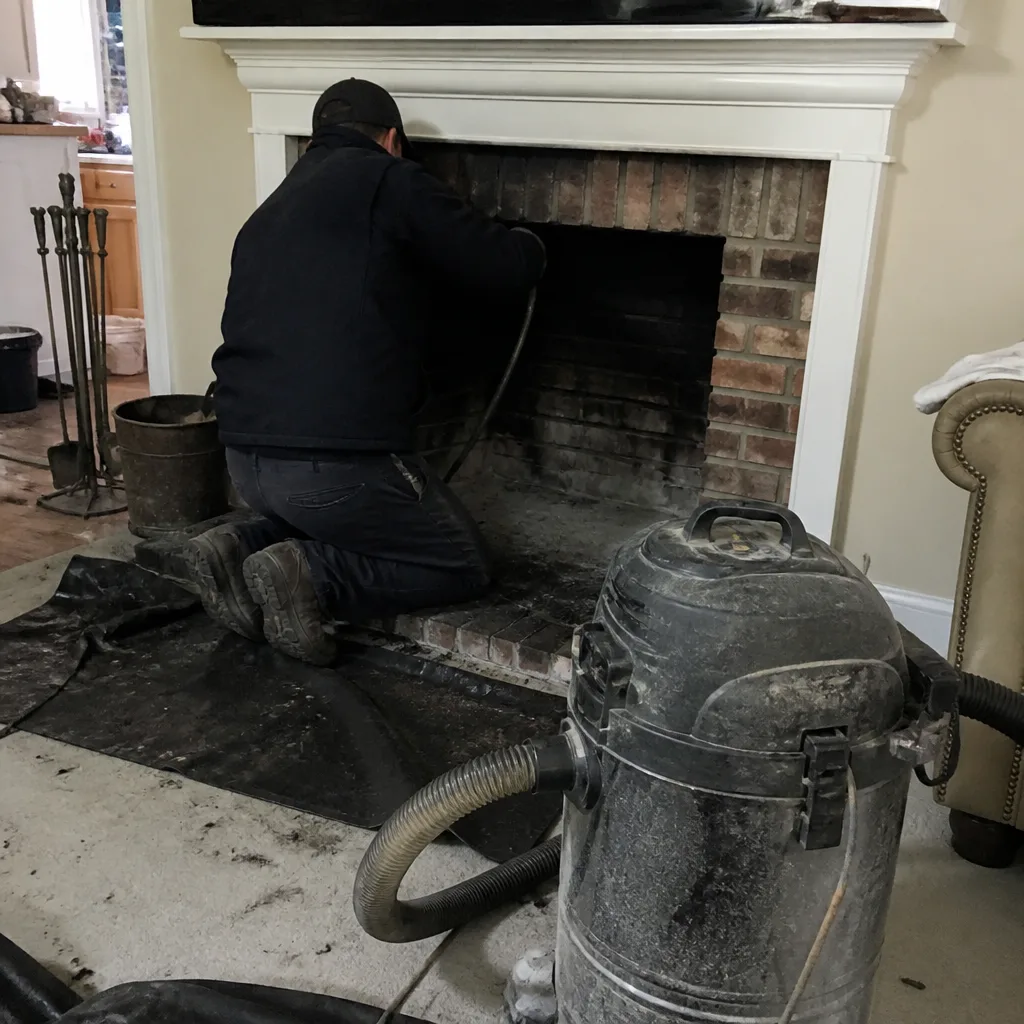 Before
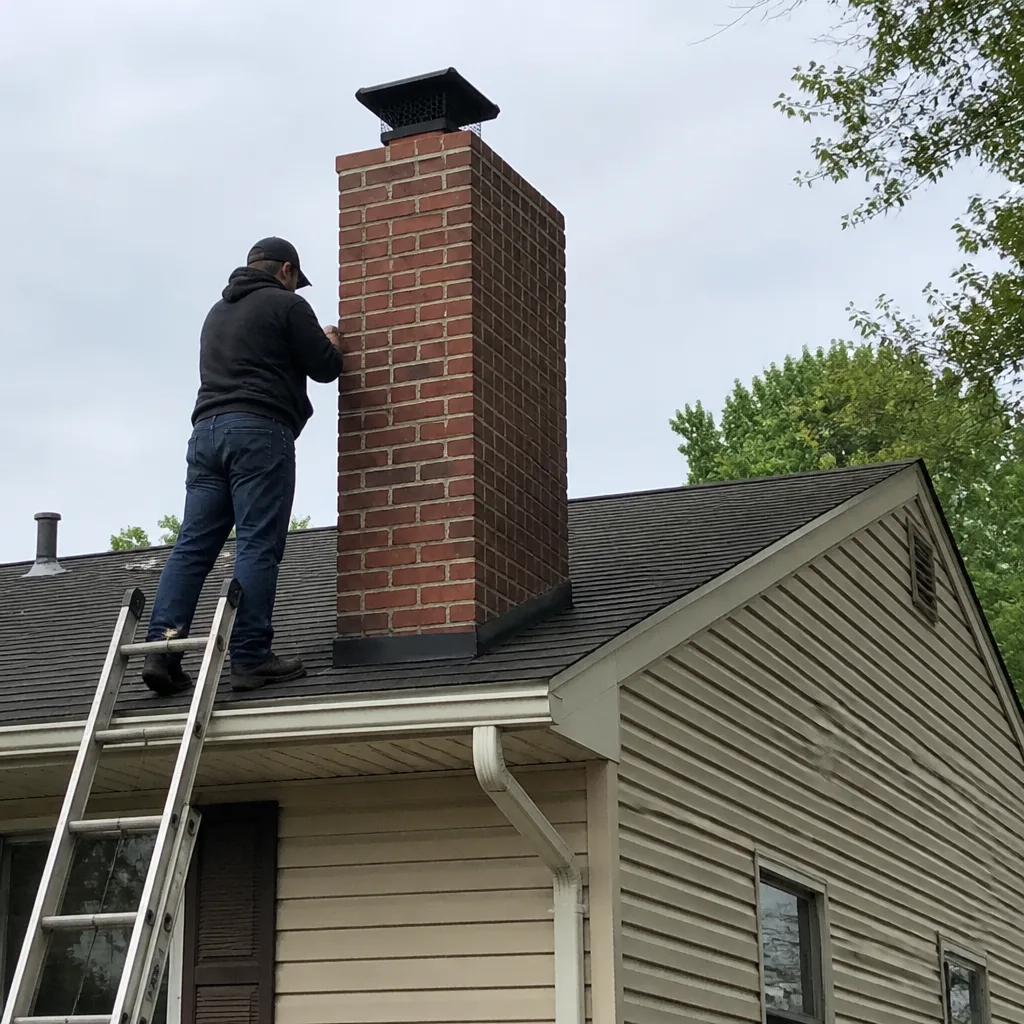 After
After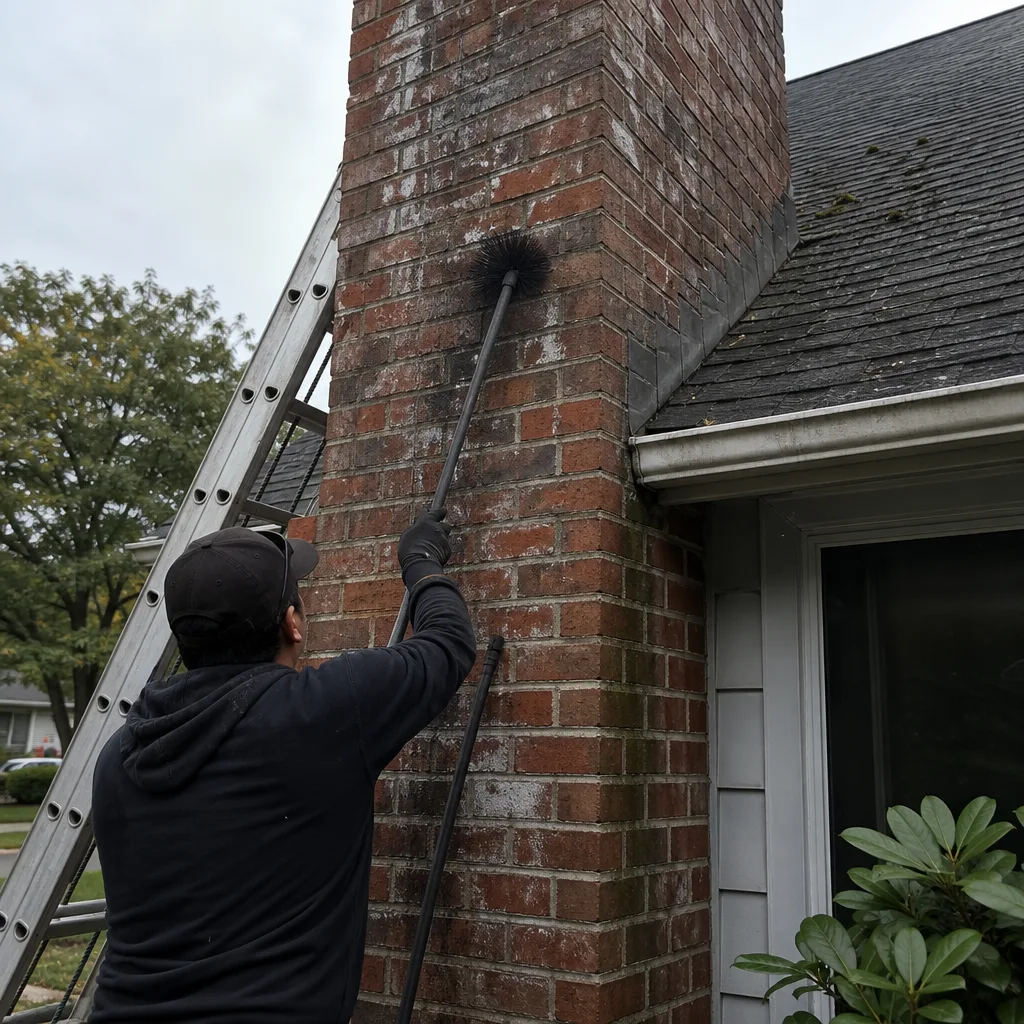 Before
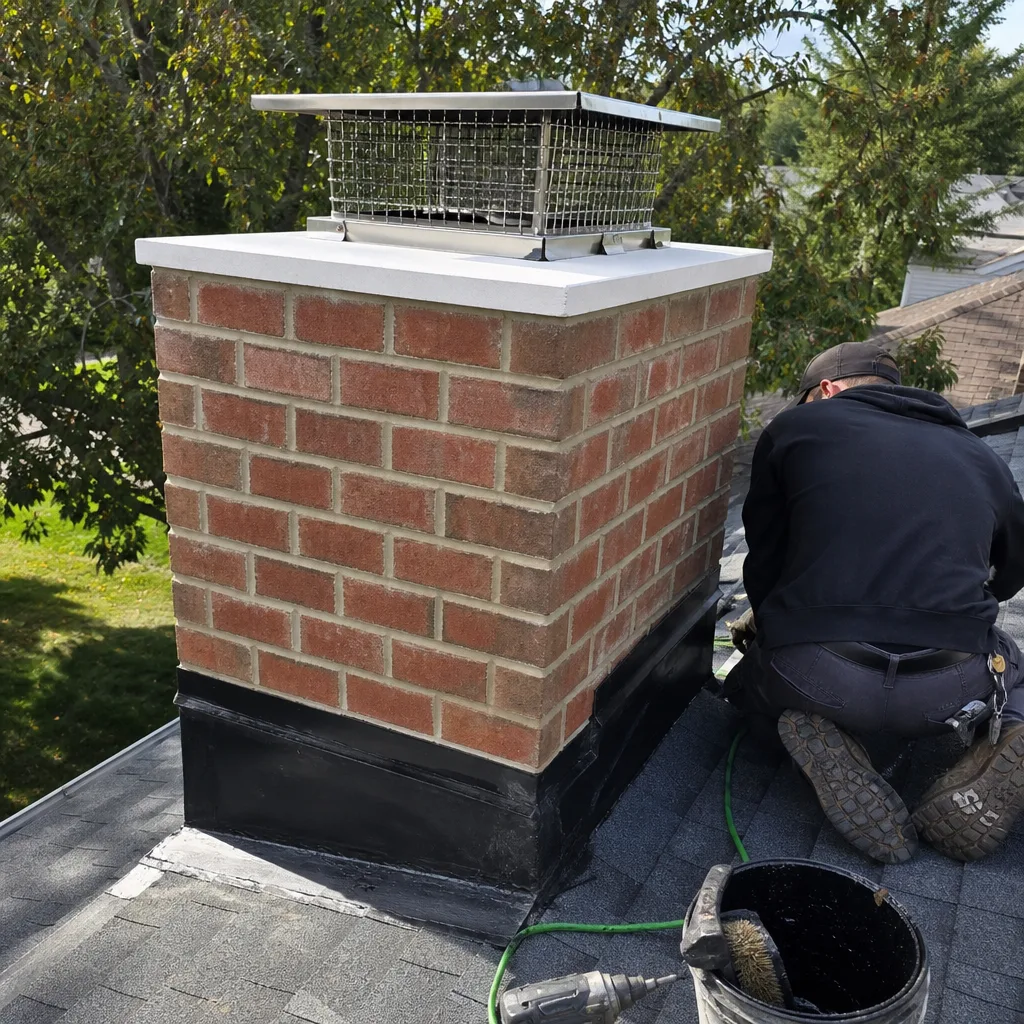 After
After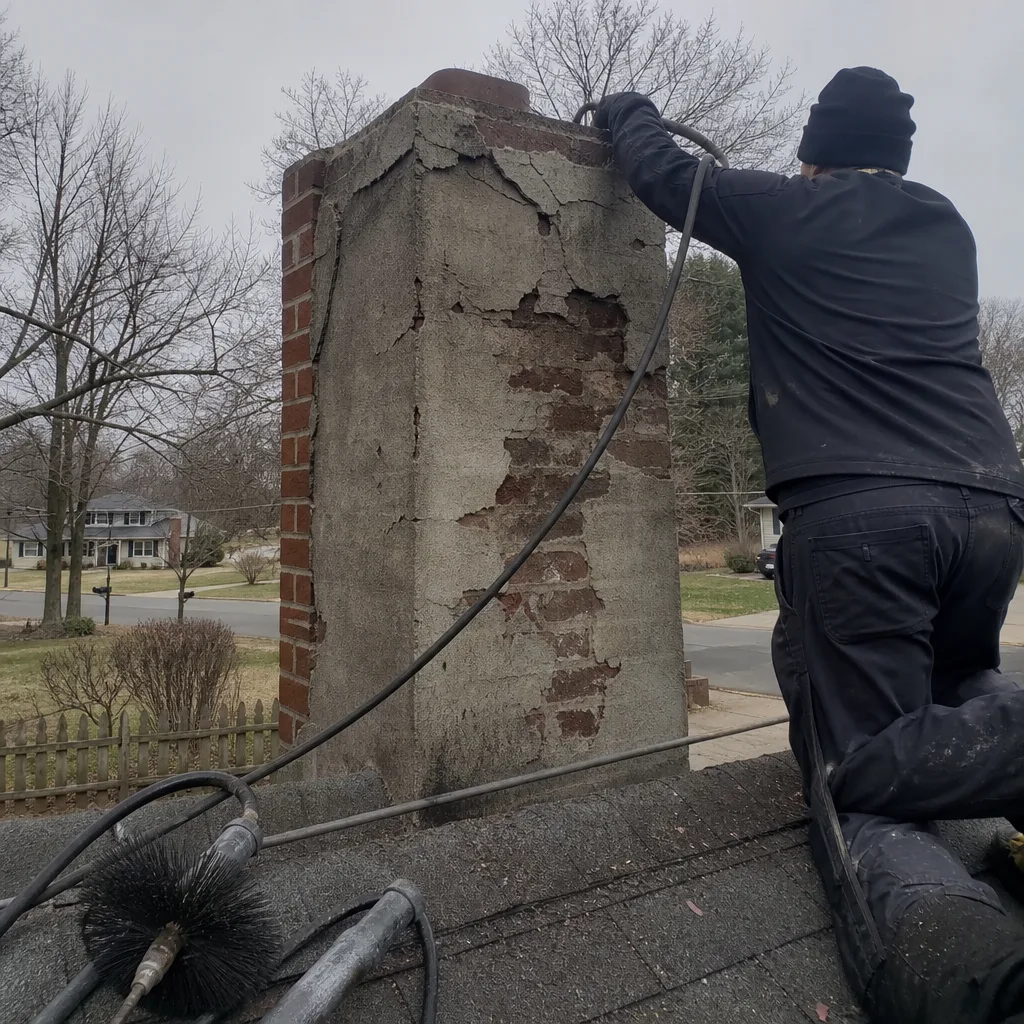 Before
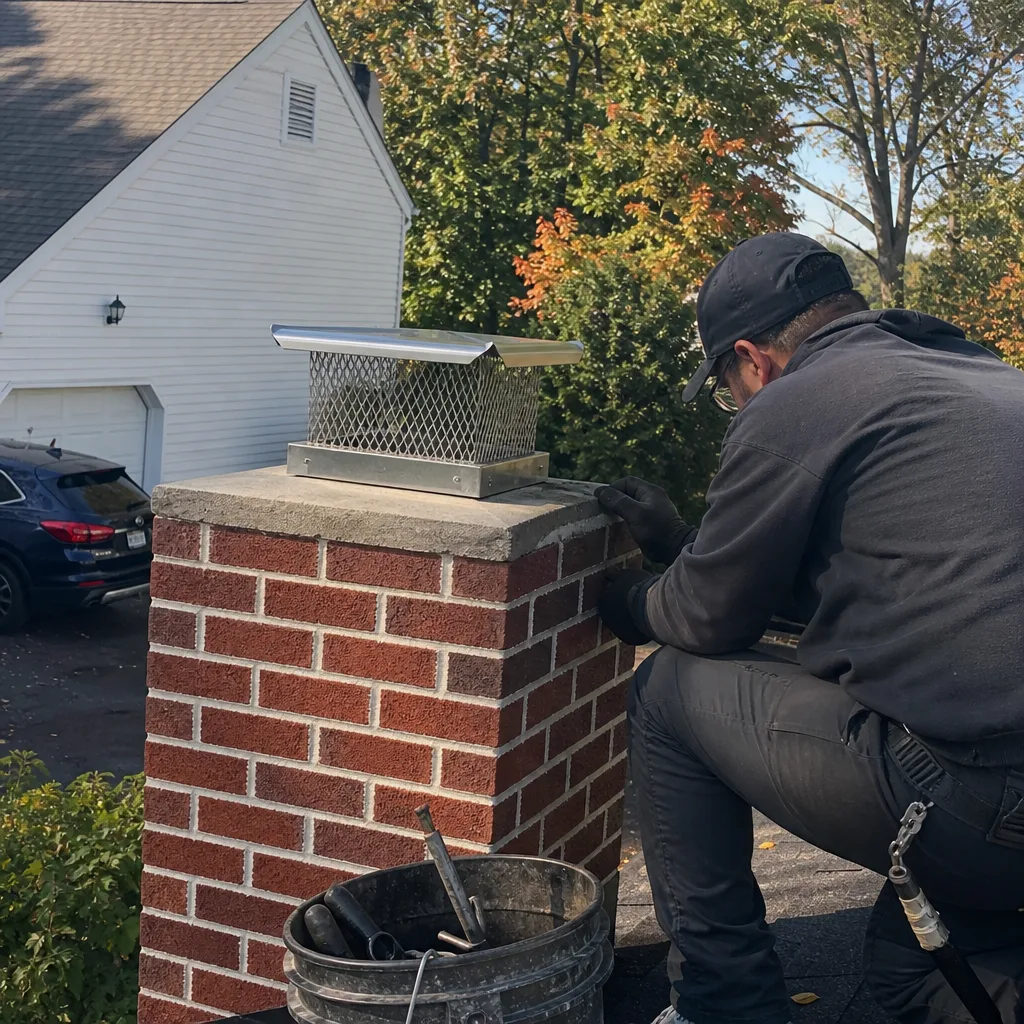 After
AfterHow Much Does Chimney Cap & Crown Cost in Gaithersburg?
Chimney Cap & Crown work in Gaithersburg, MD typically runs between $150 and $1,800, depending on whether you need a simple cap swap, a crown repair, or a full crown rebuild. A standard stainless steel cap on a single-flue chimney lands around $150-$350 installed; crown repairs start near $250 and climb toward $900 for moderate damage; a full crown replacement on a larger chimney can reach $1,200-$1,800. Every job at Level Two Chimney Co. comes with a written price before work starts – no surprises once a technician is already on your roof.
Chimney Cap & Crown Cost Breakdown (2026)
The table below reflects what we’re quoting in the Gaithersburg market right now, drawing on jobs we’ve completed across neighborhoods like Kentlands, Lakelands, Crown Farm, Flower Hill, and Rio. These aren’t national averages lifted from an article – they’re current local numbers.
| Service | Typical Price Range (Installed) | Notes |
|---|---|---|
| Single-flue galvanized steel cap (standard) | $150 – $250 | Budget option; fine for sheltered chimneys, shorter lifespan |
| Single-flue stainless steel cap | $200 – $350 | Most popular choice; resists rust in MD humidity |
| Multi-flue stainless steel cap | $300 – $550 | Covers two or more flues under one cap; common in older Gaithersburg colonials |
| Copper chimney cap (custom) | $550 – $1,100 | Popular in Crown Farm and higher-end Kentlands builds for curb appeal |
| Crown crack repair (minor, hairline) | $250 – $450 | CrownCoat or equivalent sealant application; stops freeze-thaw progression |
| Crown repair (moderate, spalling sections) | $450 – $900 | Partial rebuild with hydraulic cement and waterproofing |
| Full crown replacement | $900 – $1,800 | Tear-off and pour; price scales with chimney width and height |
| Cap + crown repair combo | $500 – $1,100 | Common package when both need attention at the same visit |
| Emergency visit surcharge (same-day) | $75 – $150 added | Applied when scheduling requires same-day dispatch |
What Pushes the Final Number Up or Down
The biggest variable is the crown itself. Gaithersburg sits in USDA Hardiness Zone 7a, which sounds mild until you remember that the area cycles through hard freezes and warm spells multiple times every winter. Water gets into hairline crown cracks, freezes, expands, and the crack is noticeably wider by spring. Crowns that get caught early – hairline stage – are a $250-$450 repair. Crowns that were ignored for two or three winters often need to come off completely, which is a $900-$1,800 job. The inspection camera is what tells us which category you’re actually in, not a flashlight look from the ladder.
Cap pricing is more predictable. The main driver is material: galvanized steel is cheapest but oxidizes faster in Maryland’s humid summers; stainless holds up better and costs $50-$100 more per flue; copper is a long-term investment and custom-built, so the price reflects fabrication time. Chimney height matters too – anything over two-story pitch requires additional staging, which adds labor.
What Affects Chimney Cap & Crown Pricing in Gaithersburg
- Freeze-thaw cycle damage (local factor): Montgomery County averages 25-35 freeze-thaw cycles per winter season. Crown concrete is porous by nature, and each cycle forces cracks wider. Chimneys in low-lying areas near Lake Whetstone or Seneca Creek see slightly more moisture exposure, which tends to accelerate deterioration. Catching crown damage after one winter versus after five winters is the difference between a repair and a full replacement.
- Number of flues: A chimney serving only a fireplace has one flue. Older homes in the Flower Hill and Washington Grove areas frequently have two or three flues – one for the fireplace, one for the furnace or boiler, sometimes one for a water heater that was decommissioned decades ago. Each uncapped or improperly capped flue is a separate line item, and a multi-flue cap has to be custom-sized to fit the full chimney crown width.
- Chimney height and roof pitch: A standard two-story colonial in Kentlands or Crown Farm is manageable with a standard extension ladder. Steeper-pitched roofs, three-story townhomes along Christopher Avenue, or tall chimneys on stacked-floor plans in Lakelands require additional staging time. That labor increase shows up directly in the quote – usually an additional $75-$200 depending on setup complexity. Safety note: steep-roof chimney work involves real fall risk. This is technician-only territory – never attempt to access or repair a crown yourself from roof height.
- Crown width and overhang: A correctly built crown extends at least 2.5 inches past the chimney’s masonry on all sides, with a drip edge angled away from the brick. Older chimneys in Gaithersburg’s pre-1990 neighborhoods sometimes have undersized crowns that were never built to this spec. Rebuilding to code requires more material and form work, which raises cost compared to a standard pour.
- Material condition of the masonry below: Crown and cap pricing sometimes gets complicated when the camera shows that water has already worked its way into the brick below the crown line. Spalling brick or deteriorating mortar joints in the top courses of the chimney need to be addressed before a new crown goes on – otherwise you’re sealing over damage that will undermine the new work. When that’s the case, we quote the masonry repair separately and clearly, before any work begins.
- Access logistics for Gaithersburg’s HOA communities: Kentlands and Lakelands both have active HOAs with rules around truck parking, equipment staging, and working hours. Scheduling around those requirements occasionally adds coordination time. We’re familiar with both communities and factor this into scheduling rather than charging a surprise fee.
BeforeAfterHow to Save on Chimney Cap & Crown in Gaithersburg
Catch It Early – the Crown Crack Math Is Real
The most consistent money-saver is timing. A crown with hairline cracking costs $250-$450 to seal and waterproof. That same crown, left through another two winters in Gaithersburg’s freeze-thaw pattern, becomes a full replacement at $900-$1,800. The math is not subtle. An annual inspection – or even one after a notably harsh winter – catches crown deterioration at the cheaper stage. We’ve pulled camera footage from chimneys in the Rio area where a $300 repair four years prior would have prevented a $1,400 full rebuild.
Combine Work Into One Visit
If your chimney needs a new cap and the crown has surface cracking, scheduling both at the same time eliminates a second trip charge and reduces total labor. The same applies to waterproofing: applying a masonry water repellent to the brick below the crown at the same visit costs far less than a second mobilization. When we scope a job, we’ll note everything that needs attention so you can decide what to bundle – the written price covers each item separately so you can compare.
Get a Free Second Opinion on Any Written Estimate
If a chimney company has already quoted you for cap or crown work in writing, bring that quote to us. We offer a free second opinion on any written estimate – always, with no conditions attached. In practice, we see quoted prices in the Gaithersburg market that range from reasonable to significantly inflated for the same scope of work. A second camera inspection and a second written price costs you nothing and occasionally saves several hundred dollars.
Ask About Material Options Before Committing
Not every chimney needs a copper cap. Stainless steel performs well in Maryland’s climate, resists rust, and typically carries a manufacturer warranty of 10-15 years. If a quote includes a copper cap and that wasn’t what you asked for, it’s worth asking whether stainless would serve the same purpose. We source caps from Gelco, Famco, and Olympia Chimney through the Haven buying network specifically to keep material costs honest – we’ll always tell you which material we’re recommending and why.
Don’t Skip the Inspection to Save Money
Some homeowners try to save by asking a company to “just install a cap” without an inspection first. This occasionally backfires: if the flue liner is damaged or the crown has deeper issues, installing a cap without knowing the full picture can seal moisture inside the flue and accelerate interior damage. The camera inspection is what makes the rest of the work defensible. At Level Two Chimney Co., a camera-scan inspection under NFPA 211 Level 2 standards is included on every visit – you get a documented photo record and a written scope before anyone touches anything.
For a free written estimate on cap or crown work in Gaithersburg, call us at (240) 220-9395. A live person answers every call, 24 hours a day.
Chimney Cap vs. Chimney Crown: What’s the Difference, and Why Does It Matter for Pricing?
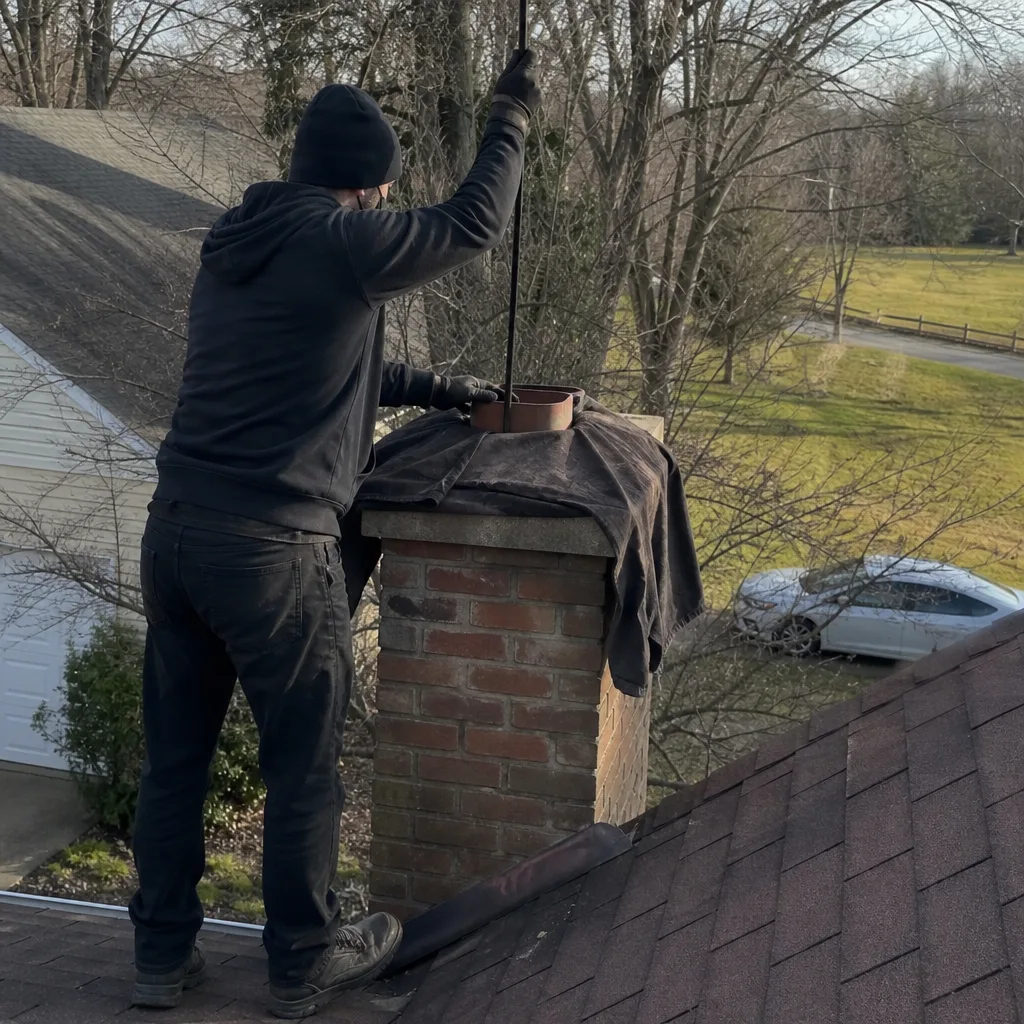
These two terms get used interchangeably in conversation, but they’re different components with different failure modes and different price points. Understanding the distinction helps you read any quote you receive more clearly.
The Chimney Cap
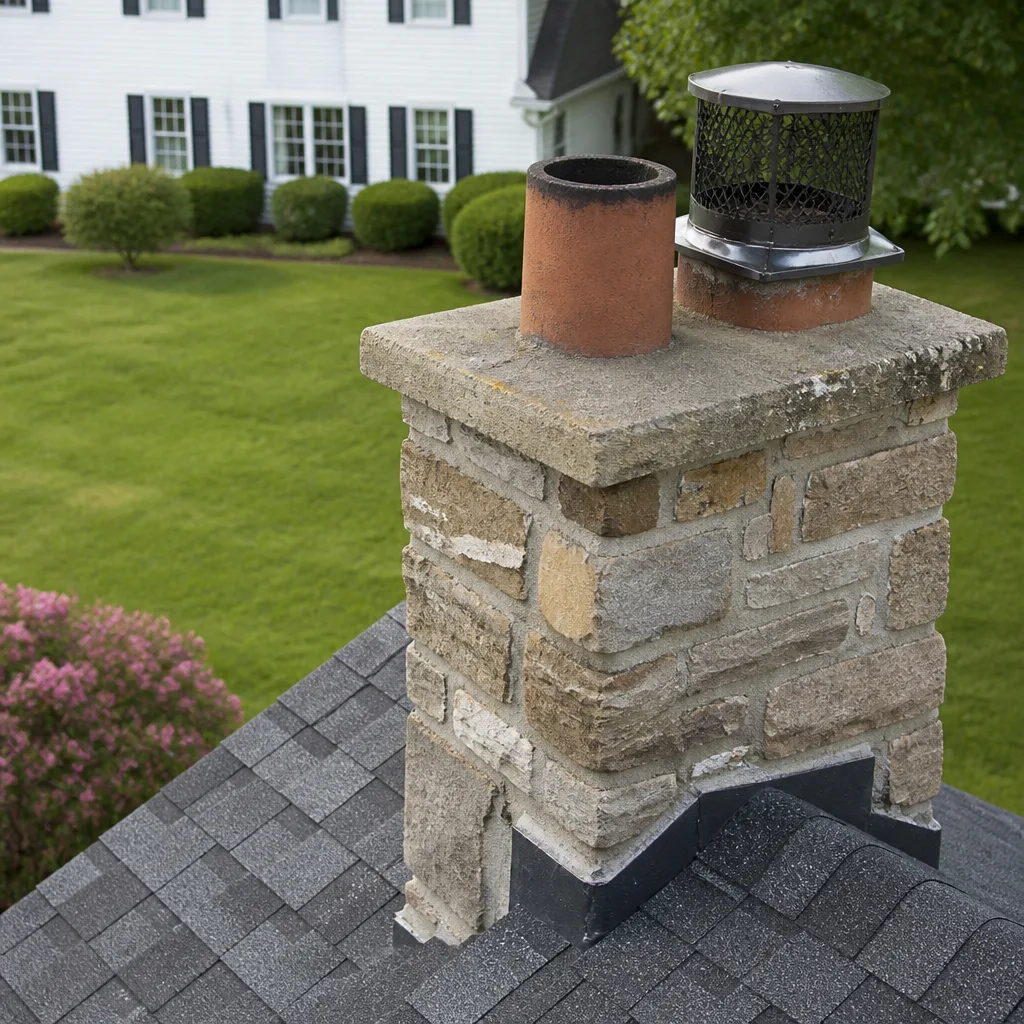
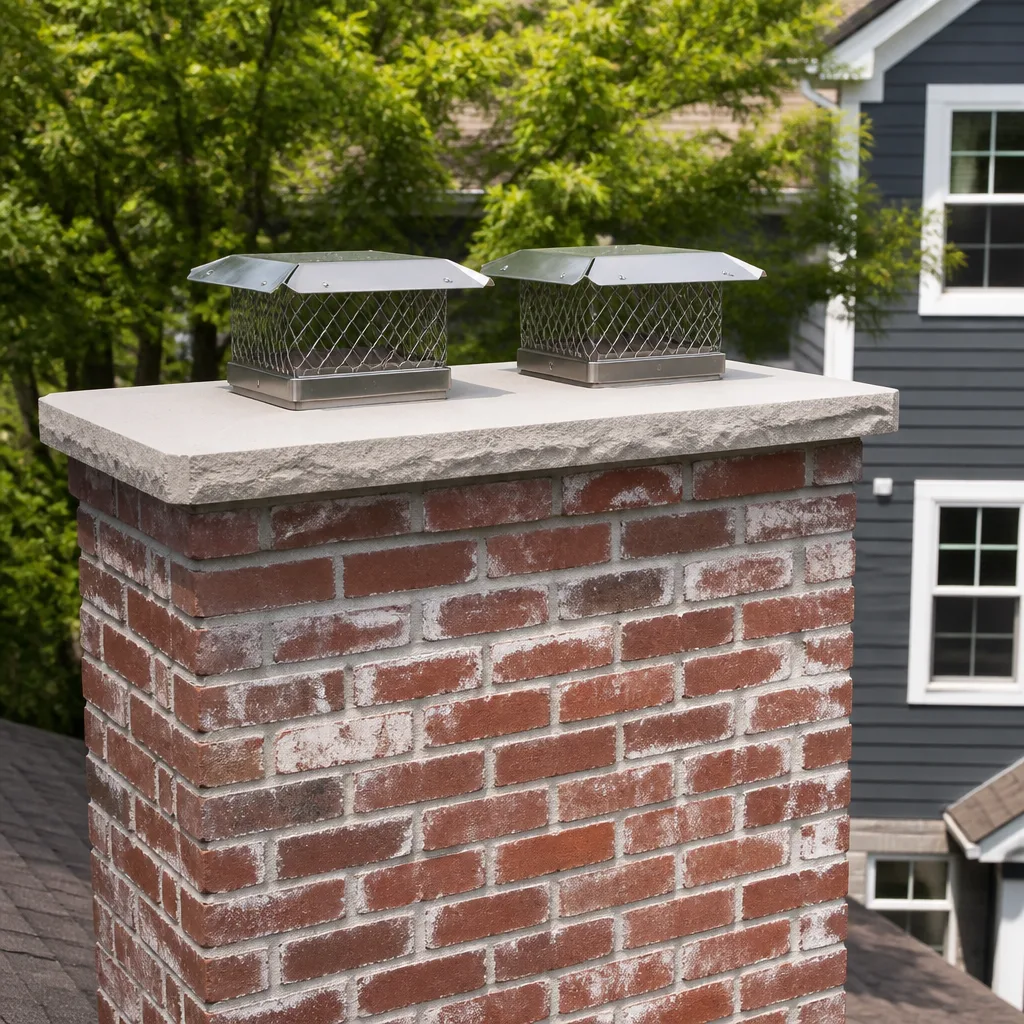
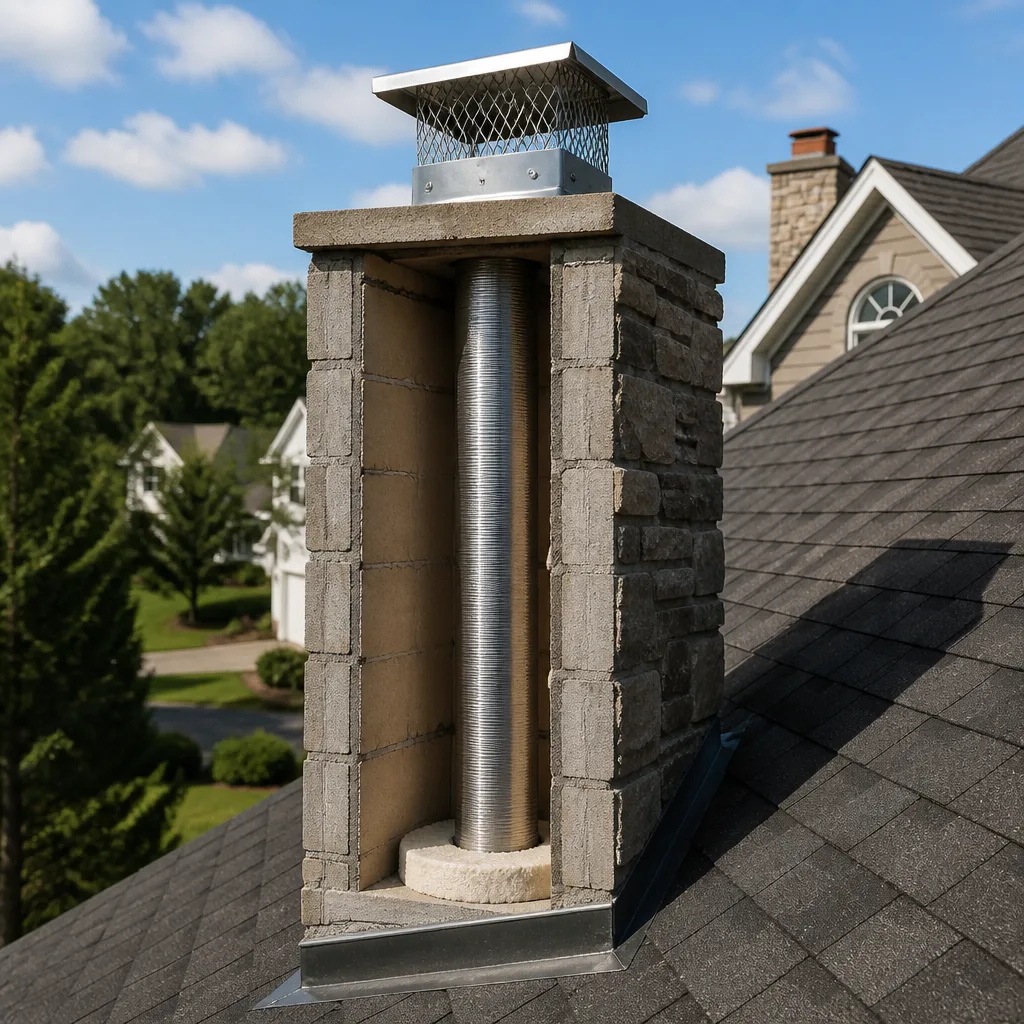
The cap sits at the very top of the flue opening – it’s the metal cover (usually steel or copper) that keeps rain, birds, and debris from falling directly into the flue liner. A properly fitted cap has mesh sides that allow smoke to exit while blocking animals. Caps are relatively inexpensive, straightforward to install, and available in standard sizes for most flue dimensions. When a cap fails – rusts through, gets blown off in a storm, or was never installed – rain enters the flue directly, and you’ll often see staining, efflorescence (white salt deposits on the brick), or moisture damage to the firebox below.
We see missing or failing caps regularly on Gaithersburg homes built in the 1980s and early 1990s, when galvanized caps were standard and a 30-to-40-year-old cap is simply at the end of its life. Replacement is usually the call rather than repair.
The Chimney Crown
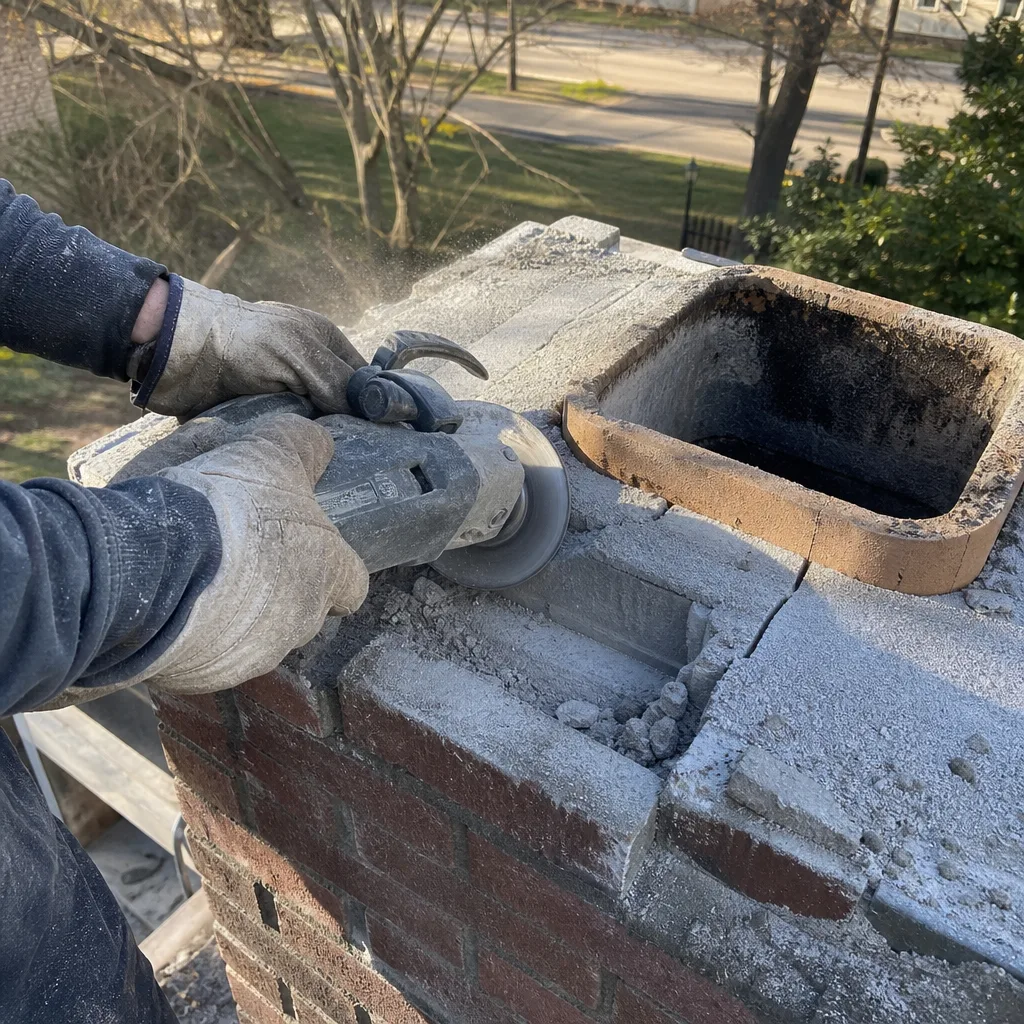
The crown is the concrete or mortar slab that covers the top of the chimney’s masonry, surrounding the flue liner on all sides. Think of it as the chimney’s roof. Its job is to direct water away from the brick below and protect the transition between the flue tile and the open air. A well-built crown has a slight slope toward the edges and a drip edge that prevents water from running back down the face of the chimney.
Crown failures are typically more expensive to address than cap failures because the crown is structural and the repair involves masonry work. Hairline cracks are common after cold winters and are manageable early. Once cracks allow water infiltration through multiple freeze cycles, sections of the crown begin to spall – chunks break away, the integrity of the entire slab is compromised, and a full rebuild becomes necessary.
On our Chimney Cap & Crown in Gaithersburg service page, we cover both components in full detail, including what the camera typically shows at each stage of deterioration.
What the Inspection Finds (and Why It Changes the Quote)
When a Level Two technician arrives at your Gaithersburg home, the first thing that happens is a camera goes down the flue – that’s the NFPA 211 Level 2 inspection standard we work to, and it’s been our default since 2009. What the camera shows at the top of the flue often determines whether the crown work is a repair or a replacement. Here’s what we look for:
- Hairline cracks in the crown surface: addressable with a flexible sealant like CrownCoat; typically $250-$450.
- Spalling or missing sections of the crown: require partial or full rebuild; typically $450-$1,800 depending on extent.
- Open gap between the crown and flue tile: water gets in through this gap even when the rest of the crown looks intact; requires re-bedding the flue tile and sealing.
- Water staining on the interior liner below the crown: indicates the crown has been failing long enough for moisture to penetrate multiple courses – this triggers a closer look at whether liner damage has occurred.
- Displaced or missing cap: straightforward replacement once the flue opening is measured; cap size has to match the flue liner dimensions exactly or rain bypasses the cap edge.
- Animal nesting at or near the cap: common in Gaithersburg’s tree-lined neighborhoods; nest material has to be cleared before a new cap goes on.
You receive a documented photo record of everything the camera finds – that’s Clause 4 of the Haven Standard, on every visit, not optional. The written quote that follows identifies each item separately, so you’re looking at a line-itemized price, not a single number with no explanation behind it.
Gaithersburg-Specific Factors That Affect Your Chimney Crown
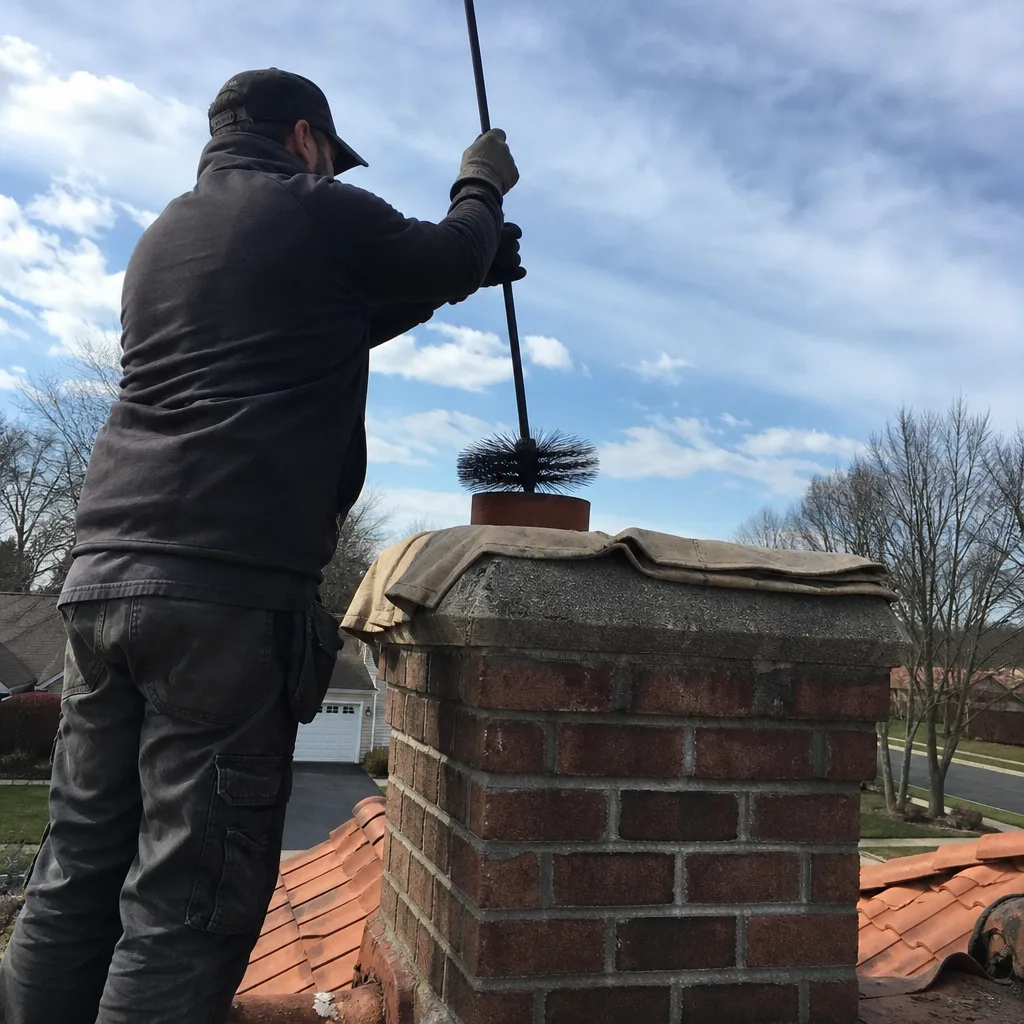
Gaithersburg isn’t a generic Maryland suburb for chimney purposes. A few local factors matter:
Housing stock age in older neighborhoods: Washington Grove, Redland, and parts of Flower Hill have a significant number of homes built before 1980. Crowns on those chimneys are often original construction – poured with materials and techniques that didn’t account for modern freeze-thaw loads. These crowns frequently lack the required overhang, have no drip edge, and are built directly flush with the brick face. When they deteriorate, they tend to fail more completely than crowns built to current standards.
Tree canopy and moisture retention: Gaithersburg’s established tree cover – particularly in the Washingtonian Woods and Quince Orchard areas – means chimneys in leaf shadow stay damp longer after rain. Sustained moisture exposure accelerates crown pitting and algae growth, both of which degrade the concrete surface faster than UV alone would. A waterproofing application at the time of crown work adds meaningful life to the repair in these conditions.
New construction in Crown Farm and Rio: Homes built in these planned communities since 2005 are newer but not immune. We see caps on these homes that were installed during construction and have never been inspected since. A 15-to-20-year-old cap on a Crown Farm home is worth a look – not because something is definitely wrong, but because that’s the normal service interval for a galvanized cap in this climate.
Wind exposure on ridgeline properties: Homes backing to the agricultural reserve northwest of Gaithersburg, and elevated lots along some of the Montgomery Village streets, see more wind load than properties sheltered by adjacent buildings. Wind can displace a poorly fitted cap and, over time, contributes to crown edge erosion. Multi-flue caps on exposed chimneys are worth checking after any notably windy season.
What Level Two’s Process Looks Like, Start to Finish
You call (240) 220-9395 – a live person picks up. You describe what you know: maybe you saw a missing cap from the yard, maybe a home inspector flagged crown deterioration during a sale, maybe you noticed staining on the firebox face. We schedule a visit. You get a text when your named technician is on the way.
On-site, the technician runs the camera inspection first. You see what the camera sees – we’ll walk through the footage with you if you want to watch it live, or you’ll receive the documented photo record afterward. Based on what the inspection shows, we write a price, a scope, and a warranty. All three are in your hands before anyone picks up a tool.
If we’re replacing a cap, we measure the flue liner opening precisely and install a cap from Gelco, Famco, or Olympia Chimney that fits correctly – not the closest standard size from a supply house shelf. If we’re repairing or replacing the crown, the work is done to NFPA 211 standards, documented in photos on completion, and backed by the 365-Day Done Right Promise: if it’s not right, we make it right, no argument.
That’s what makes a Level Two job different from a quote that felt fine until six months later. The camera found what it found, we wrote what we found, and the warranty is in writing. That’s the standard we’ve worked to on every one of the 38,000-plus chimney visits we’ve completed since 2009.
If you’ve received a written estimate from another company and want a second set of eyes on it, we’ll inspect and quote at no charge. Bring the paper. We’ll tell you whether the scope makes sense and what we’d charge for the same work.
Learn more about how we approach this work on our home page, or go directly to the service detail on our Chimney Cap & Crown in Gaithersburg page.
FAQs: Chimney Cap & Crown Cost in Gaithersburg
How much does a chimney cap cost in Gaithersburg, MD?
A single-flue stainless steel chimney cap, installed, runs $200-$350 for most Gaithersburg homes. Galvanized caps cost a bit less ($150-$250) but have a shorter lifespan in Maryland’s humidity. Multi-flue caps run $300-$550 installed. Copper caps are $550-$1,100, custom-sized, and typically chosen for curb appeal on higher-end homes. Call (240) 220-9395 for a written price before any work starts – estimates are free.
How much does chimney crown repair cost in Gaithersburg?
Crown repair in Gaithersburg runs $250-$900 for damage that doesn’t require a full replacement: hairline cracks treated with flexible sealant start around $250-$450; more significant spalling or section loss is $450-$900. Full crown replacement – tearing off the old slab and pouring new – is $900-$1,800 depending on chimney width and height. Catching crown cracks early is the single most effective way to avoid the higher end of that range. Call (240) 220-9395 for a written quote.
Is chimney crown repair or replacement worth it?
Yes, consistently. A failed crown lets water into the chimney structure every time it rains. In Gaithersburg’s climate, that moisture freezes in winter, expands, and works progressively deeper into the masonry, the smoke chamber, and eventually the firebox. The repair cost at any stage is far lower than the cost of interior masonry damage or a full chimney rebuild. A $300-$450 crown repair today regularly prevents $3,000-$8,000 in structural repair costs down the road. The camera inspection is what tells you exactly which stage you’re at.
How long does a chimney cap or crown last in Gaithersburg?
A stainless steel cap typically lasts 15-20 years in the Gaithersburg climate before showing meaningful rust or fit degradation; galvanized caps are closer to 10-15 years. A well-poured crown built to current spec – correct overhang, drip edge, and waterproofing applied – can last 25-30 years. Crowns that were poured thin, flush with the brick, or without waterproofing often fail in 10-15 years in this freeze-thaw environment. Annual inspections or post-winter checks are the practical way to catch deterioration before it escalates.
Can I see what’s wrong before committing to the repair?
Yes – and at Level Two, that’s the standard, not an upgrade. Every visit includes a camera-scan inspection under NFPA 211 Level 2 standards, and you receive a documented photo record of what the camera found. The written price, written scope, and written warranty follow the inspection – nothing is quoted before we know what we’re actually dealing with, and nothing starts before you sign off on the price. That’s Haven Standard Clause 1 (written price before work starts) and Clause 4 (documented photo record) on every job. Call (240) 220-9395 to schedule.
Written by Corrine Halstead, Owner at Level Two Chimney Co., serving Gaithersburg, MD since 2009.
Pricing reflects the Gaithersburg market as of 2026. Level Two Chimney Gaithersburg offers free estimates – call (240) 220-9395.
What Our Customers Say
"We were buying the house and needed a real inspection. The report had photographs, the standard it was done to, and a clear repair figure. The seller paid for the repair."
- Lorna D."Cap and crown replaced after water was getting in. Price was quoted in writing, and they showed me the mortar failure first."
- Neil O."Clean, careful, put down sheeting, and the fireplace works properly for the first time since we moved in."
- Yvette S.