
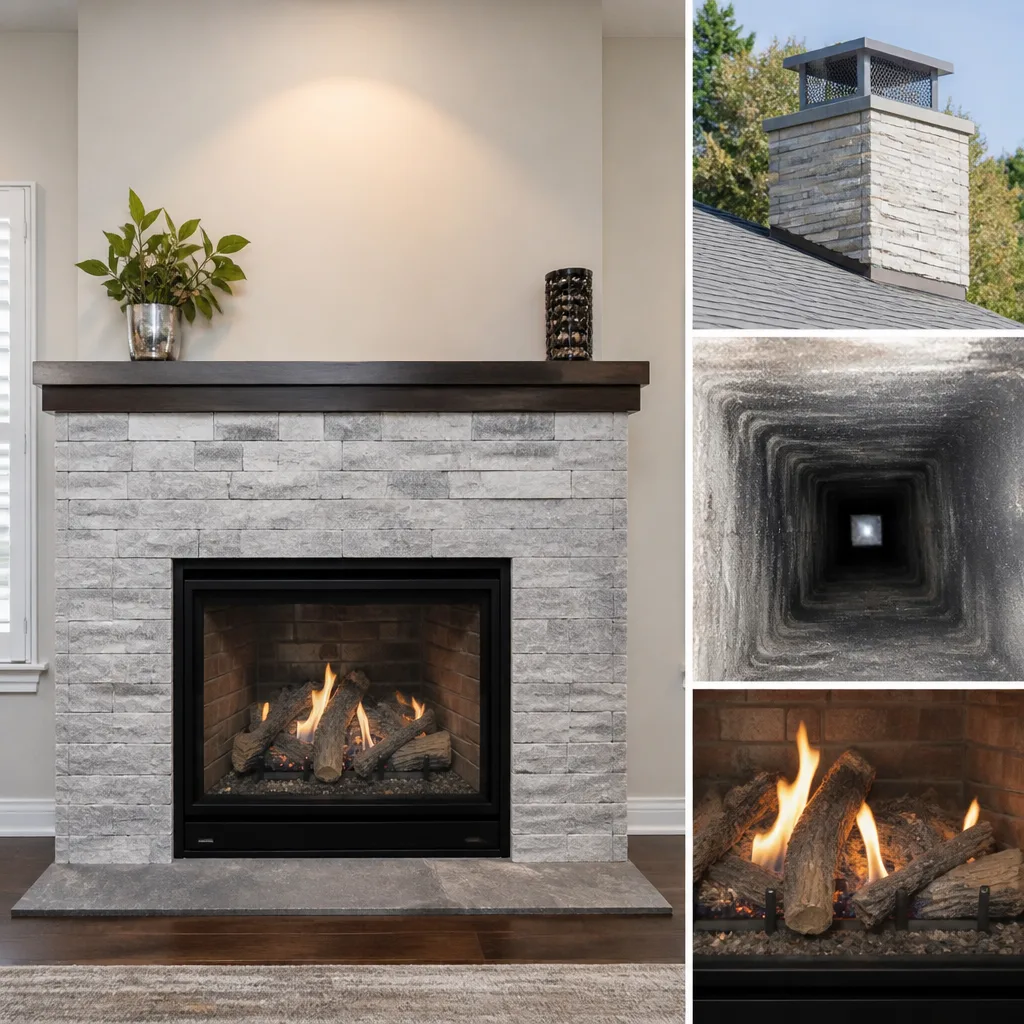
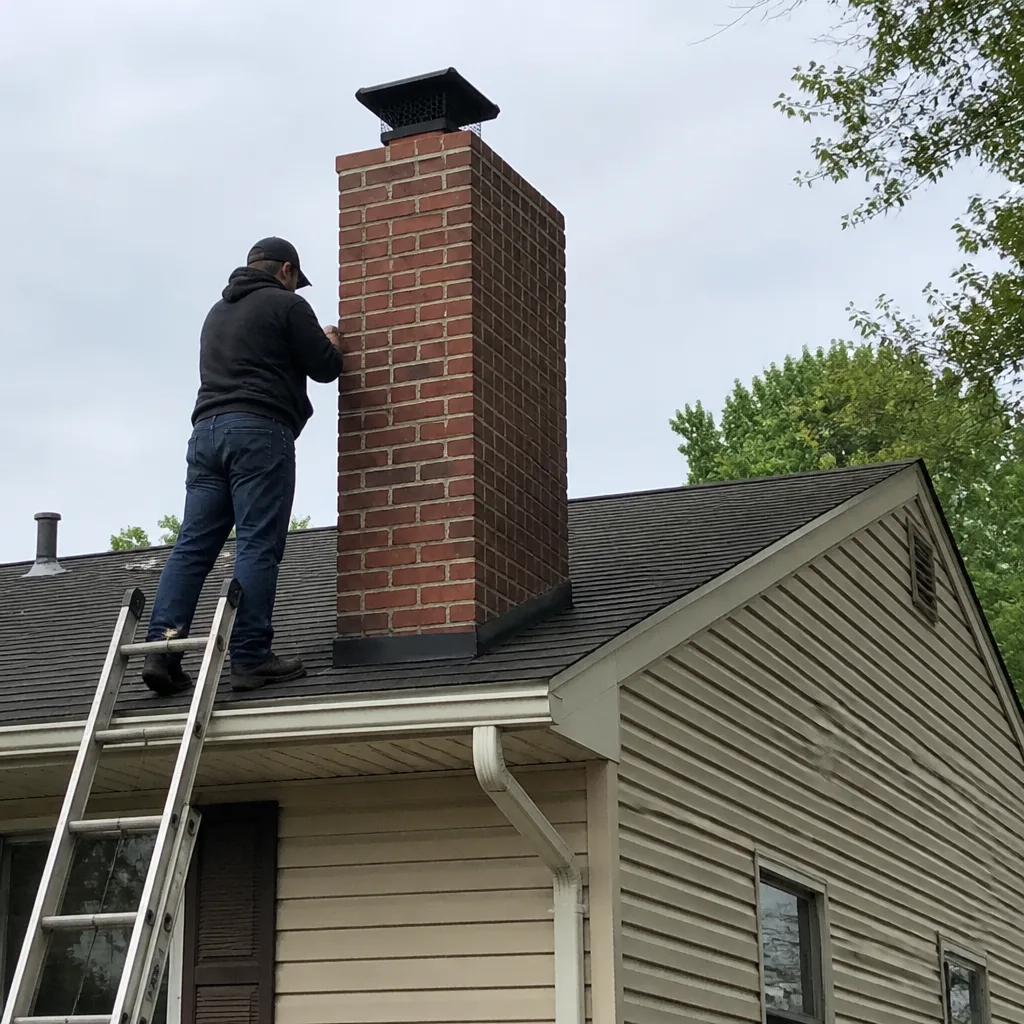
Level 1 sweep and inspection to the NFPA 211 annual standard - flue, crown, cap, and flashing checked and photographed
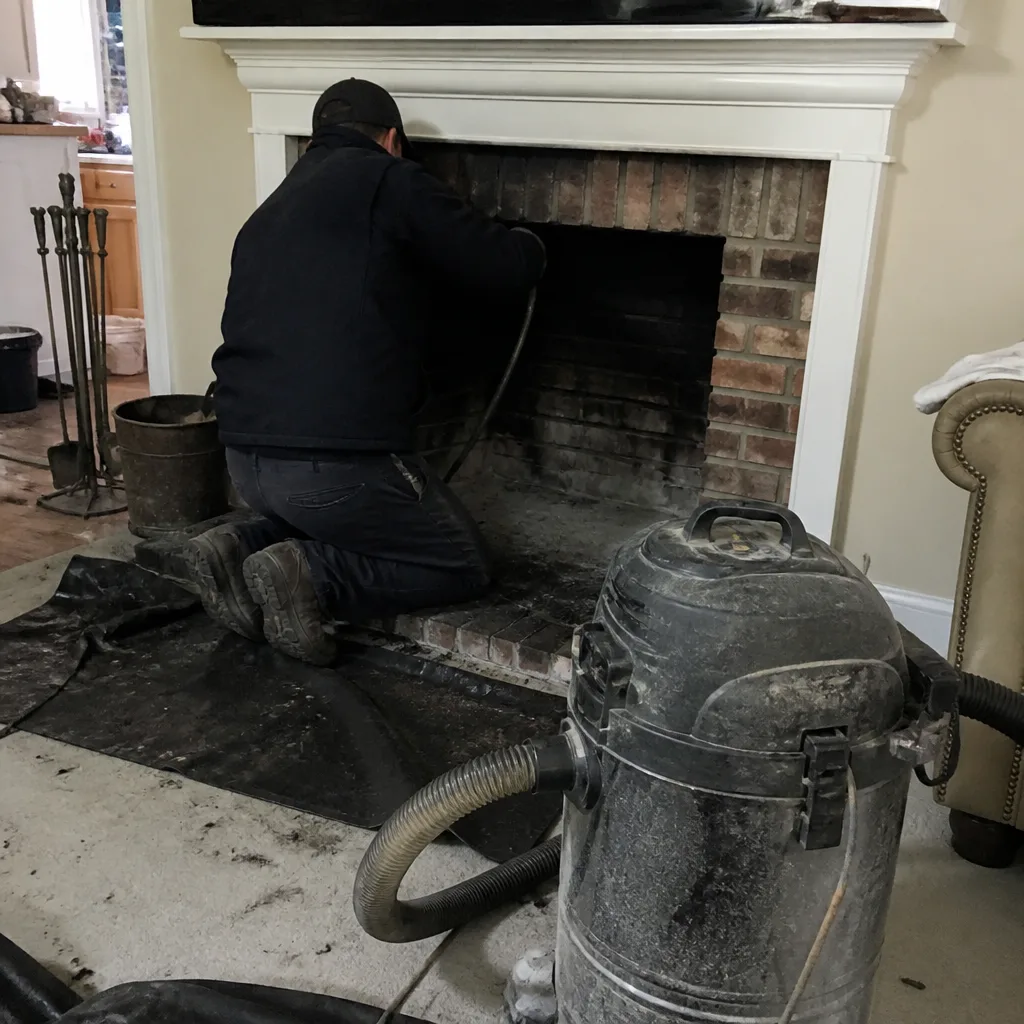
Chimney sweep logs do not sweep chimneys. They loosen some creosote - which then falls where a brush and vacuum still have to collect it.
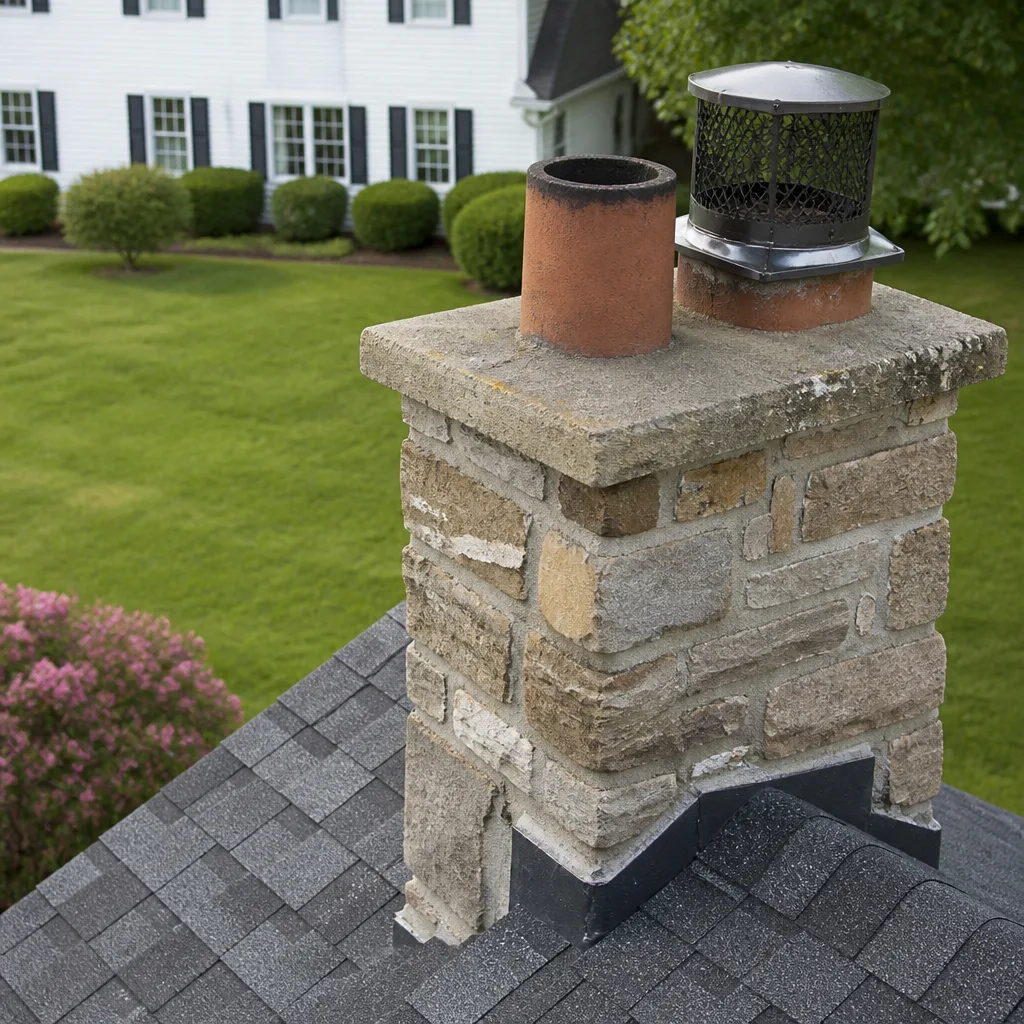
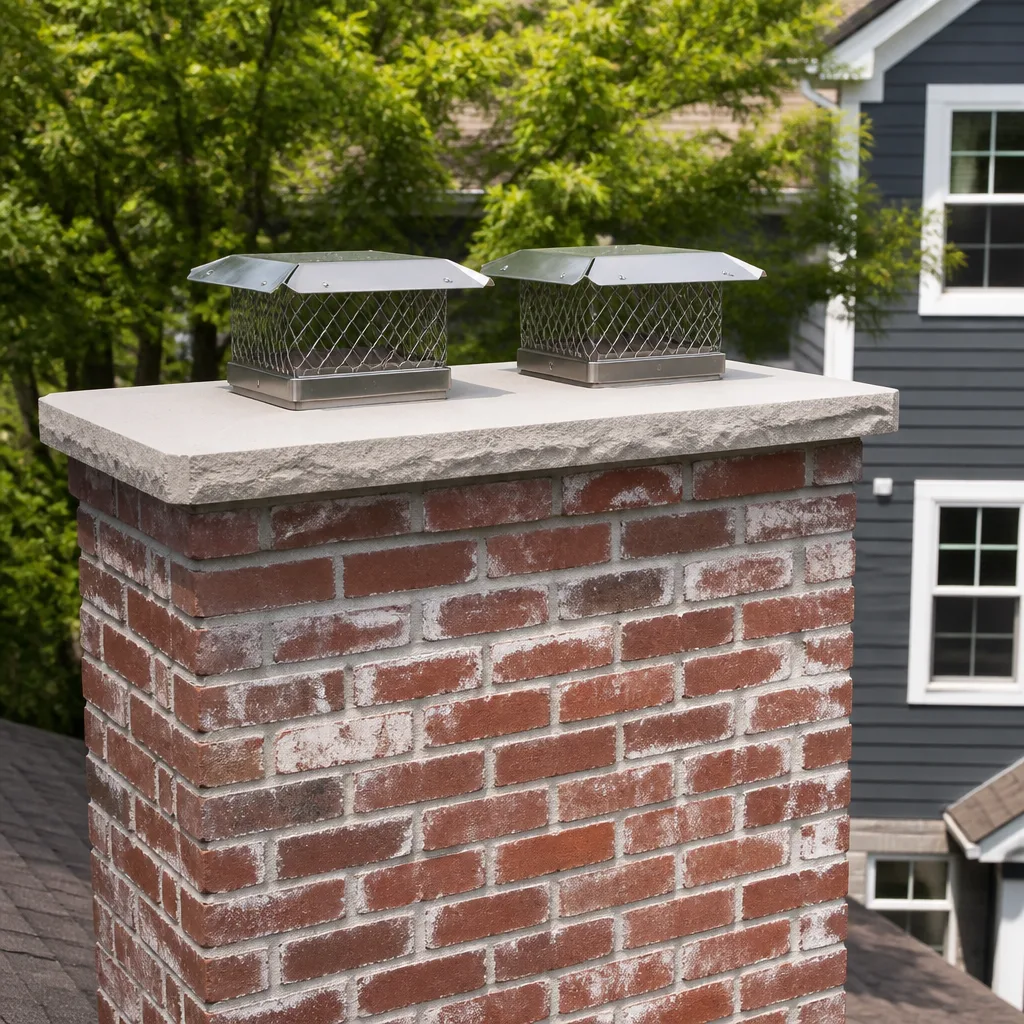
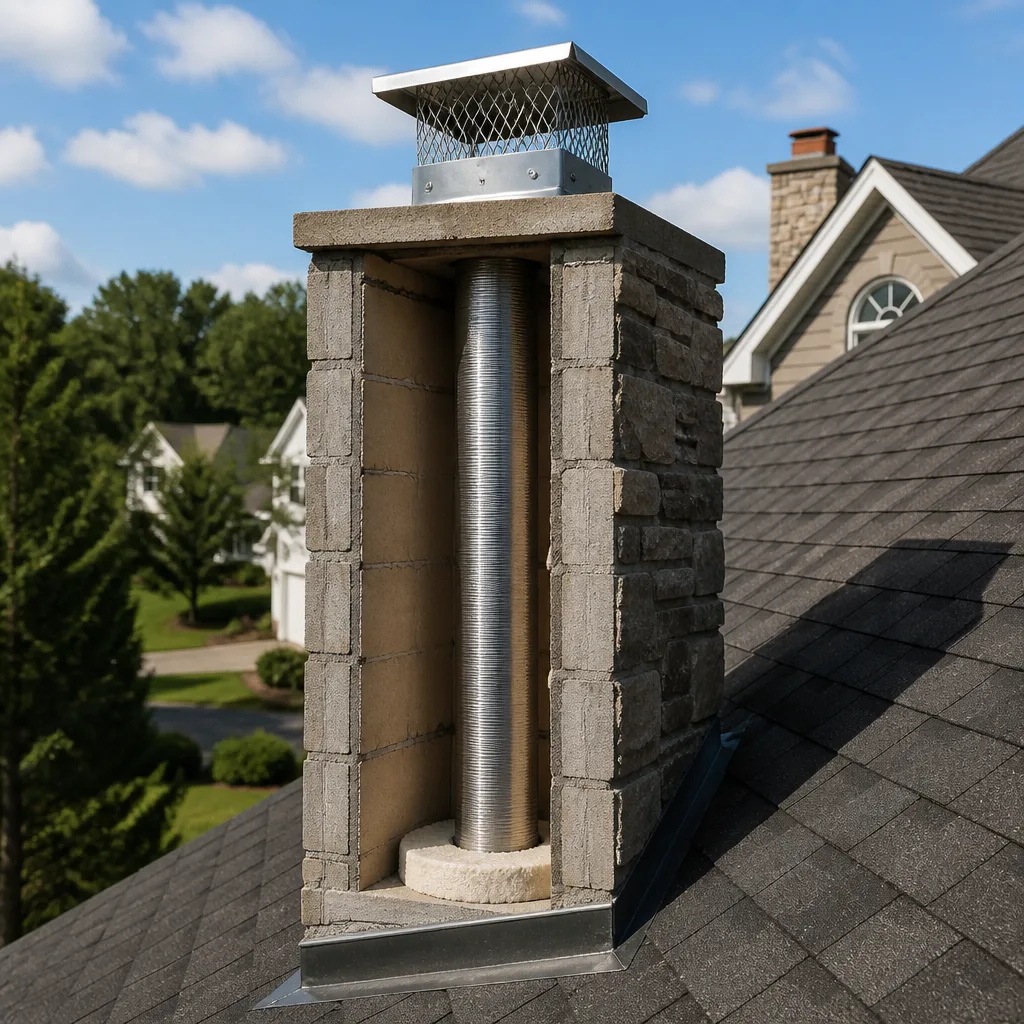
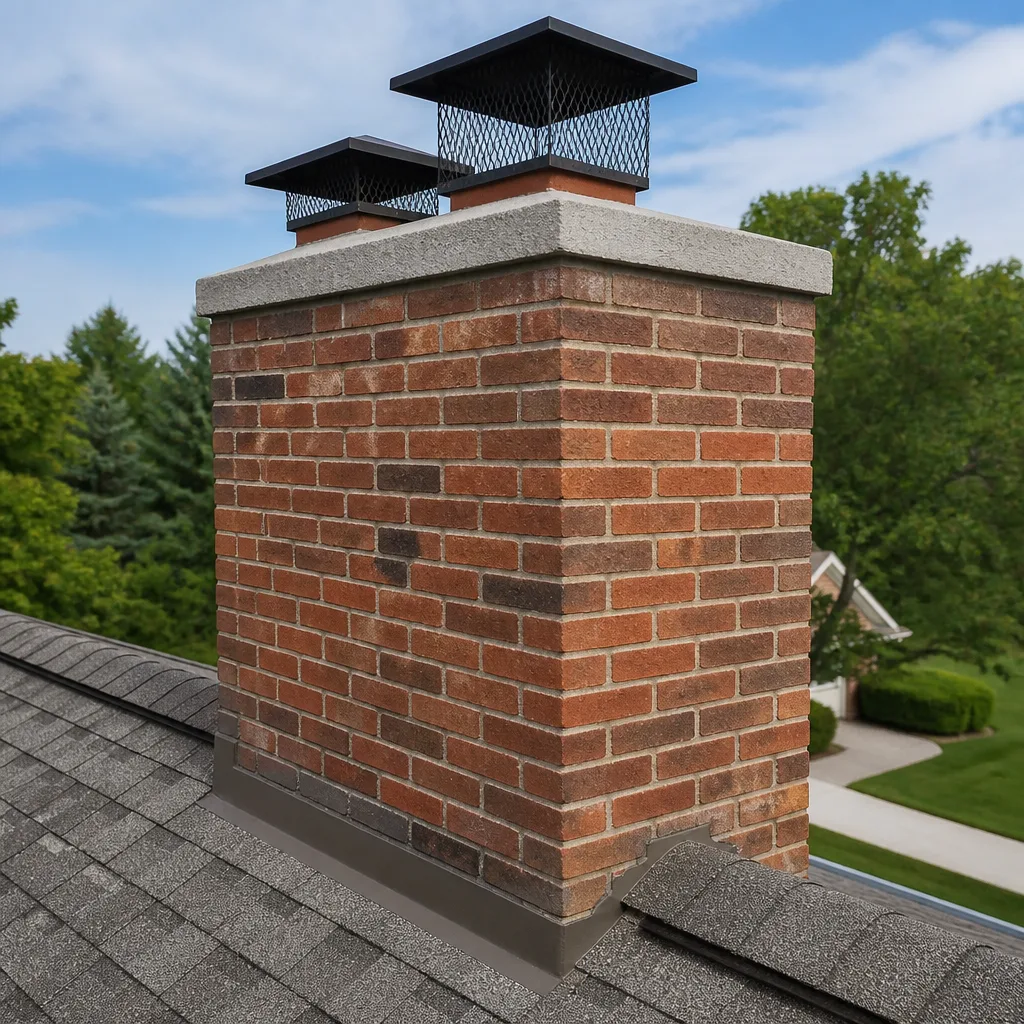
 Before
 After
After Before
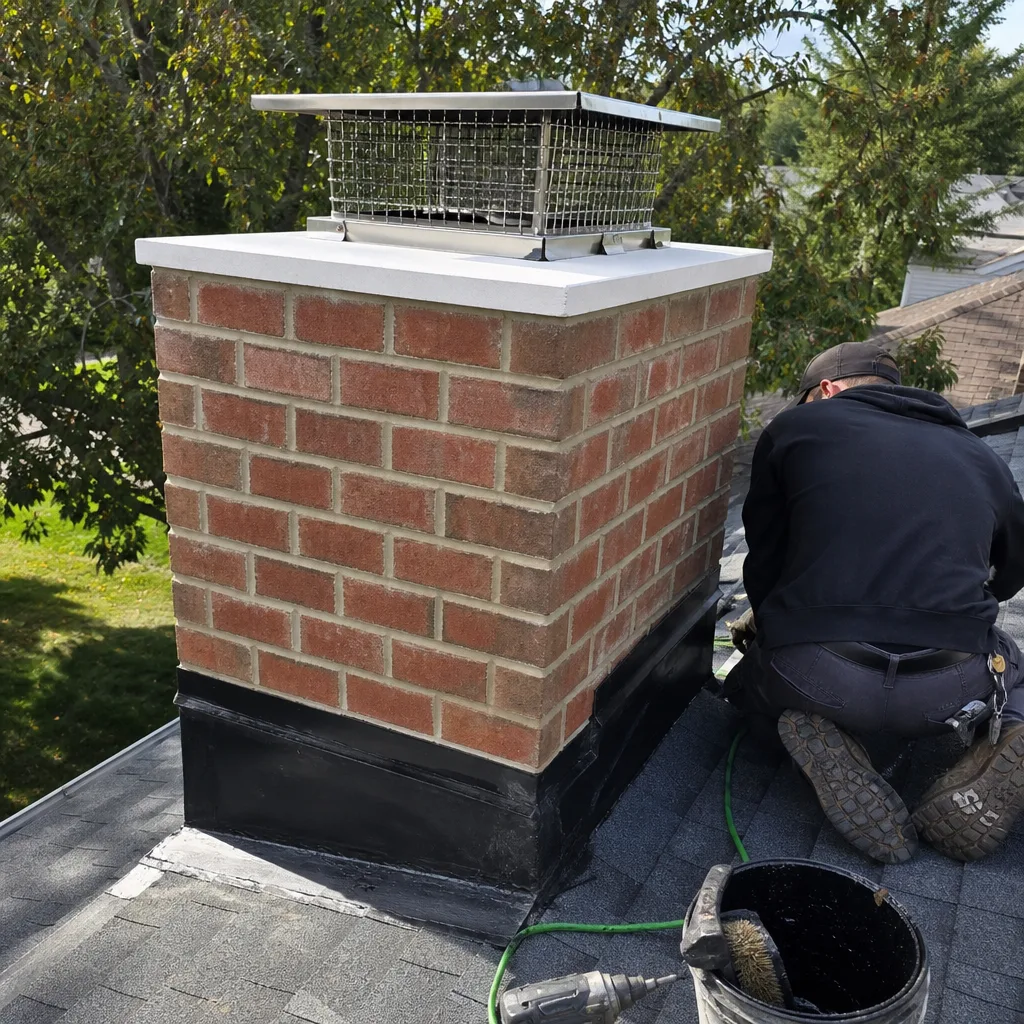 After
After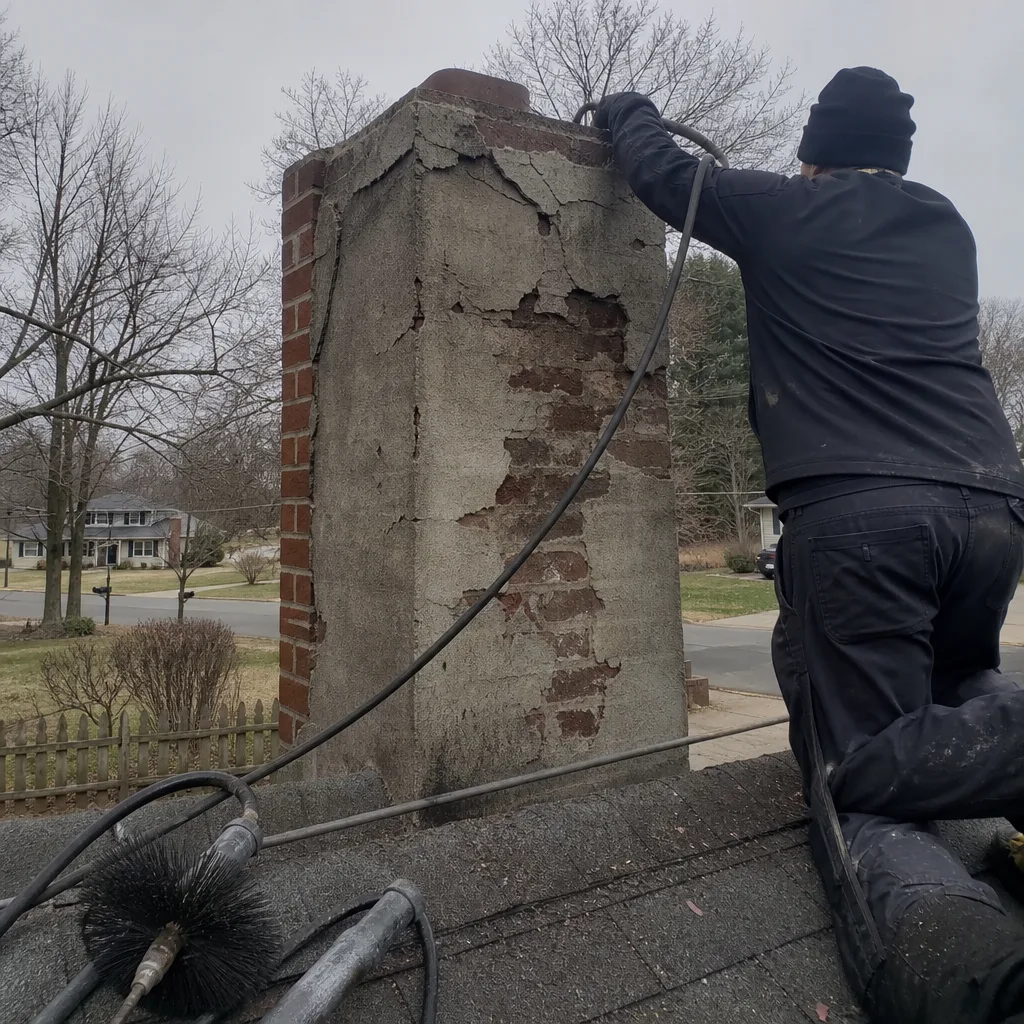 Before
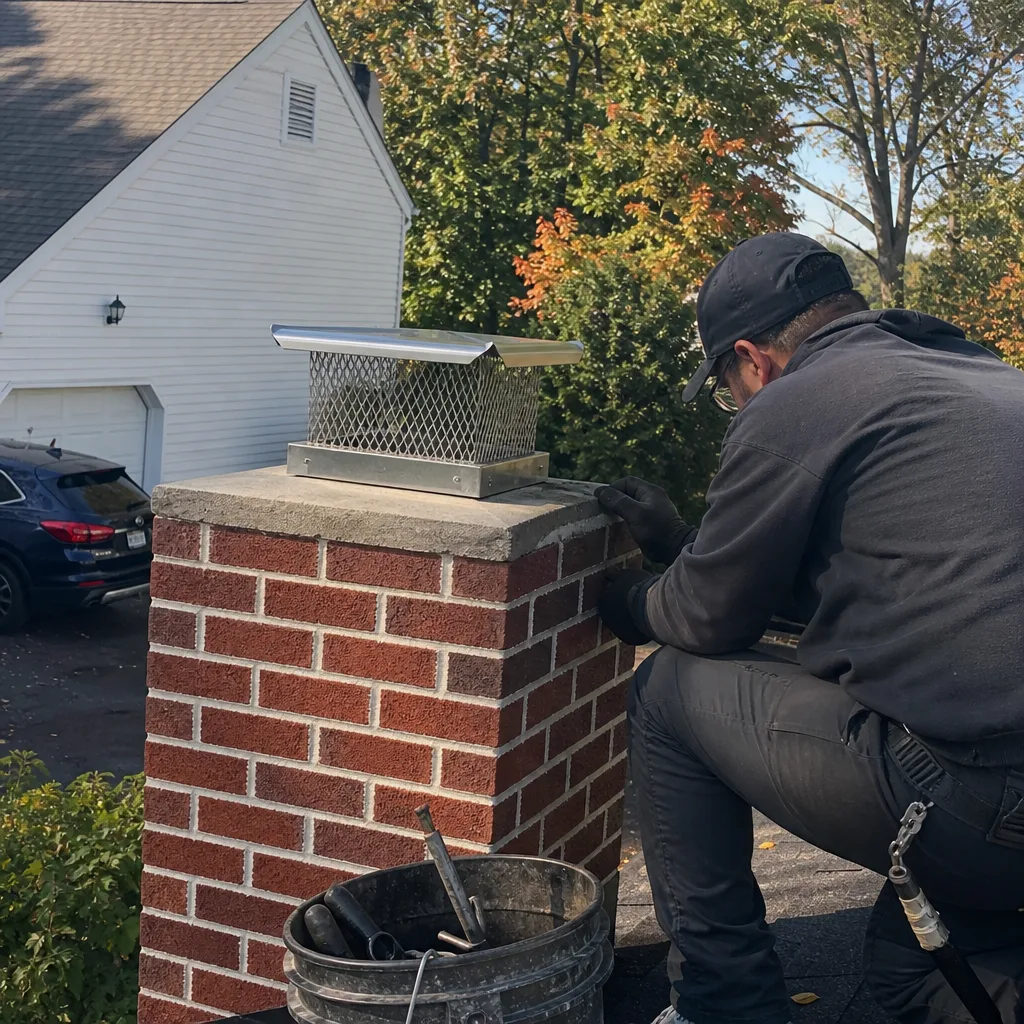 After
AfterCopperfield Chimney Cap Installation: The Gaithersburg Owner’s Guide
Copperfield chimney cap installation in Gaithersburg typically runs $340 to $680 installed, depending on the cap model and the condition of the flue tile it sits on. We stock Copperfield-compatible caps and components on the truck, so the conversation usually ends with a cap on the chimney the same day we come out. Most owners discover the problem the same way: they notice a rust stain bleeding down the brick, hear birds in the flue, or watch rainwater drip into the firebox during a storm in the Montgomery County stretch between Kentlands and the Washingtonian Center.
Copperfield makes a solid cap. The failure point is rarely the cap itself. It’s the mounting system and what the cap attaches to, which is a masonry flue tile that has spent 20 or 30 winters absorbing Maryland freeze-thaw cycles. When the tile spalls, the cap loosens. When the cap loosens, wind gets under it, and the whole assembly starts working against itself until the cap ends up in the yard or down the flue. We see this exact sequence in Gaithersburg every season.
Which Copperfield Models This Applies To
Copperfield’s chimney cap line breaks into two families. The first is their universal-fit caps for square or rectangular flue tiles, sized by outside tile dimensions, and they fit the vast majority of homes we service in Gaithersburg. The second is their round caps for manufactured chimney pipe and pre-fab chase tops, which use a different mounting collar and tension ring setup. The compatibility gotcha most people miss: a cap sized for a standard 13″ x 13″ clay flue tile will not seat correctly on a 12.5″ x 12.5″ tile, and there are more of those older, slightly undersized tiles in 1980s-era Gaithersburg construction than most owners realize. We measure the outside tile face to the eighth of an inch before quoting anything, because the difference between a snug slide-on fit and a wobbling cap is usually a measurement error, not a manufacturing tolerance.
For Copperfield specifically, we recommend OEM caps when the flue tile is square and in good condition, since their gauge and mesh spacing are matched to their mounting hardware. When the existing tile is damaged or already spalling, a quality aftermarket cap from one of the other suppliers we carry, typically a heavier-gauge stainless model, often makes more sense, and we’ll show you why on the camera before you spend a dollar. Copperfield’s standard mesh is fine for keeping birds and debris out, but it does not hold up as long in tree-heavy areas, and much of Gaithersburg carries a mature oak canopy that rains twigs and acorns onto cap mesh. Level Two Chimney Gaithersburg is an independent service provider, not affiliated with Copperfield, but we’ve installed and repaired their caps for years and know exactly how each model line behaves in Montgomery County weather.
Signs Your Copperfield Chimney Cap Installation Is Failing
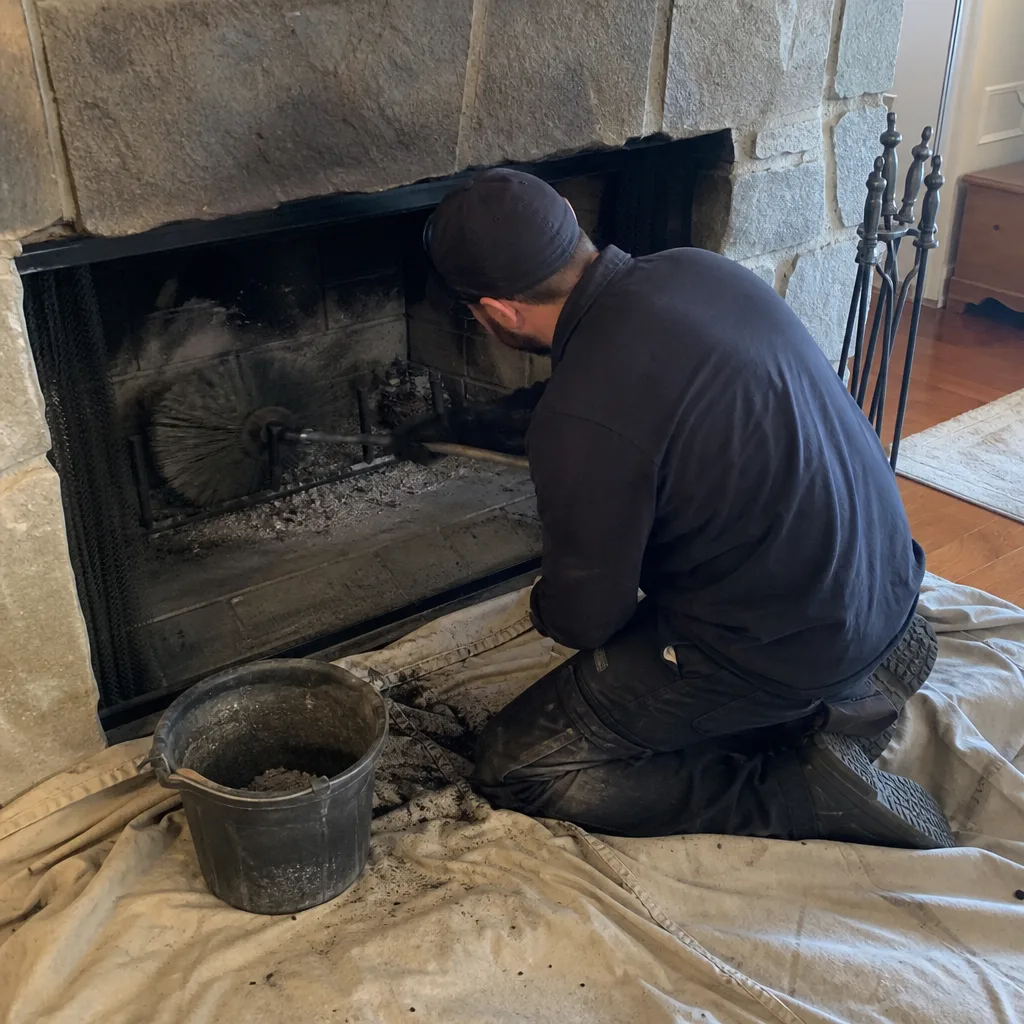
- Water in the firebox or dripping sounds during rain. The cap’s primary job is deflection. When the mounting legs have pulled free of the flue tile, rain runs straight down the flue and pools in the smoke chamber, showing up as rust streaks on the damper plate.
- Rust bleeding down the brick face near the crown. Steel mounting hardware corrodes first at the leg-to-base junction. The telltale is a brown-orange stain running from the cap area down the brick, usually on the prevailing-wind side of the chimney.
- Bird or squirrel noise coming from the flue. A missing mesh panel or a bent frame leaves an opening. Animals rarely force their way in; they find a section where the mesh has rusted away from the frame and slip through.
- The cap is visibly tilted or shifted. You can see it from the ground if you know what to look for. A Copperfield cap should sit perfectly level on the flue tile. Any tilt means at least one mounting leg has failed or the tile itself has cracked.
- Debris accumulation in the firebox between uses. Leaves, twigs, acorn caps, and fine grit drifting down the flue is the earliest warning sign. By the time debris reaches the firebox, the mesh is compromised somewhere above.
None of these are cosmetic. A loose or damaged chimney cap lets water into the flue, and water is what accelerates creosote degradation, damages liner seams, and eventually pushes repair costs from the hundreds into the thousands. Corrine Halstead, Owner of Level Two Chimney Gaithersburg, has pulled enough cameras through Gaithersburg flues to say this plainly: the chimney cap is the cheapest insurance policy on your exhaust system, and it fails quietly.
BeforeAfterReplacement Cost & What’s Included
Here’s what Copperfield chimney cap installation costs in Gaithersburg, written plainly:
- Standard Copperfield stainless steel cap, square or rectangular tile: $340 to $480 installed
- Copperfield cap with 3/4″ replacement mesh (heavier gauge): $430 to $560 installed
- Round cap for manufactured pipe or chase-top conversion: $410 to $610 installed
- Custom-sized stainless cap for oversized or odd-dimension flues: $560 to $680 installed
Every quote includes the cap, stainless mounting hardware, removal and disposal of the old cap, a camera inspection of the top 6 to 8 feet of flue while the cap is off, and a documented photo record of the finished installation. That photo record is Clause 4 of the Haven Standard, and it’s been our practice since 2009, long before most companies in the industry started doing it. We’ve installed copper, stainless, and painted variants across more than 38,000 chimney visits, and the pattern is consistent: stainless holds up longest in Maryland’s humidity-and-freeze cycle, and painted steel is a false economy that shows rust within three to five years. The written quote you get before we start is the price you pay. No surprise add-ons after the tech is on the roof.
What drives the range is the flue tile condition. If the tile is reasonably square with no cracking, the install is straightforward and quick. If the tile is spalling or already partially broken, we’ll show you the footage, quote the tile repair as a separate line item, and let you decide. Clause 1 of the Haven Standard is a written price and written scope before any work starts, and that applies here without exception.
DIY or Call Us?
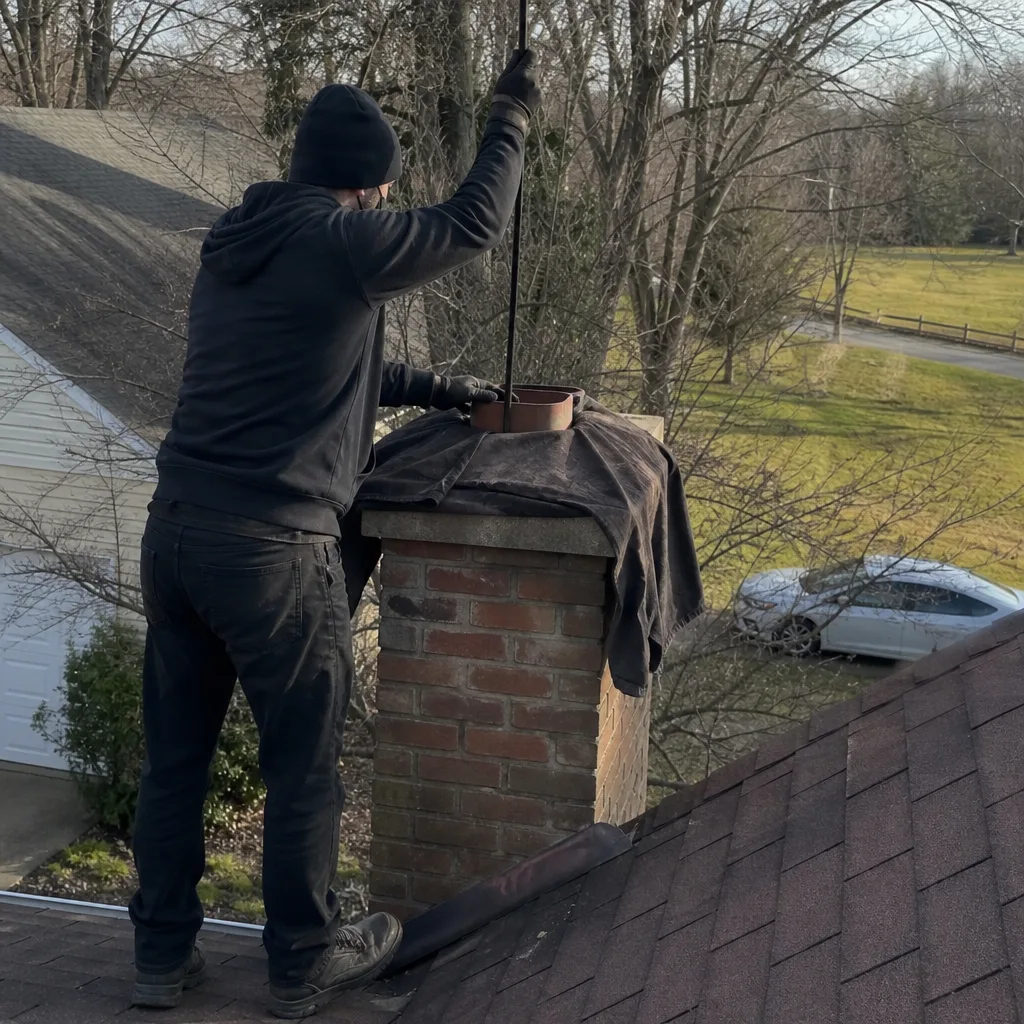
Replacing a chimney cap is one of those jobs that looks easy from the ground and feels very different on a 30-foot ladder with wind gusting off the Potomac ridges. If you can safely access the roof, you can verify a few things yourself: check whether the cap is visibly tilted, look for rust staining, and eyeball whether the mesh is intact. That’s a reasonable homeowner inspection.
What we’d caution against is doing the actual swap without a safety harness, a spotter, and the right anchoring method. The copper and stainless caps look light, but a gust catching one like a sail on a steep-pitch roof is a genuine fall risk, and roof pitch around the older Cape Cod and split-level homes in Gaithersburg is often steeper than it looks from the street. Falls from roof height are serious injuries. If you’re not equipped for height work, this is a job to hand off. Call us at (240) 220-9395, and we’ll get a named tech out with the cap on the truck, a text when we’re on the way, and a written quote before anything comes off the roof.
FAQs
Copperfield’s stainless steel caps typically last 10 to 15 years in Gaithersburg’s climate before the mesh or mounting hardware shows meaningful corrosion. Painted steel versions run shorter, often 5 to 8 years. The cap’s lifespan in this area tracks the mounting hardware more than the cap body, since Maryland’s freeze-thaw cycle works on the leg fasteners first. If you call us at (240) 220-9395, we’ll tell you what you have and what it’s worth at the current age.
Sometimes, but usually not at the point where the mesh has rusted through or a mounting leg has snapped. If it’s just a bent frame or a single loose fastener, we can often fix it on the spot. If the mesh panels are crumbling or the legs have pulled free, the cost of repair labor and parts approaches replacement cost, and a new cap with fresh hardware is the better call. We’ll show you photos before any decision is made.
Most Gaithersburg cap installs run 60 to 90 minutes on site, including the camera scan and photo documentation. The questions usually take longer than the ladder work. The reason the job moves fast is that the cap is on the truck, sized for the measurements we took during the quote visit, and the whole sequence is scripted under the Haven Standard.
Yes. We keep Copperfield-compatible cap models and mounting hardware on our service vehicles for the common Gaithersburg flue dimensions, along with caps from DuraFlex, HeatShield, and Gelco for cases where a different configuration or heavier gauge makes more sense. The one thing we never do is force a cap you don’t need or install a part without showing you exactly what’s going on up there, because the camera doesn’t guess. Neither do we.
If your Copperfield cap is done or on the way out, call Level Two Chimney Gaithersburg at (240) 220-9395. We’ll answer with a real person, give you a written price before work starts, and leave you with photo documentation of exactly what went on your chimney. Free second opinions on any written estimate, always.
Written by Corrine Halstead, Owner, Level Two Chimney Gaithersburg at Level Two Chimney Gaithersburg, serving Gaithersburg and nearby areas.